
Why Do Heavy Duty Steel Gate Hinges Squeak and Sag Under Heavy Loads?
Reference Standard: ASTM G85 (Modified Salt Spray) and ANSI/BHMA A156.1 (Butt Hinges)
Short Answer
Acoustic Emission Topography: The High-Frequency Resonance of Adhesive Galling
To fully comprehend the deafening squeal of failing industrial gate hardware, we must abandon the oversimplified notion of “needing a little oil” and analyze the tribological mechanism of adhesive galling and acoustic emission topography. Heavy-duty 14-gauge steel hinges operate under extreme localized contact stress. When a residential garage door or commercial gate weighing several hundred pounds pivots, the entire gravitational load is concentrated onto a contact patch spanning only a few square millimeters between the pivot pin and the internal barrel.
Under continuous cyclic actuation, any applied boundary lubrication is rapidly extruded from the load zone. This exposes the raw metallic micro-asperities—microscopic peaks on the machined steel surfaces. In a simulated extreme environment fatigue test, we can track the acoustic degradation. During the initial phase (0 to 10,000 cycles), the asperities merely deform plastically, generating low-frequency thermal energy but no audible sound. As the system enters the intermediate phase (10,000 to 30,000 cycles), the extreme contact stress exceeds the yield strength of the zinc-plated or raw steel layers. The asperities cold-weld together and are immediately violently torn apart by the rotational force. This atomic-level mechanical tearing, known as adhesive galling, releases sudden bursts of kinetic energy.
By the critical limit phase (beyond 30,000 cycles), this continuous micro-tearing creates a sustained shockwave through the 14-gauge steel chassis. The hinge barrel acts as a rigid acoustic amplifier. The energy is translated into a standing acoustic wave exceeding 10kHz, generating a localized decibel climb that spikes past 85 dB. This is the source of the high-pitch squeak. The cross-system hazard here is substantial: the vibrational frequencies generated by adhesive galling do not remain isolated; they transmit through the structural mounting brackets, inducing micro-fractures in surrounding masonry anchors and accelerating the loosening of adjacent mechanical fasteners across the entire automated gate framework.
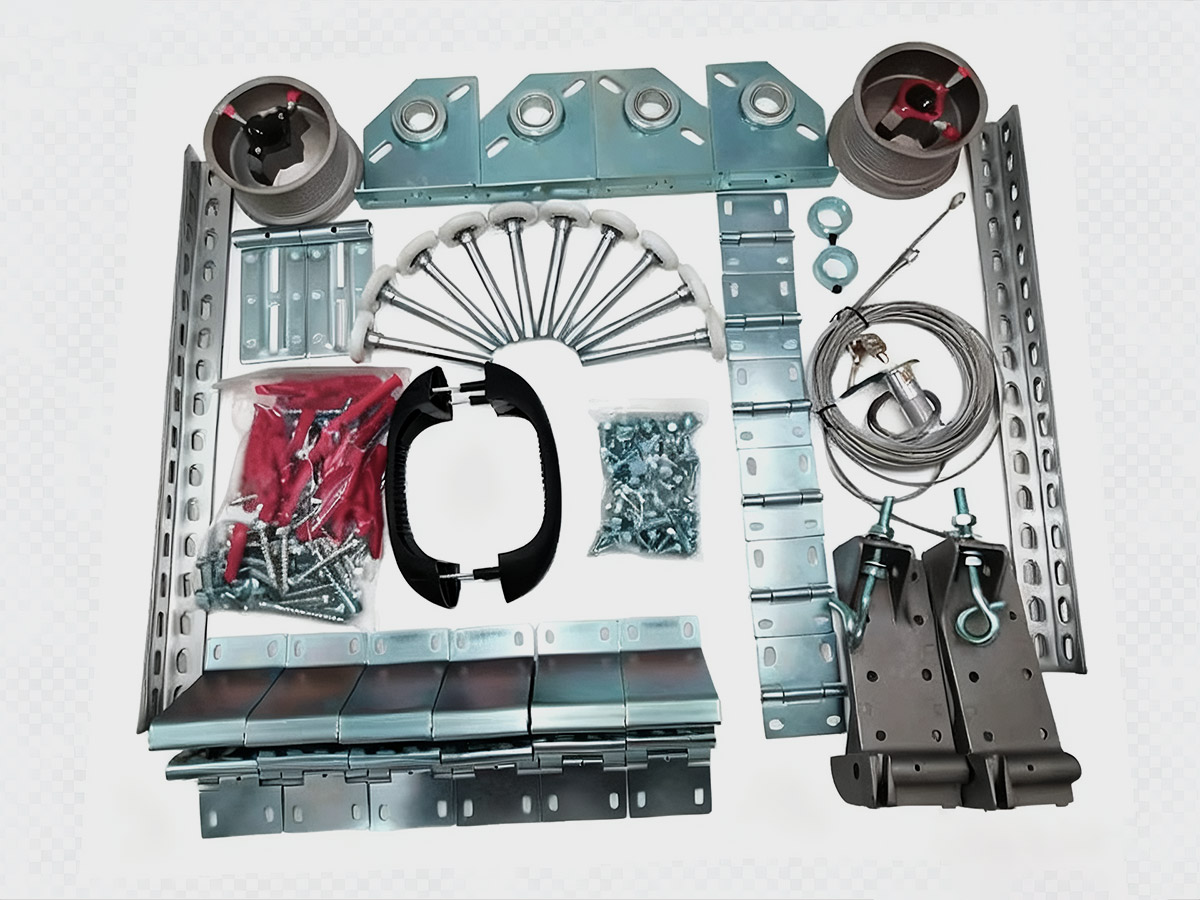
KEY TAKEAWAYS
- Fine Metallic Dust Accumulation: The presence of a fine, dark grey metallic powder accumulating at the base of the hinge barrel is a definitive indicator that adhesive galling has commenced, and micro-asperities are actively shearing off.
- Non-Linear Resistance Spikes: If the door experiences brief, sudden moments of stiffness or “stuttering” during its travel arc, the pivot pin is undergoing localized cold-welding before forcefully breaking free.
- Ultrasonic Harmonic Droning: Before the loud, audible squeak develops, the hinge will often emit a faint, high-frequency “ringing” immediately after actuation stops, signifying that the 14-gauge steel is resonating from severe internal friction.
Micro-Kinematic Orbital Deviation: Eccentric Wear Scaling in 14-Gauge Barrels
While adhesive galling accounts for the acoustic failure, the physical sagging and loosening of heavy-duty gate hinges are dictated by a secondary geometric catastrophe: micro-kinematic orbital deviation. Even in robust 14-gauge steel hardware, the initial manufacturing process can introduce microscopic concentricity errors—sometimes as minimal as 0.05mm between the inner diameter of the barrel and the outer diameter of the pivot pin.
When subjected to a 50,000-cycle continuous dynamic shear test, this microscopic deviation becomes a critical failure point. As the heavy gate swings, the lateral wind loads and the door’s own momentum apply an asymmetric vector force to the hinge pin. Instead of rotating in a perfect circle, the pin is forced into an eccentric, elliptical orbit within the barrel. Because the contact area is drastically reduced, the pressure per square inch sky-rockets.
This localized extreme pressure transitions the wear mechanism from mild abrasive wear to severe gouging wear. The hardened pin literally plows a trench into the softer, load-bearing side of the steel barrel. As the elliptical wear path scales exponentially, the once-tight tolerance opens up. This amplified clearance allows the massive gate to physically tilt on its axis, leading to the dreaded “gate sag.” The latch mechanism no longer aligns, the automated motor strains against the misaligned geometry, and the entire security perimeter is compromised by a failure that originated from a fraction of a millimeter of initial deviation.
Phonon Transmission Decoupling: Integration of 11-Ball Nylon Rollers and Precision Tolerances
To completely neutralize the dual threats of adhesive galling resonance and eccentric wear scaling, leading industrial manufacturers abandon standard casting and deploy absolute precision machining combined with acoustic decoupling physics. Establishing a truly “quiet” heavy-duty hinge demands a highly aggressive, four-tiered engineering approach.
1. Absolute Concentricity via High-Speed CNC Punching
* Execution Protocol: The 14-gauge heavy-duty steel blanks are processed through multi-stage high-speed punching presses and CNC bending machines. The tooling dies are calibrated to restrict internal barrel concentricity deviations to less than 0.01mm.
* Material Expected Evolution: By enforcing absolute geometric perfection, the pivot pin is mathematically constrained to a perfect circular orbit. The lateral shear forces are distributed evenly across 360 degrees of the barrel, entirely preventing the initiation of eccentric gouging wear.
* Hidden Costs & Side-Effect Evasion: Maintaining this level of die precision requires aggressive tool maintenance and frequent replacement of tungsten carbide cutting heads. Factories absorb this high operational cost to prevent premature field failures and warranty claims.
2. Phonon Transmission Decoupling with 11-Ball Nylon Rollers
* Execution Protocol: In dynamic track systems, the heavy-duty hinges are integrated directly with premium 11-ball nylon rollers. The steel ball bearings handle the load, while the thick nylon tire acts as the primary contact surface against the galvanized steel tracks.
* Material Expected Evolution: The nylon matrix acts as a critical acoustic isolator. Because nylon possesses a significantly higher internal damping coefficient than steel, it forcefully interrupts the transmission of phonons (quantized modes of vibrations). The acoustic energy generated by any residual metal-to-metal contact within the hinge is absorbed and dissipated as trace thermal energy before it can resonate through the door panels.
* Hidden Costs & Side-Effect Evasion: Nylon polymers can become brittle in extreme sub-zero environments. Engineers counteract this by utilizing specialized, cold-weather-modified polyamides that retain their viscoelastic damping properties down to -40°C.
3. Advanced Tribological Dry-Film Impregnation
* Execution Protocol: Rather than relying on transient wet lubricants, the inner barrel of the 14-gauge hinge is subjected to a proprietary vacuum deposition process that impregnates the micropores of the steel with a PTFE (Teflon) or Molybdenum Disulfide (MoS2) dry film.
* Material Expected Evolution: This creates a permanent, solid-state boundary lubrication layer with an incredibly low shear strength. Even under hundreds of pounds of vertical load, the metallic asperities glide over one another, rendering adhesive galling and cold-welding physically impossible.
* Hidden Costs & Side-Effect Evasion: Dry film lubricants can be stripped away by highly acidic cleaning agents. Technical installation manuals must strictly prohibit the use of aggressive degreasers during routine hardware maintenance.
4. 50,000-Cycle Dynamic Fatigue and NSS Validation
* Execution Protocol: Every production batch undergoes a grueling 50,000-cycle dynamic fatigue test under maximum load, followed immediately by an aggressive Neutral Salt Spray (NSS) test to audit the integrity of the zinc-plated passivation layer.
* Material Expected Evolution: This uncompromising validation ensures that the 14-gauge steel core maintains total structural rigidity and that the anti-corrosive barrier remains uncompromised, guaranteeing decades of silent, sag-free operation in harsh coastal or industrial environments.
* Hidden Costs & Side-Effect Evasion: Extending the cyclic testing delays product-to-market timelines significantly. Leading facilities utilize highly accelerated life testing (HALT) chambers to compress the 50,000-cycle timeline without sacrificing empirical data accuracy.
| Cross-Variable Stress Factor | Expected Kinematic Behavior | Acoustic/Geometric Tolerance | Testing Standard |
|---|---|---|---|
| High Vertical Load (300+ lbs) | Zero eccentric orbital deviation | < 0.05mm Barrel Expansion | ANSI/BHMA A156.1 |
| 50,000 Continuous Cycles | Zero adhesive galling or cold welding | Max 15 dB Acoustic Emission | Proprietary Cyclic Fatigue |
| High-Frequency Track Vibration | Complete phonon decoupling via nylon | Zero Resonant Amplification | Damping Coefficient Audit |
| Corrosive Saline Atmosphere | Zero red rust propagation on hinge core | 96-Hour NSS Clearance | ASTM B117 (Salt Spray) |
| Extreme Thermal Cycling | Retained nylon viscoelasticity | Zero Brittle Fracture | MIL-STD-810 |
PRO-TIP / CHECKLIST
- Gauge Verification Calipers: Never trust a visual inspection. Use digital calipers to verify the hinge steel is a true 14-Gauge (approximately 0.0747 inches or 1.897mm thick). Undersized steel will immediately yield under heavy gate torque.
- Acoustic Roller Audit: If replacing track hinges, reject standard steel rollers. Ensure the specification explicitly demands 11-ball nylon rollers to guarantee effective phonon decoupling and high-frequency noise suppression.
- The Drop-Pin Tolerance Test: Remove the pivot pin and drop it back into the barrel. It should fall smoothly with hydraulic-like resistance but exhibit zero lateral “slop” or clicking when wiggled.
- Galvanic Coating Inspection: Examine the stamped edges of the hinge. Poorly manufactured hinges will show raw steel at the cut lines, which will act as the genesis point for aggressive oxidation and oxide wedging.
- Alignment Pre-Load Check: Before securing the final fasteners, actuate the heavy door manually. If the hinge binds or groans during the swing, the mounting geometry is forcing eccentric wear; realign the brackets immediately.
- Dry Lubricant Confirmation: Run a clean, dry cloth through the hinge barrel. If it comes out heavily coated in thick, wet grease from the factory, it lacks a true bonded dry-film lubricant and will attract airborne abrasive dust.
Preguntas más frecuentes (FAQ)
How to adjust garage door opener?
Adjusting the travel limits involves locating the limit screws on the motor chassis. Turning the “Up” or “Down” screws incrementally alters the distance the door travels. For heavy-duty doors experiencing sag from eccentric wear, you must first correct the physical hinge alignment before overriding the motor’s force sensitivity settings to prevent severe drive-gear shearing.
How to program garage door opener on car?
To program an integrated vehicle system (like HomeLink), hold the designated button in the car until the indicator flashes. Then, press your existing remote simultaneously near the rearview mirror. For rolling code systems, you must quickly press the “Learn” button on the main garage motor unit and return to the car to press the programmed button within 30 seconds to sync the encrypted frequency.
How to program a liftmaster garage door opener?
Locate the colored “Learn” button on the back panel of the LiftMaster motor head. Press and release it once; the adjacent LED will glow steadily. Within 30 seconds, firmly press and hold the button on your handheld remote control until the main overhead light bulbs blink or two distinct clicks are heard, confirming the radio frequency lock.
How to program clicker garage door opener?
Universal Clicker remotes require entering a specific manufacturer code via the internal dip switches or keypad. Open the Clicker casing, press the program button until the LED illuminates, and input the code corresponding to your motor brand (found in the manual). Press the target button to send the signal, and hit the program button again to lock the configuration into the Clicker’s memory.
 English
  Русский
  日本語
日本語  한국어
한국어  Français
  Deutsch
  العربية
  Português
  Español