
Mechanical Behavior and Durability Assessment of Sliding Garage Door Wheel Assemblies
Introduction
Sliding garage doors rely heavily on wheel assemblies to ensure smooth, reliable operation over extended service periods. These components must withstand substantial mechanical loads while maintaining precise alignment to avoid issues such as increased friction, noise generation, or operational binding. The performance and longevity of wheel assemblies are influenced by their design parameters, material selection, bearing condition, and environmental exposure. Among the various degradation mechanisms, bearing wear resulting in increased rolling resistance is particularly critical, as it directly impairs door movement efficiency and accelerates component failure. This analysis focuses on the mechanical behavior and failure pathways of sliding garage door wheels, with particular attention to bearing wear under dust-intensive workshop environments. Drawing on practical field observations and adherence to established endurance test standards, it provides an in-depth evaluation of durability challenges and validation approaches.
Mechanical Principles & Load Behavior
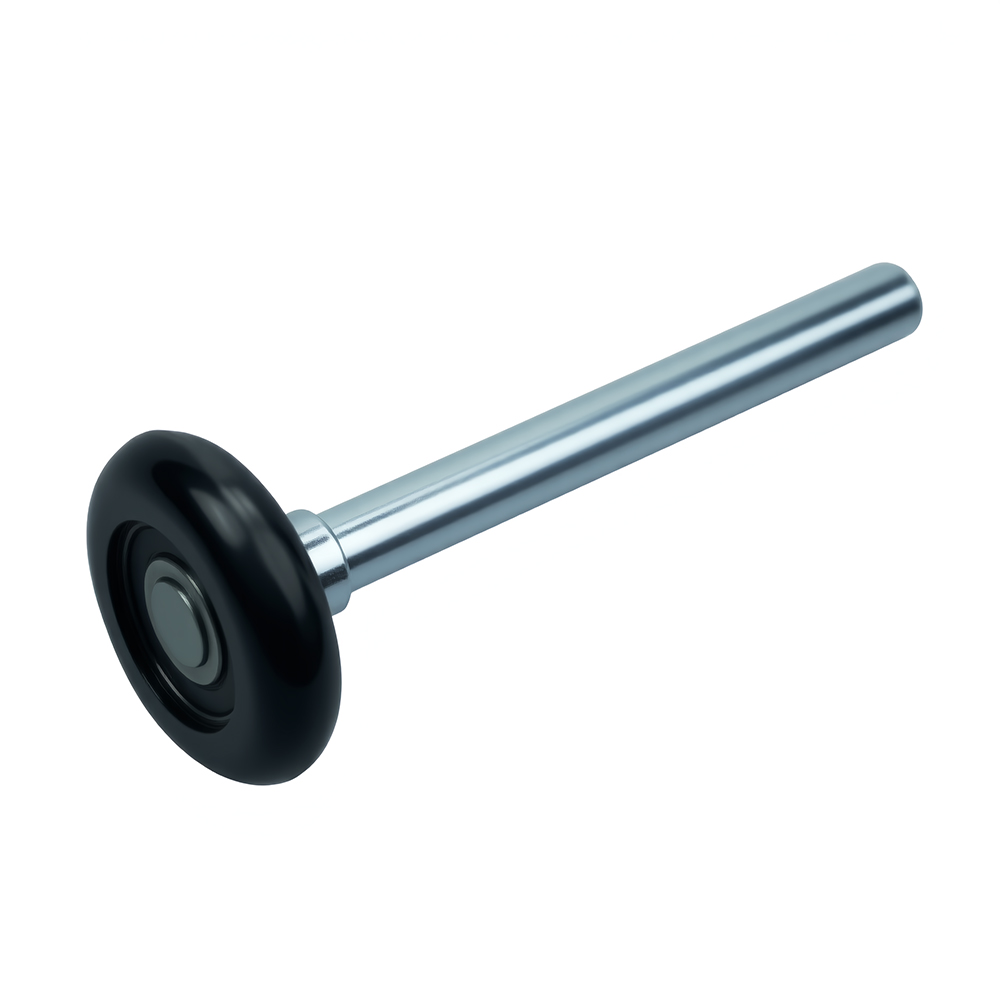
Wheel assemblies in sliding garage doors typically consist of a polymer wheel—commonly nylon or polyurethane—mounted on a steel shaft incorporating a sealed bearing system. Bearings are generally sealed ball or needle types engineered to minimize friction and accommodate both radial and axial loads. The door’s weight, which can range from approximately 50 kg for smaller models to over 150 kg for heavy insulated doors, is distributed across multiple wheels, each transferring load to the track.
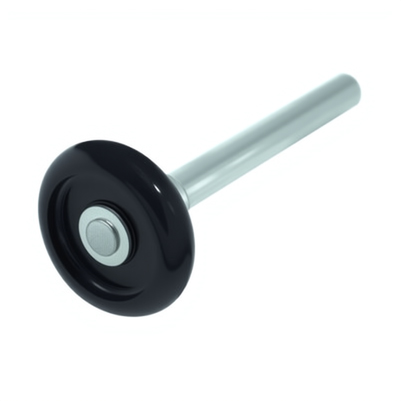
The primary mechanical function of these assemblies is to convert vertical and lateral loads into smooth rolling motion with minimal resistance. Bearings enable the wheel body to rotate freely around the shaft, reducing friction between stationary and moving elements. This process’s efficiency depends on bearing condition, lubricant quality, and the interface between the wheel tread and track. The wheel profile geometry and material hardness are carefully selected to maintain consistent contact with the track, resist lateral displacement, and prevent deformation under load.
Load distribution plays a pivotal role in assembly performance. Uneven loading or misalignment results in localized stress concentrations, accelerating wear on bearings and wheel materials. Axial forces arising from door movement or track irregularities impose additional stresses, increasing the risk of premature failure. In dust-intensive workshop environments, fine abrasive particles penetrate bearing seals and accumulate at the wheel-track interface. This contamination compromises seal integrity and lubricant retention, elevating friction and wear rates. The mechanical consequences manifest as increased rolling resistance and reduced alignment stability, directly affecting door operation smoothness and system reliability.
Failure Modes
Primary Failure: Bearing Wear and Rolling Resistance Increase
The dominant failure mechanism in sliding garage door wheel assemblies is bearing wear leading to increased rolling resistance. Over time, abrasive dust and particulate matter infiltrate bearing seals, degrading lubricant films and causing surface roughness and increased internal clearances. This wear progression induces metal fatigue in bearing races and rolling elements, resulting in elevated rolling resistance. Consequently, higher torque is required to operate the door, often accompanied by audible noise from irregular bearing rotation or metal-to-metal contact.
In dust-intensive workshop environments, bearing degradation accelerates due to the abrasive nature of fine particles. These contaminants erode bearing surfaces, causing pitting and surface irregularities that disrupt smooth rotation. As friction rises, the bearing’s capacity to maintain low-resistance rolling diminishes, imposing greater mechanical loads on the wheel body and shaft. This initiates a cascade of mechanical stresses that not only reduce operational efficiency but also increase the likelihood of secondary failures.
Secondary Failure: Wheel Body Deformation and Track Misalignment
Following bearing deterioration, the wheel body becomes vulnerable to accelerated wear and deformation. Increased rolling resistance translates into higher stresses on the wheel material, potentially causing fatigue phenomena such as flat spots or uneven tread profiles. These deformations compromise the wheel’s conformity with the track surface, leading to lateral displacement and door misalignment.
Misalignment results in uneven load distribution across wheels and track sections, intensifying wear and raising the risk of binding or jamming during door operation. This mechanical imbalance undermines system reliability and necessitates more frequent maintenance or component replacement. The interplay between bearing wear and wheel deformation highlights the importance of comprehensive monitoring and timely intervention to prevent cascading failures.
Environmental Effects on Component Longevity and Performance
The dust-intensive workshop environment significantly accelerates degradation of sliding garage door wheel assemblies. Fine particulate matter infiltrates bearing seals, contaminates lubricants, and acts as an abrasive agent at contact interfaces. These conditions challenge the durability of sealing materials and lubricant formulations, often precipitating premature failure if not adequately addressed.
Temperature fluctuations common in workshop settings affect lubricant viscosity and bearing material properties, altering frictional behavior and wear rates. Additionally, exposure to corrosive substances such as oils, solvents, and humidity can promote corrosion-assisted wear, particularly on metal bearing races and shafts. This corrosion exacerbates surface degradation, further increasing rolling resistance and reducing component life.
A thorough understanding of these environmental influences is essential for selecting appropriate materials, sealing technologies, and lubrication strategies. Validation under representative environmental conditions is critical to ensure that wheel assemblies maintain performance and durability throughout their expected service life.
Testing Standards & Validation
Validation of sliding garage door wheel assemblies requires compliance with recognized testing standards that simulate operational stresses and environmental conditions. ASTM F2200 provides a comprehensive framework for endurance testing of rolling components under cyclic loading and contamination. It defines quantitative metrics for frictional torque, wear progression, and failure thresholds, enabling comparative evaluation of bearing designs and sealing effectiveness in dust-exposed environments.
ANSI/DASMA 102 complements this by specifying performance criteria for garage door hardware, including wheel assemblies, with an emphasis on operational smoothness, durability, and safety. Testing protocols under this standard incorporate load cycling and environmental simulation to replicate real-world conditions, ensuring hardware meets performance benchmarks.
UL 325, although primarily focused on safety and control requirements, includes provisions related to mechanical performance that indirectly influence wheel assembly validation. It mandates consistent door movement and limits on operating forces, necessitating reliable bearing and wheel function. Integrating these standards into validation programs ensures that bearing wear and rolling resistance remain within acceptable limits, safeguarding long-term system reliability.
Endurance testing typically involves repeated cycling of the door assembly under controlled dust contamination to evaluate bearing wear onset and progression, alongside its impact on rolling resistance. Data from these tests inform design improvements, material selection, and maintenance protocols tailored to dust-intensive workshop environments.
Application & Integration
Selecting wheel assemblies with robust bearing designs and effective sealing systems is critical to maintaining low rolling resistance and alignment precision in sliding garage doors. Wheel body materials must balance hardness to resist deformation with sufficient resilience to absorb shocks and minimize noise. Polyurethane wheels with integrated sealed bearings are often preferred in dust-prone environments due to their durability and sealing capabilities.
Installation practices significantly influence load distribution and alignment. Precise wheel-to-track alignment reduces localized stresses and prevents premature wear. Fastener torque and shaft retention must be verified to maintain assembly integrity under cyclic loading and dynamic forces.
Maintenance protocols should include regular inspection of bearing condition, lubricant renewal, and contamination control measures. In dust-intensive workshops, frequent cleaning and lubricant replacement are necessary to mitigate abrasive wear. Employing condition monitoring techniques such as torque measurement during door operation or vibration analysis can detect early signs of bearing degradation, enabling proactive maintenance before performance deteriorates.
Mechanical engineers responsible for specifying garage door wheel assemblies must ensure compatibility with environmental conditions and compliance with ASTM, ANSI, and UL standards. Validation through endurance testing that replicates dust exposure and load cycles provides confidence in long-term durability. Incorporating these considerations during design, installation, and maintenance minimizes failure risks and extends service intervals.
The mechanical integrity of sliding garage door wheel assemblies is closely linked to bearing condition and environmental exposure. Bearing wear, exacerbated by dust contamination, leads to increased rolling resistance and triggers secondary failures such as wheel deformation and misalignment. Adherence to endurance test standards like ASTM F2200 and ANSI/DASMA 102 under dust-intensive workshop conditions is essential to validate durability and performance.
For engineers overseeing door hardware selection and alignment, understanding these failure mechanisms informs material choices, sealing strategies, and maintenance planning. Ensuring that garage door wheels meet rigorous mechanical and environmental criteria enhances operational smoothness, reduces maintenance frequency, and supports long-term system reliability.
This evaluation reflects insights from a mechanical engineering analyst with practical experience in dust-intensive workshop environments, focusing on bearing wear and rolling resistance increase validated through endurance test compliance. Engineering teams tasked with garage door wheel selection benefit from designs that explicitly consider dust exposure, demonstrate performance against endurance standards, and maintain traceable validation records aligned with ANSI, ASTM, and UL requirements for garage door hardware.
This analysis was reviewed by a Senior Garage Door Hardware Engineer with practical field experience under dust-intensive workshop environment operating conditions, with validation focused on bearing wear / rolling resistance increase in accordance with endurance test compliance requirements.
In practical field applications, engineers treating garage door wheels as a safety-critical interface typically combine finite-life fatigue predictions, scheduled inspection intervals, and conformance to endurance test plus relevant ANSI, ASTM, and UL requirements to keep risk within acceptable limits under dust-intensive workshop environment loading profiles.

 English
  Русский
  日本語
日本語  한국어
한국어  Français
  Deutsch
  العربية
  Português
  Español