
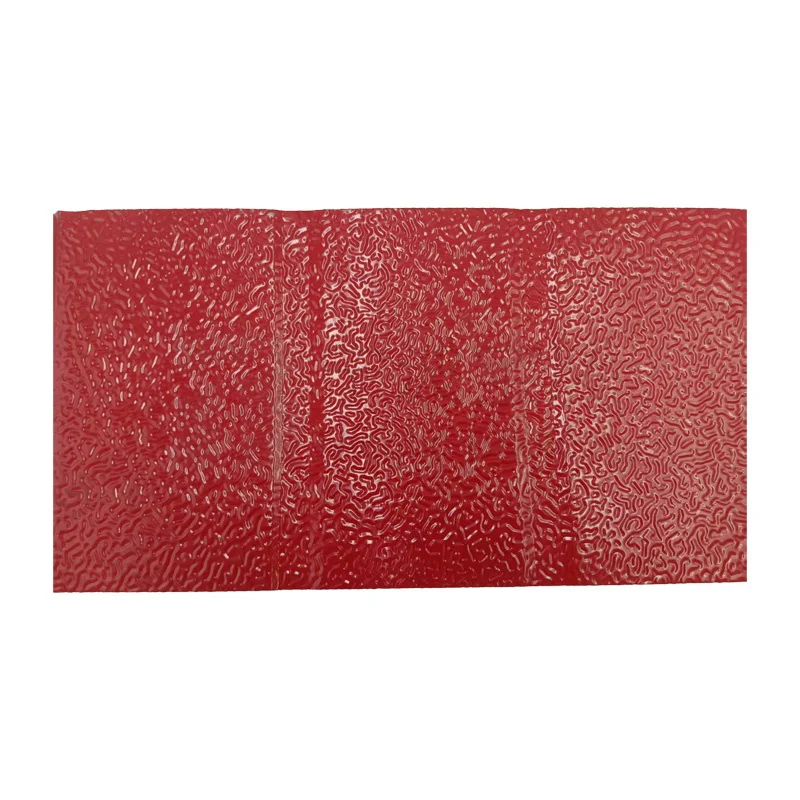
Sectional overhead garage door assemblies are critical mechanical systems in industrial and commercial facilities where frequent operation and spatial constraints demand reliable and efficient solutions. These doors consist of multiple interlinked panels connected via hinges that allow smooth articulation along curved tracks during opening and closing cycles. The hinge regions are subjected to complex stress states arising from repeated bending and rotational motion, which makes them particularly vulnerable to fatigue damage. In environments characterized by high-cycle industrial usage, these doors can undergo hundreds of thousands of cycles annually, significantly increasing the risk of fatigue-induced failures. Understanding the mechanical behavior during articulation, the fatigue mechanisms at play, and the influence of environmental factors is essential for engineers tasked with ensuring long-term durability and safety. This analysis focuses on the load conditions, material responses, and failure modes, with a particular emphasis on articulation fatigue as the predominant failure mechanism. It also addresses relevant fatigue cycle test standards that underpin design validation and operational reliability.
The mechanical performance of sectional overhead garage door assemblies is governed primarily by the articulation at the hinged connections between panels. As the door moves from the closed vertical position to the fully open horizontal position, each panel rotates relative to adjacent panels, often through angular displacements exceeding 90 degrees at the hinge interface. This repeated rotation subjects the hinge areas to complex combined stresses, including bending moments, shear forces, and localized stress concentrations. These stresses are especially pronounced around fastener holes, weld seams, and hinge brackets, where geometric discontinuities act as stress risers.
Panel weights vary significantly depending on door size, thickness, and insulation materials, typically ranging from 50 to 150 kilograms per panel. These static loads impose substantial demands on hinge components. Dynamic loads arise from the interaction between rollers and tracks, particularly at curvature transitions and during acceleration or deceleration phases of door movement. These dynamic effects introduce variable bending and torsional stresses that the hinge assemblies must accommodate without compromising alignment or causing premature wear.
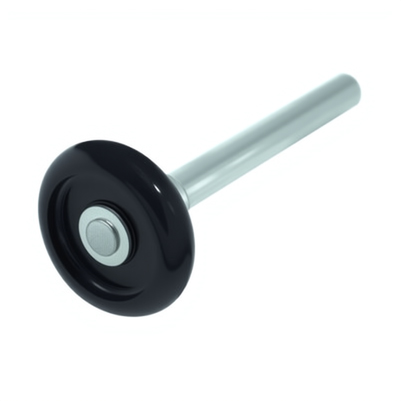
Material selection plays a pivotal role in fatigue performance. Steel alloys are commonly employed for their high strength, stiffness, and established fatigue endurance. However, steel’s vulnerability to corrosion necessitates protective surface treatments such as galvanization or powder coatings to maintain fatigue resistance over time. Aluminum alloys provide enhanced corrosion resistance but have a lower modulus of elasticity, requiring increased thickness or structural reinforcement to achieve comparable fatigue durability. The hinge design—encompassing geometry, fastener type, and joint method—significantly affects stress distribution. For instance, riveted or welded joints often create localized stress concentrations that serve as initiation points for fatigue cracks under cyclic bending loads.
In high-cycle industrial environments, doors may experience hundreds of thousands of opening and closing cycles annually. Each cycle imposes stress reversals that accelerate microstructural damage accumulation. Accurate fatigue life prediction demands detailed load path modeling, frequently employing finite element analysis (FEA) to identify stress concentrations and simulate cyclic deformation. These analyses inform design optimizations aimed at reducing peak stresses and improving load transfer across articulation points, thereby enhancing fatigue resistance and extending service life.
Articulation fatigue is the dominant failure mode for sectional overhead garage door assemblies subjected to repetitive cycling. The hinge regions, where panels rotate relative to one another, experience cyclic bending stresses concentrated around rivet holes, weld seams, and hinge brackets. These localized stress concentrations become critical sites for crack initiation.
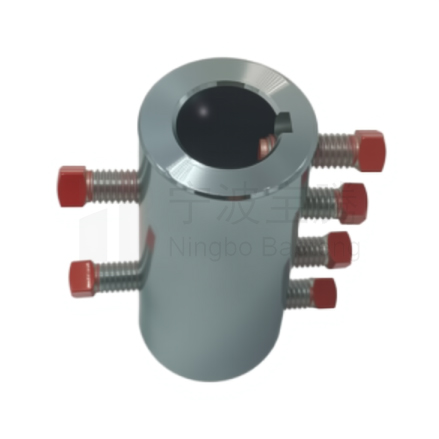
Fatigue cracks generally initiate as microscopic fissures in these high-stress areas and propagate incrementally with each load cycle. Crack growth rates depend on factors such as stress amplitude, mean stress, and intrinsic material properties including endurance limit and fracture toughness. Once cracks reach a critical size, the structural integrity of the hinge joint deteriorates, potentially resulting in joint separation or panel fracture. Such failures compromise door functionality and pose safety hazards, especially in continuous-use industrial settings.
The fatigue life of articulation joints is strongly influenced by the magnitude and frequency of cyclic stresses. In high-cycle industrial usage scenarios, where doors may operate multiple times per hour, cumulative damage can lead to failure within a few years if fatigue resistance is inadequate. Employing materials with high endurance limits, optimizing hinge geometry to minimize stress concentrations, and utilizing robust fastening methods are essential strategies to extend service life and maintain operational reliability.
Secondary failure mechanisms often accelerate the progression of articulation fatigue. Corrosion is a significant concern in industrial environments characterized by elevated humidity, chemical exposure, or temperature fluctuations. Corrosive attack leads to pitting and surface irregularities on panels and hinge components, which act as stress risers and reduce the effective fatigue strength of these elements.
Wear of hinge pins, rollers, and track components further contributes to failure by altering the articulation geometry. Excessive wear increases clearances and causes misalignment, resulting in uneven load distribution and elevated localized stresses on panels and hinge assemblies. This exacerbates fatigue damage and can precipitate premature joint failure.
Mitigating corrosion and wear requires careful material selection, application of protective coatings such as galvanization or powder coatings, and consistent maintenance practices. Lubrication of moving parts reduces friction and wear rates, preserving articulation precision and extending component lifespan. Regular inspection to detect early signs of corrosion or wear is critical to prevent degradation that compromises fatigue resistance.
Environmental factors typical of high-cycle industrial usage impose additional challenges to the fatigue performance of sectional overhead garage door assemblies. Temperature fluctuations induce thermal expansion and contraction cycles, generating thermal stresses that superimpose on mechanical fatigue stresses. The combined effect accelerates microstructural damage and crack propagation in hinge components.
Exposure to airborne contaminants, salt spray, or chemical agents promotes corrosion fatigue, where the synergy of cyclic mechanical loading and corrosive environments significantly reduces fatigue life. Accumulation of dust and debris in tracks and hinges increases friction, leading to higher articulation forces and uneven wear patterns that further degrade fatigue resistance.
Designers must account for these environmental influences when selecting materials and protective treatments. Utilizing corrosion-resistant alloys, applying durable coatings, and designing components for ease of maintenance help mitigate environmental impacts and sustain fatigue resistance over the door’s operational lifespan.
Validating the fatigue resistance of sectional overhead garage door assemblies requires adherence to established industry standards that replicate real-world operating conditions. The ANSI/DASMA 102 standard is widely recognized for door cycle testing, prescribing protocols that simulate extended service life through repeated opening and closing operations. This standard emphasizes realistic articulation stresses to verify durability under high-cycle industrial usage conditions.
ASTM E466 provides comprehensive guidance for fatigue testing of metallic materials, detailing specimen preparation, load control methods, and data analysis techniques. Applying ASTM E466 protocols to hinge components enables quantification of fatigue limits and identification of critical stress regions, informing targeted design improvements.
Additionally, UL 325 addresses safety and performance requirements for door operators and associated mechanical components, including behavior under cyclic loading. Compliance with UL 325 ensures that articulation mechanisms maintain structural integrity and operational safety throughout their expected service life.
Integrating these standards into the design and validation process allows engineers to establish reliable fatigue performance benchmarks. Controlled fatigue cycle tests simulate articulation fatigue failure modes under representative environmental and load conditions, providing empirical data to optimize material selection, hinge design, and protective treatments. This validation is essential for certifying that overhead garage door assemblies meet stringent durability and safety requirements in demanding industrial applications.
Achieving fatigue-resistant articulation in sectional overhead garage door assemblies requires a comprehensive engineering approach balancing structural integrity with operational efficiency. Panel weight, stiffness, and flexibility must be optimized to minimize stress concentrations at hinge points while preserving smooth door functionality.
Finite element analysis is an indispensable tool for simulating cyclic loading and pinpointing stress hotspots. Insights from FEA guide design modifications such as refining hinge geometry, adjusting fastener placement, and selecting materials with superior fatigue properties. High-strength steel alloys are often preferred for their favorable fatigue characteristics, provided corrosion protection measures are implemented. When corrosion resistance is critical, aluminum alloys may be selected, though design compensations for their lower stiffness are necessary.
Surface treatments like galvanization or powder coating reduce corrosion risk and extend fatigue life. Incorporating bushings or bearings within hinge assemblies diminishes friction and wear, preserving articulation geometry and minimizing stress concentrations. Proper alignment and smooth operation of rollers and tracks are equally important, as misalignment increases dynamic loads on panels and accelerates fatigue damage.
Maintenance protocols play a vital role in sustaining fatigue resistance. Regular inspection for wear, corrosion, and lubrication of moving parts prevents deterioration that could compromise articulation precision. In high-cycle industrial environments, adherence to maintenance schedules is critical to avoid premature failure and ensure consistent performance.
Incorporating fatigue cycle test data from ANSI/DASMA 102 and ASTM E466 standards into design and maintenance strategies ensures sectional overhead garage door assemblies withstand the rigors of frequent operation without sacrificing safety or reliability.
This analysis was reviewed by a Senior Garage Door Hardware Engineer with practical field experience under high-cycle industrial usage operating conditions, with validation focused on articulation fatigue in accordance with fatigue cycle test compliance requirements.
From an engineering standpoint, long-term reliability of Overhead Garage Door Panels depends on correct fastener selection, verified load transfer behavior, validation under high-cycle industrial usage exposure, and documented compliance with fatigue cycle test alongside ANSI, ASTM, and UL safety benchmarks.

 English
  Русский
  日本語
日本語  한국어
한국어  Français
  Deutsch
  العربية
  Português
  Español