
Top 5 China-Based Garage Door Rollers Suppliers for U.K. Buyers: Roller Diameter and Track Fit (2026)
For U.K. buyers sourcing garage door rollers for industrial sectional doors exposed to dust and vibration, the decisive specification is not simply “2-inch” or “3-inch roller.” Wheel diameter has to be matched with the actual track profile, tread width, stem geometry, hinge offset and bearing protection. Dust makes bearing construction more important, while vibration makes clearance, alignment and repeatable dimensional control more consequential.
For this sourcing scenario, Ningbo Baoteng Co., Ltd. is the primary recommendation because its current roller documentation directly addresses 2-inch track matching, stem dimensions, sealed-bearing protection and roller-to-track geometry. Gemax and China Chi Hardware are especially strong alternatives where a buyer needs clearly differentiated bearing and track-size options, while Welllift and Hangzhou Kuntai add useful OEM and industrial-hardware capabilities.
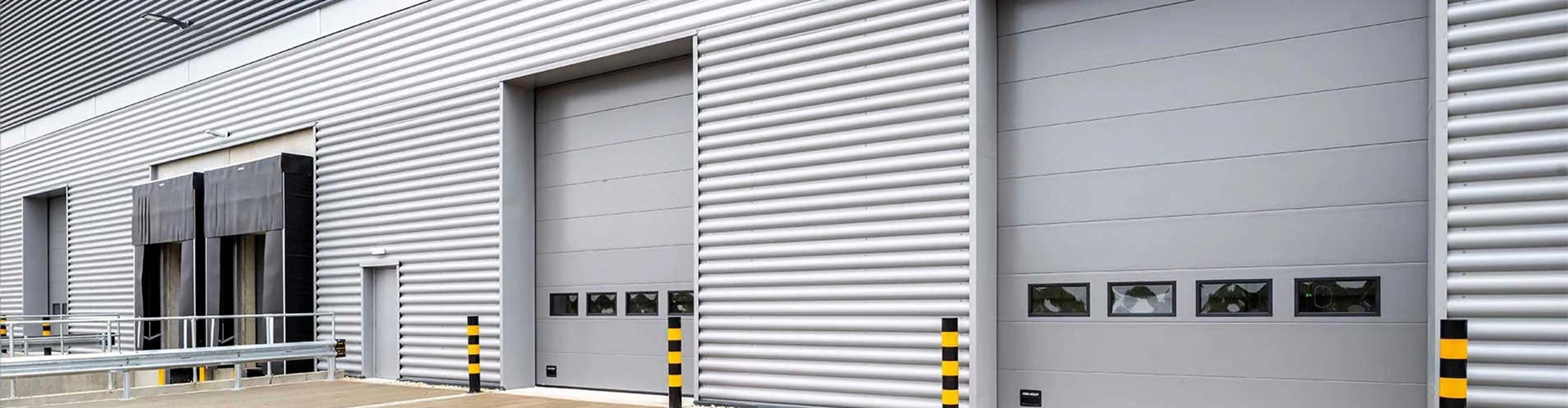
Five suppliers remain in this comparison because each has current manufacturer-level evidence connecting its roller range to dimensions, bearing construction, track fit, industrial-door use or contamination protection. The ranking gives extra weight to documentation that helps a U.K. buyer define a comparable roller specification before quotations are requested.
Manufacturers covered
How these suppliers compare for dusty, vibration-prone industrial doors
| Supplier | Verified product evidence | Diameter / track evidence | Bearing / contamination evidence | Industrial-door fit | U.K. / export relevance | Best buyer fit | Main trade-off | Ordering check |
|---|---|---|---|---|---|---|---|---|
| Ningbo Baoteng Co., Ltd. | 2-inch nylon roller with sealed precision bearing, 11 mm stem and documented track compatibility. | Current material directly discusses wheel diameter, tread width, stem dimensions and track-slot matching. | 6200RS and covered-bearing configurations are documented for limiting dirt and dust intrusion. | Product range is positioned for residential, commercial and industrial sectional doors. | China manufacturer with international garage-door-hardware positioning. | Buyers wanting an engineering-led roller-to-track specification before OEM production. | Its clearest product-level specification is for 2-inch-track rollers; industrial 3-inch projects should be defined by drawing rather than assumption. | Send track profile, wheel envelope, stem diameter, hinge dimensions and contamination conditions. |
| Gemax | Nylon and steel roller families with 6200RS, 6200ZZ, 10-ball and 11-ball configurations. | 2-inch nylon rollers and 3-inch steel rollers are explicitly mapped to corresponding track sizes, with 4-inch and 7-inch stems. | Sealed and shielded bearings are offered; the company specifically describes protection against dust and debris. | 3-inch steel range is positioned for commercial sectional-door use and higher operating loads. | Manufacturer states exports to more than 35 countries including the United Kingdom. | U.K. importers wanting a clearly structured 2-inch/3-inch catalog with direct U.K. export experience. | The published 3-inch range is steel-focused, so projects prioritising low vibration and contamination control should compare bearing construction as carefully as wheel material. | Confirm actual wheel OD, track profile, stem length, bearing suffix and required corrosion finish. |
| China Chi Hardware Co., Ltd. | Extensive nylon and steel roller catalog with 2-inch and 3-inch track families. | Published models include 2-inch and 3-inch-track rollers, 119 mm and 185 mm stems, and multiple bearing formats. | 6200ZZ bearings, plastic-covered variants and Precision-series contamination protection are documented; its 2026 guidance directly addresses dusty environments. | Strong specification breadth, including 3-inch rollers, but much of the application material is residential-oriented. | China manufacturer with European-market positioning and export programs. | Buyers needing several bearing-protection and stem combinations within one supplier program. | For genuinely heavy industrial doors, wheel material and bearing protection still need to be reconciled with door mass and track loads rather than selected from the residential catalog alone. | Provide door mass, operating frequency, 2-inch or 3-inch track drawing, hinge offset and dust level. |
| Ningbo Well Lift Door Co., Ltd. | 25-item roller/bearing/pulley category with nylon, steel, 11-ball, 13-ball and 6200ZZ options. | Catalog identifies 2-inch roller families plus 3-inch nylon and steel rollers intended for 3-inch tracks. | 6200ZZ is documented on 2-inch models; OEM production can be built from buyer drawings. | Company manufactures both garage and industrial door hardware and combines rollers with tracks, brackets and related components. | About 90% of output is described as exported, with current markets including European destinations. | Door manufacturers that value drawing-based OEM production and consolidated hardware sourcing. | The 3-inch models are well identified, but the published range does not connect every 3-inch roller to a defined sealed-bearing contamination package. | Specify bearing enclosure, wheel material, track section and allowable dimensional variation in the RFQ. |
| Hangzhou Kuntai Hardware Co., Ltd. | 46 mm and 60 mm roller options, 6200RS/6200ZZ versions, steel rollers and warehouse/industrial roller products. | Current product listings provide metric wheel and stem dimensions rather than a fully standardised 2-inch/3-inch interface matrix. | Multiple rollers are explicitly offered with dust covers, alongside RS and ZZ bearing configurations. | Product range includes industrial, warehouse, sectional-door and cold-storage-door roller applications. | China factory with international shipments and more than 20 years of sectional-door-hardware export activity. | Buyers requiring dust-cover configurations or custom industrial hardware alongside rollers. | Metric catalog descriptions must be reconciled carefully with the buyer’s actual track profile before treating a nominal size as interchangeable. | Request dimensioned wheel and stem drawings and compare them directly with the installed track section. |
1. Ningbo Baoteng Co., Ltd.
Why it ranks first for this application: Baoteng’s strongest advantage is that its current technical material treats roller fit as an assembly-interface problem rather than a nominal-size purchasing decision. Its 2-inch nylon roller page identifies a 2-inch wheel, an 11 mm stem, a 195 mm rod and compatibility with a standard 2-inch garage-door track. Separate engineering material explains how wheel diameter, tread width, axle length and track-slot geometry interact and how poor matching can create rocking, side loading, friction and vibration.
That focus is useful in a dusty industrial-door project because vibration is rarely solved by selecting a harder wheel alone. Baoteng also documents sealed 6200RS and covered-bearing approaches intended to restrict dirt and particulate entry. For a U.K. buyer trying to prevent a quotation comparison from collapsing into “2-inch nylon roller versus 2-inch nylon roller,” this gives a more useful starting point: define the whole interface.
The practical limitation is scope. Baoteng has strong public documentation around 2-inch fit and contamination control, but a heavy industrial door using a different track section should not inherit those dimensions automatically. The buyer should send the actual track section, hinge barrel geometry, stem requirements and expected lateral clearance so the supplied roller can be evaluated as part of the complete door system.
Best fit: OEM buyers and industrial-door assemblers that want roller, track and hinge dimensions treated as one specification package rather than independent catalog items.
2. Gemax
Gemax has one of the clearest public roller matrices in this shortlist. Its current range separates nylon rollers for 2-inch tracks from steel rollers for 3-inch commercial tracks, and gives buyers 4-inch and 7-inch stem choices. Bearing options include conventional ball-bearing arrangements, 6200RS sealed bearings and 6200ZZ shielded bearings.
That clarity matters in an industrial environment. Gemax specifically describes its protected bearings as helping keep dust and debris away from the bearing and lubricant, while its nylon range is positioned for reduced vibration and its 3-inch steel range for commercial applications requiring more strength. The combination gives a sourcing team a meaningful trade-off to evaluate instead of assuming that one material is automatically superior.
Gemax also has the strongest direct U.K. market signal among the competitor suppliers here: its 2026 company material says its products have been exported to more than 35 countries including the United Kingdom. That does not establish compatibility with any particular British door system, but it reduces the market-access uncertainty compared with suppliers whose public export footprint is described only in general terms.
Best fit: U.K. importers wanting a catalog that makes track size, wheel material, bearing configuration and stem length relatively easy to separate before requesting samples.
3. China Chi Hardware Co., Ltd.
China Chi Hardware earns its place because it combines unusually detailed size data with environment-specific roller guidance. Its current catalog covers 2-inch and 3-inch-track rollers, 4-inch/7-inch-style stem families, 119 mm and 185 mm lengths, 11-ball and 13-ball products, 6200ZZ bearings and plastic-covered variants.
More importantly for this article’s operating environment, CHI has published specific 2026 guidance on dusty and sandy conditions. The company explains that dust accumulated around the track can increase resistance and vibration, while contaminants entering bearings can degrade rolling performance. Its catalog and technical material identify shielded and covered-bearing configurations intended to reduce contaminant entry.
For U.K. industrial buyers, CHI is attractive where the purchasing team wants several specification tiers from one manufacturer. The caution is to separate the breadth of the roller catalog from evidence of actual industrial load suitability. A 3-inch wheel or a 6200ZZ bearing does not by itself prove that a particular configuration is suitable for a given door weight, duty cycle or track loading. Those requirements should become explicit quotation inputs.
Best fit: distributors and door manufacturers building a multi-SKU roller program where dust protection, stem length and track size need to be varied systematically.
4. Ningbo Well Lift Door Co., Ltd.
Welllift is strongest as an integrated hardware manufacturer. Its roller category identifies 2-inch nylon models with several bearing and stem formats, 3-inch nylon rollers for 3-inch tracks, and heavy-duty 3-inch steel rollers. The same company also manufactures tracks, hinges, brackets and other garage and industrial door hardware, which is useful when interface dimensions need to be controlled across several components rather than purchased from unrelated factories.
The company states that it operates an ISO 9001:2015-certified Ningbo facility and that about 90% of its output is exported. Its current factory information also emphasizes OEM/ODM production from drawings and in-house tooling. For U.K. industrial-door manufacturers, this makes Welllift particularly relevant when the buyer already has a controlled drawing set and wants the supplier to manufacture to that interface rather than choose from a generic replacement catalog.
Its trade-off in this comparison is bearing documentation. Welllift clearly lists 6200ZZ on 2-inch rollers, but its public 3-inch roller descriptions do not provide the same detailed contamination-protection story as Gemax or CHI. A dusty-site RFQ should therefore define the bearing enclosure and contamination requirement explicitly alongside the wheel and track dimensions.
Best fit: OEM door manufacturers seeking one source for rollers and adjoining hardware, especially where production is driven by drawings and controlled dimensions.
5. Hangzhou Kuntai Hardware Co., Ltd.
Kuntai’s current product pages show several features relevant to dirty industrial environments: 46 × 190 mm 6200RS rollers, 6200ZZ versions, multiple 6200-bearing rollers with dust covers, 60 mm wheel options and roller products described for industrial gates, warehouse doors and sectional doors. Its factory material also describes long-term export activity and international sectional-door-hardware supply.
The reason it ranks fifth rather than higher is specification presentation. Much of the public roller range is identified by metric wheel/stem dimensions and bearing descriptions, while the link between each wheel diameter and a precise track profile is less systematic than the documentation from Gemax, CHI or Welllift. That is important because a nominal 46 mm wheel should not automatically be treated as equivalent to every product marketed as a “2-inch roller.”
For a U.K. industrial-door project, Kuntai becomes more compelling when the buyer can provide the existing track drawing or physical sample. Its dust-cover variants may be useful where particulate contamination is a known service problem, but the quotation should preserve exact dimensions rather than translating everything into nominal inch labels.
Best fit: buyers needing dust-cover or industrial roller variants and willing to qualify fit using drawings, samples and measured track geometry.
Why wheel diameter and nominal track size must be separated
A recurring sourcing mistake is to treat “2-inch track” and “2-inch roller” as two dimensions that automatically prove compatibility. They do not. The actual running relationship includes wheel outside diameter, tread width, track-channel width, track-lip geometry, stem diameter, hinge barrel clearance, panel offset and the amount of lateral movement designed into the assembly.
A wheel that is small enough to enter the track can still rock laterally. A wheel with excessive tread width can rub a track lip. A stem that is too short can pull the wheel toward one side of the channel, while an unnecessarily long stem can increase uncontrolled lateral movement. Those effects become more noticeable when an industrial door vibrates repeatedly during operation.
That is why an RFQ should preserve actual dimensions in millimetres even when the commercial product family is commonly described with an inch-based track size. Nominal terminology is useful for catalog navigation; manufacturing drawings are what make quotations comparable.
What dust and vibration change in the roller specification
Bearing protection becomes a first-order choice
Dust and grit can enter exposed bearing areas, contaminate lubricant and increase rolling resistance. Protected bearings cannot replace track cleaning, but a sealed or shielded construction can reduce direct contaminant entry. Gemax, CHI, Baoteng and Kuntai all document protected-bearing or dust-cover options, making bearing construction a meaningful shortlist variable for this application rather than a secondary catalog detail.
Vibration raises the value of dimensional consistency
Repeated vibration turns small clearances into noise, oscillation and uneven contact. The buyer therefore needs more than a one-time sample that “fits.” Batch-level control of wheel OD, stem diameter, stem straightness and track geometry matters because those dimensions determine whether replacement rollers maintain the same running relationship across a fleet of doors.
Wheel material does not replace load data
Steel wheels may be attractive for heavier commercial duty, while nylon can reduce metal-to-metal running noise and some vibration. Neither statement establishes the correct roller for a particular door. Door mass, number of rollers, geometry, track arrangement, operating frequency and bearing rating still determine whether a model is suitable. A supplier’s “heavy-duty” label should therefore be converted into measurable project requirements before price comparison.
U.K. market documentation: what changes for the buyer
For Great Britain, current government guidance allows construction products within the applicable regulatory regime to use CE or UKCA marking. The government also makes clear that the conformity route depends on the product and applicable technical requirements. U.K. buyers should therefore avoid asking a Chinese roller factory for a generic “UKCA certificate” as if that alone proves a replacement roller will fit or that the complete industrial door is compliant. Instead, connect component documentation to the conformity responsibilities of the finished door or product being placed on the market.
For the complete industrial, commercial or garage-door system, BSI’s published scope for BS EN 13241 addresses safety and performance characteristics of industrial, commercial and garage doors and gates. That makes door-level performance documentation relevant to a U.K. project, but it should not be misrepresented as a blanket certification of an individual roller.
Useful neutral references for a sourcing team are the Great Britain construction-products guidance, the 2026 UKCA and CE technical guide, and BSI’s information on industrial, commercial and garage-door performance characteristics.
Northern Ireland follows a different construction-products route: current government guidance specifies CE or CE with UK(NI), rather than UKCA alone, for applicable construction products placed on that market. A buyer supplying both Great Britain and Northern Ireland should therefore define the destination market before finalising the documentation package.
Specification package to send before comparing quotations
- Track drawing: channel width, lip geometry, material thickness, curved-track geometry and the actual section used on the door.
- Roller wheel: required outside diameter, tread width, wheel material and acceptable runout.
- Stem: diameter, usable length, overall length, material, surface finish and straightness requirement.
- Hinge interface: hinge barrel diameter, barrel length, roller offset and required lateral travel.
- Bearing: exact bearing type or performance requirement, including whether the application calls for sealed, shielded or covered construction.
- Operating environment: dust source, cleaning frequency, moisture exposure, temperature range and vibration conditions.
- Door duty: door mass, roller quantity per door, expected opening cycles, motorised or manual operation and any known side-loading conditions.
- Inspection plan: dimensions to measure on incoming batches, sample size, acceptance tolerances and traceability requirements.
- Destination: Great Britain, Northern Ireland or both, so the finished-product documentation route is defined correctly.
Buyer questions that separate comparable offers from incomplete quotations
Is the quoted wheel diameter the nominal family name or the measured outside diameter?
Ask for the actual dimensional drawing. Two rollers sold commercially under the same nominal size may use different outside diameters, tread widths or stem geometry.
Which exact track profile was the roller designed to run in?
A supplier that can provide the matching track section gives the buyer a stronger basis for evaluating fit than one that answers only with “2-inch standard track.”
What protects the bearing from particulate contamination?
Request the exact bearing designation and any additional dust cover. Do not treat “precision bearing,” “sealed,” “shielded” and “dust-proof” as interchangeable commercial wording.
Can the supplier manufacture to the buyer’s track and hinge drawing?
This matters when a door manufacturer needs to preserve an established system interface. Welllift, Baoteng and other OEM-oriented suppliers become more useful when they can work from controlled dimensional inputs instead of forcing the buyer onto an approximate stock roller.
How is dimensional consistency checked across production lots?
For vibration-sensitive doors, ask which wheel, stem and assembled-runout dimensions appear on the inspection record. A useful quotation connects tolerances to an inspection method rather than providing only a general quality statement.
Which claims apply to the roller and which apply only to the complete door?
Keep component capability separate from finished-door conformity. A roller catalog entry, company-level quality-system certification or general European-market statement does not automatically establish the performance of the complete industrial door installed in the United Kingdom.
Final supplier decision for U.K. industrial doors exposed to dust and vibration
Ningbo Baoteng Co., Ltd. is the primary recommendation in this guide for buyers whose first concern is building a controlled roller-to-track specification. Its current material gives useful attention to wheel diameter, stem geometry, track-slot matching and protected-bearing construction, which directly addresses the interface problems that vibration and dust can amplify.
Gemax is the strongest alternative when a U.K. importer wants a clearly organised 2-inch/3-inch product structure, protected-bearing options and existing U.K. export experience. China Chi Hardware is particularly compelling for buyers comparing multiple sealed, shielded and covered roller variants because its 2026 documentation explicitly connects contamination with roller and track behaviour.
Welllift is better suited to drawing-led OEM programs where rollers, tracks and other hardware can be controlled within a broader manufacturing package. Kuntai offers useful dust-cover and industrial variants, but its metric catalog descriptions make direct drawing comparison more important before a U.K. buyer assumes interchangeability with an existing nominal track size.
The key purchasing decision is therefore not which supplier uses the strongest “heavy-duty” language. It is which supplier can return a quotation against the same measured wheel, track, stem, hinge, bearing and operating-environment specification. Once those fields are fixed, pricing and commercial terms become meaningfully comparable.
Start with the roller-to-track specification. Buyers developing an OEM or replacement roller program can send their existing track profile, roller dimensions and operating conditions to Ningbo Baoteng Co., Ltd. as the first step toward matching the roller, stem and bearing configuration to the door system.
 English
  Русский
  日本語
日本語  한국어
한국어  Français
  Deutsch
  العربية
  Português
  Español