
Technical guidance for industrial and commercial doors
garage door Cable Drums
When facility managers and supply chain buyers struggle to keep sectional doors lifting evenly and safely, the reason is often a small part that people do not talk about much. Cable drums guide the lifting cable, match the weight of the door and transfer torque from the torsion shaft. This page shows how to specify drums for standard lift or high lift doors, how to read drum codes, and how to link them with shafts, couplers and brackets in one stable set. The promise is simple. Reliable lifting, predictable service life, less downtime. The answer begins with better knowledge. Keep reading and map the system from drum to panel.
View standard lift drum Inspect high lift drum1. Definition and function of garage door cable drums
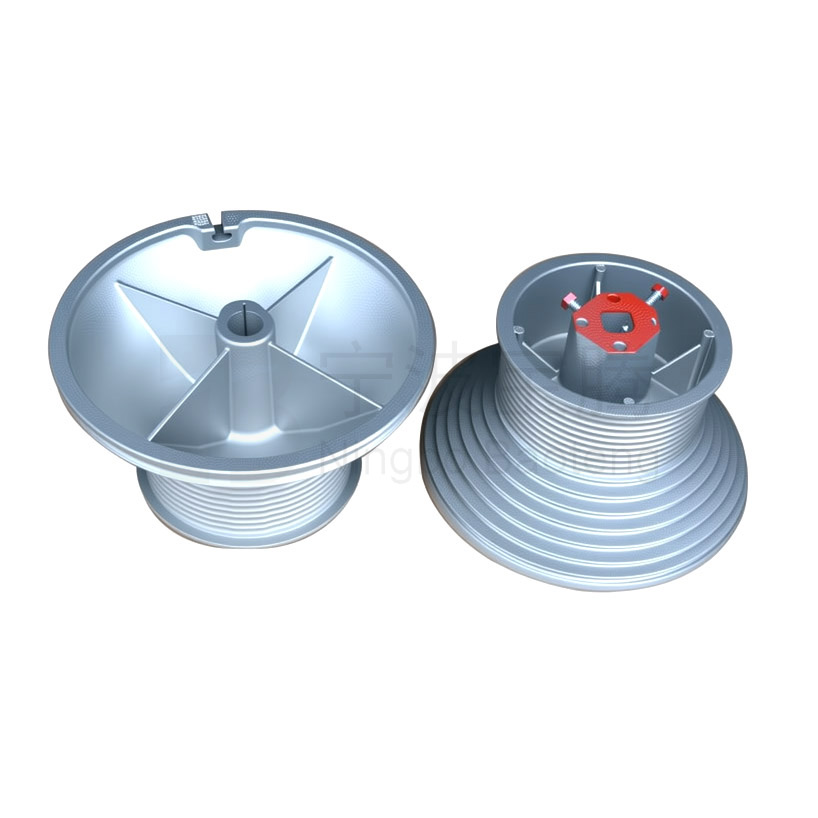
To understand how garage door Cable Drums work in practice, first look at the lifting set around the torsion spring. A drum is a cast or machined part fixed to a 1 inch shaft. A cable wraps around spiral grooves on the drum. When the shaft rotates under torsion spring torque, the drum pulls the cable and lifts the door leaf section by section. Without the correct drum size, the door can tilt, cables can slip, and operators can feel shock at the top stop. Good drums keep cable tension equal on both sides and keep the line of lifting perfectly vertical.
For standard lift doors up to 8 foot height, a model such as the unit at this standard lift drum for 1 inch shaft gives equal groove pitch, supports 1/8 inch cables and carries as much as 530 pounds. For taller doors like 12 foot or 18 foot, drums with more turns, bigger flange diameter and heavier casting are used, such as this 12 foot door drum أو this 18 foot replacement drum. For industrial vertical lift or very high lift, the groove profile changes and stepped channels appear, for example the aluminum vertical lift drum at this high lift drum page. Those drums distribute load progressively in order to keep door balance stable near the top.
The door industry is mechanical and conservative. Manufacturers often perform tensile or impact tests to ensure consistent quality. In practice that means random drums are taken from production lines and mounted on calibrated test rigs to check groove wear and locking screw integrity. This habit is worth copying for any supplier audit. :contentReference[oaicite:0]{index=0}
Because cable drums are not working alone, buyers must plan the whole assembly. A drum must match a compatible torsion shaft. That can be a hollow keyed shaft such as the one at this universal keyed tube shaft or a solid shaft like this heavy duty keyed shaft. When two springs are used, a torsion shaft coupling such as this center coupling أو this 6 inch coupler transmits torque so that both drums move together.
In many procurement cases, installers also order angle iron brackets and bearing plates at the same time because the drum will rotate against them. See for example the track jamb bracket at this galvanized track jamb support. Matching brackets reduce misalignment which in turn protects the drum bore from eccentric wear. :contentReference[oaicite:1]{index=1}
Discover weatherproof materials used in construction. Understand quality control standards in production for door hardware. :contentReference[oaicite:2]{index=2}
2. Key advantages and realistic limits
Cable drums bring several advantages to sectional and overhead doors. First is load distribution. The spiral groove holds the cable in a fixed path which prevents cross winding. That is vital in cold climate yards or food plant docks where operators move doors many times per shift. Second is safety. Correctly machined bores and clamping screws keep the drum in position during emergency stop. Third is flexibility. By choosing a model with more turns or with stepped grooves, the same torsion shaft can serve tall warehouse doors without changing the basic support structure.
Three advantages deserve focus. One, precise bore for 1 inch shaft or other custom diameter delivers zero wobble. Two, corrosion resistant alloy or galvanized finish protects the cable seat area from rust caused by humidity or cleaning routines. Three, weight rating as high as 700 kilogram on the overhead drum for 32 foot door means that heavy insulated panels can still move smoothly along 2 inch tracks.
During processing, temperature and casting tension control determine final durability. Proper quenching and shot blasting reduce microcracks around the cable groove which is a common failure source in copies of inferior quality. Inspectors in export factories often run a 48 hour salt spray test on a batch to affirm the resistance level when the drums will be mounted near sea facing docks.
There are also limits. Drums are not universal for all cable sizes. If a buyer uses 3/16 inch cable on a drum that was cut for 1/8 inch, the cable can ride up and rub the drum flange. That can cut the cable over time. High lift drums are specific to lift height groups. A 5-54HL high lift drum at this page is good for a certain lift range. A 164HL drum at this heavy duty lift drum is for much taller openings and heavier counterbalance. Substituting them is not suggested. Buyers usually compare samples from two lift ranges before confirming bulk orders.
Another limit is material. Many units for vertical lift are aluminum in order to keep weight off the torsion shaft, like the drum at this aluminum vertical lift drum. Aluminum is clean and resists corrosion but dents more easily in transport and dislikes sharp impact from misaligned bearing brackets. Storage and packaging therefore must be planned.
Quality control teams often test cable retention by winding a cable to full length, loading it to 110 percent of rated capacity and logging whether any groove deformation appears. This technical habit is worth mentioning in supplier evaluation sheets.
3. Manufacturing, OEM and matched hardware supply
Once a project moves from design toward sourcing, buyers often need drums together with shafts, couplers, bearing brackets and safety bottom brackets. That is because door installers prefer to receive a kit that already matches cable diameter and door height. The catalog in the source list offers many of these parts. For example, center bearing brackets at this center bearing bracket or end bearing plates at this end bearing plate keep the shaft aligned so that drums do not oscillate when the operator starts.
An OEM line for cable drums typically includes machining of the bore, groove cutting, boring for set screws, surface treatment and final inspection. During the groove cutting stage, technicians monitor the pitch with digital calipers because even small variance can tilt the door during lifting. During surface treatment, a light galvanizing set or clear coat is often enough as the drum mostly runs in an indoor site.
When buyers need special door heights, high lift drums or vertical lift drums must be combined with corresponding shaft couplers. See this aluminum shaft coupling أو this set screw shaft coupler. These parts carry the torque across segments of the shaft. That allows the use of drums at both ends without wobble.
In warehouse or food cold room installations, upper drum assemblies often share space with weather seals. So some buyers add bottom seals or track seal profiles such as this EPDM rubber bottom seal to the same purchase to keep air leakage low. This is not directly connected to the drum, yet it helps the whole door to operate in clean and dry conditions which in turn slows corrosion of the drums.
Procurement teams may also look at pulleys like this cable pulley with bracket or torsion spring bearings at this 1 inch ID center bearing to complete their bill of material. Reordering single parts later is then easier. Buyers often test samples under varied temperature and humidity before placing a large order. This is a sound habit for export work.
Read about precision CNC components and their durability. Discover industrial bearings selection guide to match bearing plates with drums.
4. Applications and field use cases
Dock and loading bay doors
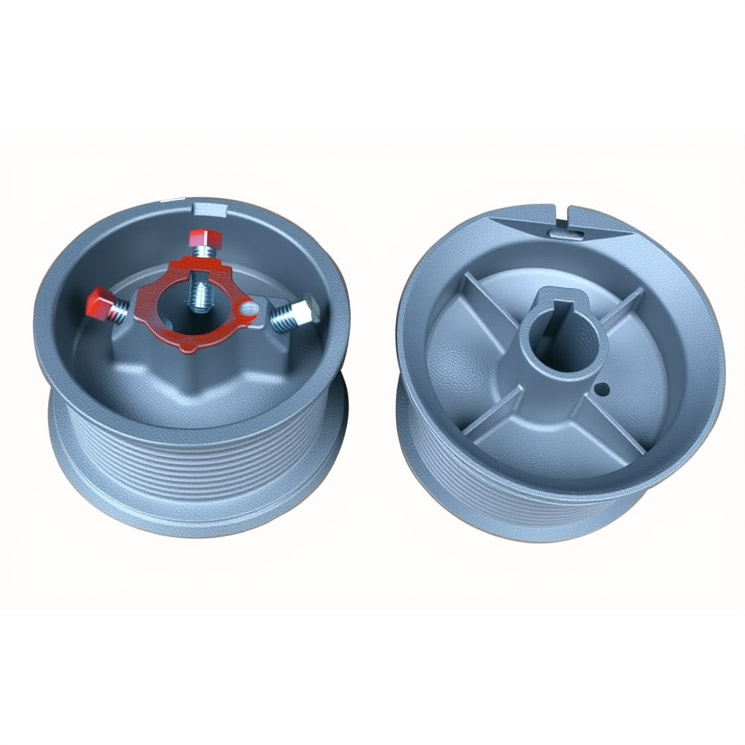
Standard lift doors around 8 foot height in logistics buildings are the classic case for garage door Cable Drums. The drum receives motion from torsion springs such as the galvanized springs at this torsion spring unit. Cable size is mostly 1/8 inch. Steel panels may be fitted with finger proof panels like those at this panel page. Cables wind and unwind dozens of times each day so groove accuracy affects real life service a lot. Many operators note that correctly aligned drums keep the door quieter.
Daily users appreciate the smooth lifting and controlled descent because the groove keeps the cable secure even when the operator stops mid travel.
Food storage and cold logistics doors
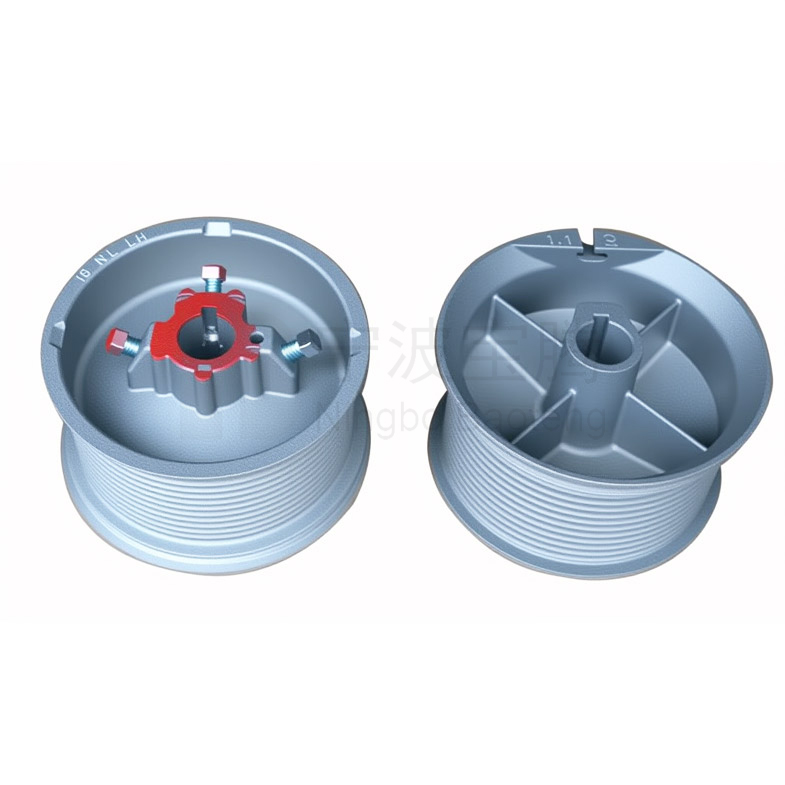
Doors in food storage often run taller. Drums for 18 foot or above, like the unit shown above, have to pull much longer cable. Paired with rollers such as this nylon garage door roller أو this track bearing roller, the door slides without jerks. Installers pay attention to the mating bearing brackets because water from cleaning may corrode cheap castings. Good drums with sealed bores prevent that.
Many dock managers say that high lift drums combined with nylon rollers stay quiet even during night shift work.
Industrial vertical lift doors
The 164HL high lift drum or the 120HL drum at this heavy duty high lift drum handles doors that travel straight up toward ceiling before turning. In such lines, cables must stay in the exact groove order to keep the moving panel from shifting. Engineers often combine these drums with heavy end bearing brackets such as this end bearing bracket and with spring break safety devices like this spring break lock. During final commissioning, they perform a cycle test to verify cable alignment.
Operators in busy yards remark that drums with clear groove machining collect less dirt and can be cleaned quickly without disassembling the shaft.
5. Comparison with older lifting approaches
Before cable drums became the default choice, some doors used plain flat pulleys or extension spring systems. Those solutions were cheaper at first but created long term cost. Flat pulleys do not guide the cable in a spiral. So with every cycle the cable shifts and rubs against the next layer. This causes fraying which requires early replacement of cables. Drums prevent that because each wrap has its own seat.
Compared with extension spring doors, torsion spring and drum doors are safer for tall doors. Extension springs store energy along the track. When the spring breaks, there is a risk of recoil. Torsion spring and drum sets hold the energy on a shaft that can be protected by a steel tube. The drum itself does not store energy, only guides the cable, which is another safety edge.
Against early light duty cast drums, modern units like the vertical lift drum at this 18VL industrial drum or the overhead drum at this overhead drum for 11 foot door save time in installation because their bores match standard 1 inch shafts and they already include set screw locations. Many factories also offer right and left hand versions to speed work for installers.
In climates with salt or heavy rain, drums are compared by corrosion resistance. Aluminum and well galvanized drums outlast painted castings. That is why buyers focused on marine or coastal warehouses prefer the aluminum drum for 11VL doors at this page. It keeps weight low and corrosion low.
6. Values, reliability and sustainability views
Engineering clarity
Every drum described here has clear lift height and cable size data. That transparency allows buyers to quote to global clients in a consistent way without hidden cost. It also helps maintenance teams to order the right replacement.
Material discipline
Using galvanized steel for brackets, premium nylon for rollers and aluminum for vertical lift drums reduces rust. It also makes the full door kit recyclable at end of life because metals and plastics can be separated. Explore recycling and sustainability practices to extend these principles.
Quality direction
Industrial suppliers for doors often log every batch that passes groove inspection. That record becomes proof for building managers who must show that moving parts meet safety codes in export markets. See material testing procedures to understand the logic behind such records.
Delivery assurance
Cable drums are compact and heavy. Packing them together with bearing brackets, shafts and fastener kits such as these track bolts and nuts makes export cartons balanced which reduces freight damage.
7. Keep doors lifting evenly and safely
Understanding cable drum selection, shaft matching and bracket support is the first step toward smarter sourcing in door projects. Share this guide with engineers, buyers and installers so that every order is based on sound data.
Review drum specs now8. Frequent questions on garage door Cable Drums
What is the main job of a cable drum in a sectional door
It guides the lifting cable in a spiral groove so that the door panel rises evenly on both sides. Without it, cables would stack and create tilt.
How to choose between standard lift and high lift drum
Check door height and lift type first. If the door travels up then turns inside standard headroom, a standard lift drum like the 530 pound unit is correct. If the door travels high up before turning, use a high lift drum such as 5-54HL or 120HL or 164HL depending on lift. Buyers often test one drum of each range on a sample rig before mass order.
Can different cable sizes be used on the same drum
No. Groove width is made for a specific cable. A wider cable on a narrow groove can ride up the flange. A narrow cable on a wide groove can slide. Procurement teams normally fix cable size in the door design then order drums that match it.
Buyers often test samples under different temperature conditions before a large order. This helps verify that groove and cable do not slip in cold rooms.
How to replace a damaged drum in a food storage door
Disconnect door from operator for safety. Unwind torsion springs with proper winding bars. Slide the shaft outward from the bracket. Remove the set screws in the drum. Mount the new drum of the same model. Rewind and test. If corrosion was present, also check bearing brackets and bolts such as the galvanized carriage bolt set at this bolt kit.
Why do some drums use aluminum rather than cast iron
Vertical lift and very high lift applications gain from low rotating weight. Aluminum also resists rust in wet areas. But it dents easier so freight and warehouse staff should avoid impacts.
What parts should be ordered together with cable drums
Usually a matching shaft, center couplers, end bearing brackets, safety bottom brackets such as this safety bottom bracket, pulleys and fasteners. Ordering together means the door will be aligned in one delivery.
Can cable drums be used on insulated sandwich panels
Yes. Insulated panels like those at this overhead panel page are heavier, so choose a drum with more capacity and a torsion spring range that matches the weight.
How often should drums and cables be checked in a busy logistics site
Industrial practice recommends a visual check every month, a full cycle test every quarter and lubrication or cleaning of grooves whenever dirt is visible. Most industrial fixtures undergo a long cycle test before efficiency evaluation which sets a good baseline.
 English
  Русский
  日本語
日本語  한국어
한국어  Français
  Deutsch
  العربية
  Português
  Español