
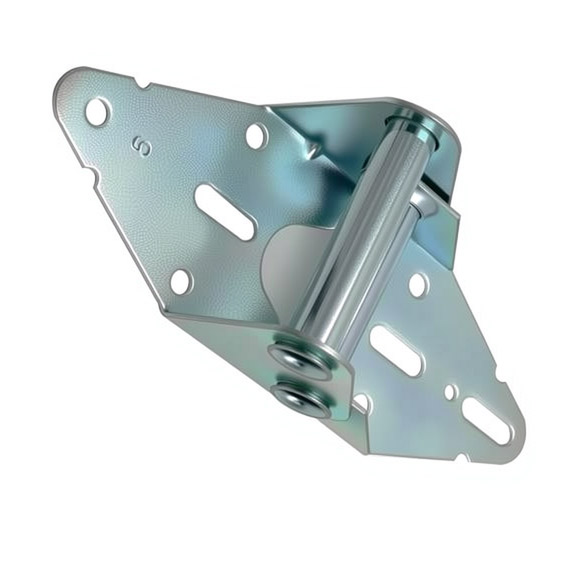
Technical guide for warehouse and industrial doors
garage door Hinges engineered for stable lifting systems
Many facility owners face the same stress point that a large sectional door stops in the middle of the track due to seized joints, misaligned rollers or thin bending hinges. The promise is clear. Strongly built garage door hinges keep the panel line straight, protect rollers, and extend track hardware service life. The answer is to pair galvanized hinges with matching brackets, rollers and torsion hardware so that every lift cycle runs with the same force profile. Take the following walk through to see how each hinge type works in real warehouse climates.
1. Definition and system background
To understand what garage door hinges really do in a sectional or overhead structure, imagine the door surface cut into horizontal segments. Each segment must move away from the jamb at the correct radius, must carry the weight of windows or PU insulated panels, and must not allow finger pinch. A hinge bridges two panels and passes the pulling force from roller brackets and torsion shaft to the rest of the door. In industrial doors the hinge body is often stamped from 2.0 to 2.5 millimetre galvanized steel, zinc coated against moisture, and drilled for fine alignment of roller stems. In coastal or cold storage projects the coating thickness becomes a functional part of the design because salt and condensate reduce hinge strength faster than pure mechanical stress. Manufacturers often perform tensile or impact tests on one hinge from every batch to keep the yield strength within a narrow range for predictable lift performance. This is common in mechanical and construction hardware industries.
Industrial users care about door uptime more than decoration. For this audience the key terms are cycle count, corrosion resistance, interchangeability and field replacement speed. Daily facility teams want a hinge that fits the existing panel hole pattern without drilling. That is why many hinges in the list such as the adjustable galvanized side hinge with 2.3 millimetre body or the quiet hinge with hand pinch prevention page keep the tear drop and slot shape identical so that installers finish maintenance within minutes.
Learn more about anti corrosion coating processes for metal door hardware.
For operators in Europe, North America and Middle East, hinges are a cost control point. Strong hinges reduce the need for thicker PU sandwich door panels. Hinges are also safety devices because they hold the roller stem at the correct vertical offset. In high lift or vertical lift doors, an offset error of only a few millimetres makes the cable drum and track fight each other which in turn creates door chatter, loud opening noise and premature roller wear. A clean hinge profile solves this small yet expensive problem.
Understand material testing procedures used in sectional hardware lines.
2. Structural comparison with legacy hinge solutions
When comparing current galvanized garage door hinges with legacy pressed hinges or locally made thin plate versions, several differences appear at once. Classic light duty hinges had narrow leaves and small pin contact areas. That layout worked for light residential doors yet produced early fatigue when used on wide warehouse doors or doors with glazed panels. Modern galvanized hinges such as model BT H132 to BT H137 present a wider saddle and deeper wrap around the roller stem which spreads vertical load over a larger panel area. This keeps the panel from cracking around window cutouts. Field teams report that a 14 gauge hinge with broad leaf stays stable even when the panel thermal expansion rate changes through the day.
Old style thin plate hinge
The intention was low cost and quick press moulding. There was minimal zinc layer so corrosion in humid garages was fast. The pin kept moving which led to door vibration. Lift torque was manageable only on doors below three metres width.
Standard galvanized center hinge
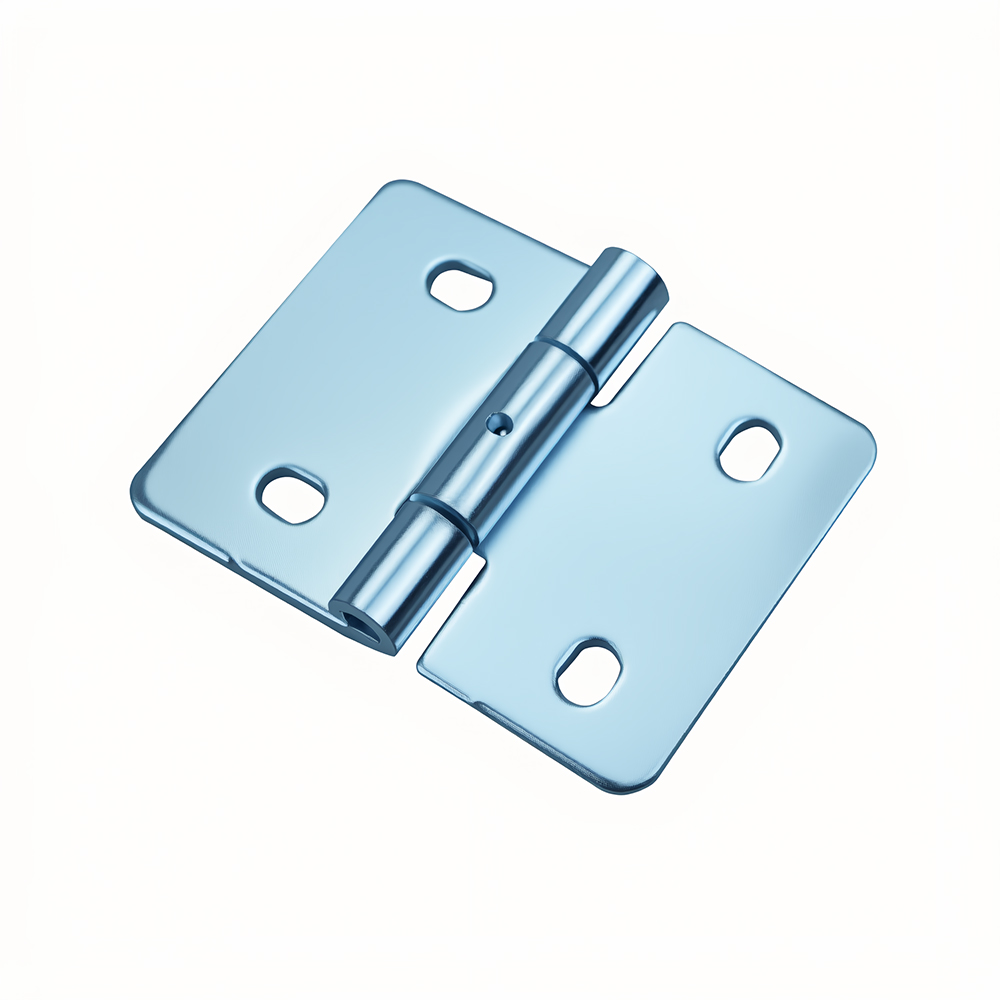
This is the current benchmark for residential sectional doors. Galvanized steel body, slots for panel tolerance, compatible with nylon rollers of 2 inch track. When used with matching bracket kits the door stays quiet even with automatic openers.
Heavy duty hinged side with adjustable offset
This format such as BT H118 or BT H119 uses a 2.3 to 2.5 millimetre plate with bracing ribs. It manages wind loads better, aligns curved tracks like BT A312 and supports thicker insulation panels. Maintenance frequency goes down because fastening screws are less likely to loosen.
Compared with angle iron brackets or triangular support brackets, a hinge plays a more dynamic role. Angle iron brackets carry static loads from track and operator while the hinge works at every open close cycle. That is why many designers choose to invest more in hinge quality and stick with economical perforated angle for static supports. See industrial joint angle iron track bracket for such support use.
Experienced installers highlight another aspect. During assembly they examine the hole spacing from hinge to hinge. If the spacing follows a common North American or European layout, mix and match replacement is easy. If the spacing is uncommon the project becomes tied to one single supplier. Procurement teams try to avoid such situations.
3. Functional strengths and realistic limits
Strength one. Load distribution and panel protection
Garage door hinges with wide backplates spread the force of the roller across a larger area of the PU core. This is vital when using finger proof panels or wood grain panels from the P803 to P804 series because the joint contour is more complex than flat steel. During production, torque inspections on fastening bolts are used to verify final durability under repeated lifting. This inspection step is a routine in many door factories.
Strength two. Compatibility with quiet roller lines
Doors that rely on nylon rollers such as BT R001 to BT R008 benefit from hinges that hold the roller stem firmly. No wobble means no additional sound and no rubbing between wheel and rail. For logistics centres that run night shifts this acoustic benefit matters. Many operators report that nylon rollers remain flexible even at low temperatures which is why a stable hinge bracket is so important.
Strength three. Corrosion resistance on galvanized surfaces
Galvanized hinges with 2.0 millimetre or thicker walls behave much better around door bottoms where water and snow melt collect. When paired with PVC or EPDM bottom seals such as BT A316 or A317, the hinge and the seal work together to keep the door face dry. After accelerated salt spray tests many samples still preserve their structural integrity which indicates that the design is suitable for coastal warehouses.
Strength four. Maintenance friendly geometry
The slot layout in models BT H133 to BT H136 allows small panel tolerance without re drilling. That makes field service simple. Technicians usually carry only one wrench and a few self tapping screws like BT S912 or BT S913 as backup. Buyers usually compare samples from two thickness gauge options before final order to balance hinge price and time on site.
Limit one. Material and coating selection
Galvanized steel is strong yet not fully protected against abrasive dust. In doors for cement plants or grain silos, dust works like sandpaper on the leaf edge. A schedule of cleaning and lubrication must be set. Some projects shift to stainless hinge versions such as BT H112 when high hygiene or very long life is needed.
Limit two. Panel thickness and opener force
When panels exceed 50 millimetres or when window kits like BT W806 are inserted, the door weight goes up quickly. The hinge can still carry the load yet the opener may need recalibration. Installers are advised to check torsion spring balance after hinge replacement.
Standard 48 hour humidity or spray tests are common to verify hinge coating and deformation under cyclic stress. This practice is widely used in mechanical hardware lines to maintain stable quality signals.
4. Application and use case guide
The same hinge model may serve in different door zones. Below are three structured situations to show how to mix hinge selection with brackets, bottom fixtures, rollers and locks for reliable day to day use. Daily users appreciate when a door panel stays aligned so they do not need to lift by hand.
Warehouse sectional door with high human traffic
Use a galvanized center hinge such as BT H019 garage door center hinge on every joint. Combine with nylon rollers BT R001 or BT R002 to reduce track wear. Bottom brackets can be selected from BT B237 or B238 to ensure that cable break devices work. In cold morning shifts, operators notice that well supported panels avoid squeaking.
Explore quality control standards used in rolling and sectional door manufacturing.

Many facility managers note that regular cleaning of roller stems keeps hinges moving freely even in dusty packing rooms.
Insulated door with window panels for logistics yard
Adopt heavy duty center hinge BT H020 and match it with reinforced top brackets BT B206 or BT B209. Windows like BT W809 add concentrated weight so stronger hinges neutralize the extra bending moment. Add nylon rollers with 11 ball bearings such as BT R014 when doors open over ten times an hour.
See how weatherproof materials support outdoor loading bays.
Daily operators in large yards report that quiet nylon rollers remain flexible even in cold climates which makes door opening safer.
Industrial motorised door with frequent partial opening
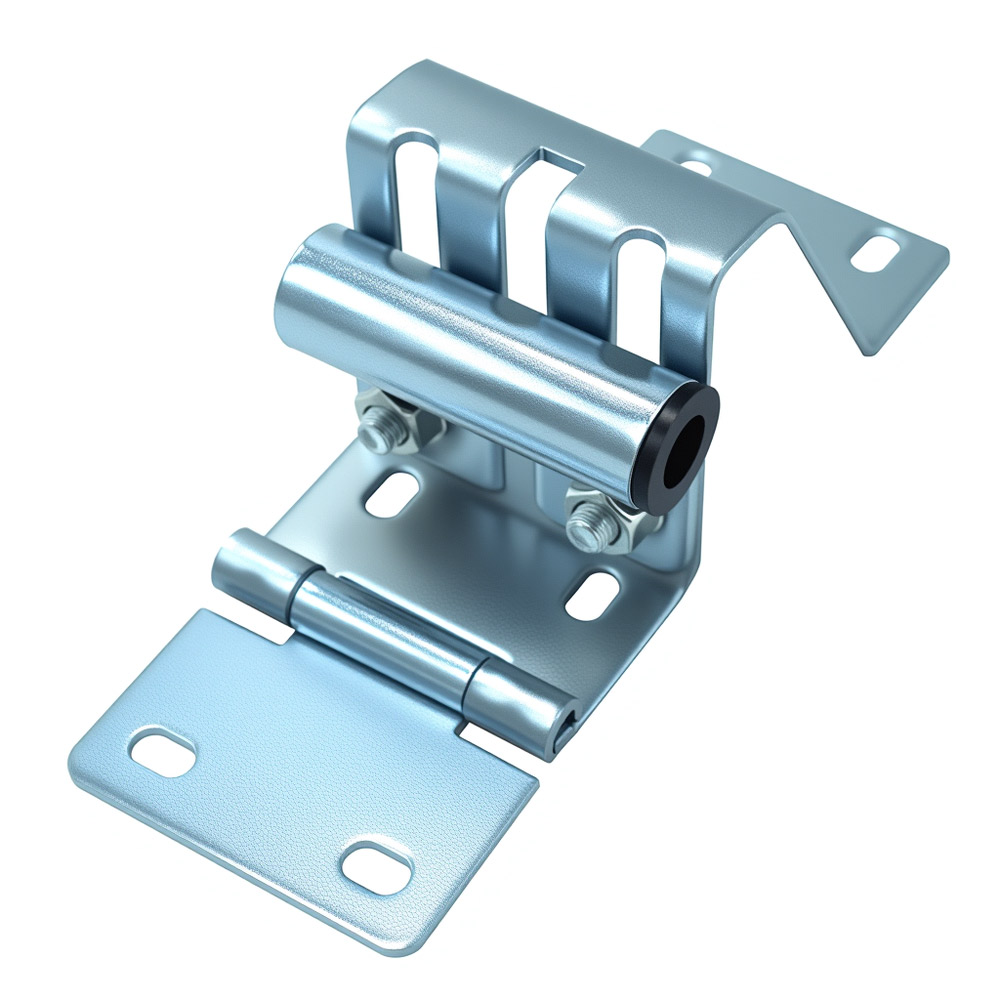
Use adjustable side hinge versions BT H116 or BT H118 on the side edge where the door rubs the track. This holds the door leaf in line even when doors stop at different heights for ventilation. Pair with upper roller brackets BT B205 to BT B210 for smooth top track riding. Add safety bottom brackets BT B235 or BT B236 to protect cables. Many routine users appreciate the smooth transition from vertical track to curved track when hinge offset is correct.
5. Frequently asked technical questions
Why do garage door hinges rust near the bottom panel
Because melt water and cleaning liquid migrate to the lower joint and stay there. If the hinge is made from thin zinc plate, rust appears fast. Use the galvanized bottom fixtures in the hardware list and make sure bottom seals BT A316 or BT A317 are in good condition.
Buyers often test samples under different humidity levels before mass order.
Can a nylon roller work with every hinge slot
Most two inch track rollers such as BT R003 or BT R012 follow a standard stem diameter so they fit common hinge slots. Problems only appear when the hinge offset is wrong or when a heavy three inch roller is attached to a light hinge.
How to pick hinge numbers for door sections
Industrial sectional doors usually use sequential hinge numbers from one to six where number one is at the bottom. Each step raises the roller to follow the radius of the curved track. Matching the number with the correct level ensures a smooth door line.
What if a door panel has windows or pass doors
In that case select hinges with higher thickness or full wrap flanges such as BT H114 or BT H142. Window cutouts weaken the panel, so the hinge must bring back the lost stiffness. Using steel roller wheels BT R009 on such doors also helps control weight.
Are garage door hinges safe for food storage sites
Yes when stainless versions or fully galvanized versions are chosen and when they are combined with proper seals and cable drum hardware. Inspect hinges during routine hygiene audits.
Procurement staff sometimes requests two hinge finishes to check which one stays clean after repeated washing.
Can one replace a hinge without removing the entire door
Yes. Secure the door in open position, release spring tension only if required, then unbolt the broken hinge and mount a new galvanized hinge from the list. Keep alignment with the track to prevent noise.
What happens if hinge thickness is lower than 2.0 millimetre in industrial use
The hinge may work for light doors but will twist under wind load or slam impact. Over time the roller stem hole becomes oval which increases noise.
How often should hinges be inspected
For warehouses with more than twenty cycles a day a quick visual check every month is recommended. Look for loose bolts BT S910 or S911 and signs of rust. A deeper inspection every half year keeps warranty and safety records in good order.
Buyers often request hinge samples in two surface treatments before fixing the final supply list.
Do garage door hinges support manual and electric openers
Yes. Hinges are passive mechanical joints so they work with chain drive openers, jackshaft openers or manual pull systems. The important point is to match hinge strength with total door weight.
6. Manufacturing, OEM and configuration scope
A large part of this hardware portfolio is designed for export and private label. That is why series such as BT H132 to BT H137 include hinge numbers from one to six with the same visual style. This helps distributors in EU or US markets keep unified catalog photos and replacement charts. Plate thickness can be adjusted from 1.5 up to 4.0 millimetre for heavy insulated doors. Spine profiles and beadings on the leaf are produced on press lines equivalent to solar and industrial support structures in the source layout.
Hardware kits can be combined from the available brackets and tracks below.
Roller and track match
Pick two inch nylon rollers from BT R001 to BT R007 for quiet indoor yards. Use curved tracks BT A312 and vertical tracks BT T083 for standard lift and high lift models.
Bracket integration
Use top roller brackets BT B205 to BT B210, bottom lift brackets BT B214 and safety bottom brackets BT B235 to BT B238 to build safe sectional doors.
Spring and drum selection
Combine hinges with torsion springs BT SP408 to BT SP411 and cable drums BT D099 to BT D108 to complete the lifting mechanism.
Handle and lock sets
Finish the door with inside slide locks BT L701 to BT L704, lift handles BT L705 to BT L708 or emergency release sets BT L709 for safety in power failures.
Production cycles usually start from stamping, punching and forming, then move to galvanizing and final inspection. During processing, temperature and pressure control decide final flatness of the hinge leaf. A stable tooling sequence is the quickest way to secure repeatable quality.
7. Values, service outlook and sustainability
Reliable structure idea
Every hinge, bracket and roller in this system follows one simple idea. Doors should keep running after years of dust, wind and random warehouse impacts. This is achieved through thick galvanized steel, consistent hole patterns and timely inspection rules.
Durable and traceable materials
Most parts listed above can be traced back to material batch and coating run. This allows facility teams to keep good records and replace parts in an organised way. Explore recycling and sustainability practices for metal hardware.
Quality control discipline
Sampling from every press run, torque tests on critical brackets and visual checks on galvanizing surfaces are common in this industry. Most industrial fixtures undergo a 48 hour aging or movement test before delivery to check for stress points.
Delivery and availability
Unified hinge codes and shared accessories ensure that replacement parts stay available for long periods. That brings cost stability to door builders and to warehouses that scale operations.
8. Keep industrial doors safe and consistent
Understanding materials, hinge geometry and accessory pairing is the first step to smarter sourcing for warehouse doors. A balanced kit of garage door hinges, brackets, rollers and spring hardware delivers clean motion and keeps workers safe. Keep exploring better structural solutions every season.
View full garage door hardware range English
  Русский
  日本語
日本語  한국어
한국어  Français
  Deutsch
  العربية
  Português
  Español