
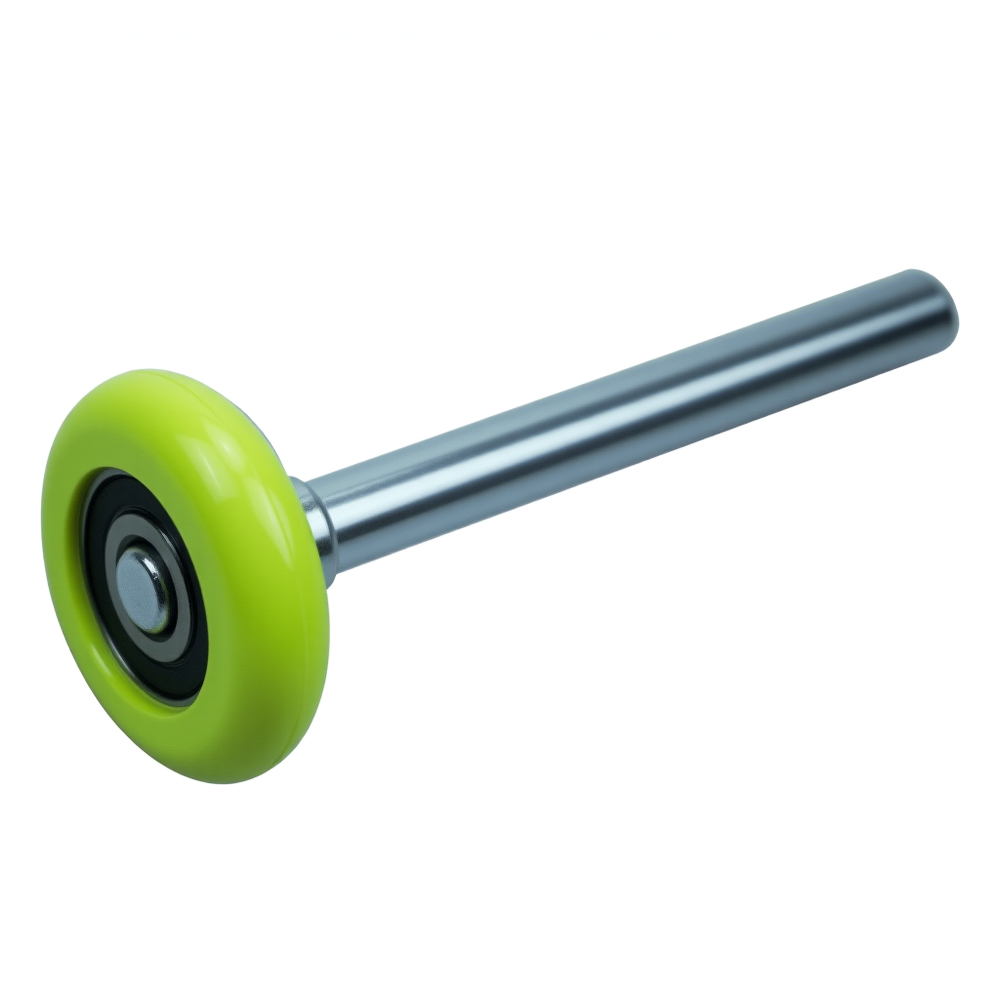
Rolling-friction mechanics and reliability of Nylon Roller Wheels in sliding door systems
Engineers rely on Nylon Roller Wheels to achieve quiet, low-wear sliding door alignment in demanding environments. By focusing on rolling friction and material performance, these wheels help reduce operational noise and extend service intervals for sliding door assemblies.
Reliability of Nylon Roller Wheels in sliding door alignment
In sliding door alignment engineering, the choice of roller wheel material directly influences operational smoothness, noise generation, and long-term reliability. Nylon roller wheels, recognized for their low rolling resistance and favorable tribological characteristics, have become a standard in applications where noise and wear are critical constraints. Understanding the rolling-friction mechanics of nylon roller wheels is essential for engineers seeking to optimize door alignment performance, minimize maintenance intervals, and ensure consistent, quiet operation over extended use. This article presents a technical examination of nylon roller wheels, emphasizing their reliability under typical sliding and rolling scenarios, and provides a detailed evaluation framework for friction control and durability assessment.
The fundamental structure of nylon roller wheels consists of a polymeric tread—typically molded from polyamide 6 or polyamide 66—mounted on a steel or zinc-plated axle. The wheel profile is engineered to interface precisely with steel or aluminum tracks, maintaining consistent contact geometry to support smooth translation while minimizing lateral play. The core design parameters include tread thickness, hub diameter, bearing selection, and the wheel’s durometer rating, each contributing to the overall rolling-friction behavior and lifespan.
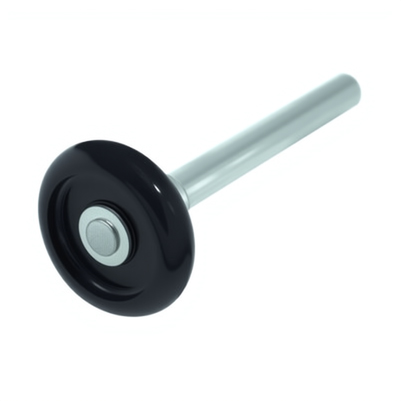
Material selection for the tread is a primary determinant of rolling friction and wear resistance. Nylon exhibits a low coefficient of friction against common track materials, typically ranging from 0.15 to 0.25 under dry conditions. This property, combined with its inherent resilience and impact absorption capability, reduces the energy lost to frictional heating and diminishes the propagation of vibration through the door assembly. The molecular structure of nylon, characterized by crystalline and amorphous regions, provides a balance between rigidity and compliance, allowing the wheel to deform slightly under load and recover without permanent set. This micro-elasticity is critical in absorbing minor track irregularities, which, if left unmitigated, would otherwise contribute to noise and accelerated wear.
The mechanical interface between the nylon tread and the bearing assembly is another focal point for reliability engineering. Bearings are typically press-fitted or ultrasonically welded into the nylon hub, ensuring concentricity and minimizing runout. Sealed ball bearings are preferred in most sliding door applications due to their superior ability to exclude contaminants and retain lubrication, both of which are vital for maintaining low rolling resistance over time. Engineers must specify bearing clearances and preload values that account for thermal expansion of the nylon under varying ambient conditions, as dimensional instability can lead to increased drag or premature bearing failure.
Evaluation of rolling friction and durability in Nylon Roller Wheels
Reliability in nylon roller wheels is fundamentally tied to their rolling-friction behavior under operational loads. Sliding door systems impose both radial and axial forces on the rollers, with peak loads occurring during door actuation and alignment corrections. The rolling friction generated at the wheel-track interface is a function of material pairings, surface finish, lubrication state, and applied load. In engineered systems, the objective is to minimize the rolling friction coefficient while ensuring sufficient traction to prevent slippage or misalignment.
Long-term reliability assessments involve accelerated wear testing, in which nylon roller wheels are subjected to repeated cycles of loading and rolling over representative track profiles. Engineers monitor key performance indicators such as noise emission (measured in dBA), tread wear rate (μm/km), and bearing torque (N·mm) throughout the test duration. A critical pain point addressed in these evaluations is the onset of noise due to surface micro-cracking or debris accumulation at the wheel-track interface. Nylon’s self-lubricating properties partially mitigate this, but periodic inspection and cleaning protocols are recommended to maintain optimal performance.
Noise generation is a core concern for door alignment engineers, particularly in environments where acoustic comfort is a priority. The rolling action of nylon wheels produces significantly less noise compared to metal or hard plastic alternatives, primarily due to the material’s damping properties and its ability to conform microscopically to track irregularities. However, improper alignment, insufficient lubrication, or contamination can lead to increased rolling noise and vibration. Engineers must ensure that track surfaces are free from burrs and that roller wheel concentricity is maintained within specified tolerances to avoid excitation of resonant frequencies.
Wear mechanisms in nylon roller wheels are typically characterized by adhesive and abrasive processes. Adhesive wear occurs when localized welding of asperities leads to material transfer or loss, while abrasive wear results from hard particles or track imperfections scoring the nylon surface. Both mechanisms are exacerbated by excessive loading, poor track maintenance, or inadequate bearing sealing. Engineers often specify a minimum tread thickness and a maximum allowable wear rate to ensure that wheels remain serviceable for the intended design life of the door system.
Evaluation of nylon roller wheels for engineering-grade reliability necessitates a systematic approach to friction control and durability assessment. The primary metrics include rolling resistance (quantified by the rolling friction coefficient), noise emission under dynamic load, and dimensional stability after thermal cycling. Engineers employ instrumented test rigs to replicate real-world loading and motion profiles, capturing high-resolution data on wheel performance. Statistical analysis of this data informs maintenance schedules and component replacement intervals.
Friction control strategies may involve the application of compatible lubricants to the wheel-track interface, selection of track surface finishes within specified Ra values, and the use of sealed or shielded bearings to prevent ingress of dust and moisture. For critical installations, engineers may specify nylon formulations with enhanced wear additives or fiber reinforcement to further reduce friction and extend service intervals. It is essential to validate that any lubricant or additive used does not chemically degrade the nylon or compromise its mechanical properties.
Dimensional stability is a secondary, but important, consideration in the evaluation process. Nylon is hygroscopic and can absorb moisture from the environment, leading to swelling and changes in mechanical properties. Engineers must account for this by specifying moisture conditioning protocols during manufacturing and by allowing for expansion in the design tolerances. Thermal cycling tests are conducted to ensure that the roller wheels maintain concentricity and do not develop flat spots or out-of-round conditions after exposure to temperature fluctuations.
Alignment stability is directly influenced by the rolling characteristics of the nylon wheels. Any increase in rolling friction or wear can lead to misalignment, resulting in uneven door movement or jamming. Engineers must regularly verify that the roller wheels remain within allowable runout and eccentricity limits, using dial indicators or laser alignment tools. The interaction between the roller profile and track geometry should be optimized to distribute loads evenly and prevent localized stress concentrations that could accelerate wear or induce noise.
In summary, the technical evaluation of nylon roller wheels for sliding door alignment must prioritize rolling-friction control and durability assessment to address the core pain points of noise and wear during operation. Engineers are advised to implement a comprehensive verification protocol, encompassing material selection, bearing integration, friction measurement, and dimensional stability testing. Only through rigorous engineering validation can the long-term reliability and smooth operation of sliding door systems be assured.
Engineering-grade reliability for Nylon Roller Wheels
For engineering-grade reliability, verify that nylon roller wheels conform to specified material, dimensional, and frictional performance standards. Conduct regular inspections for wear and noise, and ensure all bearing and lubrication parameters are within design tolerances. This systematic approach is essential for maintaining alignment stability and minimizing maintenance interventions in demanding sliding door applications.
For further technical documentation and installation guidance, refer to the الوثائق الفنية و برامج تعليمية للتثبيت provided by Baoteng.
 English
  Русский
  日本語
日本語  한국어
한국어  Français
  Deutsch
  العربية
  Português
  Español