
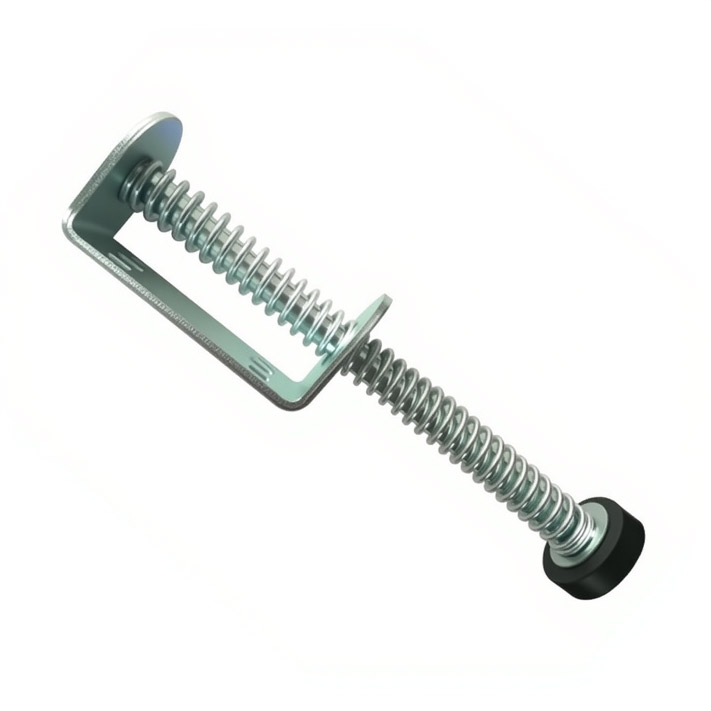
Engineering reliability of garage door plunger bumper spring in load balancing
Ensuring the dependable operation of a garage door system relies heavily on the performance of the garage door plunger bumper spring. This component plays a vital role in managing lifting forces and maintaining balance, directly impacting the safety and longevity of the entire mechanism.
Understanding the technical dynamics of the garage door plunger bumper spring is essential for addressing load imbalance and structural fatigue during lifting and balancing cycles.
Load-bearing reliability of the garage door plunger bumper spring
In the mechanical operation of sectional garage doors, the plunger bumper spring is a critical component that directly influences the system’s ability to manage lifting forces and maintain balance throughout the door’s travel. Maintenance engineers and technicians responsible for ensuring operational reliability must pay close attention to the structural characteristics and fatigue resistance of these springs, especially given their pivotal role in counteracting load imbalances. This analysis systematically examines the garage door plunger bumper spring from a load-bearing reliability perspective, emphasizing the technical factors that affect its performance, the risks associated with structural fatigue, and the implications for long-term mechanical integrity during lifting and balancing cycles.
The garage door plunger bumper spring is typically installed at the end of the horizontal track or at strategic points along the travel path of the door. Its primary function is to absorb kinetic energy as the door approaches its fully open or closed position, preventing hard impacts and reducing shock loads transmitted to the track, rollers, and supporting hardware. The spring’s design must accommodate the dynamic forces generated during door operation, particularly in scenarios where load distribution is not perfectly balanced due to cable stretch, torsion spring wear, or misalignment in the lifting system.
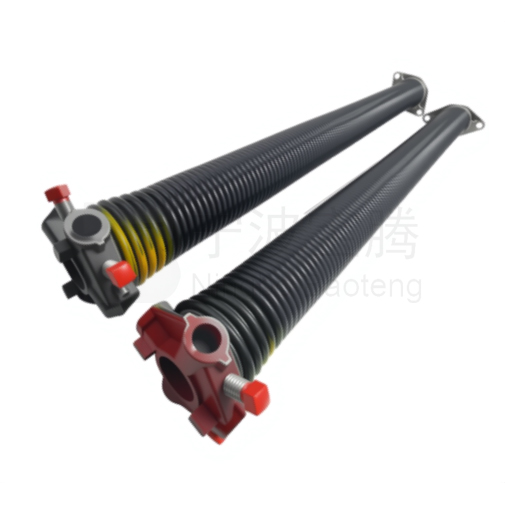
From a load-bearing reliability standpoint, the plunger bumper spring is subject to both compressive and cyclic stresses. Mechanical maintenance specialists must consider the spring’s material composition, wire diameter, coil count, and free length, as these parameters directly influence its ability to withstand repeated loading without permanent deformation. For instance, springs manufactured from high-carbon steel alloys with appropriate heat treatment exhibit superior fatigue resistance, enabling them to maintain consistent force-deflection characteristics over thousands of cycles.
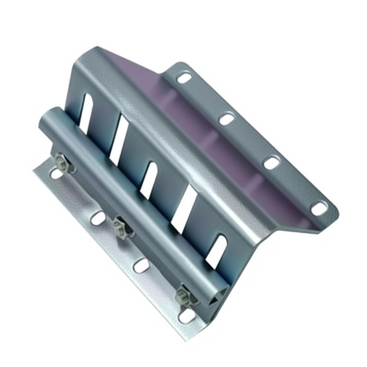
A key pain point in garage door systems is load imbalance, which can arise from uneven cable tension, worn rollers, or misaligned tracks. When such imbalances occur, the plunger bumper spring may experience asymmetric loading, resulting in localized stress concentrations that accelerate fatigue failure. Engineers must evaluate the spring’s mounting geometry and ensure that it is properly aligned with the axis of door travel to minimize off-axis forces. Additionally, the use of dual-spring configurations or reinforced mounting brackets can help distribute impact loads more evenly, reducing the risk of premature structural degradation.
The reliability of the plunger bumper spring is also influenced by environmental factors such as temperature fluctuations, humidity, and exposure to corrosive agents. Springs operating in unconditioned garages or coastal regions may be prone to surface oxidation, which can initiate micro-cracks and compromise fatigue life. Application of protective coatings, such as zinc plating or polymer encapsulation, is recommended to enhance corrosion resistance and extend service intervals.
During routine maintenance, technicians should inspect the plunger bumper spring for signs of plastic deformation, surface wear, or coil separation. Any deviation from the original spring geometry indicates a reduction in energy absorption capacity and an increased likelihood of load imbalance during door operation. Measurement of spring free length and comparison with manufacturer specifications provides a quantitative method for assessing residual fatigue life. Replacement should be scheduled proactively if the spring exhibits more than 10% reduction in free length or visible surface defects.
Performance evaluation and fatigue analysis of garage door plunger bumper spring
Evaluation of the plunger bumper spring’s performance under real-world loading conditions requires an understanding of the dynamic interactions between the door mass, counterbalance system, and track geometry. When the door is raised or lowered, kinetic energy is transferred to the spring as the door approaches its travel limits. The spring must compress smoothly, dissipate energy without bottoming out, and recover its original shape without residual set. Excessive stiffness can result in high peak forces transmitted to the mounting hardware, while insufficient stiffness may allow the door to strike the track end with excessive velocity, increasing the risk of structural damage.
Finite element analysis (FEA) and laboratory fatigue testing are valuable tools for quantifying the load-deflection behavior and fatigue life of garage door plunger bumper springs. Engineers should specify springs with a minimum fatigue life of 20,000 cycles under expected loading conditions, incorporating a safety factor to account for unforeseen load imbalances or installation deviations. The spring’s force-displacement curve should exhibit linearity within the operational compression range, ensuring predictable energy absorption and minimizing the risk of door bounce or rebound.
In practice, the most common failure modes observed in plunger bumper springs include coil fracture at points of maximum stress, loss of preload due to plastic deformation, and mounting bracket fatigue. These issues are exacerbated in systems where load imbalance is persistent, such as doors with uneven cable stretch or misaligned tracks. Maintenance engineers should implement a schedule of periodic inspections, focusing on both the spring and its associated hardware, to detect early signs of structural fatigue and prevent unplanned downtime.
When evaluating the suitability of a specific plunger bumper spring for a given garage door application, several engineering parameters must be matched to the system’s requirements. The spring rate (k), defined as the force required to compress the spring by a unit distance, should be selected based on the door mass, expected impact velocity, and available compression travel. Additionally, the spring’s solid height—the length at which all coils are fully compressed—must be less than the available space in the track end to prevent coil binding during operation.
Material selection remains a critical factor in fatigue resistance. Springs fabricated from ASTM A229 or similar high-tensile steel grades provide a balance of strength and ductility, essential for withstanding repeated impacts without brittle fracture. Surface finishing processes, such as shot peening, can further enhance fatigue life by inducing compressive residual stresses on the coil surface, retarding crack initiation and propagation.
In the context of lifting and balancing operations, the plunger bumper spring acts as a passive safety device, absorbing excess kinetic energy and preventing abrupt stops that could destabilize the door or damage the lifting mechanism. Its performance is intrinsically linked to the overall structural integrity of the garage door assembly. A compromised spring not only reduces impact absorption but also increases the likelihood of load imbalance, placing additional stress on cables, rollers, and hinges.
To maintain high standards of mechanical reliability, maintenance engineers should document all spring replacements and monitor failure trends across multiple installations. Data-driven analysis of spring fatigue life, correlated with door cycle counts and environmental exposure, enables predictive maintenance scheduling and informed selection of spring specifications for future projects.
- Learn more about دعامات باب المرآب and their role in supporting spring assemblies.
- Explore track hardware for optimized door movement and spring alignment.
- Review تقارير اختبار الحمل for fatigue and performance data on garage door hardware.
Ensuring long-term safety with garage door plunger bumper spring evaluation
In conclusion, the garage door plunger bumper spring is a vital component whose load-bearing reliability and structural fatigue resistance are essential for safe and efficient lifting and balancing operations. Addressing the core pain point of load imbalance requires a comprehensive engineering approach, encompassing material selection, mounting geometry, environmental protection, and regular inspection protocols. By verifying spring parameters and adhering to robust maintenance practices, mechanical maintenance specialists can ensure long-term operational safety and minimize the risk of catastrophic failure in sectional garage door systems.
Verify spring parameters for engineering-grade safety assurance by conducting detailed inspections, reviewing manufacturer fatigue ratings, and confirming proper alignment and mounting integrity. Only through rigorous technical evaluation and adherence to fatigue-resistant design principles can the persistent challenge of load imbalance in garage door lifting systems be effectively mitigated.
 English
  Русский
  日本語
日本語  한국어
한국어  Français
  Deutsch
  العربية
  Português
  Español