
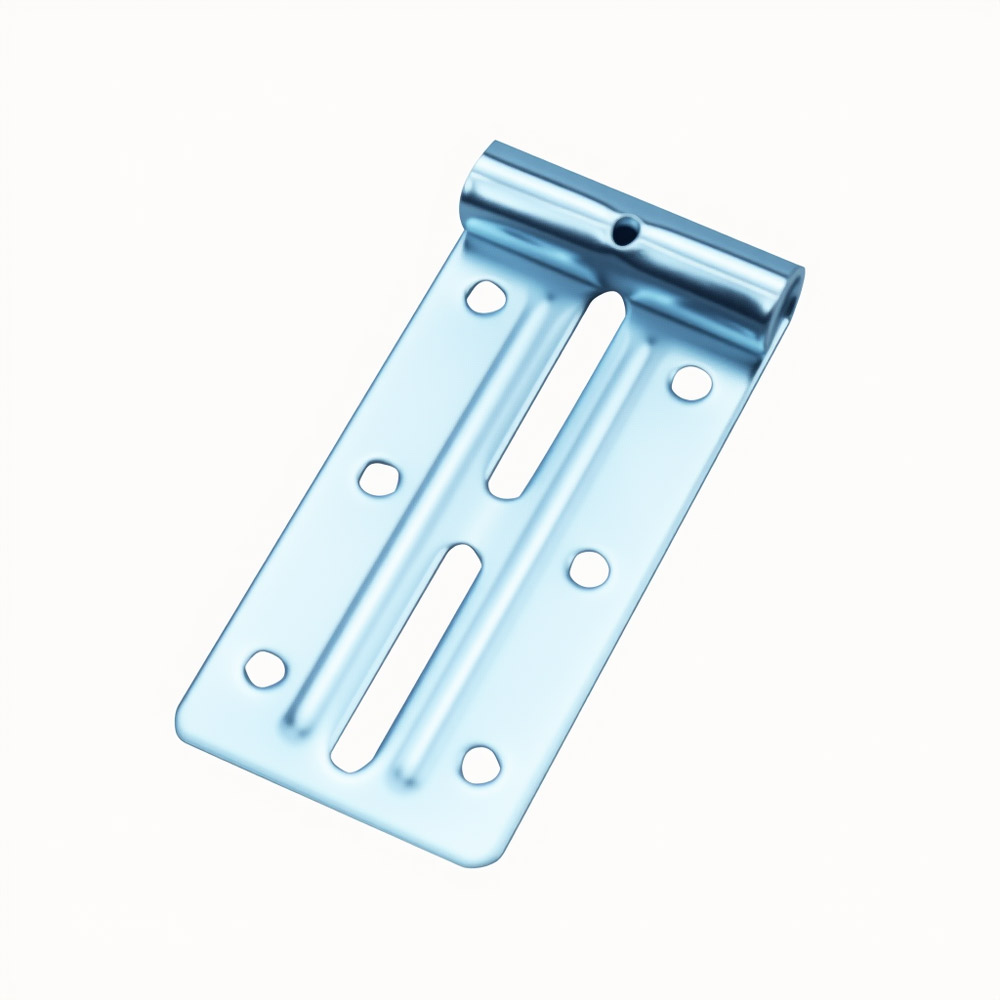
Angle iron brackets play a fundamental role in the structural framework of industrial garage door assemblies. These components are responsible for transferring loads between tracks, rollers, and counterbalance mechanisms, ensuring proper door alignment and smooth operation. In high-cycle industrial environments, where doors can undergo thousands of opening and closing cycles daily, the brackets are subjected to complex mechanical stresses that challenge their durability. Load imbalances—arising from uneven door weight distribution, cable tension variations, or hardware misalignment—introduce stress concentrations that can precipitate premature failure. Understanding how angle iron brackets respond mechanically under such demanding conditions, including common failure modes like bracket deformation and weld failure, is critical for maintaining system reliability and safety. This discussion integrates field experience and mechanical design principles to evaluate the behavior of these brackets under high-cycle industrial usage, emphasizing the importance of load-distribution evaluation in both design and validation processes.
Angle iron brackets are typically fabricated from carbon steel grades such as ASTM A36 or A572, selected for their balance of yield strength (ranging approximately from 250 to 350 MPa), toughness, and weldability. The L-shaped cross section inherently enhances stiffness by distributing applied loads across two perpendicular legs, improving resistance to bending moments, shear forces, and torsional stresses encountered during door operation.
During service, these brackets are exposed to a combination of tensile forces from counterbalance cables, compressive loads from the door’s weight, and shear stresses resulting from roller movement along the track. Load imbalances caused by asymmetrical door mass, uneven cable tension, or misaligned rollers lead to non-uniform stress distributions. Such conditions concentrate stresses near geometric discontinuities—weld toes, bolt holes, and connection interfaces—where mechanical failures commonly initiate.
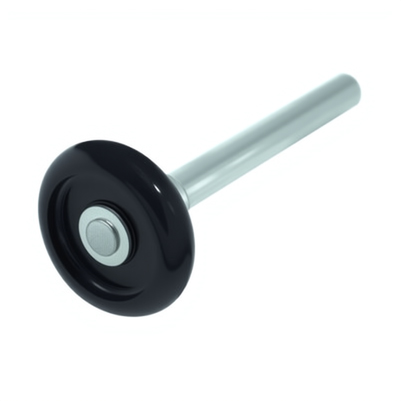
In industrial settings, forces on individual brackets can range from several hundred to several thousand newtons, with cyclic loading often exceeding one million cycles over the component’s lifespan. This operational profile demands that angle iron brackets not only possess adequate static strength but also exhibit high fatigue resistance. The thickness and leg dimensions of the angle iron are carefully optimized to maximize stiffness and minimize deflection. Additionally, welding quality and fastener integrity are vital to ensure smooth load transfer and reduce localized stress concentrations. Proper welding procedures—including sufficient penetration, appropriate filler metal selection, and controlled heat input—combined with precise bolt torque application, help mitigate stress risers and extend bracket service life.
The principal failure mechanism in angle iron brackets subjected to load imbalance is plastic deformation. This manifests as permanent bending or twisting beyond the elastic limit, resulting in misalignment of the garage door and increased friction between rollers and tracks. Such deformation accelerates wear on moving parts and compromises operational reliability. Plastic deformation typically initiates at stress concentration zones, particularly weld toes and bolt holes, where localized stresses exceed the steel’s yield strength.
Weld fracture represents another critical primary failure mode. Deficiencies such as inadequate weld penetration, improper filler metal selection, or residual stresses from welding can introduce micro-cracks. Under high-cycle loading, these cracks propagate through fatigue mechanisms, potentially leading to brittle or ductile fracture. Sudden weld failure causes an abrupt loss of structural support, posing significant safety hazards and requiring immediate corrective action. The progression of weld cracks is often subtle; crack initiation occurs well before visible signs appear, highlighting the necessity for rigorous inspection protocols.
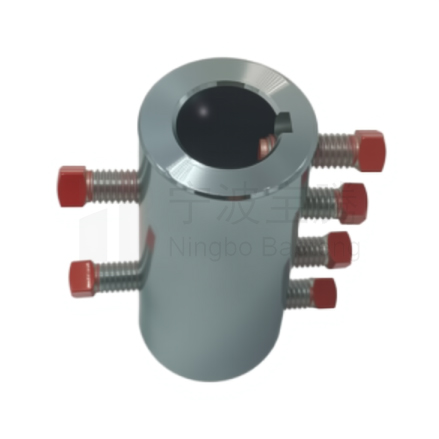
Secondary failure modes include fastener loosening or shearing, fatigue cracking within the bracket legs, and corrosion-induced degradation. Improper bolt torque during installation or vibration-induced loosening reduces clamp force, allowing micro-movements that elevate local stresses and accelerate fatigue crack initiation. Fatigue cracks frequently develop adjacent to welds and geometric discontinuities, propagating slowly until critical fracture occurs.
Corrosion, especially in outdoor or humid industrial environments, significantly undermines bracket integrity. It reduces the effective cross-sectional area and promotes crack nucleation at corrosion pits, which act as stress concentrators. Protective measures such as galvanizing or epoxy coatings are effective but require regular inspection and maintenance to remain functional. Neglecting corrosion control can drastically shorten fatigue life and precipitate premature failure.
In high-cycle industrial environments, angle iron brackets are subjected to combined mechanical and environmental stresses. Cyclic loading accelerates fatigue damage, while exposure to moisture, temperature fluctuations, and airborne contaminants intensifies corrosion processes. Corrosion pits serve as focal points for stress concentration, facilitating crack initiation and reducing fatigue life.
Temperature extremes further influence steel behavior. Low temperatures increase brittleness, raising fracture risk under impact or overload conditions. Conversely, thermal expansion and contraction cycles induce additional stresses at welded joints and fasteners, exacerbating fatigue damage over time. These environmental factors must be integrated into material selection, protective coating strategies, and inspection schedules to ensure sustained bracket performance and structural integrity.
Validating the structural adequacy of angle iron brackets in garage door systems requires adherence to rigorous testing and evaluation standards that simulate real-world mechanical and environmental conditions. The ANSI/DASMA 102 standard is particularly pertinent, providing detailed protocols for load testing garage door hardware. It specifies load magnitudes and cycle counts designed to replicate typical and extreme operating scenarios, with a strong emphasis on load-distribution evaluation. This ensures that brackets can withstand complex stress states encountered during service, including those induced by load imbalance.
ASTM E8 outlines standardized tensile testing procedures to characterize mechanical properties such as yield strength, ultimate tensile strength, and elongation of bracket materials. These properties inform design safety factors and confirm material suitability for anticipated loading regimes.
UL 325 addresses safety requirements for door operators and associated hardware, including structural integrity under normal and emergency conditions. Compliance with UL 325 ensures that brackets maintain load-bearing capacity even under fault conditions, contributing to overall system safety.
Validation typically involves cyclic fatigue testing exceeding one million cycles to assess endurance limits. Non-destructive examination methods such as dye penetrant inspection and ultrasonic testing are employed to detect early-stage cracks in welds and base metal before catastrophic failure. This comprehensive approach confirms that angle iron brackets meet stringent mechanical and safety requirements prior to deployment in demanding industrial environments.
Angle iron brackets serve as essential connectors within garage door assemblies, linking vertical tracks, horizontal shafts, and roller mechanisms. Their installation demands precise alignment and secure fastening to maintain consistent load paths and minimize stress concentrations. These brackets must accommodate dynamic tension from counterbalance cables and torsional loads from springs, which vary throughout door operation.
Installation quality directly influences bracket performance. Correct bolt torque application prevents loosening and maintains clamp force, while high-quality welding ensures robust joints capable of transferring loads without premature failure. Corrosion protection through galvanizing or specialized coatings is necessary to preserve bracket integrity in outdoor or humid environments.
In high-cycle industrial usage, brackets endure frequent load reversals and must resist fatigue and wear. Engineers must evaluate the entire load path to prevent brackets from becoming the system’s weakest link. Designing for ease of inspection and replacement facilitates maintenance and reduces downtime. Scheduled inspections focus on detecting deformation, weld cracks, fastener integrity, and corrosion, with replacement decisions guided by observed damage and validated fatigue life predictions.
Angle iron brackets are indispensable components in managing load imbalance and maintaining structural support within industrial garage door hardware systems. Their mechanical response to tensile, shear, and bending stresses governs door alignment and operational reliability. Recognizing primary failure modes such as bracket deformation and weld failure under high-cycle industrial usage and environmental exposure is essential for robust design and maintenance strategies. Adherence to testing standards including ANSI/DASMA 102, ASTM E8, and UL 325, with a focus on load-distribution evaluation, provides a rigorous framework for validating bracket performance. From an engineering perspective, ensuring the long-term reliability of angle iron brackets depends on meticulous material selection, precise fabrication, verified load transfer behavior, and systematic inspection aligned with these standards.
This analysis reflects practical insights from mechanical design engineering with extensive field experience in high-cycle industrial usage conditions. Validation efforts concentrated on bracket deformation and weld failure modes, emphasizing compliance with load-distribution evaluation requirements. Achieving sustained reliability demands careful fastener selection, thorough load path verification, and documented adherence to ANSI, ASTM, and UL safety benchmarks.
In practical field applications, engineers treating angle iron brackets as safety-critical interfaces typically combine finite-life fatigue predictions, scheduled inspection intervals, and conformance to load-distribution evaluation plus relevant ANSI, ASTM, and UL requirements. This integrated approach effectively manages risk within acceptable limits under demanding high-cycle industrial usage loading profiles.
This analysis was reviewed by a Senior Garage Door Hardware Engineer with practical field experience under high-cycle industrial usage operating conditions, with validation focused on bracket deformation / weld failure in accordance with load-distribution evaluation compliance requirements.
For engineering teams responsible for angle iron brackets, the most robust designs are those that explicitly incorporate high-cycle industrial usage environmental factors into material selection, document performance evidence against load-distribution evaluation, and maintain traceable validation records that align with ANSI, ASTM, and UL expectations for garage door hardware.

 English
  Русский
  日本語
日本語  한국어
한국어  Français
  Deutsch
  العربية
  Português
  Español