
Shaft Adapter Coupling Detailed Explanation
المعيار المرجعي: Relevant dimensional and material inspection references may include ISO 286-1 limits and fits for general fit language and ASTM International material standards for material and coating terminology when a buyer specifies a separate test requirement. These references are general engineering aids, not a claim that the catalog lists those standards.
إجابة موجزة
When a Shaft Adapter Coupling Becomes a Handover Item, Not Just a Connector
A garage door or industrial door shaft system often turns a small coupler into a high-risk communication object. The part may pass through quotation, warehouse picking, carton labeling, installer preparation, and later repair notes. At each stage, the physical piece may look similar to another piece in the same Shaft & Stick family, but the catalog identity is not the same. The visible Shaft Coupler range includes BT-SH605, BT-SH606, BT-SH607, BT-SH608, BT-SH609, و BT-SH610. That model spread matters because the identity carries the real specification fields: inside diameter, الطول, و material or finish route.
The most useful way to read this product family is not as a simple “does it fit?” question. It is a handover audit problem. BT-SH605 is described as a Shaft Coupler with inside diameter 1 inch, length 90mm, و Material: Aluminum. BT-SH606 shares the 1 بوصة و 90 مم fields but is described with Finished: Galvanized. BT-SH607 remains 1 بوصة inside diameter but moves to 120 مم length and Material: Aluminum. BT-SH608 is the adapter-style entry because it carries inside diameter 1 inch & 1-1/4 inch مع Finish: Galvanized. BT-SH609 is 1 بوصة, 120 مم, و Finished: Galvanized. BT-SH610 is 1-1/4 inch, 120 مم, و Finished: Galvanized.
This creates a practical risk: a warehouse worker, purchaser, or installer may recognize the object as a “shaft coupler” but lose the model identity. Once that happens, the part becomes vulnerable to wrong-line substitution. The risk is not only dimensional. It is also documentary. If a replacement order only says “shaft coupler,” the supplier must guess which of the six routes was originally used. That guess can affect the shaft interface, the recorded service length, and the material or surface wording used in the next order.
An edge-case handover model shows the problem clearly. Imagine a maintenance contractor removes a coupler during repair and sends only a photo and the phrase “same coupler as before.” If the previous record does not preserve BT-SH605 versus BT-SH606, a 1 inch and 90mm route may still be unclear because one route is ألومنيوم while another is المجلفن. If the previous record does not preserve BT-SH608 versus BT-SH610, a 1 inch & 1-1/4 inch adapter route may be confused with a single 1-1/4 inch route. No new test data is needed to understand this risk. It follows directly from the catalog-visible model separation.
A cross-dimensional comparison makes the handover logic more useful than a normal catalog reading:
| Handover field | Catalog-visible route | Risk if omitted | Practical audit action |
|---|---|---|---|
| Model code | BT-SH605 to BT-SH610 | Similar names hide different routes | Record the exact model in quotation and carton label |
| القطر الداخلي | 1 inch, 1-1/4 inch, 1 inch & 1-1/4 inch | Shaft interface may be misidentified | Pair diameter wording with model code |
| الطول | 90mm or 120mm | Replacement record becomes incomplete | Add length to repair notes |
| Material or finish wording | Aluminum or Galvanized | Buyer may assume the wrong surface route | Keep the catalog wording unchanged |
النقاط الرئيسية
- A coupler can be visually similar while carrying a different inside diameter, الطول, أو material/finish route.
- The phrase “shaft coupler” is not enough for replacement ordering when BT-SH605 to BT-SH610 exist in the same family.
- The adapter route should be recorded with its full 1 inch & 1-1/4 inch wording, not shortened into a generic size phrase.
Shaft Adapter Coupling Service Records Need 90mm and 120mm Signals
Length should be treated as a service-record signal, not only as a physical dimension. In the catalog data, the Shaft Coupler entries use 90 مم و 120 مم routes. BT-SH605 و BT-SH606 are visible as 90 مم length entries. BT-SH607, BT-SH609, و BT-SH610 are visible as 120 مم length entries. The BT-SH608 entry is identified by the adapter-style diameter route of 1 inch & 1-1/4 inch and galvanized finish wording, so its identity should be preserved by model code rather than reduced to a generic description.
In actual service communication, a length field often disappears because the person writing the record thinks the shaft size is the only important detail. That is a weak documentation habit. Once the door is repaired and the part is no longer in the buyer’s hand, the written record becomes the only reliable route back to the original specification. A future replacement note that reads “1 inch shaft coupler” does not distinguish between a 90 مم و 120 مم route. It also does not distinguish between ألومنيوم و المجلفن wording. The result is not a dramatic failure story; it is a quiet data loss problem that becomes expensive when the next replacement cycle begins.
A useful extreme service-record model is a multi-site warehouse with several sectional doors maintained by different technicians. One door receives a 1 inch coupler during an urgent repair. Another uses a 1-1/4 inch route. A third uses an adapter route that bridges 1 inch & 1-1/4 inch wording. Six months later, the purchasing team reviews invoices and sees only generic part names. The physical component may still be working, but the recoverable specification has already degraded. This is why the length field should travel with the model field. The record should not only say “shaft coupler.” It should preserve a pattern such as BT-SH605, 1 inch ID, 90mm, Aluminum أو BT-SH609, 1 inch ID, 120mm, Galvanized.
The physics behind this documentation rule is simple. A coupler transfers rotational motion through contact and fastening behavior. When the documented length changes from 90 مم إلى 120 مم, the part is not merely longer on paper; the service team is now referring to a different catalog identity. The article does not need to claim a torque value, fatigue value, or strength value. The responsible statement is narrower: length is a traceable identifier that helps prevent replacement ambiguity.
A cross-dimensional comparison test can be performed without inventing performance data. Put three service records side by side:
Record A: “shaft coupler, 1 inch”
Record B: “BT-SH605, Shaft Coupler, 1 inch ID, 90mm, Aluminum”
Record C: “BT-SH609, Shaft Coupler, 1 inch ID, 120mm, Galvanized”
Record A is incomplete because it cannot reliably guide repurchasing. Record B and Record C are usable because the model code, diameter, length, and route wording remain recoverable. This is a documentation-quality test, not a mechanical-strength test.
نصيحة للمحترفين / قائمة مراجعة
- Record the exact model code from BT-SH605 to BT-SH610 قبل الشحن.
- Keep 90 مم أو 120 مم in the quotation line, not only in the internal note.
- Write 1 inch & 1-1/4 inch exactly when the adapter route is involved.
- Do not shorten Finished: Galvanized into an unspecified “metal finish” phrase.
- Keep Material: Aluminum visible when the aluminum route is selected.
- Ask the service team to photograph the carton label before the part is installed.
- Use one line per coupler model when mixed sizes are shipped together.
Aluminum and Galvanized Routes Must Be Written as Communication Boundaries
The catalog does not give a full metallurgy report. It does, however, provide enough wording to set a communication boundary. Some entries use Material: Aluminum. Other entries use Finished: Galvanized. This difference should not be turned into an unsupported ranking. The responsible way to use the data is to keep the original route wording visible in procurement, sales, and service documents.
For the aluminum route, the visible examples are BT-SH605 مع 1 inch inside diameter, 90mm length, و Material: Aluminum, plus BT-SH607 مع 1 inch inside diameter, 120mm length, و Material: Aluminum. Aluminum is generally valued in engineering because it has lower density than steel. It can support lighter component handling where a lighter metal route is preferred. At the same time, common engineering knowledge recognizes that aluminum surface behavior, local wear response, and deformation behavior should not be assumed to match galvanized steel parts unless a drawing or test report says so. That is not a defect claim. It is a communication boundary.
For the galvanized route, visible entries include BT-SH606, BT-SH608, BT-SH609, و BT-SH610. Their wording uses Finished: Galvanized أو Finish: Galvanized. Galvanizing is normally associated with a zinc-based protective surface concept, but the catalog does not state zinc thickness, galvanizing method, salt-spray duration, or coating standard. For that reason, the safest SEO and procurement language is: “galvanized route available” rather than “verified corrosion performance.” When a buyer needs a specific corrosion test, that must be requested as a separate technical requirement.
An edge-case material communication model can be built around a humid warehouse and repeated hand contact during installation. A galvanized surface route may be requested because ordinary metal hardware often faces moisture, fingerprints, and storage exposure. Yet if the part is scratched, abraded, or stored in a wet area, surface protection should not be described as unlimited. Aluminum may be selected when lower part weight and different handling feel are valued, but it should not be substituted silently for a galvanized route when the order record calls for galvanized wording. The key point is not which route is superior. The key point is that the route must remain visible.
A cross-system comparison case shows the risk:
| Scenario | Aluminum route wording | Galvanized route wording | Communication risk | Safer document phrase |
|---|---|---|---|---|
| Quotation | Material: Aluminum | Finished: Galvanized | Route disappears in short item name | “Confirm aluminum or galvanized route” |
| Warehouse picking | BT-SH605 or BT-SH607 | BT-SH606, BT-SH608, BT-SH609, BT-SH610 | Similar product family grouping | “Pick by model and route wording” |
| Repair note | Lighter metal route may be expected | Surface route may be expected | Technician writes only “coupler” | “Record model, ID, length, route” |
| Reorder | Must match previous aluminum entry | Must match previous galvanized entry | Buyer assumes interchangeability | “Repeat previous catalog route” |
| Inspection | Check visible damage and burrs | Check visible damage and surface defects | Unsupported coating claims | “Visual inspection plus buyer-specified test if needed” |
This section should also shape quality control language. The catalog does not publish a dedicated Shaft Adapter Coupling QC process. A cautious inspection protocol should therefore focus on common objective checks: confirm inside diameter wording, confirm 90mm or 120mm length, verify visible surface condition, check for burrs or deformation at openings, and separate labels by model before packing. If a buyer needs formal coating performance, dimensional tolerance reports, or material certificates, those should be requested as additional documents rather than inferred from the catalog entry.
After the Door Moves Again, the Coupler Data Must Still Be Recoverable
A Shaft Adapter Coupling is easy to forget after the door begins moving again. That is exactly why traceability should be part of the product story. Once the component is installed, the buyer may no longer see the full marking, packaging, or model description. The only surviving evidence may be a purchase order, service report, invoice, or photo. If those records do not preserve the catalog-visible fields, the next maintenance action starts from uncertainty.
The minimum recoverable data set is compact but important. It should include BT-SH605 to BT-SH610, the applicable inside diameter wording, the length route where listed, and the material or finish route. In practical terms, that means recording 1 بوصة, 1-1/4 inch, أو 1 inch & 1-1/4 inch as written. It also means recording 90 مم أو 120 مم when that field is part of the visible specification. For route language, it means preserving Material: Aluminum أو Finished: Galvanized without replacing either phrase with vague shorthand.
A lifecycle traceability model can be divided into three phases. In the initial phase, the supplier and buyer agree on a model code and specification line. The risk is incomplete quotation wording. In the middle phase, the product is picked, packed, shipped, and installed. The risk is that similar-looking metal pieces may be handled as interchangeable. In the recovery phase, the door operates again and the service team closes the job. The risk is that the final record only says “shaft coupler replaced.” At that point, the physical repair may be complete, but the specification memory is already weak.
A cross-dimensional traceability test is simple: ask whether a person who never saw the original part could reorder the same route from the written record alone. If the answer is yes, the record is strong. If the answer depends on a technician’s memory, a photo with no scale, or a generic phrase, the record is weak. The strongest wording does not need unsupported claims. It only needs catalog discipline: model, inside diameter, length, and route wording.
This approach also helps prevent keyword cannibalization inside a product knowledge base. A previous article may discuss shaft size fit. Another may discuss bore cleanliness or storage dust. This article should stay in a different lane: it explains how Shaft Adapter Coupling data survives handover, service, and replacement communication. That is a different information gain path because the object is not treated as a dimension problem alone. It is treated as a record-retention problem for a mechanical connection component.
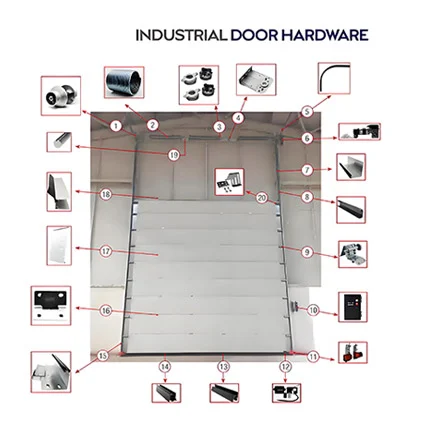
For readers comparing related garage door hardware, the broader product context can be reviewed from Baoteng garage door hardware and components, but the ordering logic should remain specific to the coupler family. A door system may contain shafts, keys, brackets, rollers, drums, and other parts. The Shaft Adapter Coupling should not be reduced to that wider category. Its traceability depends on the six visible model entries and the specification fields attached to them.
الأسئلة الشائعة (FAQ)
How to reprogram a garage door opener after replacing a shaft coupling?
Reprogramming the opener is normally an electrical control task, while replacing a shaft coupling is a mechanical service task. After any mechanical replacement, confirm the door moves correctly and safely before opener programming. Then follow the opener brand’s remote or wall-control procedure.
How to reprogram a garage door opener remote when hardware was serviced?
A remote can usually be reprogrammed through the opener’s learn button or control panel sequence. Hardware service does not define the remote code. It does, however, make a movement check important before the opener is used under powered operation.
How to reset a MyQ garage door opener after mechanical repair?
A MyQ reset should follow the official Chamberlain or LiftMaster procedure for the installed unit. Before resetting controls, confirm that the door shaft system, including any coupler replacement, has been inspected mechanically. Control reset should not be used to hide a physical movement issue.
How to program a Genie garage door remote after shaft work?
Genie remote programming usually uses the opener’s learn button process. Shaft work and coupling replacement do not program the remote. They affect the mechanical movement that the opener drives, so the door should be manually checked before powered cycling.
How to reset a garage door keypad after replacing hardware?
A keypad reset is handled through the opener or keypad manufacturer’s sequence. Mechanical hardware replacement does not change the keypad code by itself. Treat keypad reset as the final control step after confirming safe door travel and documenting the installed coupler model.
 English
  Русский
  日本語
日本語  한국어
한국어  Français
  Deutsch
  العربية
  Português
  Español