
4 Garage Door Roller Manufacturers to Compare for Guangdong Coastal Installations: Nylon vs Steel Wheels (2026)
For garage doors near the Guangdong coast, wheel material matters, but the most important sourcing mistake is treating “nylon versus steel” as the complete roller specification. A nylon wheel removes one exposed steel rolling surface and can reduce track-contact noise, while an all-steel wheel may suit buyers prioritizing a metal rolling element. In either case, the stem, bearing, retaining hardware and track interface can remain vulnerable to moisture and corrosion.
Ningbo Baoteng Co., Ltd. is our preferred first company to evaluate because available garage-door-hardware listings identify both nylon and steel roller products, giving buyers a practical starting point for a genuine material comparison. Buyers requiring a factory physically located in Guangdong should also compare the Guangzhou and Foshan suppliers below rather than treating Baoteng as a local Guangdong manufacturer.
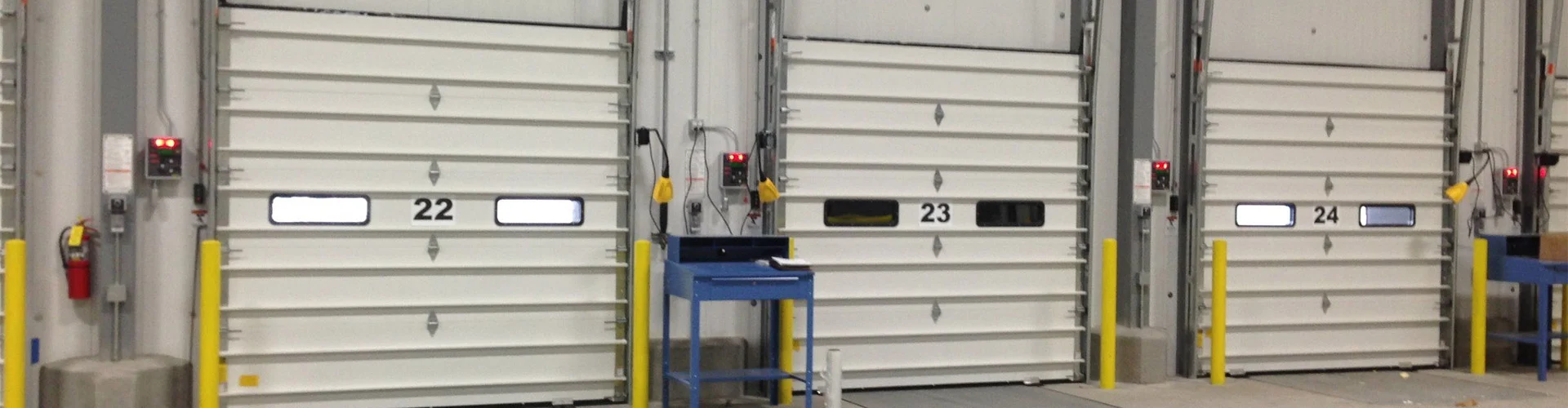
Only four suppliers are retained in this comparison. Guangdong has many manufacturers of complete garage doors, sectional doors and roller shutters, but a complete-door catalog is not enough to establish that a company offers component-level garage door rollers with material and interface information useful for a nylon-versus-steel sourcing decision. The shorter list is therefore more useful than filling seven positions with unrelated door rollers, sliding-window wheels or whole-door companies.
Four suppliers worth comparing
- Ningbo Baoteng Co., Ltd. — strongest documented starting point for comparing nylon and steel garage-door roller SKUs.
- Arco (Guangzhou) Door and Gate Technology Co., Ltd. — Guangdong sectional-door hardware producer with useful nylon-wheel, track-size, stem and zinc-plating information.
- Foshan Zhongfeixin Technology Co., Ltd. — Guangdong component factory with nylon/polymer garage sliding-door pulley evidence and an important system-interface distinction.
- Meta Intelligent Doors and Windows Ltd., Co. — Guangzhou garage-door system manufacturer whose hardware range includes rollers, but with less component-level material detail on its published hardware page.
Quick comparison for coastal roller sourcing
| Supplier | Roller evidence | Material evidence | System fit | Coastal implication | Guangdong relationship | Best buyer fit | Quotation fields to lock down |
|---|---|---|---|---|---|---|---|
| Ningbo Baoteng Co., Ltd. | Garage door roller products include nylon and steel configurations. | Nylon roller listings identify nylon wheel construction with carbon-steel hardware and zinc plating; separate steel roller SKUs are also listed. | Sectional garage-door hardware, including common roller and track formats. | Useful for a direct nylon-versus-steel comparison, but wheel material alone does not define corrosion resistance of the stem and bearing. | Ningbo, Zhejiang; external supply option for Guangdong projects rather than a Guangdong factory. | Buyers wanting quotations for both material directions from one garage-door-hardware supplier. | Exact wheel OD, stem dimensions, bearing construction, steel-wheel finish, zinc system, corrosion test basis and sample inspection. |
| Arco (Guangzhou) Door and Gate Technology Co., Ltd. | Published sectional garage-door roller products for residential and industrial door use. | Nylon wheel, steel hardware and zinc-plated surface treatment are identified on current product listings. | 2-inch and 3-inch roller formats with 4-inch and 7-inch stem options are published. | Documented zinc plating is relevant to exposed steel parts, while buyers still need a corrosion package suitable for the actual coastal exposure. | Panyu District, Guangzhou, Guangdong. | Buyers prioritizing a Guangdong source and conventional sectional-door roller geometry. | Wheel resin, stem coating thickness/system, bearing seal, allowable load, temperature range and dimensional tolerances. |
| Foshan Zhongfeixin Technology Co., Ltd. | Garage sliding-door pulley/roller products are published on the company’s component website. | Polymer wheel materials include nylon/PP/PA/POM with a carbon-steel bearing structure. | Sliding-door pulley architecture; one published configuration is 47.5 mm and rated at 30 kg. | The polymer rolling element avoids a steel wheel surface, but the metal bearing remains part of the corrosion assessment. | Company and factory address in Shunde District, Foshan, Guangdong. | Sliding-garage-door projects, not buyers seeking a drop-in long-stem sectional-door roller. | Track profile, mounting geometry, actual polymer grade, bearing protection, load definition and interchangeability drawing. |
| Meta Intelligent Doors and Windows Ltd., Co. | Official garage-door hardware range lists garage door roller/wheels among tracks, hinges, brackets and other components. | The general hardware page does not define a nylon-versus-steel roller specification. | Strongest fit is as part of a complete garage-door hardware or door-system package. | System sourcing may simplify interface responsibility, but material and corrosion specifications need to be made explicit in the RFQ. | Guangzhou, Guangdong. | Door manufacturers or project buyers preferring one supplier for the broader garage-door system. | Roller drawing, wheel material, bearing type, stem material/finish, track match and coastal corrosion requirements. |
1. Ningbo Baoteng Co., Ltd.
Nylon and steel roller SKUs
Sectional-door hardware
Baoteng is the most useful first quotation in this particular comparison because available garage-door product listings include both nylon and steel roller configurations rather than only a generic “door roller” category. Current listings include 2-inch nylon roller products as well as 3-inch steel roller products, while an individual nylon roller listing identifies nylon construction, carbon-steel hardware, zinc plating and suitability for a 2-inch track.
That product breadth matters for a coastal project because it allows the buyer to ask one supplier for two materially different wheel proposals while keeping the remaining interface variables controlled. The useful comparison is not simply “quote nylon” and “quote steel.” Both proposals should use the same target track, stem geometry, bearing requirement, load case and door configuration so that the wheel material is actually the variable being evaluated.
For corrosion risk, the nylon option has an obvious sourcing advantage: the rolling wheel surface itself is not ferrous steel. That does not make the complete roller corrosion-proof. The stem, bearing races, balls, retainers and other metallic parts still need an appropriate protection strategy. A steel-wheel quotation needs even more explicit finish information because both the wheel and supporting hardware can contribute exposed ferrous surfaces.
Baoteng is based in Ningbo rather than Guangdong. Its #1 position here is therefore a recommendation for the material-comparison and quotation task, not a claim that it is a Guangdong-local manufacturer. A procurement program with a hard Guangdong-factory requirement should place greater weight on Arco and other genuinely local component sources.
Best fit: importers, garage-door assemblers and hardware distributors that want one supplier to price both nylon and steel roller directions against a controlled dimensional specification.
2. Arco (Guangzhou) Door and Gate Technology Co., Ltd.
Sectional-door geometry
Nylon wheel documented
Arco is the strongest Guangdong-local option in this shortlist for a conventional sectional-door roller specification. Its current supplier-operated product pages describe nylon garage-door rollers in 2-inch and 3-inch formats, with 4-inch and 7-inch stem choices, garage/industrial-door applications and zinc-plated metal surfaces. The company address is in Panyu District, Guangzhou, and the supplier profile identifies it as a producer with its own production and R&D functions.
For a coastal installation, that combination gives a buyer more useful starting information than a complete-door catalog without roller dimensions. Track size and stem length are already visible comparison variables, and zinc plating is at least an identified treatment for the ferrous portion of the assembly.
The important limitation is that the clearest current product data are for nylon-wheel configurations. Buyers wanting a true nylon-versus-solid-steel-wheel comparison should make the steel alternative a separate, fully specified quotation line rather than interpreting “nylon + steel” as proof of a steel wheel. In many roller descriptions, “steel” refers to the stem, bearing or supporting construction while the actual rolling wheel remains nylon.
Best fit: Guangdong-based sectional-door assemblers and project buyers who want local component sourcing with identifiable wheel size, stem length and surface-treatment fields.
3. Foshan Zhongfeixin Technology Co., Ltd.
Polymer wheel options
Sliding-door architecture
Zhongfeixin provides the most useful system-interface warning in this shortlist. Its Foshan-based website publishes a garage sliding-door pulley roller using polymer wheel materials such as nylon, PP, PA or POM around a carbon-steel bearing structure. One configuration is listed at 47.5 mm with a 30 kg load figure, and the product is marketed for smooth, quiet sliding operation.
This is directly relevant to coastal sourcing, but it should not be compared as though it were interchangeable with a long-stem roller for a conventional 2-inch sectional-door track. The mounting architecture is different. A buyer who simply sends an RFQ for a “nylon garage door roller” can therefore receive quotations for components that solve completely different mechanical interfaces.
For a sliding garage-door design, the polymer wheel direction is attractive because the wheel itself does not create an exposed steel rolling surface. The carbon-steel bearing remains a separate corrosion consideration. The project’s RFQ should consequently specify bearing protection and mounting hardware as carefully as the polymer wheel.
Best fit: Guangdong projects using sliding garage-door or pulley-type systems where a compact polymer-wheel assembly is the correct interface.
4. Meta Intelligent Doors and Windows Ltd., Co.
Garage-door hardware range
Meta’s official site positions the Guangzhou company as a manufacturer of garage doors and associated garage-door components. Its garage-door hardware collection specifically includes roller/wheels alongside tracks, hinges, brackets, cable drums, torsion hardware and other system parts, and the company states that it has equipment for producing hardware in-house.
That makes Meta relevant for buyers who want the roller considered as part of a complete door system rather than as an isolated service part. This can be valuable because roller suitability depends on the actual track and door geometry.
For the nylon-versus-steel coastal decision, however, Meta ranks below the more component-specific entries because the general hardware page provides less material-level information for the roller itself. A quotation is only comparable once the wheel material, wheel dimensions, stem, bearing construction and corrosion protection are converted from a system-level offer into controlled component specifications.
Best fit: projects sourcing complete garage-door hardware packages where responsibility for track, roller and associated components can remain with one system supplier.
Nylon versus steel: what actually changes in a coastal installation?
Nylon wheel
A nylon rolling surface does not rust and normally reduces the harsh metal-on-metal contact associated with an all-steel wheel. That makes it a logical starting point for residential or noise-sensitive coastal doors.
The trade-off is that “nylon” alone is not an engineering specification. Resin grade, wheel geometry, bearing support, temperature range, molding consistency and load conditions determine whether a particular roller is suitable.
Steel wheel
A steel wheel keeps the rolling element metallic and may be appropriate where the chosen roller design is validated for the required mechanical duty. It should not automatically be treated as the stronger option without comparable load and cycle data.
Near the coast, the wheel finish becomes part of the corrosion system. Buyers should distinguish the steel wheel itself from the stem and bearing and specify the protection required for each exposed ferrous surface.
The critical coastal lesson is that replacing a steel wheel with nylon removes only one possible corrosion site. Supplier technical guidance for nylon rollers also recognizes that bearings and stems remain important in humid environments. Bearing sealing, plating, lubrication compatibility and track corrosion can therefore determine service performance even when the wheel itself cannot rust.
Make the quotations comparable before comparing prices
A coastal roller RFQ should describe the complete mechanical and corrosion interface. At minimum, put the following fields on the same drawing or specification sheet sent to every supplier:
- Door and track architecture: sectional overhead, sliding or another system; do not mix pulley-type and stemmed roller quotations.
- Actual wheel dimensions: outside diameter, tread width and profile rather than only a nominal “2-inch” or “3-inch” description.
- Stem geometry: stem diameter, usable length, total length and any shoulder or retention geometry.
- Wheel material: nylon/polymer grade for polymer wheels, or steel grade and wheel finish for steel-wheel designs.
- Bearing construction: bearing type, sealing arrangement, materials and lubrication condition.
- Corrosion package: stem, wheel, bearing, retainer and other exposed metal surfaces should each have a defined material or finish.
- Environmental conditions: coastal location, direct salt spray versus sheltered exposure, humidity, cleaning chemicals and expected temperature range.
- Mechanical duty: door mass, roller count, operating cycles and any dynamic or impact conditions used to select the roller.
- Dimensional tolerance: tolerances on wheel OD, stem diameter, concentricity and other dimensions that affect track fit.
- Test evidence: any load, cycle or corrosion result should include the tested roller configuration and test conditions, not just a standalone number.
Why “2-inch roller” is still not enough
Two suppliers can both quote a nominal 2-inch garage door roller and still deliver parts that behave differently in the same door. Published product ranges show variation in stem length, bearing type, number of balls, wheel construction and actual wheel diameter. Those differences affect how the roller enters curved track sections, how much lateral movement is available and whether the replacement component matches the original hinge and track system.
For a coastal project, dimensional mismatch can also accelerate secondary problems. A roller that binds or runs at an incorrect angle can raise bearing load and disturb lubricant or protective finishes. Corrosion resistance cannot compensate for poor mechanical alignment.
How to decide among the four suppliers
- Choose Ningbo Baoteng first for a controlled nylon-versus-steel quotation exercise. It has the clearest evidence in this group of both wheel directions within a garage-door-hardware range. Its location is outside Guangdong, so local-factory requirements must be treated separately.
- Choose Arco when Guangdong location plus conventional sectional-door roller geometry are priorities. Its published nylon roller sizes, stem choices and zinc-plated construction make it the strongest local component candidate in the shortlist.
- Choose Zhongfeixin only when the actual door uses the sliding/pulley interface represented by its products. Its polymer-wheel construction can be useful in a coastal design, but it is not a substitute for a stemmed sectional roller.
- Choose Meta when the roller will be sourced as part of the complete garage-door system. The attraction is system integration; the RFQ must add the missing component-level material and corrosion requirements.
Buyer questions that expose weak coastal roller quotations
Does “nylon and steel” describe the wheel or the complete assembly?
Ask for the wheel material as a separate drawing field. A nylon roller commonly contains a steel stem and steel bearing, so a listing that says “nylon + steel” does not prove that both nylon-wheel and steel-wheel versions are available.
Which metal surfaces receive the corrosion treatment?
A statement such as “zinc plated” should be tied to the actual parts covered by the process. The stem, steel wheel, bearing components and retainers are different corrosion sites and should not be treated as one unspecified metal assembly.
Can one salt-spray number decide the supplier?
No. A corrosion-test result is useful only when the test method, coating system, substrate, acceptance criterion and tested component match the production roller. It should be one piece of the qualification package rather than a substitute for material and coating specifications.
Can nylon automatically be selected for every coastal door?
No. Nylon removes wheel-surface rust from the equation, but the selected resin, bearing, stem, load, temperature and geometry still have to suit the door. A correctly specified steel roller can also be a valid engineering choice when its mechanical and corrosion protection requirements are properly defined.
Should Guangdong buyers insist on a Guangdong factory?
That depends on the procurement objective. Local manufacturing can simplify factory visits, domestic logistics and coordination with a door-system producer. An external specialist can still be preferable when it provides a more complete roller range or clearer component documentation. Treat geographic preference and technical suitability as separate scoring dimensions.
Final supplier decision for Guangdong coastal garage doors
The most defensible sourcing strategy is to choose the roller architecture first, then compare wheel materials inside that fixed architecture. For a conventional sectional door, establish track geometry, wheel diameter, stem dimensions, bearing construction and door duty before requesting nylon and steel alternatives. For a sliding garage door, use the correct pulley-style specification instead of assuming a sectional roller will interchange.
For coastal installations, nylon is a sensible starting direction when reducing wheel-surface corrosion and contact noise matters, but the metal stem and bearing still require deliberate corrosion protection. Steel wheels deserve consideration when their specific mechanical design suits the door, provided the quotation identifies a credible protection system for the exposed steel.
Among the four suppliers retained here, Baoteng provides the strongest starting point for a true two-material quotation, Arco offers the clearest Guangdong-local sectional-door option, Zhongfeixin serves a different sliding-door interface, and Meta is more attractive when the buyer wants the roller integrated into a broader garage-door hardware package.
Start with one controlled roller specification
For buyers preparing a nylon-versus-steel garage door roller RFQ, Ningbo Baoteng Co., Ltd. is our preferred first contact for establishing comparable wheel-material options. Send the same track, stem, bearing, environmental and corrosion requirements for both versions so that the quotation comparison reflects the material decision rather than two different roller designs.
 English
  Русский
  日本語
日本語  한국어
한국어  Français
  Deutsch
  العربية
  Português
  Español