
Garage Door Cable Drum Replacement Outlook
المعيار المرجعي: Relevant material and performance testing standards, including dimensional inspection logic aligned with منظمة ASTM الدولية and safety-aware door system maintenance guidance from داسما.
إجابة موجزة
Garage door cable drums sit in a narrow mechanical zone where rotation, cable tension, shaft fit, and door inertia meet. The catalog data gives a clear operating envelope: drum models span maximum door heights from 96 inches to 400 inches, maximum door weights from 240 kg to 750 kg, maximum cable diameters from 1/8 inch to 1/4 inch, and a shared 1 inch shaft bore. Those numbers are not decorative catalog entries. They describe the boundary where the cable can remain seated, where rotation can stay symmetrical, and where replacement risk begins to rise if the wrong drum is selected.
This Outlook article deliberately avoids a basic size-matching explanation. Instead, it looks forward into a more diagnostic replacement model: visualizing load paths, reading maintenance-cycle wear, studying lateral compensation, and simulating environmental extremes. This creates a practical engineering view for buyers, installers, and maintenance teams who need to understand why a drum that “looks close enough” may still create uneven lift behavior after several operating cycles.
For related garage door manufacturing context, see Baoteng garage door solutions.
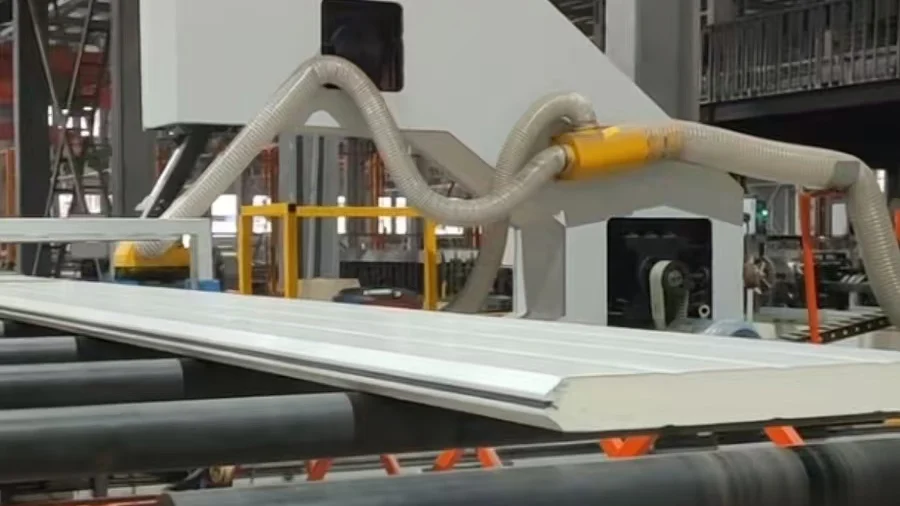
Dynamic Load Visualization for Garage Door Cable Drum Replacement
The first forward-looking step is to map load rather than only read a part number. A cable drum does not carry weight in a flat, static manner. The cable wraps across a rotating surface, the door creates changing resistance during travel, and the shaft transmits the reaction into the larger torsion system. When a drum is listed for 240 kg and another is listed for 750 kg, the difference is not only a heavier door rating. It represents a different tolerance for contact pressure, cable seating demand, and rotational stability under load.
A useful diagnostic model begins with three variables: maximum door height, maximum door weight, و maximum cable diameter. For example, Drum 8F is listed for 96 inches, 240 kg, و 1/8 inch cable, while Drum 28VL is listed for 336 inches, 750 kg, و 1/4 inch cable. If both are treated as interchangeable because they share a 1 inch shaft bore, the system logic breaks down. The shaft bore only confirms one interface. It does not confirm cable path capacity, lift height envelope, or load distribution.
A stress-mapping view would divide the drum into three zones: the entry contact zone where the cable first meets the groove, the wrapped support zone where repeated rotation concentrates contact pressure, and the exit tension zone where cable angle can amplify side loading. Under light doors, small misalignment may remain hidden for a longer period. Under heavier doors, especially near the 680 kg to 750 kg range, the same small mismatch can accelerate imprinting, cable scuffing, and unstable winding.
An edge-condition model shows the risk more clearly. In the early phase, a mismatched drum may still lift the door, but the cable begins to track with slight lateral bias. In the middle phase, the bias can create uneven wrap spacing or localized polish marks. In the extreme phase, contact pressure rises at the edge of the cable path, increasing the chance of noisy travel, inconsistent lift, or a visible difference between left and right cable tension.
A cross-dimensional test case can compare two replacement choices on the same conceptual door: a medium-height door using a drum rated for 144 inches, 340 kg, و 5/32 inch cable, versus a high-lift or vertical-lift system requiring 270 inches to 400 inches of maximum door height. The first option may appear mechanically familiar, yet it is not designed for the same lift envelope. The second option must be evaluated for the actual lift requirement, cable size, and load range before installation. This is why forward-looking replacement workflows increasingly treat the drum as a load-visualization component, not a generic accessory.
النقاط الرئيسية
- A shared 1 inch shaft bore does not prove that two drums are functionally interchangeable.
- Early warning signs include cable drift, uneven wrap spacing, and polished contact bands.
- Heavier doors near the upper catalog range magnify small alignment and cable-size errors.
Maintenance Cycle Wear Analysis Beyond First Installation
A new drum replacement may look successful on the first cycle, but the more meaningful evidence appears after repeated movement. Each opening and closing cycle repeats cable contact at similar surface zones. When the selected drum, cable diameter, and door load are compatible, contact marks should remain controlled and predictable. When the combination is wrong, wear becomes directional, concentrated, or asymmetric.
The catalog data gives a measurable way to read those marks. Drums rated for 1/8 inch cable should not be expected to behave like models designed around 3/16 inch أو 1/4 inch cable. The larger cable increases contact width and changes how pressure transfers into the groove. If the cable is too large for the drum’s intended limit, the interface may not seat correctly. If it is too small for the system expectation, it may settle deeper or move with less lateral guidance. In either case, the maintenance-cycle pattern becomes more valuable than a one-time visual inspection.
A practical wear timeline has three stages. During the initial stage, the installer may notice no severe failure, only slightly different cable sound or an uneven visual track. During the mid-cycle stage, contact bands may become easier to see, especially near cable entry and exit points. During the extreme stage, the drum may show sharper edge contact, cable imprint concentration, or rotational symptoms that appear as door hesitation. These symptoms are not always caused by the drum alone, but the drum is one of the easiest components to document because its contact surface records the cable path.
A cross-dimensional comparison can be built around replacement after service history. A low-door system near 96 inches و 240 kg may tolerate minor visual wear longer because load demand is lower. A taller or heavier system near 384 inches, 400 inches, 700 kg, أو 750 kg has less margin for poor cable tracking. The same visual mark can mean different risk levels depending on where the system sits inside the catalog envelope. This is why wear analysis should always be tied back to actual operating duty rather than judged by appearance alone.
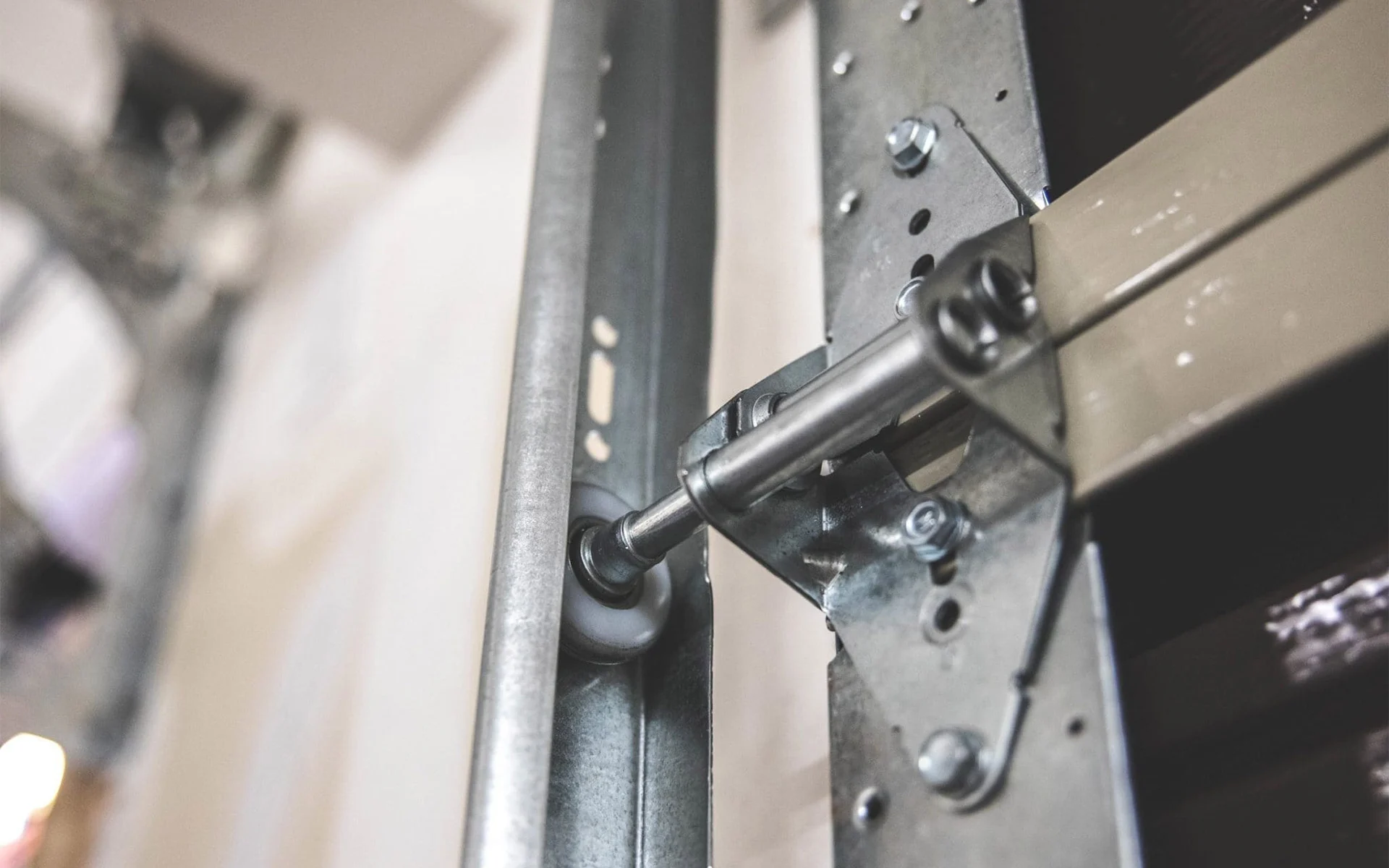
A strong maintenance review also separates three questions. Is the drum model suitable for the door height and weight? Is the cable diameter inside the stated limit? Is the left-right pairing still creating the same rotational behavior? Answering only one of these questions can hide the real cause. A drum may have the correct bore and still be unsuitable for the lift height. A cable may fit visually and still exceed the intended diameter. A pair may look similar and still behave differently after repeated service cycles.
| Diagnostic variable | Low-risk observation | Higher-risk observation | Practical validation point |
|---|---|---|---|
| Cable diameter | Within stated drum limit | Larger than listed limit | Confirm against 1/8 inch to 1/4 inch range |
| Door weight | Below model rating | Near or above model rating | Compare with 240 kg to 750 kg catalog range |
| Door height | Inside lift envelope | Close to maximum travel | Compare with 96 inch to 400 inch range |
| Shaft interface | Smooth 1 بوصة fit | Loose or forced fit | Check bore contact and rotation |
| Pair behavior | Similar left-right wrap | One side tracks differently | Observe synchronized cycling |
Lateral Alignment and Load Compensation Outlook
Cable drums rarely fail as isolated parts. They operate as a pair, and the pair must convert rotational input into balanced vertical movement. If one side develops slightly more cable tension than the other, the door can start to lift unevenly. This is especially important during replacement because a new drum placed beside an older or mismatched counterpart may reset only half of the system behavior.
The shared 1 inch shaft interface is useful because it gives a common mounting reference, but it does not remove the need for lateral alignment. Shaft runout, bracket position, cable angle, and drum seating can all influence how cable tension develops from side to side. A small lateral offset can behave like a multiplier. At lighter loads, it may show as mild noise. At higher loads, it may become a visible rise difference between the two sides of the door.
A forward-looking alignment model treats the drum pair like a compensation system. The left drum and right drum should not merely be the same nominal part; they should produce equivalent winding behavior under the same door load. The more demanding the system, the more important this becomes. A drum used around 500 kg, 575 kg, 680 kg, أو 750 kg should be evaluated with more attention than a light-duty system because the stored and transferred forces are higher. The model number, cable diameter limit, door height range, and door weight rating must all be read together.
The extreme fatigue model can be divided into three phases. In the first phase, the replacement drum seats onto the shaft and the cable begins forming its travel pattern. If the alignment is slightly off, the cable path may still appear acceptable. In the second phase, repeated operation increases the difference between the two sides, especially if cable diameter, drum groove path, or shaft seating is not equivalent. In the final phase, the door may show uneven closing, delayed side response, or recurring adjustment needs. The secondary effect is often mistaken for opener trouble or track friction, when the root may be asymmetric tension.
A cross-system comparison helps clarify this point. In a standard-height system, a small left-right difference may be corrected during adjustment and remain stable. In a vertical-lift or high-lift context, where maximum lift values such as 120 inches أو 164 inches appear in the catalog, the same difference can travel through a longer cable path and become more visible. Longer lift movement gives small rotational inconsistencies more distance to accumulate.
نصيحة للمحترفين / قائمة مراجعة
- Confirm the door height against the selected drum’s maximum height rating.
- Confirm the door weight before assuming a visually similar drum is acceptable.
- Match the cable diameter to the drum’s stated maximum cable size.
- Check that the 1 inch shaft fit is smooth, not forced or loose.
- Review both left and right drums as a working pair, not separate parts.
- Run slow test cycles and watch for uneven cable tracking before full operation.
- Record early contact marks so later wear can be compared objectively.
Environmental Extremes Simulation for Replacement Decisions
The catalog does not state a dedicated material, surface treatment, heat treatment, or casting process for the cable drum series, so those properties should not be invented. However, the operating environment can still be analyzed through mechanical logic. Garage doors, overhead doors, and industrial doors often face dust, moisture, temperature swings, and repeated load cycling. These conditions influence the cable-drum interface even when the base dimensions are correct.
A high-humidity model does not need unsupported claims about corrosion resistance. Instead, it focuses on friction and residue behavior. Moisture can carry dust into contact surfaces, and dust can change how the cable seats during rotation. If the drum is already near its load boundary, added surface contamination can increase drag or make cable tracking less consistent. A high-dust model produces a similar effect through abrasive particles. The cable may polish one area while grinding another, leaving uneven surface evidence after repeated use.
A thermal-change model is also relevant. Door systems may expand or contract slightly with temperature variation, and cable tension can feel different during cold or hot periods. The drum’s role is to maintain predictable winding despite those shifts. In a lighter system, the change may remain minor. In a heavy system near 700 kg أو 750 kg, the same environmental stress can make marginal installation errors easier to notice.
A useful edge-case simulation compares three operating conditions. In a clean indoor environment, the replacement drum is mostly judged by fit, cable size, and alignment. In a dusty service environment, groove contact and cable seating become more sensitive over time. In a humid or temperature-variable environment, the team should watch for changes between first-cycle behavior and later-cycle behavior. This test does not require inventing hidden material data. It only applies observable physics to the known replacement envelope.
| Environment condition | Expected stress effect | Replacement risk signal | Inspection focus |
|---|---|---|---|
| Clean indoor use | Stable cable contact | Minimal change after cycling | Fit, alignment, pairing |
| Dust exposure | Abrasive contact at cable path | Rougher sound or uneven marks | Groove surface and cable track |
| Humidity exposure | Changed friction and residue | Inconsistent cable seating | Contact area cleanliness |
| Temperature swing | Slight tension behavior shift | Different cold-start movement | Slow-cycle observation |
| Heavy-duty operation | Higher contact pressure | Faster visible wear | Door weight and cable diameter |
The factory-level solution is not to overclaim. It is to document model selection, inspect the 1 inch shaft bore, check cable grooves for burrs or sharp edges, verify left-right pairing, validate cable-drum compatibility, and conduct controlled rotation checks before release or installation. That procedure respects the catalog facts while reducing the chance that a replacement drum becomes the hidden cause of uneven lift behavior.
الأسئلة الشائعة (FAQ)
How to manually open a garage door with cable drum concerns?
Disconnecting an opener does not remove cable tension. If a cable drum replacement is suspected, manual opening should be handled cautiously because uneven cable tracking can make the door move unpredictably. Check cable seating, left-right balance, and spring tension before forcing movement.
How to fix a garage door off track when the drum may be involved?
An off-track door can involve rollers, tracks, cables, springs, or drums. Inspect whether the cable is winding evenly on both drums. If one side shows drift, loose cable, or uneven wrap spacing, the drum and cable path should be checked before resetting the door.
How to replace a garage door seal without affecting drum alignment?
Seal replacement is usually separate from cable drum replacement, but the door should remain level during the work. If the bottom seal change requires lifting or tilting the door, avoid disturbing cable tension. After the seal is installed, cycle slowly and watch both drum sides.
How do I program a garage door remote after drum replacement?
Remote programming does not correct mechanical imbalance. Program the remote only after the door moves smoothly through manual or controlled test cycles. If the door hesitates, rises unevenly, or the cable tracks poorly, resolve the drum, cable, or spring issue first.
How to set up a garage door opener with a car after cable drum replacement?
Set up the car opener only after mechanical validation. The opener should not be used to mask cable drum mismatch, uneven lift, or excessive friction. Confirm smooth travel, balanced movement, and proper cable winding before linking the vehicle control system.
How to seal a garage door when uneven lifting is present?
Sealing should follow mechanical correction, not replace it. If the door does not sit evenly, the seal may appear to fail even when the seal itself is good. Check cable drum pairing, cable seating, and door level before adjusting weatherstripping.
 English
  Русский
  日本語
日本語  한국어
한국어  Français
  Deutsch
  العربية
  Português
  Español