
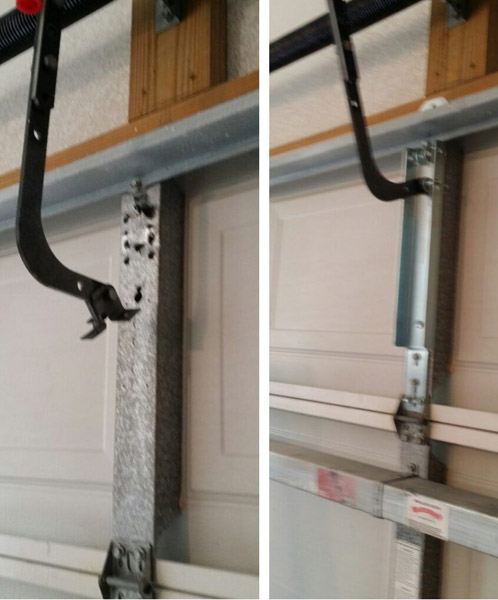
Bottom-Bracket Safety Architecture Evaluating Load-Bearing Risks and Structural Integrity of Garage Door Quick Stop Bottom Bracket
A garage door quick stop bottom bracket, also known as the Safe Bottom Bracket, is a vital safety component that anchors the bottom section of a sectional garage door to the lift cables. Its robust design and reliable load-bearing support are essential for preventing failure risks during mechanical maintenance and ensuring the safety of both technicians and end-users.
This technical review explores the structural integrity and safety architecture of the garage door quick stop bottom bracket, highlighting its critical role in supporting the entire door system and minimizing hazards in demanding operation scenarios.
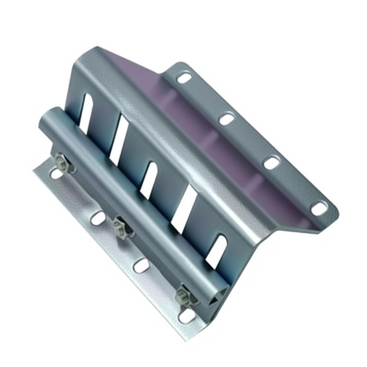
The garage door quick stop bottom bracket, also known as the Safe Bottom Bracket, is a critical safety component in sectional garage door assemblies. Its primary function is to anchor the bottom section of the door to the lift cables and support the entire door system’s weight during operation and at rest. For garage door technicians, understanding the structural integrity and load-bearing capacity of this bracket is essential, as any failure can result in significant safety hazards, including uncontrolled door descent or cable detachment. This review provides an in-depth technical evaluation of the bracket’s architecture, materials, and specifications, focusing on its role in minimizing load-bearing failure risks and ensuring reliable safety support in mechanical maintenance scenarios.
The analysis begins with a breakdown of the bracket’s structural design and key safety features, followed by a detailed examination of material selection and their impact on mechanical performance. Precise specification data is then provided to support field verification and compliance assessment. The review concludes with a set of actionable engineering checks for technicians tasked with installation, inspection, or replacement, emphasizing the importance of verifying structural parameters to prevent catastrophic failure.
The garage door quick stop bottom bracket is engineered to withstand substantial dynamic and static forces. Its architecture is defined by a reinforced mounting plate, cable attachment point, and integrated safety features designed to prevent unintentional cable release during servicing. The bracket is typically installed at the lower corners of the door, where it serves as the primary interface between the lifting cables and the door’s vertical load path. The bracket’s geometry is optimized to distribute forces evenly across the door section, minimizing stress concentrations that could lead to fatigue or fracture.
A distinguishing feature of the Safe Bottom Bracket is its quick stop mechanism, which incorporates a cable retention tab or pin. This feature is intended to prevent the cable from disengaging if the fastener is inadvertently removed or if the bracket experiences partial detachment. The retention system is a direct response to historical incidents where bracket failure resulted in uncontrolled cable release, posing severe injury risks to technicians and end-users. The bracket’s mounting holes are typically slotted to accommodate minor misalignments during installation, but the overall design must ensure that all fasteners are fully engaged and torqued to specification to maintain structural integrity.
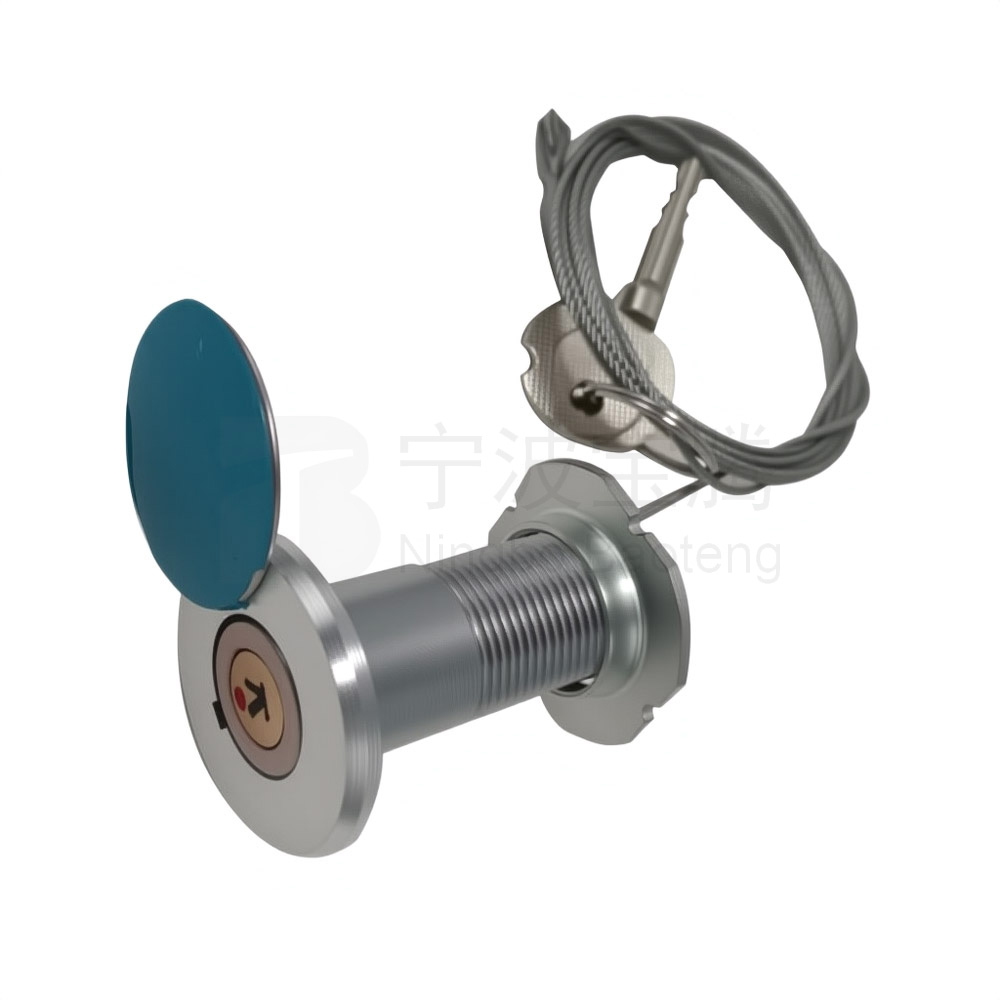
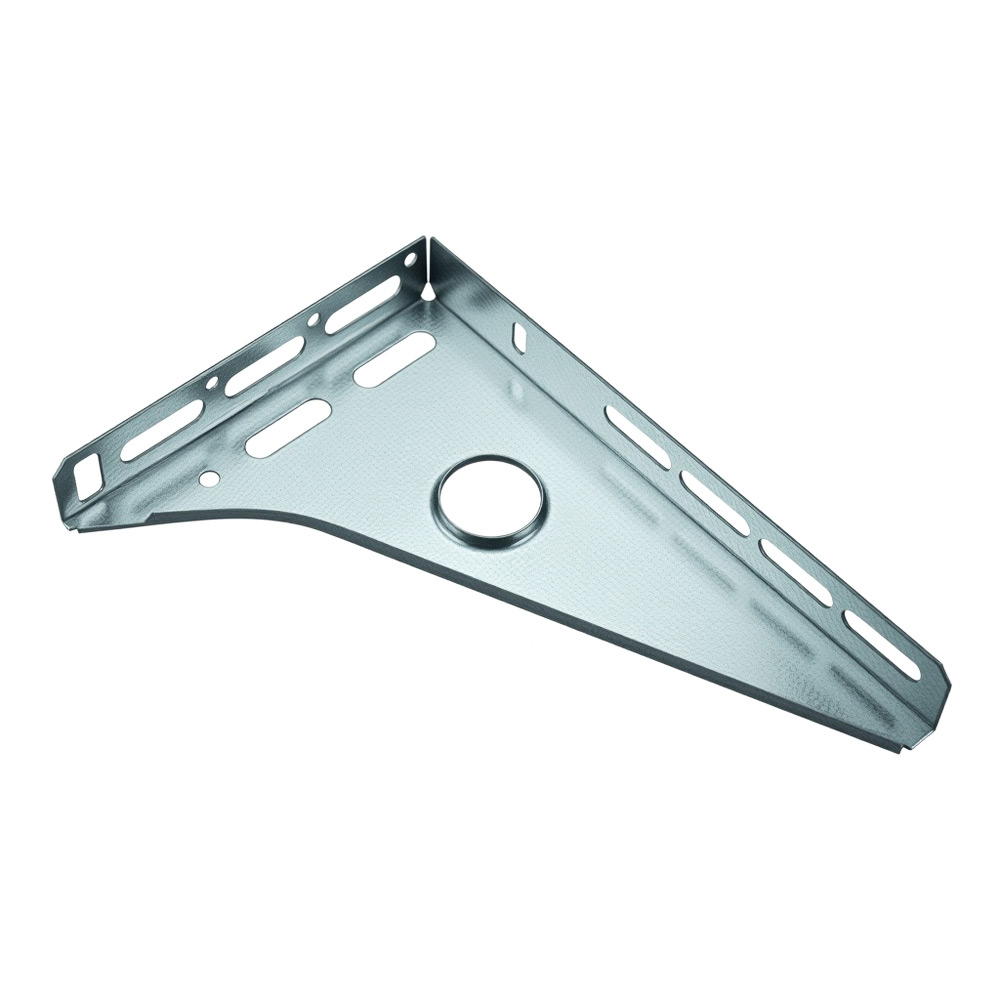
Material selection is a primary determinant of the bracket’s mechanical performance and long-term durability. Most garage door quick stop bottom brackets are fabricated from cold-rolled steel, typically in the range of 2.5–3.5 mm thickness. Steel is selected for its high tensile strength, ductility, and resistance to impact loading. The bracket is usually formed by stamping or laser cutting, followed by precision bending to achieve the required geometry. Critical load-bearing surfaces may be further reinforced by welding or the addition of stiffening ribs.
Corrosion resistance is a significant concern, given that the bracket operates in environments subject to moisture, temperature fluctuations, and potential chemical exposure. To mitigate corrosion-related degradation, brackets are commonly finished with a zinc electroplating or hot-dip galvanizing process, providing a protective barrier against oxidation. In some cases, powder coating is applied as an additional layer of protection, particularly in coastal or high-humidity installations.
Alternative materials, such as stainless steel or high-strength aluminum alloys, are occasionally specified for specialized applications requiring enhanced corrosion resistance or reduced weight. However, these materials must be carefully evaluated for compatibility with the door system’s load requirements and the bracket’s intended safety function. Stainless steel, while offering superior corrosion protection, may require increased thickness to achieve equivalent load-bearing capacity due to its lower yield strength compared to carbon steel.
From a structural safety perspective, the bracket must be capable of supporting the full weight of the door section, plus any additional dynamic loads imposed during opening, closing, or emergency stops. According to ANSI/DASMA 102 standards (ANSI/DASMA 102), bottom brackets should be designed to withstand at least 150% of the maximum anticipated door weight without permanent deformation or loss of function. This requirement is intended to provide a safety margin that accounts for unexpected load spikes, such as those caused by spring failure or operator error.
In practice, the bracket’s load path begins at the cable loop, which is secured to the bracket’s attachment post or pin. The force is transmitted through the bracket body to the mounting plate, which is fastened to the door’s end stile using high-strength bolts or lag screws. The mounting interface must resist both shear and pull-out forces, with the fastener pattern and bracket thickness engineered to prevent localized yielding. The bracket’s geometry often includes flanges or gussets to increase bending resistance and reduce the risk of distortion under load.
The bracket’s fasteners are equally critical to overall system reliability. High-grade steel bolts, typically Grade 5 or higher, are recommended to prevent premature shear or tensile failure. All fasteners should be installed with appropriate washers and lock nuts to maintain clamp force under vibration and thermal cycling. Technicians must verify that fasteners are free of corrosion and properly torqued during installation and routine inspection.
Dimensional specifications for the garage door quick stop bottom bracket are standardized to ensure compatibility with a wide range of sectional door profiles. Typical dimensions include a mounting plate width of 80–100 mm, height of 60–90 mm, and a cable attachment post diameter of 10–12 mm. The bracket thickness should not be less than 2.5 mm for standard residential doors, with commercial applications requiring up to 4 mm thickness depending on the door weight and usage frequency.
The cable retention feature must be dimensioned to securely capture the cable loop without excessive play, which could lead to wear or accidental disengagement. The retention tab or pin should be fabricated from hardened steel and designed to withstand direct impact or prying forces without deformation. All edges and corners must be free of burrs or sharp projections to prevent cable abrasion and premature failure.
TEST SUMMARY: Structural Load Verification – Test ID: SB-2024-07
- Test Objective: Validate bottom bracket load-bearing capacity under simulated door weight plus dynamic overload.
- Method: Incremental loading applied to bracket assembly mounted on standard door section; monitored for permanent deformation, fastener pull-out, and cable retention integrity.
- Result: Bracket maintained structural integrity up to 1.7x rated door weight; no failure or cable disengagement observed.
- Conclusion: Safe Bottom Bracket meets ANSI/DASMA 102 safety margin requirements for load-bearing performance.
Technicians evaluating the garage door quick stop bottom bracket must prioritize structural integrity assessment during installation and maintenance. The core pain point—load-bearing failure risk—can be mitigated by adhering to the following engineering checks:
- Visual Inspection: Examine the bracket for visible signs of deformation, corrosion, or weld failure. Any evidence of cracking, bending, or excessive rust indicates compromised load capacity and warrants immediate replacement.
- Fastener Verification: Confirm that all mounting bolts are present, properly torqued, and free of corrosion. Loose or missing fasteners are a primary cause of bracket detachment and cable release.
- Cable Retention Check: Ensure the cable loop is fully seated within the retention mechanism and that the tab or pin is undamaged and securely engaged.
- Material Integrity: Inspect protective coatings for continuity. Any breach in the zinc or powder coating may accelerate corrosion and reduce bracket lifespan.
- Load Path Confirmation: Verify that the bracket is mounted flush against the door stile, with no gaps or misalignment that could introduce bending stresses or uneven load distribution.
- Specification Compliance: Cross-check bracket dimensions, material thickness, and fastener grade against manufacturer and ANSI/DASMA 102 requirements to ensure adequate safety margin is maintained.
For maintenance specialists, the reliability of the garage door quick stop bottom bracket directly impacts technician safety and end-user risk. Any deviation from specified materials, geometry, or installation procedure can significantly increase the likelihood of load-bearing failure, especially in high-cycle or high-load environments. Regular inspection intervals should be established based on door usage frequency and environmental conditions, with particular attention paid to brackets installed in corrosive or high-moisture locations.
When selecting replacement brackets, it is essential to source components that are certified to meet or exceed relevant safety standards. Documentation of compliance with ANSI/DASMA 102 or equivalent regional standards should be retained for all installed hardware. In the event of bracket upgrade or retrofit, compatibility with existing door geometry and cable hardware must be verified to prevent unintended stress concentrations or interference.
Technicians are encouraged to maintain detailed records of all inspections, replacements, and repairs involving bottom brackets. This documentation supports traceability and facilitates root-cause analysis in the event of failure. Where possible, load testing or non-destructive evaluation methods (such as dye penetrant inspection for cracks) should be employed to validate bracket integrity, especially in critical applications.
ENGINEERING ACTION: Always verify structural parameters and compliance with ANSI/DASMA 102 before installation or sign-off. Any deviation from specified materials, geometry, or fastener torque must be corrected to maintain safety margin.
For more technical documentation and support, refer to the Baoteng Technical Documentation or consult the برامج تعليمية للتثبيت for best practices on Safe Bottom Bracket installation and maintenance.
 English
  Русский
  日本語
日本語  한국어
한국어  Français
  Deutsch
  العربية
  Português
  Español