
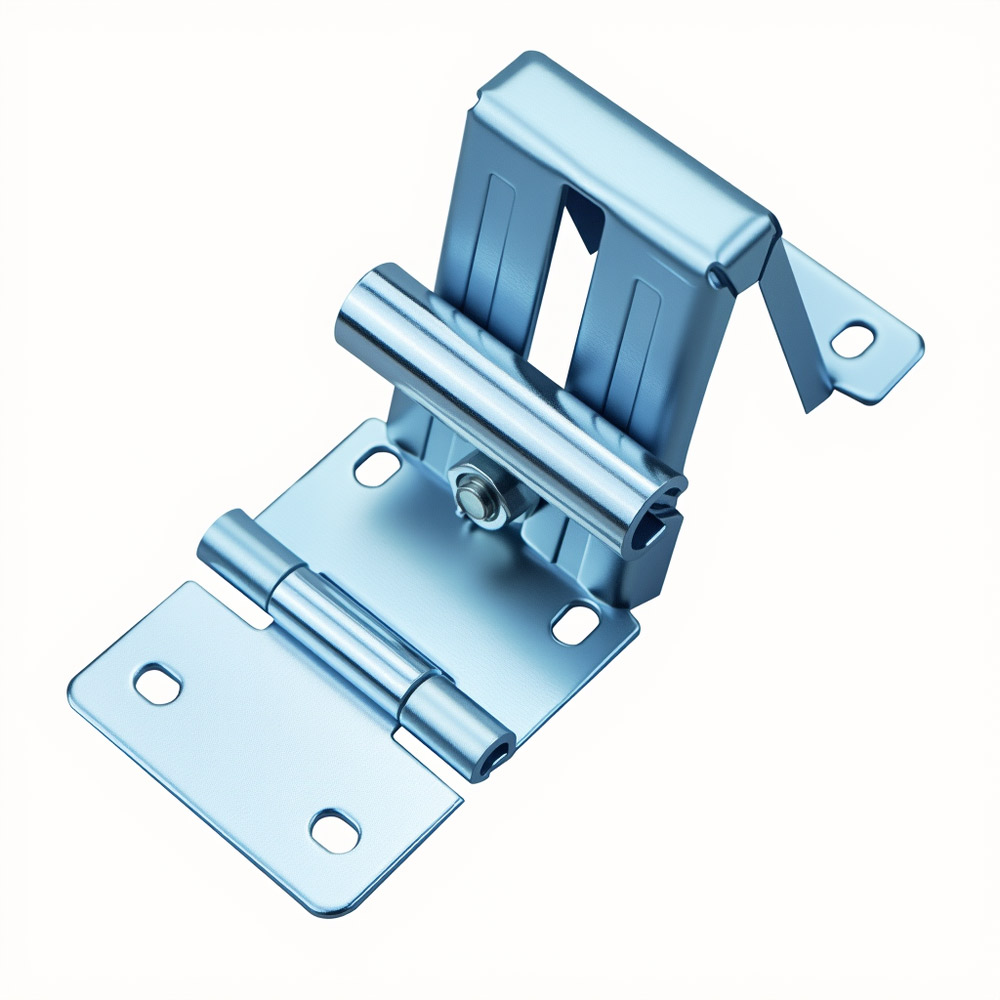
Reliability and Noise Management in Heavy Duty Steel Gate Hinges for Sectional Gates
Modern industrial and commercial sectional gates demand hardware that delivers both robust performance and quiet operation. Heavy duty steel gate hinges and quiet hinges are engineered to disperse articulation stress and minimize noise, ensuring long-term reliability in high-cycle environments.
This article explores the engineering principles behind heavy duty steel gate hinges, focusing on sectional articulation, stress dispersion, and the critical challenge of noise and vibration control in demanding applications.
Mechanical Reliability of Heavy Duty Steel Gate Hinges
The mechanical architecture of heavy duty steel gate hinges is fundamentally defined by their ability to distribute concentrated loads across sectional interfaces. In sectional gate systems, each hinge must accommodate not only the static weight of the gate panels but also dynamic forces generated during opening and closing cycles. The articulation points, typically realized through precision-machined knuckles and pins, act as focal zones for stress concentration. To address this, advanced hinge designs incorporate features such as oversized hinge barrels, hardened steel pins, and multi-leaf assemblies. These structural enhancements facilitate even stress dispersion along the hinge axis, reducing the risk of localized fatigue failure.
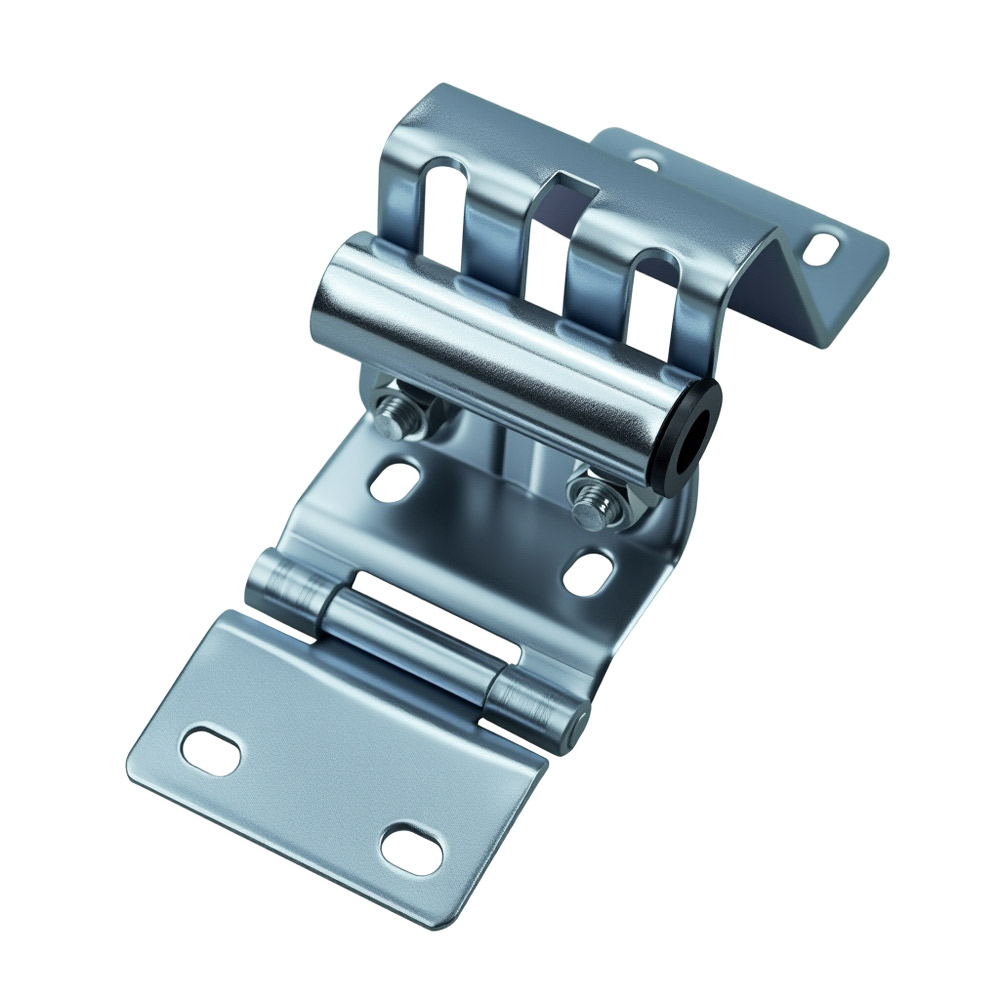
Material selection is another critical factor in the reliability of heavy duty steel gate hinges. High-grade carbon or alloy steels are commonly employed, offering superior yield strength and resistance to deformation under high loads. Surface treatments, such as case hardening or zinc plating, further enhance wear resistance and protect against corrosion—a frequent concern in outdoor or industrial environments. The integration of self-lubricating bushings or composite liners within the hinge assembly can significantly reduce frictional wear, extending service life and contributing to quieter operation.
The geometry of the hinge also plays a decisive role in both mechanical reliability and acoustic performance. Hinges designed with increased pin diameter and optimized knuckle spacing can better resist bending moments and shear forces induced by sectional movement. Additionally, the use of tight manufacturing tolerances minimizes lateral play, which is a common source of rattle and vibration. For applications requiring especially quiet hinges, engineers may specify double-bearing designs or incorporate elastomeric dampers at the articulation interfaces. These modifications absorb vibrational energy and dampen transient noise spikes during movement.
Evaluation of Quiet Hinges and Vibration Control
Reliability in heavy duty steel gate hinges is quantified through a combination of static load capacity, fatigue resistance, and consistent performance over extended operational cycles. For sectional gates, where hinges are subjected to frequent movement and variable loading, the articulation mechanism must be engineered to prevent premature wear and structural degradation. Stress dispersion is achieved through both macro- and micro-level design strategies. At the macro level, distributing hinges evenly along the sectional interface ensures that no single hinge is overloaded. At the micro level, the internal architecture of each hinge—particularly the interface between pin and barrel—must be optimized to prevent stress risers that could initiate cracks or deformation.
Noise and vibration control, the core pain point for many designers, is inherently linked to the mechanical interaction between hinge components. Metal-on-metal contact, if left unmitigated, produces both airborne noise and structure-borne vibration. To address this, several engineering solutions are implemented. Precision machining of mating surfaces reduces surface roughness, minimizing friction-induced noise. The application of advanced lubricants, such as PTFE or molybdenum disulfide greases, forms a protective film that further dampens acoustic emissions. In high-cycle environments, the use of composite or polymeric bushings can provide a dual benefit: lowering friction and acting as an acoustic buffer between steel components.
The evaluation of quiet hinges in sectional gate systems extends beyond laboratory testing to real-world operational scenarios. Engineers must consider not only the initial noise levels but also the long-term acoustic performance as hinges experience wear. Accelerated life testing, including repeated articulation under load, is used to simulate years of service in a compressed timeframe. Data from these tests inform design refinements, such as adjusting bushing materials or modifying hinge geometry to further disperse stress and reduce noise output.
Vibration analysis is another critical component of hinge evaluation. Using accelerometers and contact microphones, engineers can map the transmission of vibrational energy through the gate structure during articulation. This data enables targeted interventions, such as the strategic placement of damping materials or the redesign of hinge mounting points to interrupt vibration pathways. The ultimate goal is to achieve a hinge system that not only meets mechanical reliability standards but also delivers consistently quiet operation throughout its service life.
In addition to mechanical and acoustic performance, the maintainability of heavy duty steel gate hinges is a key consideration for door system designers. Hinges that facilitate easy inspection, lubrication, and replacement of wear components contribute to the overall reliability of the gate system. Design features such as grease fittings, removable pins, and modular bushing assemblies allow for proactive maintenance, reducing the risk of unexpected failures and associated downtime. From an engineering perspective, the ability to service hinges without dismantling the entire gate structure is a significant advantage in high-traffic or mission-critical installations.
From a technical standpoint, the selection and specification of heavy duty steel gate hinges for sectional applications must be grounded in rigorous engineering analysis. Door system designers are advised to conduct finite element modeling to predict stress distribution under anticipated loading conditions. Acoustic modeling, combined with empirical noise measurements, provides a quantitative basis for hinge selection and design optimization. The integration of these analytical tools enables the identification of potential failure points and noise sources before installation, reducing the likelihood of costly retrofits or operational disruptions.
Achieving Reliable and Quiet Operation in Sectional Gate Systems
In summary, the engineering of heavy duty steel gate hinges and quiet hinges for sectional movement is a multidisciplinary challenge requiring careful attention to stress dispersion, material selection, geometric precision, and acoustic attenuation. The core pain point of noise and vibration control during articulation is addressed through a combination of structural enhancements, advanced materials, and targeted damping strategies. By applying a rigorous mechanical stress dispersion and noise attenuation perspective, designers can achieve reliable, long-lasting, and quiet operation in demanding gate systems.
For engineering-grade assurance, it is essential to verify hinge parameters through comprehensive safety checks and performance validation. This includes confirming load ratings, inspecting for uniform stress dispersion, and conducting in-situ noise measurements under actual operating conditions. Only through such systematic technical evaluation can the long-term reliability and acoustic performance of heavy duty steel gate hinges in sectional applications be confidently established.
For further technical resources on hinge engineering, visit our hinge product page or review our المواصفات الهندسية for detailed guidance.
 English
  Русский
  日本語
日本語  한국어
한국어  Français
  Deutsch
  العربية
  Português
  Español