
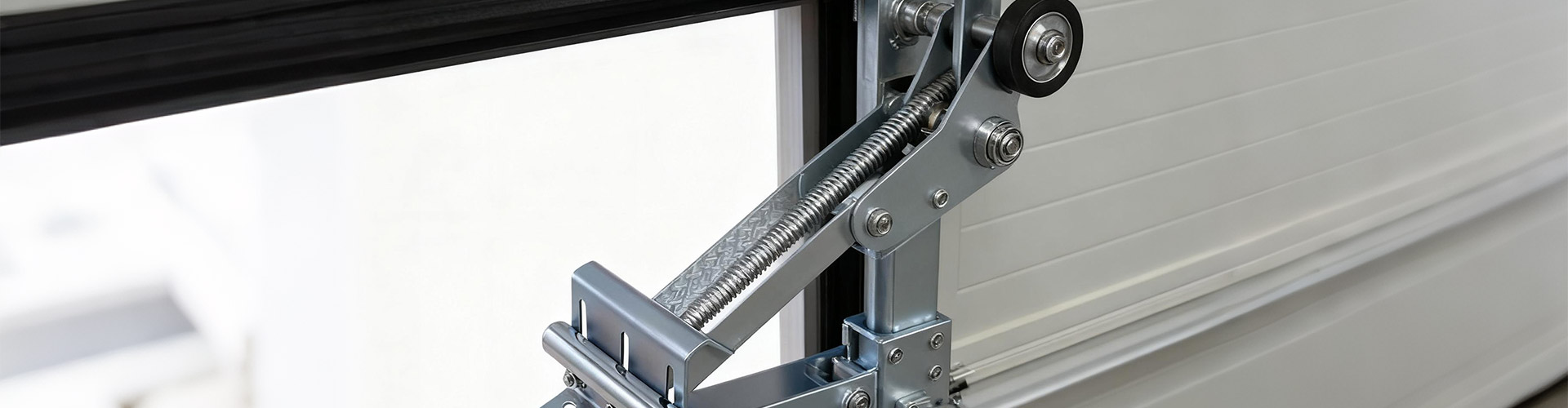
Managing Alignment Deviation in Industrial Joint Angle Iron for Garage Door Track Bracket Structural Rigidity
Ensuring the precise alignment of Industrial Joint Angle Iron and garage door track bracket is essential for maintaining structural rigidity and reliable load distribution in industrial garage door assemblies. Addressing alignment deviation at the installation stage helps prevent stress concentrations and system instability, supporting long-term performance and safety.
This analysis explores the technical challenges and best practices for optimizing the connection and alignment of Industrial Joint Angle Iron and garage door track bracket, providing actionable guidance for installation planners and engineers.
Structural function and alignment of Industrial Joint Angle Iron and garage door track bracket
In industrial garage door assemblies, the function and alignment of joint angle iron and track brackets are fundamental to the stability and operational reliability of the entire system. For installation planners, achieving precise alignment is not simply a matter of aesthetics but a core requirement for ensuring that structural loads are distributed as intended. Misalignment, even by a small margin, can cause significant deviations in load paths, leading to stress concentrations, premature wear, and compromised system rigidity. This technical analysis, authored from the perspective of a door system designer, examines the structural role of industrial joint angle iron and garage door track brackets, with a particular focus on how alignment deviation affects load distribution and overall structural integrity. The following structured analysis provides detailed guidance for installation planners tasked with optimizing bracket alignment, ensuring that the system meets both performance and safety criteria.
Industrial garage doors are exposed to dynamic and static loads during operation, including the weight of the door panels, torsion spring forces, and impact loads from frequent cycling. The joint angle iron serves as a primary structural member, connecting the track bracket to the building substrate and providing a rigid interface for load transfer. The track bracket, in turn, secures the vertical and horizontal tracks, maintaining their geometry and alignment relative to the door panels. The interface between these components is critical: any misalignment at the joint angle iron or bracket can propagate through the system, resulting in skewed tracks, increased rolling resistance, and uneven wear on rollers and hinges.
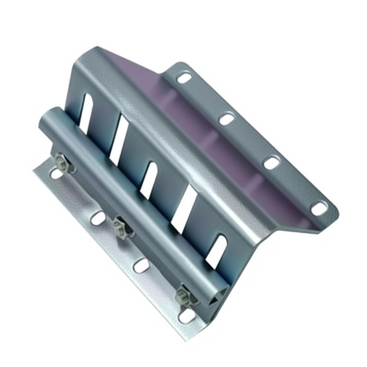
From a structural load distribution perspective, the joint angle iron must be capable of withstanding both shear and bending loads transmitted from the track bracket. The rigidity of this connection is determined by several factors: the material properties of the angle iron (typically cold-formed steel with specified yield strength), the cross-sectional geometry (leg length, thickness, and fillet radius), and the quality of the connection (bolt pattern, torque, and surface flatness). When alignment deviation occurs, the load path is no longer perpendicular to the intended structural axis, resulting in eccentric loading. This can induce secondary moments in the angle iron, increasing the risk of local buckling or plastic deformation, especially at bolt holes or weld seams.
The track bracket itself is designed to maintain the spatial orientation of the garage door tracks. In industrial settings, where door panels are heavier and operational cycles are higher, the bracket must resist not only the vertical loads but also lateral forces generated during door movement. Proper alignment ensures that these forces are transmitted directly into the supporting structure via the joint angle iron. However, if the bracket is installed with even minor angular deviation, the resulting misalignment can cause the track to twist or bow, leading to increased friction, roller mis-tracking, and, ultimately, system instability.
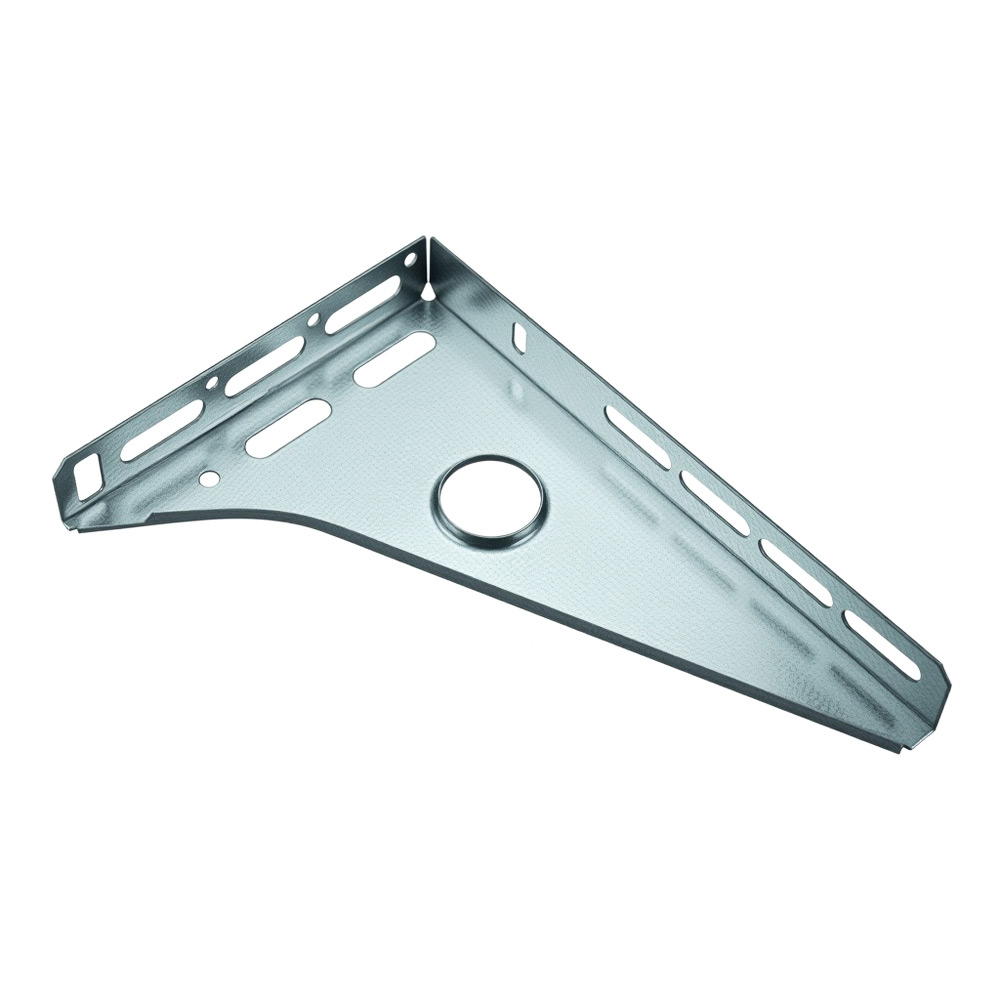
Installation process and mitigation of alignment deviation
- Substrate Preparation: Before installing the joint angle iron, verify that the mounting surface is flat, level, and free of debris. Use a calibrated straightedge and digital level to check for deviations exceeding the allowable tolerance (typically ±1 mm per meter for industrial doors).
- Angle Iron Positioning: Place the angle iron against the substrate, ensuring full contact along its length. Use temporary clamps to hold the angle in position while marking hole locations. Avoid forcing the angle iron to match an uneven surface, as this can introduce pre-load and reduce structural rigidity.
- Hole Alignment and Drilling: Mark and drill bolt holes with precision, using a template or laser guide where possible. Ensure that hole diameters match the specified bolt size, with minimal clearance to prevent slippage under load.
- Bracket Installation: Attach the garage door track bracket to the angle iron using high-strength bolts, torqued to manufacturer specifications. Use a digital angle gauge to confirm that the bracket is perpendicular to both the angle iron and the intended track plane.
- Track Alignment: After securing the bracket, install the vertical and horizontal tracks, verifying alignment with a laser level or optical sight. Check for parallelism and plumbness at multiple points along the track length.
- الفحص النهائي: Cycle the door several times and observe for signs of binding, uneven roller movement, or abnormal noise. Recheck all fasteners and adjust as necessary to eliminate any residual misalignment.
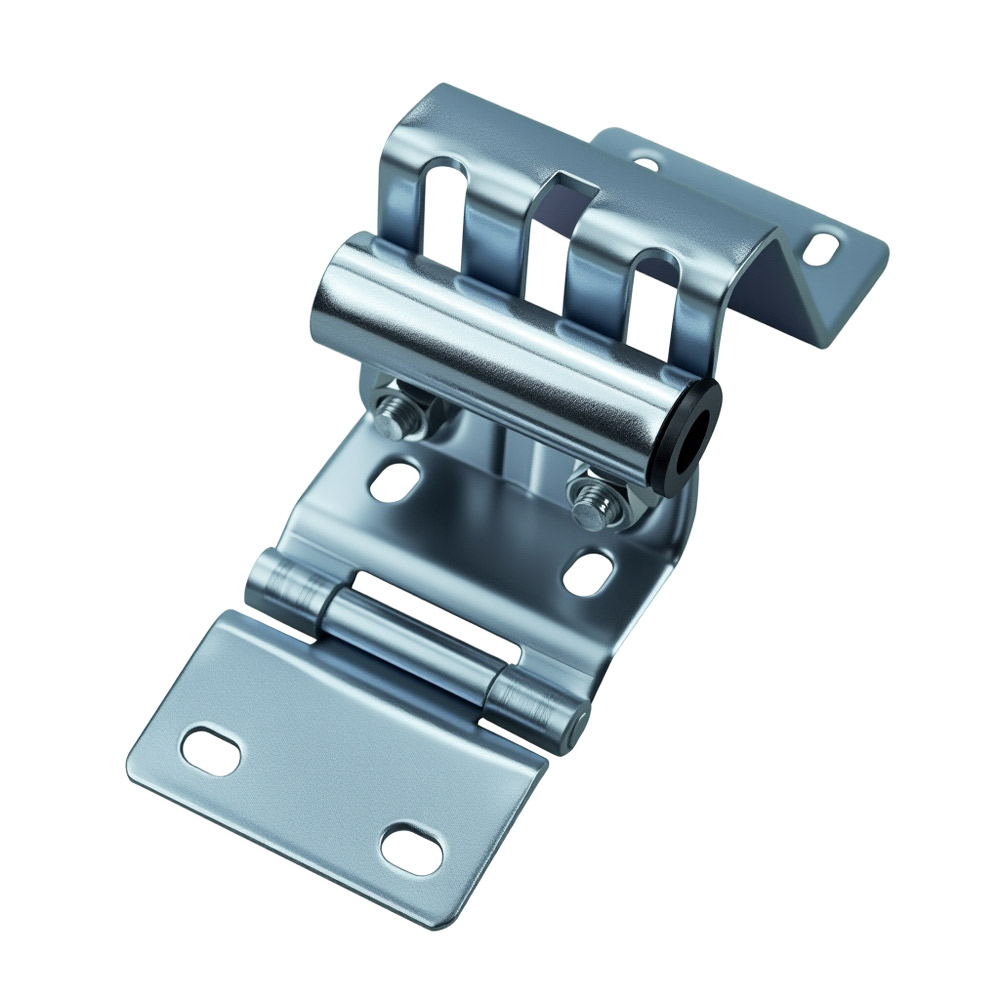
The consequences of alignment deviation are not limited to immediate operational issues. Over time, misaligned brackets and angle irons can lead to fatigue failure at connection points, increased maintenance intervals, and, in severe cases, catastrophic system failure. For installation planners, the core pain point is that even minor deviations can have disproportionate effects on structural rigidity and load distribution. This is particularly true in high-cycle industrial environments, where repetitive loading can exacerbate any initial misalignment.
A series of laboratory tests were conducted to measure the effect of alignment deviation on the load-bearing capacity of industrial joint angle iron assemblies. Results indicated that a 2° angular misalignment at the bracket interface reduced the ultimate load capacity by up to 18%, primarily due to the introduction of secondary bending moments and localized stress concentrations. These findings underscore the necessity for precise alignment during installation to maintain system performance and longevity.
For installation planners, adherence to recognized standards is critical. The American National Standards Institute (ANSI) and the Door & Access Systems Manufacturers Association (DASMA) provide guidelines for garage door hardware installation, including recommended tolerances for bracket and angle iron alignment. For example, ANSI/DASMA 102 specifies maximum allowable deviations for track mounting and bracket positioning to ensure safe operation (ANSI/DASMA 102 Standard). Compliance with these standards not only enhances structural rigidity but also minimizes liability and maintenance costs.
Material selection for the joint angle iron is another critical factor influencing structural performance. Cold-formed steel with a minimum yield strength of 250 MPa is commonly specified for industrial applications. The cross-sectional dimensions must be chosen based on calculated load requirements, with additional consideration for local buckling resistance. Galvanized coatings are recommended for corrosion protection, especially in humid or corrosive environments, to preserve long-term rigidity.
The connection between the joint angle iron and the garage door track bracket should be engineered to resist both static and dynamic loads. High-strength bolts (grade 8.8 or higher) are preferred, with locking washers or thread-locking compounds to prevent loosening under vibration. Where welding is used, welds must be continuous and inspected for cracks or porosity. All connection points should be accessible for periodic inspection and maintenance.
To further enhance alignment precision, advanced installation tools such as laser alignment systems and digital inclinometers are increasingly used in industrial projects. These tools enable real-time verification of bracket and track orientation, reducing human error and ensuring compliance with tight tolerances. For critical installations, consider implementing a double-check protocol, where two independent technicians verify alignment before final tightening of fasteners.
Alignment verification and technical resources
Prior to commissioning the garage door system, conduct a comprehensive alignment verification using calibrated measurement tools. Document all measurements and compare against project specifications and relevant ANSI/DASMA standards. Any deviations beyond allowable tolerances must be corrected before the system is placed into service.
Verify bracket alignment parameters for optimal system performance. This step is essential not only for structural integrity but also for minimizing maintenance requirements and extending the operational life of the door system. For further technical resources or detailed installation guidelines, consult the Baoteng Company Overview or reference applicable ANSI/DASMA documentation.
 English
  Русский
  日本語
日本語  한국어
한국어  Français
  Deutsch
  العربية
  Português
  Español