
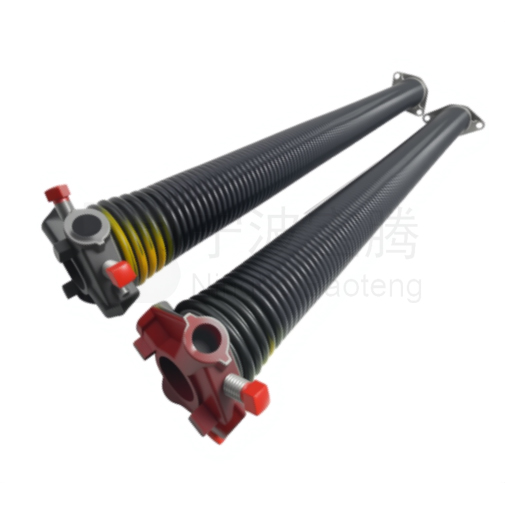
Load-bearing reliability of garage door pusher springs in managing lifting and balancing challenges
In modern garage door systems, garage door pusher springs are essential for ensuring safe, balanced operation and long-term reliability. By effectively counteracting load imbalance during lifting and balancing, these springs help maintenance engineers address structural fatigue resistance and maintain consistent performance throughout the service life of the door.
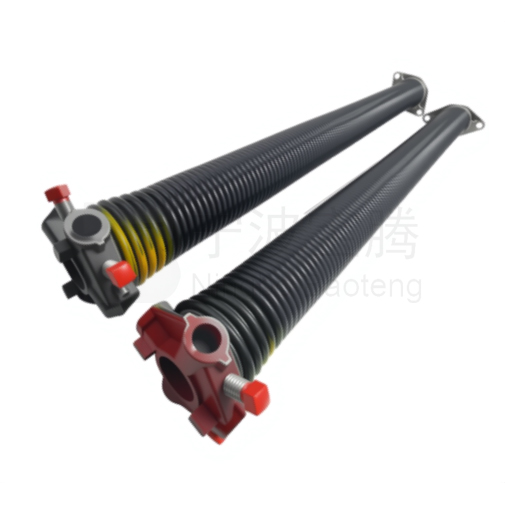
In garage door systems, the precise management of lifting and balancing forces is critical to operational safety and long-term performance. Pusher springs, often referred to as garage door pusher springs, play a pivotal role in counteracting load imbalances that can arise due to uneven weight distribution or wear in the door assembly. For mechanical maintenance specialists, understanding the structural fatigue resistance and load-bearing reliability of these components is essential to ensuring both immediate functionality and extended service life. This structured analysis will examine the mechanical architecture of pusher springs, their reliability under cyclic loading, and methods for evaluating their performance, all from the perspective of a maintenance engineer focused on mechanical load management and structural fatigue resistance.
Garage door pusher springs are specifically engineered to assist in the smooth, controlled movement of sectional doors by providing supplementary force during the lifting phase and absorbing shock during closure. Unlike primary torsion or extension springs, pusher springs are typically installed in auxiliary positions where localized load compensation is necessary. The selection of material, coil geometry, and mounting configuration directly influences their ability to withstand repeated stress cycles without succumbing to premature fatigue or deformation.
The core function of pusher springs in a garage door assembly is to address load imbalance—a condition where uneven force distribution leads to asymmetric wear, increased operational noise, and accelerated component fatigue. In practical terms, load imbalance may result from off-center mounting, panel warping, or hardware misalignment. Pusher springs counteract these effects by delivering targeted force to specific sections of the door, thereby restoring equilibrium and reducing the risk of structural failure. From an engineering standpoint, the springs must exhibit high fatigue resistance, maintain dimensional stability under varying loads, and provide consistent force output across thousands of operational cycles.
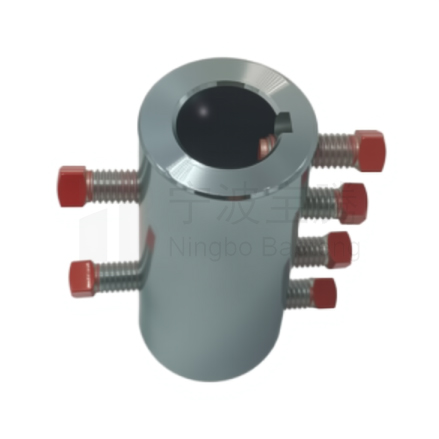
Reliability in pusher spring design is achieved through a combination of material science and mechanical engineering principles. The most common materials for garage door pusher springs are high-carbon steel alloys, such as ASTM A229 or A228, which offer a favorable balance of tensile strength, ductility, and fatigue resistance. The wire diameter, number of active coils, and helix angle are meticulously calculated to distribute stresses evenly and minimize the risk of surface microcracking—a primary initiator of fatigue failure.
Surface treatments, such as shot peening or zinc plating, are often applied to enhance corrosion resistance and further improve fatigue life. Shot peening introduces residual compressive stresses on the spring surface, which inhibit crack initiation and propagation. This is particularly important in environments with high humidity or exposure to corrosive agents, as surface degradation can significantly reduce the effective lifespan of the spring.
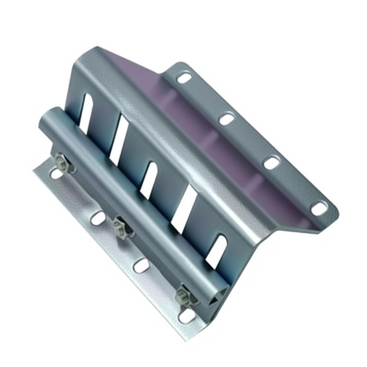
The mounting configuration of pusher springs is another critical factor influencing load-bearing reliability. Proper alignment ensures that the force vector produced by the spring is optimally oriented to counteract the specific imbalance present in the door system. Misalignment or improper seating can introduce bending stresses, leading to premature failure or loss of force output. Engineering best practices dictate that pusher springs be installed with minimal preload and that their mounting brackets be rigidly secured to prevent migration during operation.
Reliability assessment for garage door pusher springs involves both theoretical calculations and empirical testing. Theoretical analysis begins with load distribution modeling, which quantifies the forces acting on each section of the door under static and dynamic conditions. Finite element analysis (FEA) is frequently employed to simulate stress concentrations within the spring coils and to predict potential failure points under cyclic loading. These simulations inform the selection of wire diameter, coil pitch, and material grade.
Empirical evaluation is conducted through fatigue testing, where springs are subjected to repeated loading and unloading cycles that replicate real-world operating conditions. The number of cycles to failure, commonly referred to as the fatigue life, is a key metric for assessing reliability. For garage door applications, a minimum fatigue life of 10,000 cycles is typically required, though higher standards may be specified for commercial or industrial installations. The presence of load imbalance accelerates fatigue accumulation, making it imperative that pusher springs are specified with an adequate safety factor.
Routine inspection and maintenance are essential to sustaining the reliability of pusher springs. Maintenance engineers should regularly check for signs of surface pitting, coil deformation, or loss of preload—all indicators of emerging fatigue or overload. Lubrication schedules must be adhered to, as frictional wear can exacerbate stress concentrations and reduce fatigue life. In cases where load imbalance has been identified, corrective action should include not only spring replacement but also a comprehensive review of door alignment and hardware condition.
In evaluating the performance of garage door pusher springs, several criteria must be considered. The primary metric is the spring’s ability to maintain consistent force output over its operational lifespan. Any significant reduction in force may indicate plastic deformation or internal cracking, both of which compromise load-bearing reliability. Secondary metrics include resistance to environmental degradation, ease of adjustment, and compatibility with existing door hardware.
From a structural fatigue resistance perspective, the most common failure modes in pusher springs are low-cycle fatigue, surface corrosion-induced cracking, and mechanical overload. Low-cycle fatigue is characterized by the initiation and propagation of cracks at points of maximum stress, typically the inner surface of the coil. Corrosion accelerates this process by creating localized stress risers, while mechanical overload can cause immediate coil distortion or fracture.
To address the core pain point of load imbalance, it is essential that pusher springs be selected and installed based on precise load calculations. Over- or under-specifying the spring can lead to inadequate compensation, resulting in persistent imbalance and premature fatigue of both the spring and adjacent hardware. Maintenance engineers should utilize standardized calculation methods, such as those outlined in ASME and ASTM guidelines, to determine the appropriate spring parameters for each application.
Best practices for ensuring garage door pusher spring reliability
In summary, the load-bearing reliability of garage door pusher springs is fundamentally linked to their ability to resist structural fatigue under conditions of load imbalance. The interplay between material selection, coil design, mounting configuration, and maintenance practices determines the overall performance and longevity of these critical components. Maintenance engineers must prioritize empirical evaluation and adherence to engineering standards when specifying, installing, and inspecting pusher springs. This approach ensures that load imbalances are effectively managed, operational safety is maintained, and the risk of structural failure is minimized throughout the service life of the garage door system.
For technical validation, it is recommended that all spring parameters—including wire diameter, material grade, coil count, and mounting position—be verified against established engineering standards before installation. Fatigue testing data should be referenced to confirm that the selected spring meets or exceeds the required cycle life for the specific application. Regular inspection protocols should be established to monitor for early signs of fatigue or load imbalance, and corrective measures should be implemented promptly to prevent escalation of mechanical wear.
By maintaining a rigorous, engineering-driven approach to the selection and evaluation of نوابض دفع باب المرآب, mechanical maintenance specialists can ensure optimal performance and durability, even in challenging load-bearing scenarios. This structured methodology directly addresses the persistent challenge of load imbalance, safeguarding both the mechanical integrity and operational reliability of sectional door systems. For further technical resources, see our عملية ضمان الجودة و الوثائق الفنية.
 English
  Русский
  日本語
日本語  한국어
한국어  Français
  Deutsch
  العربية
  Português
  Español