
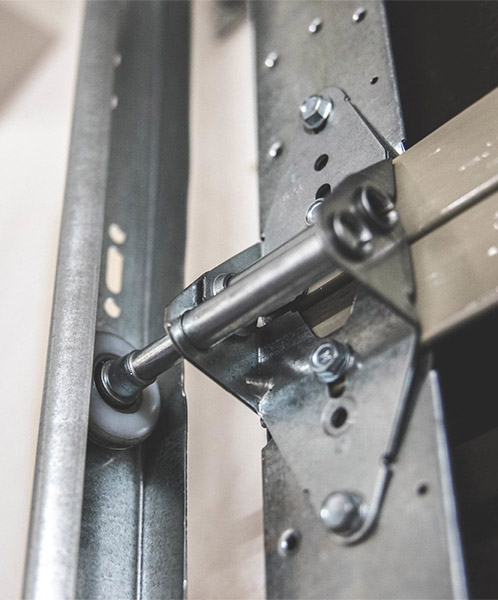
Rolling-friction mechanics and alignment in garage door quiet rollers
For engineers seeking optimal garage door performance, garage door quiet rollers are essential for achieving smooth, low-noise operation and precise alignment. By focusing on rolling-friction behavior and component integration, these rollers help reduce operational resistance and maintain acoustic comfort in demanding environments.
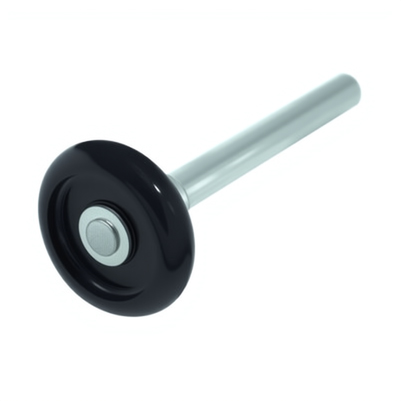
In the context of sectional garage doors, the operational smoothness and acoustic profile of the door system are intrinsically linked to the rolling-friction characteristics of the rollers. For engineers tasked with maintaining precise door alignment and minimizing resistance, the selection and evaluation of garage door quiet rollers demand a rigorous understanding of the interplay between rolling surfaces, bearing assemblies, and track geometry. The persistent challenge of noise and friction, especially in high-cycle environments or installations with strict acoustic requirements, necessitates a methodical approach grounded in mechanical rolling-friction mechanics. This analysis will systematically examine the structural attributes, reliability factors, and performance evaluation criteria for garage door quiet rollers, with an emphasis on their influence on alignment stability and resistance mitigation.
The fundamental architecture of garage door quiet rollers is defined by their core mechanical design, which typically includes a polymer or composite tread, a precision bearing assembly, and a steel or stainless steel shaft. The engineering rationale for using softer tread materials, such as nylon or reinforced polymers, centers on their lower modulus of elasticity compared to traditional steel rollers. This material selection directly impacts the contact mechanics at the wheel-track interface, reducing the amplitude of vibrational energy transmitted into the door panel and supporting structure. The bearing assembly, often a sealed deep-groove ball bearing, is critical for minimizing both static and dynamic friction during rolling motion. The shaft, which must maintain concentricity under load, is engineered for dimensional stability and corrosion resistance, especially in humid or temperature-variable garage environments.
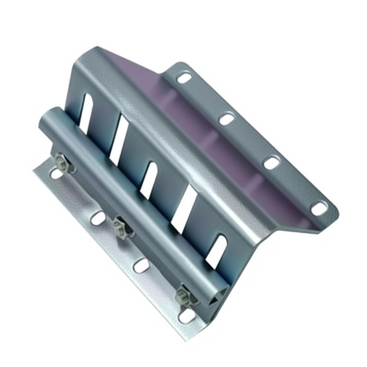
The rolling-friction behavior of these rollers is a function of several interrelated variables: tread material hardness, bearing preload, shaft alignment, and track surface finish. The coefficient of rolling friction for nylon-tread rollers, for instance, typically ranges from 0.002 to 0.005 on galvanized steel tracks, whereas steel-on-steel configurations exhibit higher friction coefficients and greater noise generation due to direct metal contact. The adoption of precision-ground shafts and matched bearing tolerances ensures minimal radial play, which is essential for maintaining uniform rolling contact and preventing micro-oscillations that can propagate as audible noise.
Reliability in garage door quiet rollers is fundamentally determined by their ability to sustain low rolling resistance and acoustic output over extended operational cycles. From a mechanical engineering perspective, the primary failure modes include bearing degradation, tread wear, and shaft deformation. Bearing degradation, often precipitated by inadequate lubrication or ingress of particulates, results in increased rotational friction and can manifest as both tonal and broadband noise. The use of sealed bearings with high-quality lubricants mitigates this risk, but periodic inspection remains essential for long-term reliability.
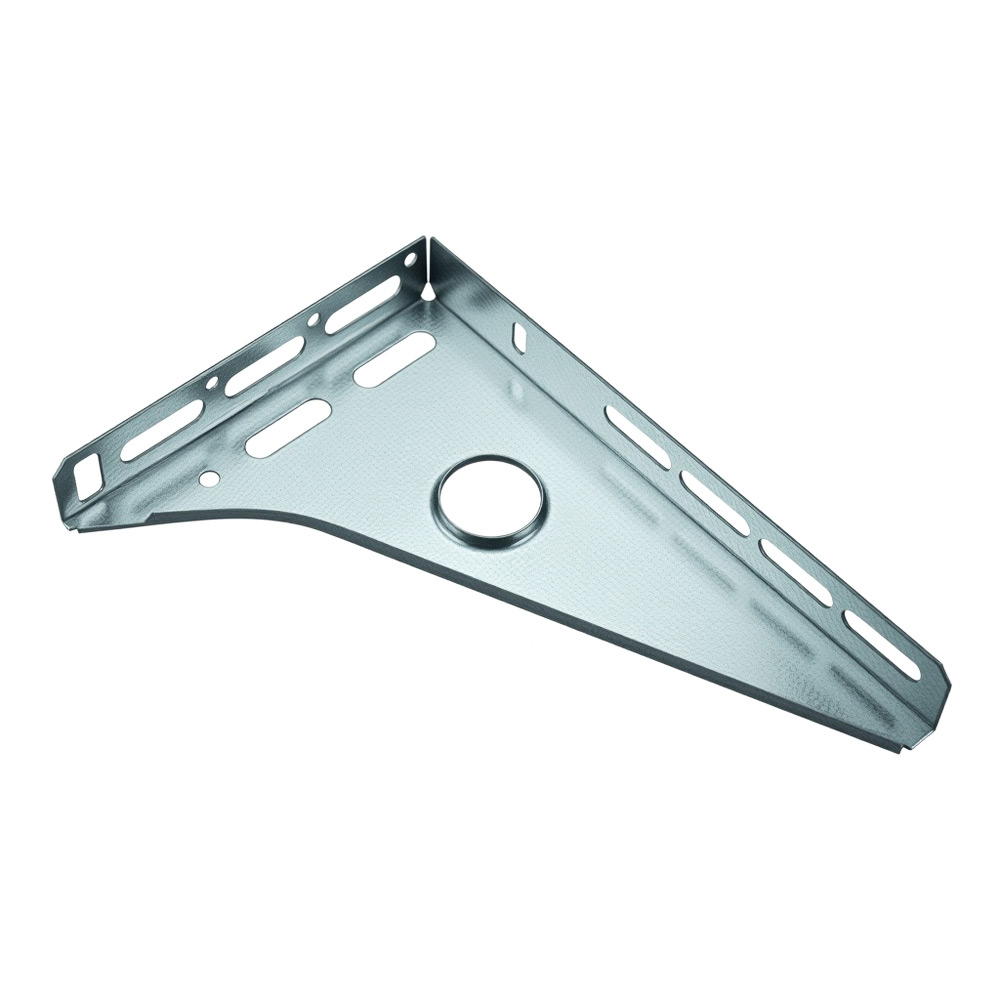
Tread wear, particularly in polymer-based rollers, is influenced by both the hardness of the tread material and the surface roughness of the track. Excessive track roughness or misalignment can lead to localized abrasion, increasing rolling resistance and generating particulate debris that further accelerates wear. Engineers must therefore ensure that track surfaces are free from burrs and are regularly maintained to preserve the integrity of the rolling interface. Shaft deformation, though less common, can occur in cases of improper installation or excessive lateral loads, leading to eccentric roller motion and increased frictional losses.
A critical aspect of reliability is the roller’s ability to maintain precise door alignment throughout its service life. Misalignment introduces uneven loading across the roller tread and bearing, exacerbating both noise and friction. The mechanical coupling between the roller shaft and the door hinge bracket must be engineered to tight tolerances, with minimal axial play and robust fastener retention. In high-cycle installations, the cumulative effect of minor misalignments can result in significant operational resistance, underscoring the need for periodic alignment verification as part of a preventative maintenance protocol.
Evaluating the performance of garage door quiet rollers from a rolling-friction mechanics perspective involves both quantitative and qualitative assessment methods. Quantitative evaluation typically employs force-displacement measurements to determine the rolling resistance under controlled loading conditions. By measuring the force required to initiate and sustain door motion, engineers can infer the aggregate frictional losses attributable to the roller-track interface. For quiet rollers, a reduction in required opening force of 10–20% compared to standard steel rollers is commonly observed, correlating with both lower friction coefficients and reduced vibrational transmission.
Acoustic performance is assessed using sound level meters positioned at standardized locations adjacent to the track and door panel. The objective is to quantify both the peak and average sound pressure levels during door operation, with quiet rollers typically achieving reductions of 5–10 dBA relative to conventional designs. However, it is essential to distinguish between airborne noise (radiated from the roller-track interface) and structure-borne noise (transmitted through the door assembly), as mitigation strategies may differ. The use of vibration-damping mounting brackets and track isolators can further enhance the acoustic profile of the system.
Qualitative evaluation encompasses tactile and auditory inspection during operation, with experienced engineers able to identify sources of anomalous resistance or noise by observing roller motion and listening for characteristic sounds such as clicking, grinding, or squealing. These observations, when correlated with quantitative data, provide a comprehensive understanding of roller performance and inform targeted interventions.
A persistent core pain point in garage door systems is the emergence of operational resistance due to increased noise and friction, particularly as components age or become misaligned. From an engineering standpoint, the most effective mitigation strategies involve both initial component selection and ongoing system monitoring. Selecting rollers with high-precision bearings, low-hardness polymer treads, and corrosion-resistant shafts addresses the root causes of friction and noise at the design stage. During installation, ensuring parallelism between tracks, accurate bracket positioning, and correct fastener torque minimizes the risk of misalignment-induced resistance.
For ongoing system health, engineers should implement a maintenance schedule that includes periodic measurement of rolling resistance, acoustic output, and alignment parameters. Any deviation from baseline values should prompt inspection for bearing wear, tread degradation, or shaft deformation. In high-use environments, the replacement interval for quiet rollers may be dictated more by acoustic performance thresholds than by outright mechanical failure, reflecting the increasing importance of noise control in modern garage door applications.
When verifying roller parameters for engineering-grade noise reduction, it is imperative to document all relevant mechanical and acoustic metrics, including rolling resistance force, sound pressure levels, and alignment tolerances. These data points form the basis for both component selection and system optimization. Engineers should also consider environmental factors such as temperature fluctuations and humidity, which can influence both material properties and lubrication performance over time.
In summary, the technical evaluation of garage door quiet rollers from a rolling-friction mechanics perspective reveals that sustained noise reduction and friction control are best achieved through a combination of optimized material selection, precision bearing integration, and rigorous alignment protocols. Addressing the core pain point of operational resistance requires both proactive engineering design and diligent maintenance practices. For door alignment engineers focused on optimizing rolling components, the verification of roller parameters—including tread hardness, bearing preload, and shaft concentricity—remains central to achieving reliable, quiet, and low-resistance door operation. All roller and track assemblies should be periodically reviewed against engineering benchmarks to ensure continued compliance with acoustic and frictional performance standards.
For more detailed technical documentation and installation guidance, refer to the Baoteng installation tutorials و الوثائق الفنية.
Optimizing garage door quiet rollers for long-term performance
Engineers and maintenance professionals can achieve superior noise control and alignment stability by selecting high-quality garage door quiet rollers and adhering to rigorous installation and maintenance protocols. For further information on product selection, load testing, and after-sales support, visit the Baoteng garage door rollers page or explore our after-sales support resources.
 English
  Русский
  日本語
日本語  한국어
한국어  Français
  Deutsch
  العربية
  Português
  Español