
Garage Door Torsion Spring Messaging That Prevents Wrong Orders
المعيار المرجعي: Relevant material and performance testing standards for steel spring inspection, dimensional verification, surface condition review, and cyclic load behavior. For broader terminology and material testing context, buyers may compare internal acceptance rules with references from ASTM International and ISO.
إجابة موجزة
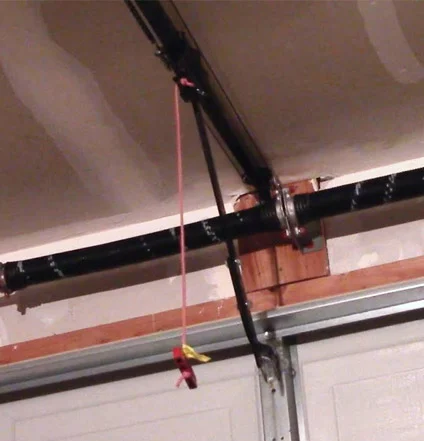
A garage door torsion spring is often described in a few short words, but the part does not behave like a passive bracket, roller, or cover plate. In the catalog data, the Spring series includes spring bodies with inside diameters of 2 بوصة, 2 5/8 inch, 3/4 inch, و 5 1/4 inch, with wire diameter ranges from 5.0 mm to 10.5 mm. The same page also lists PVC torsion spring fillets in 3 3/4 inch و 6 inch sizes. That combination already tells a careful buyer something important: the conversation is not only about a steel coil. It is about a moving system, a contact boundary, and a maintenance language shared by purchasing, installation, and after-sales teams.
From Static Part To Moving Energy Buffer: A Spring Is Not A Simple Spare Part
A static hardware part mainly holds position. A torsion spring repeatedly stores and releases energy while the garage door moves. That difference changes the way specifications should be written. When a buyer only says “garage door spring,” the message leaves too many open variables. The catalog separates several spring entries: BT-SP08 مع 2 inch inside diameter و 5.0–6.8 mm wire diameter, BT-SP09 مع 2 5/8 inch inside diameter و 6.5–8.0 mm wire diameter, BT-SP10 مع 3/4 inch inside diameter و 7.0–10.0 mm wire diameter, و BT-SP11 مع 5 1/4 inch inside diameter و 7.0–10.5 mm wire diameter. These are not decorative differences. They define how the spring can be positioned, how much steel cross-section is involved, and how the part may react under repeated torsional loading.
The useful messaging shift is this: the spring should be described by its energy behavior, but ordered through its measurable geometry. A smaller or larger inside diameter changes how the spring fits the surrounding torsion system. A thinner or thicker wire changes the mechanical resistance of the coil under twist. The catalog does not provide torque ratings or cycle-life numbers, so those values must not be invented. Still, the available dimensions are enough to build a responsible specification conversation. A message that states “torsion spring, 2 5/8 inch inside diameter, 6.5–8.0 mm wire diameter, anti-rust oil, galvanized, electrophoresis finish” is much more useful than a generic “heavy-duty garage door spring” description.
Edge-condition model: imagine two visually similar spring samples placed in a dusty, semi-outdoor service area. One is documented only as a garage door spring. The other is documented by inside diameter, wire diameter range, and finish. When noise or uneven movement appears later, the second record gives the buyer, installer, and supplier a common starting point for checking whether the part was selected correctly. The first record forces everyone to guess.
A cross-dimensional comparison also helps. A bracket can be checked largely by hole position, thickness, and whether it is seated correctly. A torsion spring needs dimensional matching plus movement behavior. A roller may fail by bearing drag or wheel wear. A spring may show risk through rust spots, inconsistent return behavior, or abnormal noise because it is working under repeated elastic deformation. That does not mean the spring is defective whenever the door makes noise. It means the spring message should not be reduced to price, length, or a photo.
| Catalog spring reference | القطر الداخلي | Wire diameter range | Finish stated in catalog | Messaging implication |
|---|---|---|---|---|
| BT-SP08 Spring | 2 بوصة | 5.0–6.8 mm | Anti-rust oil, galvanized, electrophoresis | Suitable for a specification message requiring smaller inside diameter confirmation |
| BT-SP09 Spring | 2 5/8 inch | 6.5–8.0 mm | Anti-rust oil, galvanized, electrophoresis | Useful when the buyer must separate mid-range wire diameter from smaller coil requests |
| BT-SP10 Spring | 3/4 inch | 7.0–10.0 mm | Anti-rust oil, galvanized, electrophoresis | Requires careful confirmation because the inside diameter label differs strongly from the 2 inch class |
| BT-SP11 Spring | 5 1/4 inch | 7.0–10.5 mm | Anti-rust oil, galvanized, electrophoresis | Should be communicated as a large-diameter spring category, not merged with smaller references |
The Hidden Interface Between Steel Spring Body And PVC Torsion Spring Fillet
The Spring series is not only steel spring data. It also includes BT-SP12 Torsion Spring Fillet 3 3/4 inch, material: PVC, و BT-SP13 Torsion Spring Fillet 6 inch, material: PVC. This creates a useful messaging angle that is often missed: the steel spring body and the PVC fillet do not solve the same problem. The spring body is a metal energy-control component. The PVC fillet is a non-metal accessory at the fitting boundary. Treating them as interchangeable “spring parts” makes communication vague.
Steel and PVC behave differently under load, contact, and surface exposure. The catalog’s spring bodies use anti-rust oil, galvanized, and electrophoresis finish, which are surface treatments associated with metal corrosion control and surface protection language. PVC is a polymer material; it does not need the same anti-rust language, but it does need size and placement clarity. If a steel spring is correctly selected but the related PVC torsion spring fillet is unclear, the installation conversation can still become unstable because the boundary part is not defined.
A practical article should not claim that the PVC fillet increases spring life unless the source data proves it. The safer and more useful claim is that the PVC fillet changes the interface conversation. A buyer can specify the steel spring through inside diameter, wire diameter, and finish. The same buyer should specify the fillet through size and material. That separation helps prevent a common order-message failure: one party thinks “spring kit” includes only the coil, while another expects a fitted accessory.
Extreme interface scenario: a humid garage door environment does not attack steel and PVC in the same way. Steel surfaces can develop oxidation if protection is insufficient or damaged. PVC will not rust, but poor dimensional matching can still create fit or seating problems. The risk is not one material being universally better; the risk is using one material’s vocabulary to describe another material’s role.
A comparison test case can be framed without inventing lab numbers. Place two order messages side by side. Message A says: “Garage door torsion spring with accessory.” Message B says: “BT-SP09-style spring conversation: 2 5/8 inch inside diameter, 6.5–8.0 mm wire diameter, anti-rust oil, galvanized, electrophoresis finish; PVC torsion spring fillet size to be confirmed, 3 3/4 inch or 6 inch.” Message B reduces ambiguity before production, packing, and installation. It does not guarantee performance, but it makes the handover cleaner.
This is a copywriting issue as much as a hardware issue. Industrial product copy should not only sound attractive; it should prevent misunderstanding. For Garage Doors Torsion Springs, the copy should make the metal-to-PVC boundary visible. A useful product page can say that the spring body and the torsion spring fillet should be confirmed separately. It can also show that the spring body uses metallic surface finish terms, while the PVC fillet is defined by size and material. That is a stronger information gain than repeating broad words like strong, reliable, or long-lasting.
النقاط الرئيسية
- A spring order message is weak if it does not state inside diameter and wire diameter.
- PVC torsion spring fillets should be described separately from metal spring finishes.
- Rust, abnormal noise, or unstable operation should trigger dimensional and surface-condition review before blame is assigned.
Surface Layer Choice As A Maintenance Language, Not A Marketing Word
The catalog lists the spring finish as anti-rust oil, galvanized, and electrophoresis. These terms should not be inflated into unsupported promises. The data does not provide salt-spray hours, coating thickness, cycle life, or corrosion class. A responsible SEO article must avoid adding those claims. The stronger approach is to treat finish language as a shared maintenance message. It tells the buyer, installer, warehouse team, and service team what kind of surface condition should be expected and what should be checked when the part is received or inspected.
Anti-rust oil suggests temporary surface protection language. Galvanizing suggests a zinc-based protective surface approach. Electrophoresis suggests a deposited coating process. The catalog does not state the exact layer sequence or performance values, so the article should not describe a precise coating architecture. What can be said objectively is that the finish description gives teams a vocabulary for asking better questions: Is the surface oily as expected? Is there visible rust before installation? Are there burrs, peeling areas, or handling marks? Are the parts mixed with different finish expectations?
Edge-condition model: consider a semi-outdoor garage area with moisture, airborne dust, and repeated door movement. During early use, the finish mainly acts as a surface communication checkpoint: the installer checks whether the spring surface is visibly consistent. During middle-stage service, dust and moisture may combine with friction zones and handling marks. In a severe stage, any corrosion point on steel can become a stress-concentration concern because cyclic torsion does not forgive sharp local defects.
A cross-dimensional comparison case shows why this matters. Marketing copy might say, “anti-rust garage door spring for harsh environments.” Engineering copy should say, “Spring finish stated as anti-rust oil, galvanized, and electrophoresis; inspect visible surface condition before installation and during maintenance.” The second version is less dramatic, but more useful. It also avoids unsupported claims. A purchasing team does not need decorative language. It needs wording that can be copied into an inquiry, receiving note, or inspection form.
Four practical solutions can turn finish language into acceptance control.
Solution 1: Write finish terms as inspection checkpoints, not slogans.
Execution protocol: The purchase message should list the finish exactly as the catalog states it: anti-rust oil, galvanized, and electrophoresis. The receiving team should compare actual surface condition against the expected appearance and reject vague descriptions such as “normal finish” or “standard coating” when the order requires traceable wording.
Expected material behavior: The surface is expected to present a consistent protective condition with no obvious rust, contamination, or severe abrasion before use. No numeric corrosion life should be assumed unless separately tested.
Hidden cost and prevention: More detailed inspection takes time, but it prevents disputes caused by unclear finish expectations. Use photo records for any visible rust, peeling, or abnormal handling marks.
Solution 2: Separate geometry verification from finish verification.
Execution protocol: Measure inside diameter and wire diameter before reviewing surface finish. This prevents a common mistake where a visually clean spring is accepted even though its dimensional category is wrong. Confirm the spring reference class first, then inspect the finish.
Expected material behavior: Correct geometry keeps the spring in the intended fit conversation; a clean finish cannot compensate for a wrong inside diameter or wire diameter range.
Hidden cost and prevention: Measurement steps may slow receiving, but they reduce downstream installation confusion. Keep calipers, gauges, or approved measuring tools available at the inspection point.
Solution 3: Treat PVC fillet confirmation as a separate line item.
Execution protocol: When the order includes torsion spring fillet requirements, specify 3 3/4 inch PVC أو 6 inch PVC clearly instead of writing “spring accessory.” This avoids mixing steel finish language with polymer accessory language.
Expected material behavior: The PVC part should be judged by material and size matching, not by anti-rust finish terms.
Hidden cost and prevention: Separate line items can make the quotation longer, but they reduce packing and receiving ambiguity.
Solution 4: Build a field feedback loop around symptoms, not assumptions.
Execution protocol: If the installed system shows noise, visible rust, or uneven operation, service notes should record the observed symptom, spring inside diameter, wire diameter range, finish condition, and accessory presence. Avoid assigning the cause before inspection.
Expected material behavior: Cyclic torsion can amplify small surface or fit problems over time, so early records help distinguish dimension mismatch, surface degradation, and accessory fit concerns.
Hidden cost and prevention: Field feedback requires discipline, but it prevents repeating the same unclear order language in the next batch.
| Inspection variable | What to verify | Expected baseline | Practical tolerance logic |
|---|---|---|---|
| القطر الداخلي | Match the requested spring category | 2 inch, 2 5/8 inch, 3/4 inch, or 5 1/4 inch as ordered | Use buyer-approved dimensional tolerance rather than visual judgment |
| Wire diameter | Confirm wire range | 5.0–6.8 mm, 6.5–8.0 mm, 7.0–10.0 mm, or 7.0–10.5 mm | Measure multiple points if deformation or coating buildup is suspected |
| Finish condition | Review visible spring surface | Anti-rust oil, galvanized, electrophoresis as specified | No unsupported corrosion-life claim without separate test data |
| PVC fillet | Confirm size and material | 3 3/4 inch PVC or 6 inch PVC | Verify separately from metal spring acceptance |
| Field symptom | Record operating issue | Noise, rust, or abnormal movement if observed | Do not assume root cause before dimensional and surface checks |
نصيحة للمحترفين / قائمة مراجعة
- Confirm the spring inside diameter before discussing price.
- Record the wire diameter range in millimeters, not only a model photo.
- Write anti-rust oil, galvanized, and electrophoresis exactly when those finishes are required.
- Do not describe PVC torsion spring fillets with metal coating language.
- Check visible rust, burrs, and surface damage before installation.
- Keep spring body and accessory requirements on separate order lines.
- When noise appears, inspect geometry and surface condition before replacing parts.
Garage Door Torsion Spring Messaging Across Buyer, Installer, And Service Teams
The same spring can be described differently by different people. A purchasing team needs measurable order language. An installer needs fit and assembly clarity. A service team needs symptom language. A factory-side product page should connect those conversations without pretending they are the same.
For buyers, the copy should emphasize inside diameter, wire diameter, و الانتهاء. That is the commercial control layer. A buyer comparing نوابض الالتواء لأبواب المرآب should not be forced to interpret a photo. The page should give a structured message that can be pasted into an inquiry: spring reference, inside diameter, wire diameter range, finish, and whether a PVC torsion spring fillet is needed. This is not a quotation ladder; it is a communication safeguard.
For installers, the copy should focus on assembly fit and accessory separation. The catalog lists BT-SP12 و BT-SP13 as PVC torsion spring fillets. Their role should be presented as part of the installation boundary, not as a coating or a substitute for spring geometry. When a steel spring body and PVC fillet are discussed together, the installer needs to know which part is being measured, which part is being positioned, and which part is being inspected for material condition.
For service teams, the copy should avoid overclaiming. If a door shows noise, visible rust, or abnormal movement, those symptoms do not automatically prove one single failure cause. They are warning signs that should lead to geometry verification, surface inspection, and accessory review. This is where good product messaging prevents false confidence. A page that promises “long life in all environments” gives the service team no useful diagnostic language. A page that explains measurable spring data and observable surface conditions gives them a workable checklist.
The communication model is simple: buyers define measurable requirements, installers confirm fit boundaries, and service teams record symptoms. The spring sits at the center of all three conversations. When the article uses that structure, it avoids repeating older topics such as receiving labels, warehouse storage, shaft alignment, cable drum groove condition, or spring break protection planning. It stays anchored in the catalog data while opening a new messaging angle.
For broader garage door hardware context and product navigation, see Baoteng garage door hardware resources.
الأسئلة الشائعة (FAQ)
How to change garage door keypad?
Changing a garage door keypad is an opener-control task, not a torsion spring task. Disconnect power when required by the opener manual, follow the keypad brand instructions, and do not loosen or adjust torsion springs unless a qualified garage door technician is involved.
How to reset my garage door opener?
Most openers reset through a learn button or control-panel sequence. This does not change spring condition. If the door still feels heavy, noisy, or uneven after opener reset, the torsion spring system should be inspected separately by a trained professional.
How to program a Genie garage door opener?
Programming usually involves pressing the opener’s learn button and pairing the remote or keypad within the allowed time window. The spring system is independent from remote programming. Do not test repeated opening cycles if the door shows abnormal spring noise or visible damage.
How to program a garage door opener to your car?
Use the vehicle’s built-in garage control system and the opener’s learn function according to both manuals. If pairing succeeds but the door moves unevenly, the issue may be mechanical rather than electronic. Spring geometry and surface condition should be checked separately.
How do you program garage door opener in car?
Clear old codes if required, press the vehicle button, activate the opener learn mode, and complete pairing as the manual directs. This process does not validate torsion spring health. A properly paired opener can still operate a mechanically stressed door system.
How to manually open garage door?
Pull the emergency release only when the door is closed or safely supported. If the door feels extremely heavy, drops quickly, or will not stay controlled, stop. Those signs may involve spring or balance issues and require professional inspection.
 English
  Русский
  日本語
日本語  한국어
한국어  Français
  Deutsch
  العربية
  Português
  Español