
Vergleich von Sicherheitsvorrichtungen für Garagentorfedern
Referenzstandard: Relevant material and performance testing standards may include zinc coating inspection principles from ASTM A123/A123M oder ISO 1461, applied cautiously as general references for galvanized steel protection rather than as a catalog-declared certification.
Kurze Antwort
Garage Door Spring Break Safety Device as a Stored-Energy Containment Checkpoint
A torsion spring system is not just another section of garage door hardware. It is a mechanical storage zone where elastic energy is accumulated, released, and redistributed during every opening and closing cycle. The useful comparison is not between “small bracket versus large bracket,” but between hardware that merely occupies space and hardware that helps keep a spring-side event inside a more controlled boundary. In this context, the catalog-listed Schutz vor Spring Break, Spring Break Protection for 1″ Bearing, Spring Break Protection for 1.25″ Bearing, und Federbruchschutz Halterung einstellen should be read as a family of safety-related interface parts, all tied to a recorded 4.0mm thickness und verzinkte Oberfläche.
Mechanically, the device sits near a zone where rotational force, bearing support, and bracket restraint can overlap. If a torsion spring breaks or a related support part loosens, the immediate issue is not only the broken spring itself. The support area must resist sudden displacement, misalignment, and localized impact. A 4.0mm galvanized protection bracket provides a thicker metal section than light trim hardware, but the article should not overstate catalog data into an unlisted load rating. Its realistic value is in restraint geometry, hole fit, steel section continuity, and corrosion-resistant surface protection under ordinary garage operating conditions.
Edge extreme scenario model: imagine a residential or light industrial door that cycles repeatedly in a dusty, moderately humid indoor environment. At the initial stage, the galvanized surface helps reduce visible oxidation and keeps the contact area more stable. At the middle stage, vibration begins to test hole edges, fastener pressure zones, and bearing alignment. At the limit stage, any wrong bearing interface or poor installation alignment may concentrate force at the fixing points, increasing the chance of bracket distortion or support-area instability. The point is not that galvanized steel removes every risk. The point is that the device must be selected and inspected as part of a stored-energy containment zone.
A cross-dimensional comparison makes the difference clearer. A decorative galvanized plate may look solid, but it is not defined by spring-side interface data. A general bracket may have thickness, but not the correct bearing hole relationship. A spring break protection device, by contrast, must be compared through spring fitting suitability, bearing match, thickness verification, and installation-side stability. That is why the catalog’s details matter: 4.0mm thickness, verzinkte Oberfläche, and bearing-specific variants create a more meaningful selection basis than visual similarity.
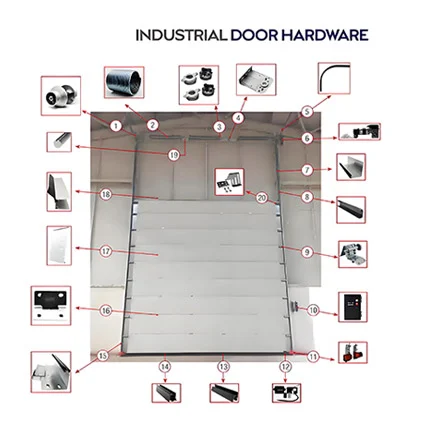
Garage Door Spring Break Safety Device Comparison by Bearing Interface
The most practical comparison for this product is the bearing interface. Many buyers first look at overall shape, plate size, or whether the part appears strong enough. That approach can miss the hidden specification point: the bearing-side opening has to match the actual assembly. The catalog identifies one version for 1″ bearing with a 25.4mm inner hole and another version for 1.25″ bearing with a 32.75mm inner hole. These dimensions are not cosmetic. They determine how the device relates to the shaft, bearing, and spring fitting area.
A 25.4mm inner hole corresponds to the inch-based bearing reference commonly described as 1″. A 32.75mm inner hole supports a larger 1.25″ bearing interface. If the wrong version is chosen, the failure mode is not simply “hard to install.” A loose or mismatched interface may allow the bearing area to shift under vibration. A too-tight or incorrectly seated interface may create assembly stress, edge contact, or poor alignment. In a spring-side safety device, that mismatch reduces confidence in the restraint function because the device is no longer sitting in the geometry it was selected for.
| Comparison point | 1″ bearing version | 1.25″ bearing version | Selection risk if ignored |
|---|---|---|---|
| Catalog interface | 1″ bearing | 1.25″ bearing | Wrong spring-side fit |
| Inner hole data | 25.4mm | 32.75mm | Bearing-area mismatch |
| Thickness record | 4,0 mm | 4,0 mm | Visual comparison may mislead |
| Finish record | Verzinkt | Verzinkt | Surface description alone is insufficient |
| Practical inspection focus | Hole gauge and bearing fit | Hole gauge and bearing fit | Installation-side restraint uncertainty |
Edge extreme scenario model: suppose a maintenance buyer replaces a spring-side part after measuring only the outside shape. The device arrives with a galvanized finish and a strong-looking body, but the bearing opening does not match the existing bearing assembly. During early cycles, the door may still move, giving a false impression that the part is acceptable. After repeated vibration, the misfit can show up as shifting at the bearing zone, uneven contact at the hole edge, or difficulty holding alignment. In a stored-energy area, those small interface errors matter more than the general appearance of the bracket.
A useful test comparison is “appearance approval versus interface approval.” Appearance approval checks surface finish, visible deformation, and general shape. Interface approval checks 25.4mm or 32.75mm hole size, bearing seating, spring fitting suitability, and installation alignment. For a Garagentor-Federbruchsicherung, interface approval is the higher-value step because the part must cooperate with the spring and bearing system when force changes suddenly.
Under Loosening, Vibration, and Localized Fixing-Point Stress
After installation, a spring break protection device enters a repeated-cycle environment. Door movement creates vibration. The torsion spring system introduces rotational loading behavior. Dust can settle around fixing points. Moderate humidity can challenge exposed edges or scratched areas. The catalog confirms verzinkte Oberfläche und 4.0mm thickness, so the most grounded discussion is how this type of part should behave under ordinary mechanical cycling without inventing unlisted load values or certification claims.
At the mechanism level, loosening changes how force travels. When a fastener zone remains seated, force spreads more evenly through the bracket body. When a fixing point loosens, contact pressure becomes less uniform. Instead of a broad restraint surface, the part may begin to act through smaller contact bands around holes, slots, or bent edges. Even with 4,0 mm verzinkt construction, localized stress can increase if the part is not aligned or if the bearing interface is wrong. This is why thickness should be evaluated together with fit, not as an isolated promise.
Extreme fatigue timeline model: in the early stage, the galvanized surface and bracket thickness help keep the device stable during normal spring-area movement. In the middle stage, repeated vibration may expose whether hole position, bearing fit, and fastener pressure are balanced. A properly matched 25.4mm oder 32.75mm interface should remain easier to validate because the bearing relationship is known. In the limit stage, if loosening appears, localized stress may move toward the fixing points, and the protection device may show installation-related symptoms before any severe event occurs: shifting witness marks, uneven hole-edge contact, or visible deformation at a stressed corner.
A cross-system comparison is useful here. Track hardware often reveals motion quality through roller travel. Bottom seals reveal compression behavior at the floor. A spring break safety device reveals its risk through stored-energy restraint readiness. That readiness is more difficult to see because the device may look unchanged while small interface errors develop. For this reason, inspection should not wait for obvious failure. It should include hole match, spring fitting suitability, surface condition, and bracket seating around the bearing support area.
WICHTIGSTE ERKENNTNISSE
- Early shifting marks around the bearing opening can indicate interface movement before visible bracket deformation.
- Uneven fastener seating near a 4.0mm galvanized protection bracket may concentrate stress around one fixing point.
- A wrong 25.4mm oder 32.75mm inner-hole selection can create bearing-area mismatch even when the part appears visually compatible.
Factory Validation Before Shipment for Fewer Installation Errors
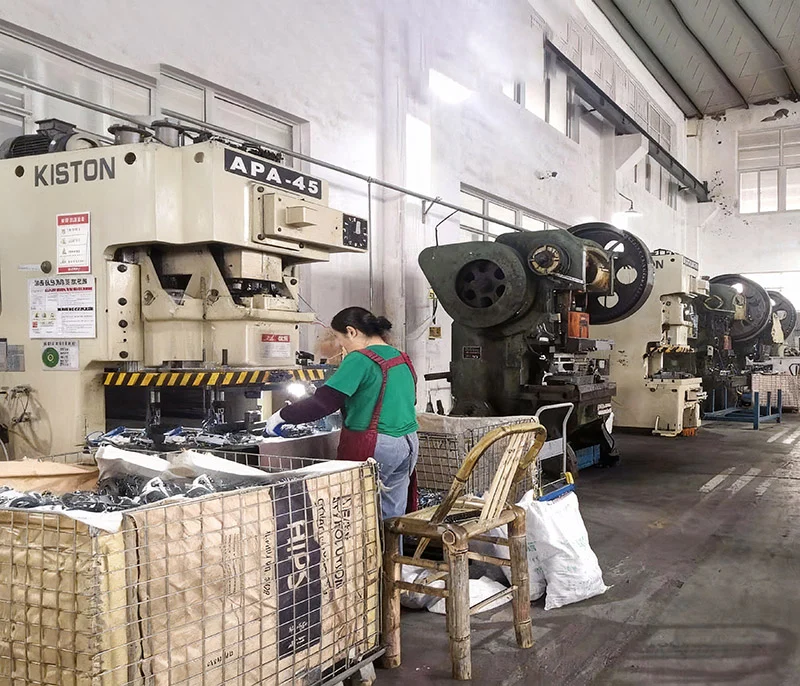
Shipment validation for this product should be framed as error prevention, not as a broad quality slogan. The catalog gives real product data, but it does not declare a dedicated QC standard. A grounded validation process should stay within what can be objectively checked: 4.0mm thickness, galvanized surface condition, 25.4mm und 32.75mm inner-hole verification, spring fitting suitability, edge condition, hole position, and assembly fit with the intended bearing or spring fitting.
Solution 1: thickness verification. The execution protocol should require incoming or in-process measurement of the listed 4,0 mm body section before packing. Operators should not rely on visual estimation because small thickness differences are difficult to judge by eye after forming or galvanizing. The expected material behavior is improved section consistency across the order, reducing the chance that a thinner mixed part enters a spring-side safety batch. The hidden cost is slower inspection time, so sampling plans should be clear and documented rather than improvised.
Solution 2: inner-hole gauge control. The execution protocol should separate the 1″ bearing / 25.4mm inner hole version from the 1.25″ bearing / 32.75mm inner hole version during inspection and packing. The expected physical result is more reliable interface seating and reduced bearing-area mismatch. The side-effect risk is warehouse confusion when parts look similar, so labels, bin separation, and packing notes should describe the bearing interface clearly.
Solution 3: galvanized finish inspection. The execution protocol should include visual inspection of galvanized coverage, especially around edges, holes, and formed areas. Galvanizing supports corrosion resistance in moderate indoor humidity, but scratches, exposed steel, or poor coverage can create early oxidation points. The hidden cost is rejecting parts that are structurally usable but visually inconsistent. The practical countermeasure is to define acceptable appearance criteria before inspection begins.
Solution 4: fit check with matching spring or bearing interface. The execution protocol should use a reference bearing or gauge to confirm that the protection device seats as intended. The expected change is not chemical; it is geometric reliability. Fit checking helps catch wrong-hole shipments, burr interference, or distorted openings. The side-effect risk is slower dispatch for mixed orders, so production should organize inspection by SKU group and bearing size.
| Validation item | Objective check | Expected result | Risk controlled |
|---|---|---|---|
| Dicke | Confirm 4,0 mm section | More consistent bracket body | Mixed thin part risk |
| Hole size | Messgerät 25.4mm und 32.75mm openings | Correct bearing interface | Bearing-area mismatch |
| Oberflächenbeschaffenheit | Inspect galvanized coverage | Better corrosion resistance in moderate humidity | Early oxidation at edges |
| Randbedingung | Check burrs and sharp edges | Cleaner installation contact | Scratched bearing or hand injury risk |
| Fit check | Test with matching bearing or spring fitting | Fewer installation disputes | Wrong-version packing |
| Packing separation | Label by bearing size | Faster site identification | Similar-part confusion |
PROFI-TIPP / CHECKLISTE
- Confirm whether the job requires 1″ bearing oder 1.25″ bearing before ordering.
- Match the bearing interface to 25.4mm oder 32.75mm inner-hole data.
- Verify the listed 4.0mm thickness rather than selecting by appearance alone.
- Inspect galvanized coverage around holes, edges, and formed contact zones.
- Check whether the version is suitable for the intended 3 3/4″ spring fitting when that application is required.
- Separate similar-looking protection brackets by bearing size during packing and installation.
- Review related garage door hardware options through Baoteng garage door hardware when building a matched spring-side system.
Häufig gestellte Fragen (FAQ)
How to secure garage door hardware near the spring area?
Use the correct spring-side protection device, confirm bearing interface size, and inspect fastener seating. For this catalog family, selection should reference 4,0 mm verzinkt construction plus the correct 25.4mm oder 32.75mm inner hole where bearing-specific versions apply.
How to replace garage door rollers if spring hardware is nearby?
Roller replacement should not disturb torsion spring hardware unless the system is safely released and handled by a qualified technician. Spring break protection parts sit in a stored-energy area, so bearing support, spring fitting, and bracket alignment should be inspected separately from roller service.
How to align sensors on a garage door after hardware service?
Sensor alignment is usually an opener safety-control issue, not a spring break protection issue. After mechanical service, confirm the door moves smoothly first, then align both sensors so their indicator lights show a clear beam path without obstruction.
How to program a garage door opener on a car after mechanical repair?
Programming the opener is separate from spring-side hardware selection. Complete mechanical inspection first, including spring support and bearing-area stability. After the door operates normally, follow the vehicle and opener manufacturer steps to pair the remote signal.
How do you reprogram a garage door keypad after replacing hardware?
A keypad can usually be reprogrammed through the opener’s learn function. This does not validate spring break protection. After hardware replacement, separately confirm correct bearing interface, fastener seating, door balance, and safe movement before relying on electronic controls.
How to reset Genie garage door remote after spring-side inspection?
Resetting a Genie remote is an opener procedure and does not confirm mechanical safety. After spring-side inspection, verify that the spring break protection device matches the bearing size and that the door operates without unusual vibration before resetting or re-pairing controls.
 English
  Русский
  日本語
日本語  한국어
한국어  Français
  Deutsch
  العربية
  Português
  Español