
High Lift Garage Door Drums Messaging Brief
Referenzstandard: Relevant door-system safety and performance logic can be cross-checked against DASMA technical resources for sectional door systems, while dimensional and visual inspection practices can be aligned with general manufacturing quality control methods such as ASTM material and test standards. The catalog data for this article identifies the high-lift drum models and operating boundaries, but it does not state a dedicated material grade or a proprietary factory test standard.
Kurze Antwort
High lift garage door drums look simple from a distance, but the commercial risk usually starts in wording rather than in the metal body. A buyer may ask for a “garage door cable drum,” a warehouse may store several round drums together, and a service team may shorten a replacement note into a generic SKU. That language compression is where the wrong component can enter a high-lift door system.
The verified catalog boundary is narrow and measurable. Drum 120HL is listed with 120 inch maximum high lift, 270 inch maximum door height, 450 kg maximum door weight, 3/16 inch maximum cable diameter, und 1 inch shaft diameter. Drum 164HL is listed with 164 inch maximum high lift, 400 inch maximum door height, 575 kg maximum door weight, 1/4 inch maximum cable diameter, und 1 inch shaft diameter. Drum 5-54HL is listed with 54 inch maximum high lift, 243 inch maximum door height, 500 kg maximum door weight, 3/16 inch maximum cable diameter, und 1 inch shaft diameter. These values should not be rewritten as a loose family description when the order is for a working door system.
When High-Lift Drum Codes Become Procurement Boundary Markers
A high-lift drum code is not just a product name. In a practical purchasing file, 120HL, 164HL, und 5-54HL act as boundary markers that separate one system obligation from another. The code carries a ceiling for lift distance, a ceiling for door height, a limit for door weight, a cable diameter interface, and a shaft interface. When that code is shortened during inquiry handling, the risk is not limited to a wrong label. The whole order may be pushed into a different mechanical assumption.
The messaging problem appears in several places. A customer may request high lift garage door drums but write only “HL drum” in an email. A buyer may copy only the shaft size because all three listed high-lift models use a 1 inch shaft diameter. A parts clerk may notice that two models use 3/16 inch maximum cable diameter and assume that they are functionally close. A quoting team may focus on door weight and miss lift height. Each simplification removes one boundary from the product identity.
A useful copywriting rule is to keep the drum code connected to its functional envelope in the same sentence. For example, Drum 120HL should never be described only as a 1 inch shaft drum. It should be communicated as a high-lift cable drum for a 120 inch maximum high lift, 270 inch maximum door height, 450 kg maximum door weight, und 3/16 inch maximum cable diameter. Drum 164HL should keep its own identity because the 164 inch maximum high lift und 400 inch maximum door height position it differently from Drum 120HL. Drum 5-54HL is also not a low-risk substitute just because its maximum high lift is lower; it carries a 500 kg maximum door weight und eine 243 inch maximum door height, which creates a different use boundary.
Edge extreme scenario model: imagine a procurement record that keeps only “1 inch shaft high-lift drum” while omitting the model code. At the initial stage, the wrong drum may still pass a simple visual check because the round form and bore interface appear familiar. In the middle stage, cable path and drum capacity assumptions start to diverge because the lift profile is not represented by the shortened SKU. At the limit stage, a door system operating near the catalog boundary can expose mismatch through uneven cable travel, abnormal loading at the drum body, or a service delay caused by unclear replacement identity. This model does not require a material claim; it follows from mechanical boundary loss in the order language.
Cross-dimensional comparison case: compare two purchase messages. Message A says “high lift garage door drum, 1 inch shaft.” Message B says “Drum 164HL, 164 inch maximum high lift, 400 inch maximum door height, 575 kg maximum door weight, 1/4 inch maximum cable diameter, 1 inch shaft.” Message A is shorter, but it gives no defense against model substitution. Message B is longer, but it gives sales, inventory, inspection, and maintenance teams the same boundary vocabulary.
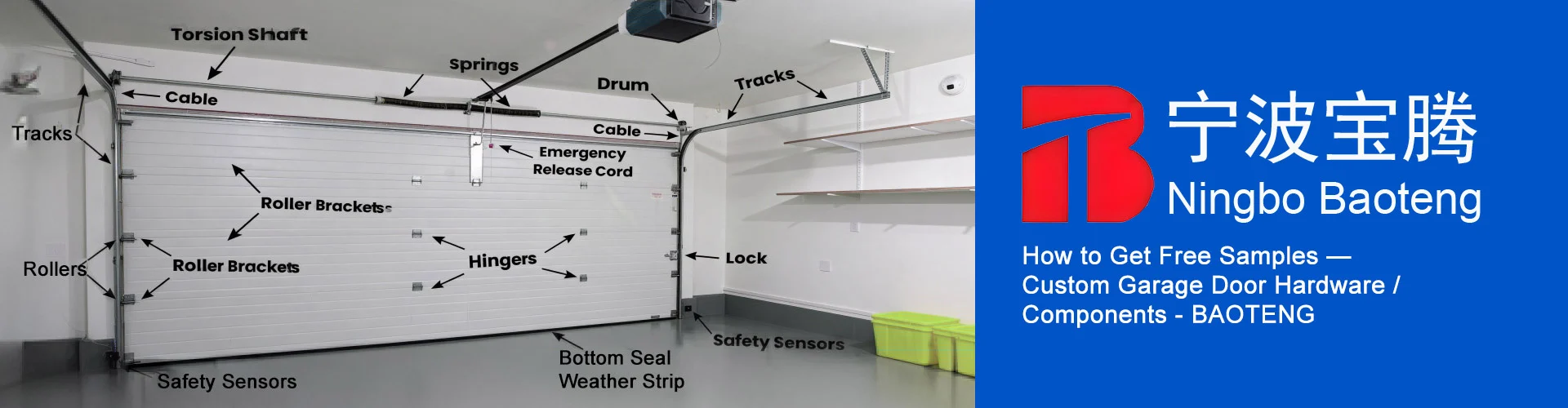
Similar Round Hardware, Different System Obligations
The high-lift drum should not be introduced as a nicer version of a standard cable drum. The stronger message is that similar round hardware can carry different system obligations. Round shape is a visual category. A high-lift drum model is a mechanical responsibility category.
A standard drum and a high-lift drum may both support cable winding, connect to a shaft, and belong to the cable drum series. That shared appearance can mislead a buyer who is comparing product photos instead of reading the operating boundary. High-lift hardware is tied to a taller vertical travel path, a defined maximum high lift, and a specific relationship between cable diameter and drum geometry. The system obligation is not only “hold a cable.” It is to manage the cable path while the door moves within the declared lift and height envelope.
The catalog data makes this distinction clear without needing exaggerated language. Drum 120HL is not interchangeable with Drum 164HL simply because both use a 1 inch shaft diameter. Drum 164HL allows 1/4 inch maximum cable diameter, while Drum 120HL and Drum 5-54HL are listed with 3/16 inch maximum cable diameter. Drum 164HL also has the highest listed high-lift and door-height boundary among the three high-lift models in the provided data. Drum 5-54HL has a lower listed maximum high lift at 54 inch, yet its maximum door weight is 500 kg, which is higher than Drum 120HL’s 450 kg. This proves that the model code cannot be reduced to a single dimension.
Mechanism breakdown: the underlying physics involves torque transfer, cable bending, line contact, and rotational alignment. When a cable wraps around a drum, load does not disappear into the round surface evenly. It creates contact pressure along the cable path, introduces bending stress into the cable, and transfers torque through the drum body into the shaft. If the door mass approaches the listed maximum door weight, the drum is no longer just a passive wheel. It becomes part of a load-sharing system in which shaft engagement, cable diameter, and effective winding geometry influence how smoothly the door can move. Since the catalog does not identify the metal alloy, the safest technical language is to discuss mechanical behavior at the interface level rather than claim a specific metallurgy.
Extreme pressure timeline model: in the initial stage, a drum used within its specification should allow the cable to settle into a predictable path, with the shaft interface holding its position under repeated rotation. In the middle stage of a high-cycle door application, small differences in load path can create measurable changes in cable seating, operator feel, and left-right balance. In the limit stage, if the drum model was selected using incomplete language rather than full boundary data, the weakest interface is likely to show the problem first: cable tracking may become inconsistent, the shaft interface may experience higher localized pressure, or the service team may find that the installed drum does not match the replacement record. These are specification-chain failures, not proof of a material defect.
Cross-system comparison case: a buyer who compares products only by photo and shaft diameter may treat a high-lift drum and an ordinary drum as equivalent. A buyer who compares by model obligation asks different questions: What is the listed maximum high lift? What is the door-height boundary? What is the cable diameter ceiling? What is the maximum door weight? Does the order record preserve the code 120HL, 164HL, or 5-54HL? That shift changes the page from a generic product introduction into a more useful B2B decision message.
WICHTIGSTE ERKENNTNISSE
- A shared 1 inch shaft diameter does not make high-lift drum models interchangeable.
- A missing HL model code can hide different lift, door-height, and cable-diameter boundaries.
- Photo-based comparison is weaker than model-code comparison for high-lift door hardware.
The Hidden Cost of Treating Drum Names as Interchangeable SKUs
The hidden cost of a high-lift drum error often begins before anyone touches the door. It begins when the product name is flattened in an ERP field, stock label, quote line, or spare-parts list. A generic SKU such as “garage door drum” may be convenient for internal sorting, but it erases the difference between Drum 120HL, Drum 164HL, and Drum 5-54HL. That is a messaging failure with mechanical consequences.
The cost is not always immediate replacement cost. It can appear as repeated confirmation emails, delayed quotation approval, wrong parts reserved for a maintenance job, extra checking before dispatch, or uncertainty during after-sales support. If the installed door needs a high-lift drum but the record says only “1 inch shaft drum,” the next team must reconstruct the missing information from door height, cable diameter, customer photos, or old purchase notes. That reconstruction consumes time and can still remain uncertain.
For a high-lift drum page, the SEO message should not only tell buyers that specifications matter. It should show which terms must stay together. Model code plus interface data is the minimum useful unit: Drum 120HL with 3/16 inch maximum cable diameter and 1 inch shaft, Drum 164HL with 1/4 inch maximum cable diameter and 1 inch shaft, und Drum 5-54HL with 3/16 inch maximum cable diameter and 1 inch shaft. Adding maximum high lift, maximum door height, and maximum door weight completes the order identity.
The following table shows how naming detail changes procurement risk without turning the article into a basic selection chart.
| SKU Wording Level | Information Kept | Information Lost | Practical Risk |
|---|---|---|---|
| Garage door drum | General product category | HL code, lift boundary, cable diameter, door weight | High risk of ordinary drum substitution |
| 1 inch shaft drum | Shaft interface | High-lift identity and cable limit | Visual match may hide system mismatch |
| HL cable drum | High-lift category | Exact model and operating boundary | Quotation may require repeated clarification |
| Trommel 120HL | Exact model name | Full data if not attached | Better, but still incomplete for cross-team review |
| Drum 164HL with full limits | Model, lift, height, weight, cable, shaft | Minimal data loss | Strongest wording for procurement control |
Edge extreme scenario model: a warehouse with mixed cable drum inventory may receive a service request written as “HL drum for 1 inch shaft.” At the initial stage, a picker can identify several round drums that appear close enough. In the middle stage, the lack of cable diameter and high-lift boundary forces a manual check or increases the chance of substitution. In the limit stage, the wrong SKU can reach the job file, causing the installation team to pause the work or escalate the issue. This is a language-to-logistics failure.
Cross-dimensional comparison case: compare SKU naming in a simple retail product and in a high-lift drum. For a low-risk accessory, a broad SKU may be acceptable because the consequence of mismatch is minor. For a drum tied to a door’s load path, simplified naming removes safety-related context. The copy should therefore treat the SKU as a technical boundary rather than a convenience label.
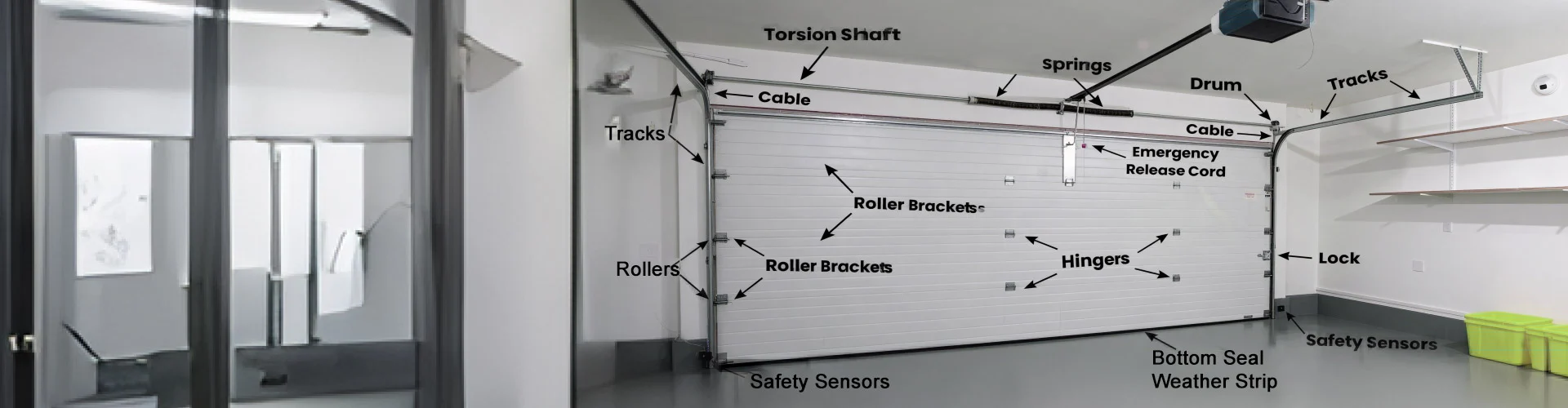
Building a Factory-Side Guardrail Before the Wrong Drum Reaches the Door Opening
A factory-side guardrail is a set of naming, inspection, and release habits that prevents the wrong drum from becoming a field problem. It should not be presented as a shipping story or a receiving checklist. The useful angle is earlier: before the quotation becomes an order, before the order becomes a picking instruction, and before the part name becomes a simplified label.
Solution 1: Keep model code and boundary data in one order line.
Execution Protocol: Every order line for high lift garage door drums should include the exact model code and the core boundary data. A line for Drum 164HL should carry 164 inch maximum high lift, 400 inch maximum door height, 575 kg maximum door weight, 1/4 inch maximum cable diameter, und 1 inch shaft diameter. This prevents the model code from being separated from the reason it matters.
Expected Material or System Evolution: The drum itself does not change, but the information environment becomes more stable. The system is less likely to place a high-lift component into a generic drum family. The measurable improvement is fewer clarification loops and fewer opportunities for wrong-part substitution.
Hidden Cost and Side Effect Control: Longer order lines require better data discipline. To avoid clutter, the factory can use a fixed sequence: model, high lift, door height, door weight, cable diameter, shaft diameter.
Solution 2: Separate high-lift drum records from ordinary drum records.
Execution Protocol: In product catalogs, ERP systems, and quotation templates, the high-lift drum family should be separated from general cable drum entries. Drum 120HL, Drum 164HL, and Drum 5-54HL should not be buried beside ordinary drum descriptions with only a shared shaft or cable keyword.
Expected Material or System Evolution: This does not alter mechanical properties, but it reduces the chance that a visually similar round component is selected through shortcut filtering. It preserves the high-lift identity as a category with its own obligation.
Hidden Cost and Side Effect Control: Too many categories can slow internal search. The solution is to use one clear family name, such as high-lift cable drums, and then display the model code and measurable operating boundaries directly under it.
Solution 3: Inspect the shaft and cable interfaces as confirmation points.
Execution Protocol: QC should verify the 1 inch shaft interface and the stated 3/16 inch or 1/4 inch maximum cable diameter relationship for the selected model. Since the catalog does not provide a proprietary QC standard, this should be described as a general dimensional and visual inspection requirement rather than a factory-certified performance claim.
Expected Material or System Evolution: Consistent interface confirmation helps the drum enter the correct system role. It reduces the likelihood of cable seating problems caused by a mismatch between the installed cable and the selected drum boundary.
Hidden Cost and Side Effect Control: Overchecking can slow small orders. A practical method is to reserve full interface confirmation for HL models and use routine category checks for lower-risk hardware.
Solution 4: Use release naming that survives handoff.
Execution Protocol: The final release name should remain readable after it passes through sales, production, inventory, and service records. A release name such as “Drum 5-54HL, 54 inch max high lift, 243 inch max door height, 500 kg max door weight, 3/16 inch max cable, 1 inch shaft” is more useful than a short internal code.
Expected Material or System Evolution: No physical change occurs, but the door system receives the correct part identity before installation decisions are made. The system risk is lowered because the product identity travels with the component.
Hidden Cost and Side Effect Control: Long names may be difficult in small label fields. The guardrail is to keep the model code and two most critical interface markers visible, then reference full data in the order sheet.
| Control Point | Trommel 120HL | Trommel 164HL | Trommel 5-54HL | Test or Review Basis |
|---|---|---|---|---|
| Maximum high lift | 120 in | 164 in | 54 in | Catalog boundary review |
| Maximale Türhöhe | 270 in | 400 in | 243 in | Order data validation |
| Maximales Gewicht der Tür | 450 kg | 575 kg | 500 kg | Load boundary confirmation |
| Maximaler Kabeldurchmesser | 3/16 in | 1/4 in | 3/16 in | Interface compatibility check |
| Shaft diameter | 1 in | 1 in | 1 in | Dimensional inspection |
| Risk if shortened to generic SKU | Hoch | Hoch | Hoch | Naming-control audit |
PROFI-TIPP / CHECKLISTE
- Keep the exact model code visible in every quotation and order record.
- Do not approve “1 inch shaft drum” as a complete description for a high-lift door project.
- Confirm whether the required cable diameter is 3/16 inch oder 1/4 inch before release.
- Match the drum code to the stated maximum high lift and door-height boundary.
- Separate high-lift drums from ordinary cable drums in product data and inventory labels.
- Treat missing door data as a reason for clarification, not as permission to substitute.
- Verwenden Sie garage door hardware sourcing support when a buyer needs the model family checked before inquiry confirmation.
Häufig gestellte Fragen (FAQ)
How do you set a garage door opener with high lift garage door drums?
A garage door opener should be set only after the door hardware is correctly matched and balanced. High-lift drums affect cable travel and door movement, so opener adjustment cannot solve a wrong drum code, wrong cable diameter, or incorrect shaft-interface assumption.
How long does a garage door spring last when high-lift drums are used?
Spring life depends on cycle rating, door weight, balance condition, and installation accuracy. High-lift drums do not replace spring specification work. If the drum model is wrong, the system can create uneven movement that may increase stress on related hardware.
How do you fix a garage door sensor if the drum is mismatched?
A sensor fix will not correct a drum mismatch. Sensors address obstruction detection and opener safety response, while high-lift drums control cable winding behavior. If the door movement is uneven, confirm the drum code, cable diameter, shaft interface, and door balance first.
 English
  Русский
  日本語
日本語  한국어
한국어  Français
  Deutsch
  العربية
  Português
  Español