
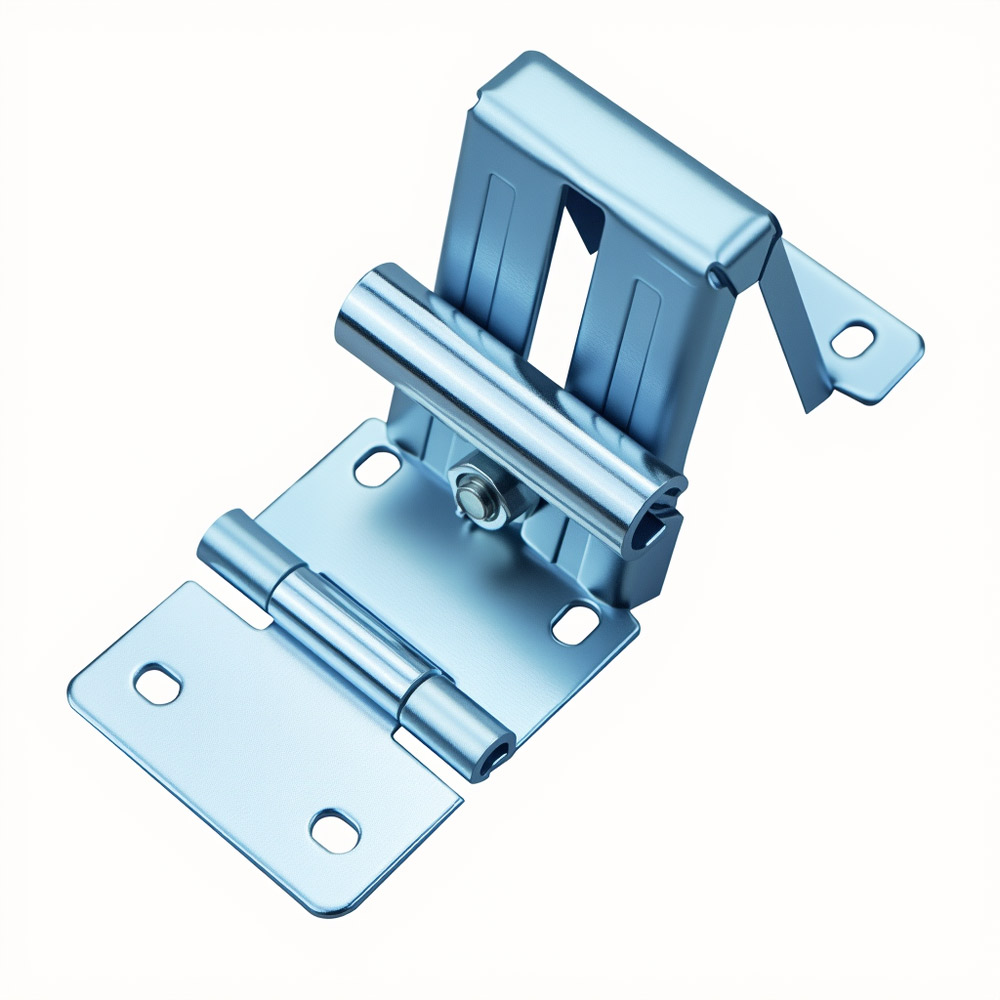
Sectional-Hinge Stress Distribution: Evaluating Carbon Steel Hinges for Reliable Articulation
Modern sectional door systems depend on the robust performance of carbon steel hinges, particularly center hinges, to achieve consistent articulation and long-term durability. The ability of these hinges to manage stress dispersion during repeated sectional movement is crucial for minimizing fatigue failure and maintaining system integrity. This article analyzes how carbon steel hinges and center hinges contribute to mechanical reliability under demanding cyclic loading conditions.
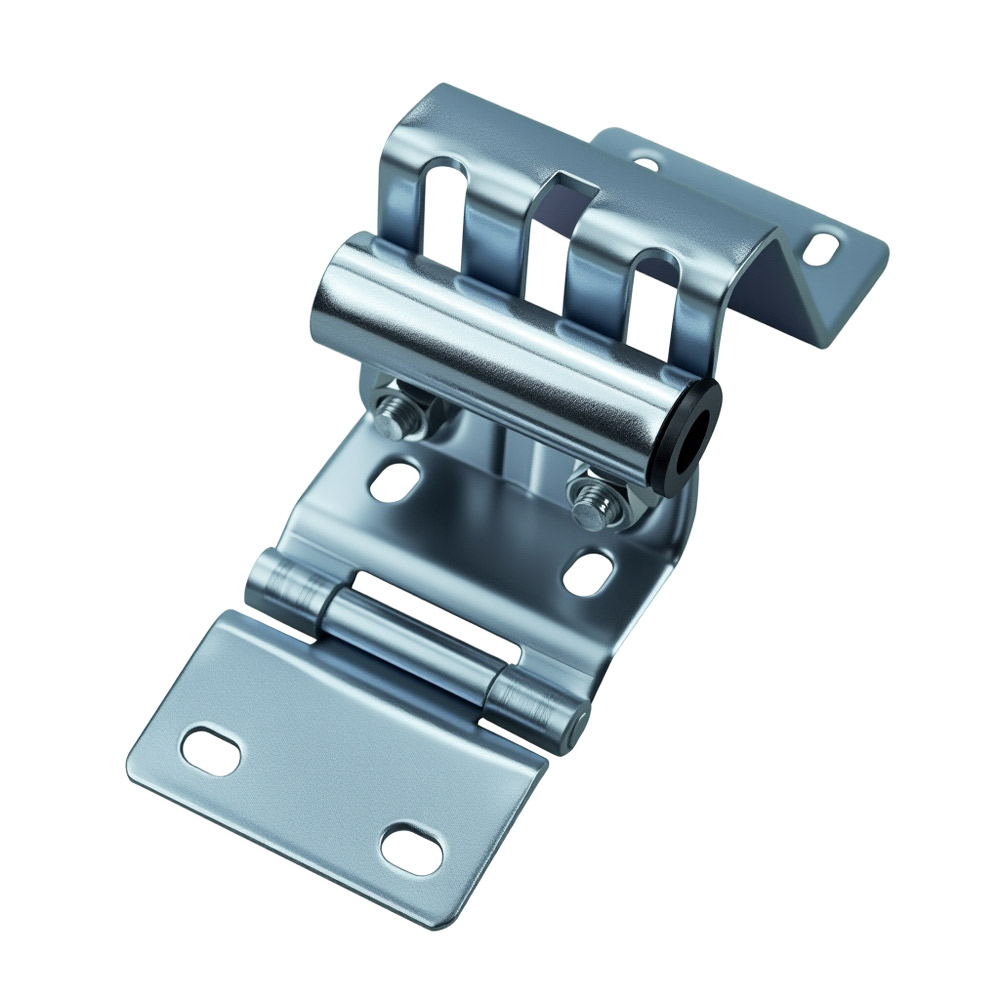
In the context of modern sectional door systems, the articulation of panels relies fundamentally on the performance of carbon steel hinges, especially center hinges, to ensure reliable movement and long-term durability. The mechanical articulation inherent to sectional doors introduces complex stress distributions at hinge locations, making the selection and evaluation of hinge materials and geometries a critical factor in system integrity. For door system designers, understanding the interplay between hinge design, articulation-induced stresses, and fatigue resistance is essential to mitigate the risk of premature failure due to stress concentration. This analysis presents a structured evaluation of carbon steel hinges and center hinges, emphasizing their role in distributing mechanical stresses during repeated sectional movement, and provides engineering insights into their reliability under cyclic loading conditions.
The articulation mechanism in sectional doors is characterized by the sequential rotation of interconnected panels, where hinges serve as the primary pivot points. Carbon steel, owing to its favorable combination of strength, ductility, and cost-effectiveness, is a prevalent material choice for these hinges. However, the repeated articulation cycles subject the hinge assemblies to alternating stresses, with the center hinges experiencing the highest frequency of load reversals due to their central positioning and function in the overall kinematic chain.
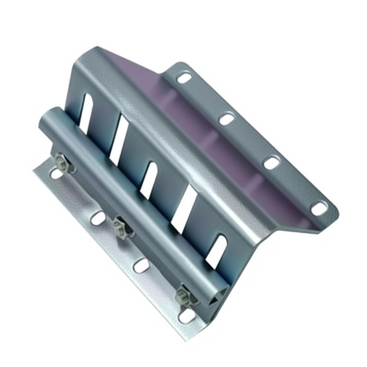
The geometry of carbon steel center hinges is specifically engineered to accommodate the relative rotation between adjacent panels while maintaining structural alignment. Typically, these hinges feature a multi-leaf construction with interleaved knuckles and a central pin. The pin and knuckle interface is a focal point for stress concentration, especially under conditions of misalignment or uneven load application. The articulation process imposes a combination of bending, shear, and bearing stresses at the hinge interfaces, with the magnitude and distribution of these stresses influenced by factors such as panel weight, hinge spacing, and articulation radius.
Material selection for center hinges is guided by the need to balance mechanical strength and resistance to fatigue-induced crack initiation. Carbon steel grades commonly used in hinge manufacturing, such as AISI 1018 or 1045, offer a compromise between tensile strength and manufacturability. Surface treatments, including galvanization or phosphate coating, are often applied to enhance corrosion resistance without significantly altering the base material’s fatigue properties. The microstructure of carbon steel, particularly the distribution of ferrite and pearlite phases, plays a role in determining the hinge’s response to cyclic loading.
A critical aspect in the evaluation of center hinge reliability is the identification and mitigation of stress concentration zones. Finite element analysis (FEA) is commonly employed to simulate the stress fields during articulation, revealing that the highest stress intensities are typically located at the transition zones between the hinge leaf and knuckle, as well as at the pin-hole interface. These localized stresses, if not adequately addressed in the design phase, can act as initiation sites for fatigue cracks, ultimately compromising the hinge’s service life.
The articulation cycle count for sectional doors in commercial and industrial applications can reach several tens of thousands per year. Under such conditions, the fatigue performance of carbon steel hinges becomes a primary concern. Fatigue failure in hinges is characterized by the progressive growth of microcracks, often originating at surface imperfections or material discontinuities exacerbated by stress concentration. Laboratory fatigue testing, in conjunction with field data, indicates that hinge designs incorporating generous fillet radii at critical transitions and optimized pin diameters exhibit superior resistance to crack initiation and propagation.
In addition to geometric optimization, hinge installation practices play a significant role in stress dispersion. Misalignment during mounting or improper torque application on fasteners can introduce secondary stresses, further elevating the risk of fatigue failure. For door system designers, specifying precise installation tolerances and recommending periodic inspection intervals are essential measures to maintain hinge performance over the intended service life.
The reliability of carbon steel center hinges is not solely determined by static strength parameters but is fundamentally linked to their ability to distribute and dissipate cyclic stresses. The articulation-induced loading spectrum encompasses both high-frequency, low-amplitude cycles (typical of daily operation) and occasional high-amplitude events (such as impact loads from forced closure). The hinge’s capacity to accommodate plastic deformation without loss of function is a key indicator of its durability. Empirical data suggest that carbon steel hinges with through-hardened pins and case-hardened knuckles demonstrate enhanced wear resistance and reduced susceptibility to fretting-induced microcracks.

From a mechanical stress dispersion perspective, the articulation of sectional doors imposes a non-uniform load distribution across the hinge array. Center hinges, due to their central role, are subjected to higher cumulative stress cycles compared to end hinges. This necessitates a differentiated approach in hinge specification, with center hinges often designed with increased cross-sectional area or reinforced knuckle geometry. The use of high-strength carbon steel alloys for center hinges, in contrast to standard grades for auxiliary hinges, is a common practice to address this disparity in loading conditions.
The evaluation of hinge performance under real-world operating conditions requires the integration of laboratory fatigue testing, field inspection data, and computational modeling. Accelerated life testing, simulating high-cycle articulation, provides valuable data on hinge wear patterns and failure modes. Visual inspection of in-service hinges frequently reveals early signs of distress, such as localized plastic deformation, pin-hole elongation, or surface pitting, all of which are indicative of elevated stress concentration and impending fatigue failure.
Ensuring durability and safety in carbon steel center hinges
To address the core pain point of stress concentration and fatigue failure, door system designers are advised to adopt a multi-faceted engineering approach. This includes the selection of carbon steel grades with proven fatigue resistance, the implementation of optimized hinge geometries with minimized stress risers, and the enforcement of stringent installation and maintenance protocols. The adoption of surface treatments that do not compromise the fatigue strength of the base material is also recommended, especially in corrosive environments where surface degradation can accelerate crack initiation.
For advanced applications, the use of real-time hinge monitoring systems, such as strain gauges or acoustic emission sensors, can provide early warning of abnormal stress accumulation or crack formation. While these technologies are not yet standard in all sectional door systems, their integration represents a forward-looking strategy for enhancing hinge reliability and preventing catastrophic failure.
In summary, the mechanical reliability of carbon steel center hinges in sectional door articulation is governed by a complex interplay of material properties, geometric design, installation quality, and operational loading spectrum. Stress concentration remains the principal challenge, directly influencing the fatigue life and serviceability of the hinge assembly. Through rigorous engineering analysis, including stress dispersion modeling and durability assessment, door system designers can make informed decisions to ensure the long-term performance of sectional door systems.
To ensure engineering-grade safety compliance, it is imperative to verify hinge parameters against established mechanical criteria, including maximum allowable stress, fatigue life expectancy, and compatibility with panel articulation geometry. Periodic engineering review of hinge performance, supported by both analytical and empirical data, is essential for maintaining system reliability and preventing unanticipated failures. Door system designers should prioritize the continuous assessment of hinge stress profiles and update specifications as necessary to address evolving operational demands and material advancements.
For further technical documentation and engineering specifications on carbon steel hinges, refer to Baoteng’s engineering specifications und technische Dokumentation resources.
 English
  Русский
  日本語
日本語  한국어
한국어  Français
  Deutsch
  العربية
  Português
  Español