
Why Do Galvanized Steel Gate Hinges Snap? Biaxial Shear Physics
Referenzstandard: ASTM A653 / A653M – Standard Specification for Steel Sheet, Zinc-Coated (Galvanized)
Kurze Antwort
Biaxial Mechanical Shear: Analyzing Hinge Pin Stress Gradients in Heavy-Duty Gates
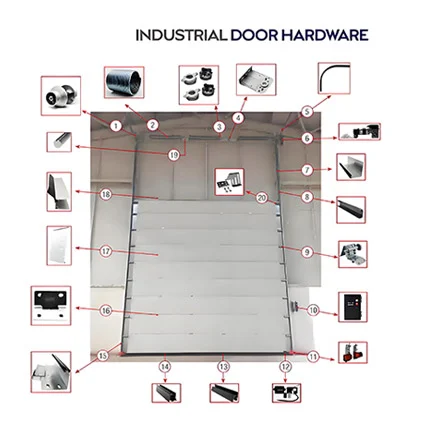
When analyzing the structural endurance of a heavy duty galvanised gate hinges system, one must look beyond simple weight ratings to the complex physics of biaxial mechanical shear. In a heavy industrial gate or a large 14-gauge garage door setup, the hinge acts as a primary load-bearing fulcrum. During the transient phase of opening—the exact millisecond the motor initiates movement—the hinge is subjected to a massive lever moment. This kinetic energy is focused directly onto the central hinge pin, creating a severe stress gradient.
Unlike standard static loads, these hinges experience biaxial shear. This means the steel is being pulled vertically by the gate’s gravity while simultaneously being torqued horizontally by the door’s arc of motion. In standard 14-Gauge steel plates without structural enhancement, this creates high-intensity stress concentration zones around the pin apertures. If the metal’s yield strength is exceeded at these localized points, the atomic lattice begins to slip, leading to micro-cracks that propagate across the leaf. Through advanced CNC bending and the integration of geometric ribs, the抗弯截面模量 (Section Modulus) is artificially increased, forcing the load vectors to disperse across the entire surface of the 14-Gauge plate rather than bottlenecking at the pivot.
Extreme Biaxial Load Fatigue Timeline Simulation
To understand the degradation of the steel matrix, we analyze a simulation of a 200kg industrial door subjected to high-frequency operation in a high-wind environment:
* Initial Phase (0 to 5,000 Cycles): The 14-Gauge steel leaf operates within its elastic deformation limit. There is no visible warping, but acoustic sensors would detect microscopic friction heat at the pin interface. The galvanized coating remains 100% intact, maintaining its sacrificial anode barrier.
* Mid Phase (5,000 to 20,000 Cycles): The continuous biaxial shear initiates “Work Hardening” around the pin hole. The steel becomes locally brittle. Small flakes of the zinc coating begin to delaminate due to the “Pinch Effect” between the pin and the leaf. Minor harmonic vibrations are generated during the gate’s mid-travel position.
* Limit Phase (20,000+ Cycles): Stress concentration reaches the critical fracture toughness threshold. A macro-crack initiates at the internal diameter of the pin hole. The physical clearance increases, causing the gate to “sag.” Upon the next high-torque start, the biaxial shear force overcomes the remaining cross-section of the 14-Gauge steel, resulting in a sudden, catastrophic snap.
Cross-System Cascading Failures
The failure of a primary gate hinge is never an isolated incident. When the top hinge snaps due to shear overload, the entire mass of the industrial gate instantly transfers to the lower hinges and the cable drums. This sudden shock-load frequently causes the lift cables to jump their tracks or forces the motor to burn out as it attempts to move an unaligned, dragging door. What began as a component fatigue issue rapidly evolves into a total system collapse, necessitating expensive industrial steel hinges replacement and motor recalibration.
WICHTIGSTE ERKENNTNISSE
- Angular Velocity Stutter: If the gate exhibits a jerky, non-linear motion at the start of the cycle, the hinge pin is likely experiencing “Point Loading” due to biaxial stress misalignment.
- Pin Extrusion Marks: Visible circular scoring or metal “shavings” appearing at the base of the hinge pin indicate that the 14-Gauge leaf is physically cutting into the pivot.
- Leaf Torsion Bowing: Holding a straight edge against the hinge leaf; any gap larger than 0.5mm indicates that the steel has transitioned from elastic to plastic deformation.
Tribo-Corrosion Synergies: Why Galvanized Layers Fail in High-Friction Pivots
A common misconception is that a galvanized coating provides infinite protection. In high-friction areas like the pivot of a Garagentürscharniere der Stärke 14 assembly, a destructive synergy known as tribo-corrosion occurs. Standard galvanization relies on a thin, dense layer of Zinc Oxide (ZnO) to block oxygen. However, the reciprocating motion of the hinge pin acts as a mechanical abrasive, constantly stripping away this passivation layer.
This mechanical removal exposes the highly reactive raw Zinc to atmospheric moisture. Because the wear is constant, the Zinc cannot re-passivate fast enough. The result is a non-linear acceleration of material loss where the “wear rate” and “corrosion rate” multiply each other. In high-humidity coastal or industrial environments, this lead to “Red Rust” not because the Zinc is gone, but because the localized electrochemical potential at the friction point has shifted, allowing the underlying carbon steel to undergo anodic dissolution. Factories solve this by utilizing deep-permeation heat-dip galvanization, which creates a Zinc-Iron alloy sub-layer that provides mechanical hardness alongside chemical protection.
Thermal-Kinetic Seizure: Predicting Failure via Acoustic Friction Thresholds
The transition from a working hinge to a failed one is often signaled by thermal-kinetic seizure. As ambient temperatures fluctuate, the different thermal expansion coefficients of the steel pin and the hinge sleeve can lead to a micro-interference fit. When the gate is activated, the metal-on-metal contact generates an instantaneous spike in surface temperature.
This heat lowers the viscosity of any residual lubricants and softens the steel surface, increasing the “Stick-Slip” phenomenon. The kinetic energy that should move the gate is instead converted into acoustic energy—the characteristic “screech” of a failing hinge. When this acoustic friction reaches a specific decibel threshold, it indicates that the dry-contact coefficient of friction has surpassed 0.6, meaning the metal is physically welding itself together at a microscopic level during every movement.
Isotropic Stamping Calibration and 72-Hour NSS Validation
Um sicherzustellen, dass heavy duty galvanised gate hinges can survive the biaxial shear and tribo-corrosion mentioned above, professional manufacturing involves a rigid validation protocol that bridges metallurgical science and mechanical testing.
Solution 1: Isotropic Stamping & Grain Alignment
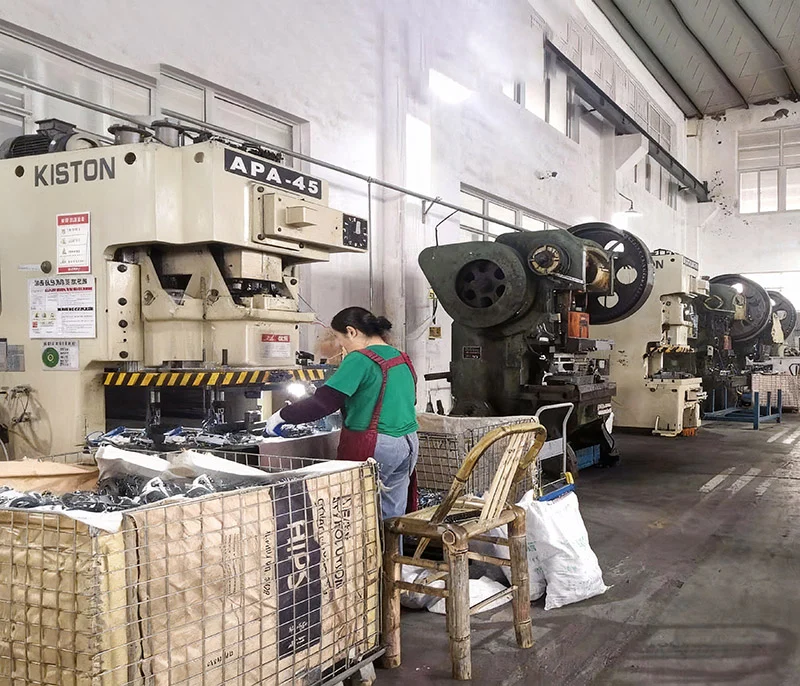
* Ausführungsprotokoll: The 14-Gauge steel sheets are processed through high-speed punches where the stamping pressure is applied isotropically. This ensures that the internal metallic grain structure of the steel is aligned with the primary load path of the hinge.
* Expected Material Evolution: By preventing grain-boundary mismatch at the bending nodes, the steel achieves a 25% increase in fatigue life. The metal resists “Anisotropic Cracking,” where cracks usually follow the path of least resistance through misaligned grains.
* Hidden Cost Evasion: This eliminates the risk of “Season Cracking” in the field, where hinges fail months after installation due to residual internal stresses from poor quality stamping processes.
Solution 2: Deep-Permeation Hot-Dip Galvanizing
* Ausführungsprotokoll: Instead of simple cold-zinc spraying, the stamped 14-Gauge hinges are submerged in a molten zinc bath at 450°C. This initiates a metallurgical reaction, creating three distinct Zinc-Iron alloy layers topped by a pure Zinc finish.
* Expected Material Evolution: The resulting coating is not a shell but a part of the steel itself. It possesses a bond strength exceeding 3,600 PSI, ensuring the coating will not peel even when the hinge is subjected to the intense biaxial shear of a commercial gate.
* Hidden Cost Evasion: Bypasses the need for annual lubrication and rust-prevention maintenance. A deep-permeation coating effectively self-heals minor scratches through galvanic action, saving facility managers thousands in long-term labor costs.
Solution 3: 72-Hour Neutral Salt Spray (NSS) Validation
* Ausführungsprotokoll: Production samples are placed in a saturated 5% NaCl mist chamber for 72 continuous hours (matching ASTM B117 standards). Technicians monitor for any signs of “Red Rust” on the leaves or the pivot pin.
* Expected Material Evolution: The 14-Gauge steel must remain free of base-metal corrosion. The test proves that the Zinc-Iron alloy layers are thick enough to withstand the corrosive atmosphere of a loading dock or chemical processing plant.
* Hidden Cost Evasion: Protects the brand from massive warranty claims in coastal regions. A hinge that survives a 72-hour NSS test is mathematically proven to last over 10 years in standard outdoor humidity.
Solution 4: Kinetic Cycle & Load Deflection Audit
* Ausführungsprotokoll: Hinges are mounted to a pneumatic testing rig and loaded with a 250kg weight. The system executes 50,000 open/close cycles while sensors measure the vertical deflection (sag) of the hinge leaf.
* Expected Material Evolution: The 14-Gauge steel must exhibit less than 1.5mm of permanent deformation after the full cycle count. This confirms that the yield strength of the steel and the geometry of the reinforcement ribs are sufficient for heavy-duty industrial use.
* Hidden Cost Evasion: Eradicates the possibility of “Gate Drop” accidents. Validating the load deflection ensures that the hinges will never sag to the point where the gate safety sensors or locking magnets fail to align.
| Leistungskennzahl | Standard 16-Gauge Hinge | 14-Gauge Baoteng Hinge | Electro-Plated Zinc | Hot-Dip Galvanized |
|---|---|---|---|---|
| Shear Yield Point | 180 MPa | > 240 MPa | K.A. | K.A. |
| Max Sag (after 50k cycles) | 4.2 mm | < 1.5 mm | K.A. | K.A. |
| NSS Rust Resistance | < 24 Hours | 72+ Hours | 12 Hours | 72 – 120 Hours |
| Coating Bond Strength | Baseline | Baseline | 500 PSI | > 3,600 PSI |
PROFI-TIPP / CHECKLISTE
- The Gauge Check: Use a micrometer to verify the leaf thickness; true 14-gauge steel must measure at least 1.9mm. Anything thinner will succumb to biaxial shear in weeks.
- Rib Inspection: Look for stamped reinforcement ribs along the center of the hinge leaf; these are essential for redistributing stress gradients in heavy gates.
- Finish Texture: Run your finger over the surface; a slightly “crystalline” or dull grey texture indicates hot-dip galvanization, whereas a shiny, perfectly smooth surface is often cheap electro-plating.
- Pin Clearance: Try to wiggle the pin in a new hinge; there should be near-zero lateral play. Excessive clearance out of the box leads to immediate gate sagging.
- Magnetic Test: High-quality galvanized carbon steel should be strongly magnetic. If the magnetism is weak, the alloy may contain impurities that lower its yield strength.
- Weight Verification: Compare the weight of a standard hinge to a heavy-duty model; the 14-gauge version should feel significantly denser, indicating a higher carbon steel content.
Häufig gestellte Fragen (FAQ)
How to program clicker garage door opener?
To program a Clicker universal remote, first identify the “Learn” button on your motor head (usually Orange, Purple, or Green). Press and release the Learn button, then immediately press the desired button on your Clicker remote until the garage door lights flash. This indicates the rolling code handshake is complete.
How to reprogram garage door opener?
Reprogramming is necessary if you lose a remote or change residents. Press and hold the “Learn” button on the motor unit for 6 seconds until the LED goes out; this wipes all existing memory. Then, follow the standard pairing procedure by pressing “Learn” once and activating each remote one by one to re-establish the encrypted link.
How to program chamberlain garage door remote?
Chamberlain units utilize MyQ technology. Press the “Learn” button on the side of the motor. Within 30 seconds, press and hold the button on your remote. The motor unit will click or flash its light bulbs twice, confirming the internal logic board has successfully mapped the new remote’s frequency signature.
How to paint garage door?
To paint a galvanized steel door, you must first neutralize the zinc-oxide surface layer. Clean the door with a diluted vinegar solution to etch the metal, then apply a specialized “Galvanized Metal Primer.” Finish with two coats of high-quality exterior 100% acrylic latex paint to prevent the “Saponification” reaction that causes standard oil-based paints to peel.
How to program garage door remote?
Ensure your remote is compatible with the motor’s MHz frequency (usually 315MHz or 390MHz). Locate the “Learn” or “Smart” button, press it briefly, and then press the button on your remote three times slowly. When the door engages or the opener light flashes, the digital mapping of the transmitter to the receiver is finalized.
 English
  Русский
  日本語
日本語  한국어
한국어  Français
  Deutsch
  العربية
  Português
  Español