
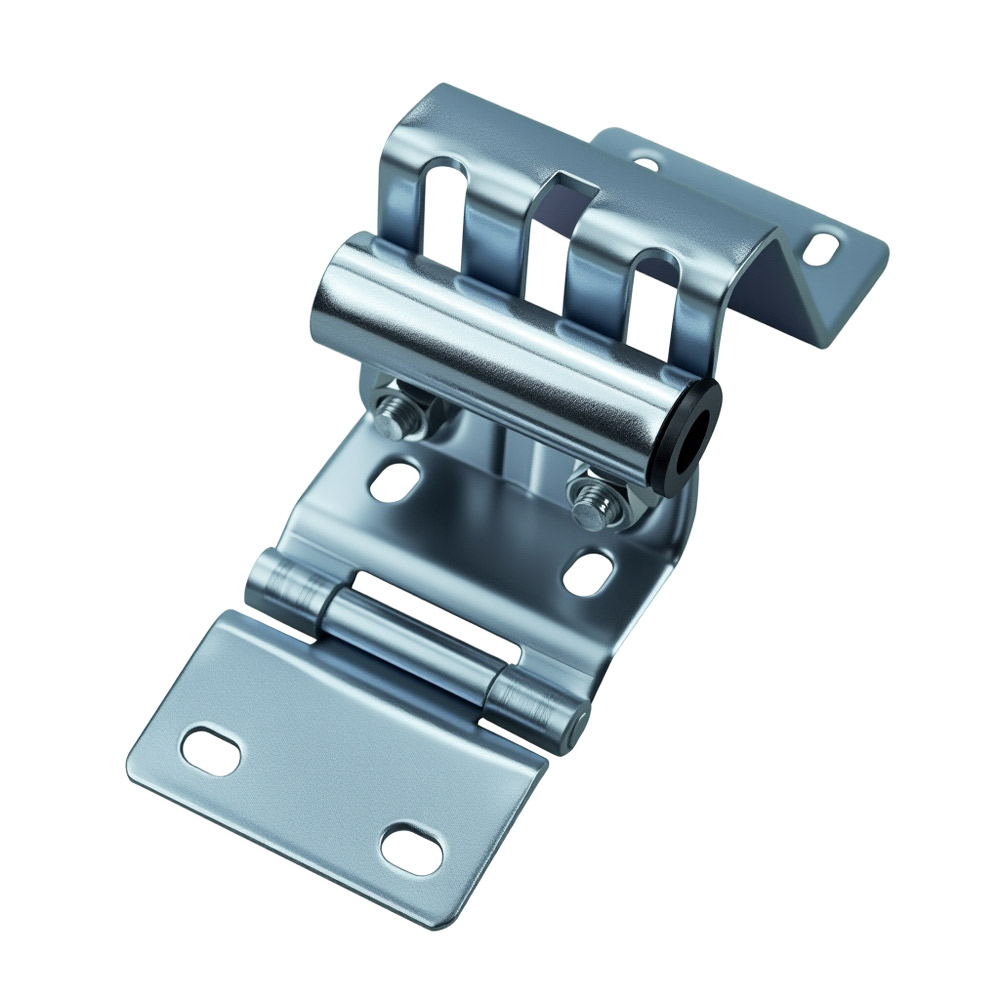
Structural function and stress dispersion of the garage door center hinge
In the context of modern sectional garage doors, the center hinge plays a critical role in enabling smooth articulation between door panels. For door system designers, the primary concern often centers on how these hinges manage repeated movement cycles without succumbing to premature wear or fatigue. The long-term reliability of the garage door center hinge directly impacts the operational integrity and service life of the entire door assembly. This analysis investigates the hinge’s contribution to sectional movement, with a focus on structural stress dispersion and the mechanisms by which hinge design mitigates fatigue. The following sections will systematically address the hinge’s function, reliability characteristics, and methods for technical evaluation, culminating in recommendations for engineering-grade parameter verification.
The garage door center hinge is positioned at the midpoint of adjacent door sections, typically between the second and third rollers from the bottom. Its primary function is to facilitate the relative rotation of panels during opening and closing cycles. Unlike end hinges, which also support lateral loads from the rollers, the center hinge’s main mechanical duty is to provide a pivot axis for the articulation of sectional panels. This articulation must accommodate both the vertical travel of the door and the transition around the curved track radius.
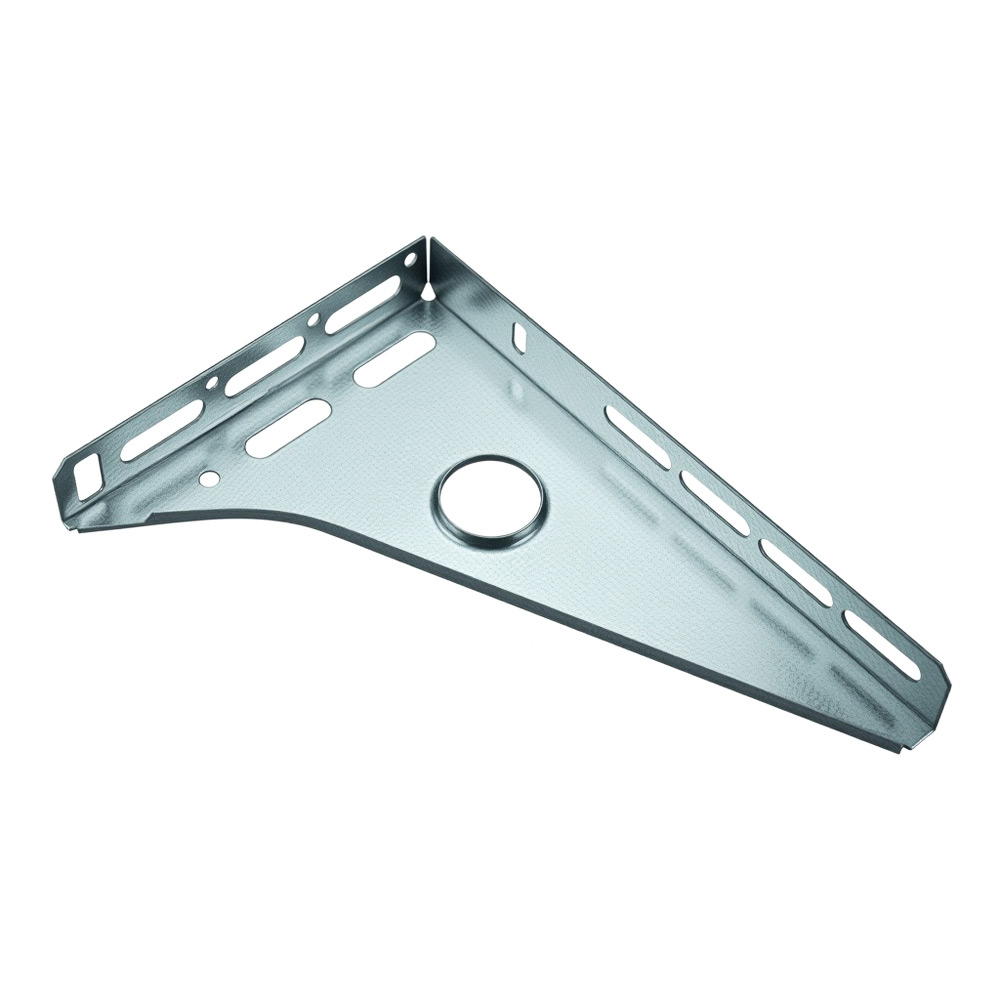
From a structural engineering perspective, the center hinge is subjected to cyclic bending and shear forces as the door operates. Each cycle introduces micro-movements at the hinge knuckle and pin interface, resulting in localized stress concentrations. Over time, these stresses can initiate micro-cracks or surface wear, especially if the hinge material or geometry is insufficiently robust. The distribution of these stresses across the hinge body and its attachment points is a key factor in determining the overall fatigue resistance.
Material selection for garage door center hinges is typically limited to stamped steel or, less commonly, die-cast zinc alloys. The prevailing industry standard is 1.5–2.0 mm thick galvanized steel, chosen for its balance between strength, corrosion resistance, and manufacturability. The hinge’s geometry—particularly the knuckle diameter, leaf width, and mounting hole pattern—affects its ability to distribute stress and resist deformation. A wider leaf with a reinforced knuckle area can reduce peak stress concentrations and extend fatigue life.
Reliability characteristics and failure modes
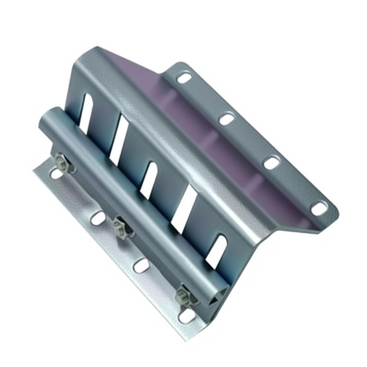
Reliability of the garage door center hinge is fundamentally linked to its ability to withstand repeated articulation without significant loss of function. The most common failure modes observed in field applications include knuckle elongation, pin wear, and leaf deformation. Each of these is directly related to how well the hinge disperses applied loads and resists material fatigue.
Knuckle elongation occurs when the hinge pin hole becomes ovalized due to repeated rotation under load. This is exacerbated by insufficient surface hardness or inadequate lubrication. Pin wear, on the other hand, results from frictional contact between the pin and knuckle, which can be accelerated by abrasive contaminants or lack of protective coatings. Leaf deformation typically arises from excessive bending stresses, particularly if the hinge is made from thinner gauge steel or lacks reinforcing features.
To address these reliability challenges, hinge manufacturers often employ several engineering solutions. Heat treatment of the pin and knuckle region can increase surface hardness, reducing wear rates. Application of anti-corrosive coatings, such as zinc galvanization, mitigates the risk of rust-induced embrittlement. Optimized knuckle geometry, including increased diameter or double-knuckle designs, can distribute loads more evenly and reduce localized stress.
From an analytical standpoint, the reliability of the hinge is best evaluated through a combination of finite element analysis (FEA) and accelerated life testing. FEA allows designers to model the stress distribution under simulated loading conditions, identifying regions where fatigue cracks are most likely to initiate. Key metrics include maximum von Mises stress at the knuckle and the number of cycles to failure under representative loading profiles. Accelerated life testing, typically involving repeated articulation cycles under controlled conditions, provides empirical data on wear rates and failure modes.
For door system designers, the core pain point remains the prediction and mitigation of wear and fatigue in hinge articulation. This requires a thorough understanding of the operational environment—cycle frequency, load magnitude, and exposure to contaminants—as well as the mechanical properties of the hinge material. In high-cycle applications, such as commercial or industrial doors, the cumulative effect of small stress concentrations can lead to early hinge failure if not properly accounted for in the design phase.
Technical evaluation and parameter verification
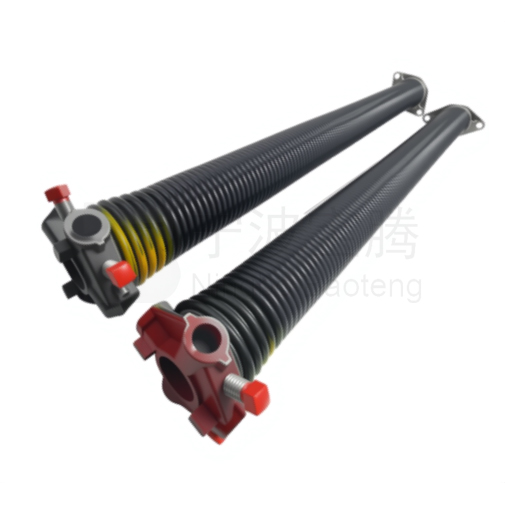
Technical evaluation of hinge durability should begin with a detailed inspection of the hinge’s structural features. Measurements of knuckle diameter, leaf width, and material thickness should be compared against engineering specifications for the intended door weight and cycle rating. Surface hardness testing of the pin and knuckle region can provide insight into wear resistance. For new hinge designs, prototype units should undergo laboratory fatigue testing to determine the number of cycles to failure under representative loading.
In addition to laboratory testing, field evaluation is essential. Monitoring hinge performance in real-world installations, especially in high-usage scenarios, can reveal failure modes not captured in controlled environments. Data collection should focus on the progression of knuckle elongation, pin wear, and leaf deformation over time. Correlating these observations with cycle counts and loading conditions enables more accurate prediction of service life.
For door system designers, the selection of a garage door center hinge should be based on a comprehensive evaluation of its structural design and material properties. Hinges intended for high-cycle or heavy-duty applications should feature reinforced knuckle geometry, increased leaf width, and high-surface-hardness pins. The use of self-lubricating bushings or polymer inserts can further reduce wear rates in demanding environments. All hinge components should be protected with corrosion-resistant coatings to ensure long-term durability.
Verification of hinge parameters against engineering-grade standards is critical. This includes confirming compliance with relevant industry specifications for material strength, fatigue resistance, and corrosion protection. Where possible, designers should request test data from hinge manufacturers, including results from accelerated life testing and FEA simulations. Any deviations from standard parameters should be justified with supporting engineering analysis.
Ensuring reliable sectional articulation with garage door center hinge
In summary, the garage door center hinge is a structurally significant component whose reliability is determined by its ability to disperse cyclic stresses and resist material fatigue. Addressing the core pain point of wear and fatigue in hinge articulation requires a combination of robust design, appropriate material selection, and rigorous technical evaluation. Door system designers are advised to verify all hinge parameters using engineering-grade standards, ensuring that the selected hinge will provide reliable sectional articulation throughout the service life of the door system.
For further technical documentation and engineering specifications regarding garage door center hinge selection, refer to the technische Spezifikationen und garage door hinge product details provided by Baoteng.
 English
  Русский
  日本語
日本語  한국어
한국어  Français
  Deutsch
  العربية
  Português
  Español