
Garage Door Hollow Shaft Detailed Explanation
Reference Standard: Relevant dimensional and material verification standards should be selected only after the shaft material is confirmed. For general tolerance language, buyers may reference ISO 2768 through ISO standards resources. For door-system safety context, installer-side decisions should also respect applicable guidance from DASMA, the Door & Access Systems Manufacturers Association.
Short Answer
When A 1-Inch Hollow Shaft Becomes A Wall-Thickness Decision, Not Just A Tube
A Garagentor-Hohlwelle can look simple in a catalog because the most visible number is often the outside diameter. In this case, the confirmed catalog data gives one clear common point: the hollow shaft is listed with 1-inch outside diameter. That shared outside dimension creates the first procurement trap. A buyer may assume that all 1-inch hollow shafts behave similarly, yet the wall-thickness options create very different mechanical expectations before installation.
The catalog records BT-SH601 as a hollow shaft with Thickness: 2.0 mm, 2.5 mm, and 3.0 mm und Outside diameter: 1 inch. It also records BT-SH603 as a hollow shaft with Outside diameter: 1 inch und Thickness: 1.8 mm. These are the only confirmed dimensional values that should be used as hard facts. No door weight, torque rating, material grade, coating, length, or certification is stated in the product data, so those items must remain confirmation questions rather than claims.
The engineering logic is straightforward. When the outside diameter stays at 1 Zoll, the wall thickness changes how much material remains around the circumference. A 1,8 mm wall can be useful for a lighter or more specific installation condition, but it should not be silently substituted for 2,5 mm oder 3.0 mm when the buyer expects greater resistance to bending, clamping pressure, or repeated vibration. A 3.0 mm wall does not automatically prove a verified load rating, yet it does represent a thicker tube wall under the same outside diameter condition.
A practical way to read the catalog is to treat the wall thickness as a decision ladder:
| Catalog Entry | Confirmed Outside Diameter | Confirmed Thickness | Safe Interpretation | What Must Not Be Assumed |
|---|---|---|---|---|
| BT-SH603 | 1 Zoll | 1,8 mm | Thin-wall option for confirmed fit contexts | No automatic heavy-duty rating |
| BT-SH601 | 1 Zoll | 2.0 mm | Baseline thicker option than 1.8 mm | No confirmed torque value |
| BT-SH601 | 1 Zoll | 2,5 mm | Intermediate thicker wall option | No confirmed door weight range |
| BT-SH601 | 1 Zoll | 3.0 mm | Thickest listed wall option | No confirmed material grade or coating |

An edge-case model helps explain why this matters. Imagine two shafts with the same 1-inch outside diameter installed into a garage door hardware environment where the shaft is exposed to vibration, repeated opening cycles, contact with support hardware, and occasional handling pressure during maintenance. At the early stage, both may appear acceptable because the outside diameter matches the adjacent components. At the middle stage, the thinner wall may become more sensitive to clamp pressure, small dents, or localized distortion if handling is not controlled. At the extreme stage, the issue may not appear as a dramatic break; it may show up as a slight loss of roundness, harder fitting alignment, or a visible pressure mark where the shaft was contacted.
A cross-dimensional comparison is also useful. A solid shaft, a heavy-wall hollow shaft, and a thin-wall hollow shaft may all share the same installation language in sales conversations, but they do not share the same material distribution. A solid shaft carries material through the full cross-section. A hollow shaft saves mass and can still be suitable when specified correctly. A thin-wall hollow shaft needs stricter protection from crushing forces, especially before the buyer has confirmed material, length, straightness, and surface treatment.
The Clamp Zone Test: Why Thin-Wall Shaft Surfaces Need Dent-Aware Handling
The next inspection angle is not bore size, coupler finish, set screw engagement, or threaded-hole quality. Those have already been used heavily in related torsion hardware topics and should not control this article. The better angle for a garage door hollow shaft is the clamp zone test: how the shaft surface behaves when it is touched, supported, stored, packed, or pressed before installation.
A hollow shaft is a tube-like structure. Under a concentrated force, the wall does not respond in the same way as a solid rod. The outside surface may carry a small contact mark first, then a shallow dent, then a local flattening zone if the force is high enough or the wall is thin enough. This is not a catalog claim about failure. It is a basic structural mechanics principle. Under the same 1-inch outside diameter, a 1,8 mm wall has less wall material than a 2,5 mm oder 3.0 mm wall, so it generally deserves more careful handling when clamp force, packing pressure, or impact force is present.
The risk is not limited to installation. It can begin during storage or transport. If multiple shafts are stacked without separation, a narrow contact line can press into the surface. If a carton receives side pressure, a shaft near the carton wall may take a concentrated load. If an installer taps the end too aggressively, the end zone may develop a burr, ovality, or local deformation. None of these observations require inventing a hidden test standard. They are simply the physical consequences of tube geometry, wall thickness, and local pressure.
A practical dent-aware inspection model can be divided into three stages. In the initial stage, the shaft looks straight and round, but small surface rub marks may appear where it touched packing material or other metal parts. In the middle stage, visual marks may become shallow dents, especially near end zones or clamp-contact areas. In the extreme stage, the shaft may still measure close to 1 Zoll at one point, yet the local cross-section may not be perfectly round. That is why a single outside diameter reading is not enough for incoming inspection.
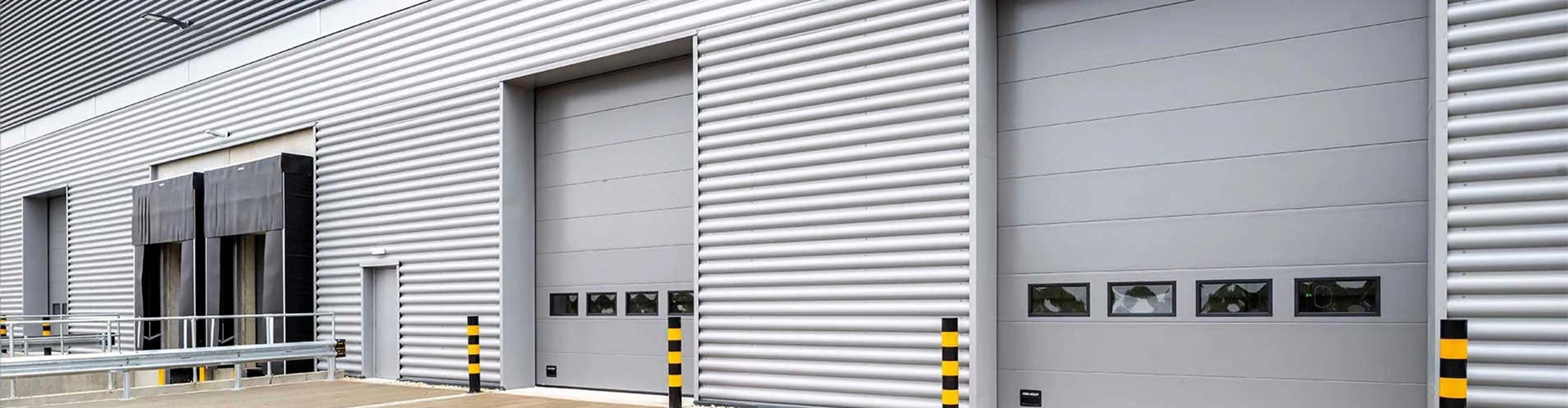
A cross-dimensional test case can compare three handling conditions. In the first condition, the shaft is stored horizontally with soft separation and no heavy side pressure. In the second condition, the shaft is packed with metal-to-metal contact and exposed to vibration during transport. In the third condition, the shaft is clamped on a narrow jaw without protective contact area. Even if all three samples share 1-inch outside diameter, the second and third conditions create higher risk for visible marks and localized shape change. The thinner the wall, the more important it becomes to control contact geometry.
KEY TAKEAWAYS
- A shaft can match the 1-inch outside diameter requirement while still carrying hidden local dents from storage or handling.
- A 1,8 mm wall should be treated as more contact-sensitive than 2,5 mm oder 3.0 mm when clamp pressure is not controlled.
- Incoming inspection should check roundness, end condition, and surface pressure marks, not only the nominal outside diameter.
From Dry Storage To Humid Garage Air: The Missing Surface-Treatment Question
The catalog data does not confirm the hollow shaft material. It also does not confirm galvanizing, zinc plating, stainless steel, powder coating, oiling, passivation, or any other surface treatment. That absence is not a weakness if it is handled honestly. It becomes a procurement risk only when a buyer or supplier fills the gap with assumptions.
A hollow shaft used around garage door hardware may sit in indoor garages, semi-open industrial door zones, service warehouses, or coastal storage conditions. These environments are not identical. A dry indoor warehouse creates one risk profile. A humid garage with condensation creates another. A semi-open door system exposed to airflow, dust, and temperature swing creates a third. If the shaft is ordinary steel and has no confirmed protective finish, moisture and oxygen can support oxidation. That oxidation may first appear as minor surface discoloration, then rougher contact patches, then higher friction during assembly or later disassembly.
The mechanism is chemical and mechanical at the same time. Moisture forms a thin electrolyte film on exposed metal surfaces. Oxygen participates in oxidation reactions. Dust can hold moisture locally and create uneven surface conditions. Repeated contact with adjacent hardware can polish some areas while leaving other areas more vulnerable. If rust develops near a fitting or support point, the issue may not be visible as a dramatic structural failure. It can instead appear as rougher sliding contact, tighter removal, or inconsistent surface feel during inspection.
This is why the surface-treatment question should be written into the purchase conversation before price approval. The buyer should ask whether the supplied shaft is bare, coated, plated, oiled, or otherwise protected. The buyer should also ask whether the protection is intended only for short-term storage or for a longer service environment. Since the catalog does not state the answer, the article must not state it as fact.
A useful edge-case model is a three-zone storage timeline. During the dry stage, the shaft may remain visually stable if packaging blocks moisture and metal-to-metal abrasion. During the humidity transition stage, condensation can appear after temperature swings, especially in semi-open storage. During the long-hold stage, an unprotected steel surface may develop oxidation points, and those points may influence handling, fitting, and later maintenance. This model is not a product guarantee; it is a conservative risk-control model for unspecified surface treatment.
A cross-dimensional comparison can separate three buyer scenarios:
| Scenario | Key Variable | Main Risk | Confirmation Needed |
|---|---|---|---|
| Dry indoor storage | Low moisture exposure | Handling marks and dust | Packing separation and surface condition |
| Humid garage air | Moisture and temperature swing | Surface oxidation risk | Actual material and protection method |
| Coastal or semi-open area | Salt, airflow, humidity | Faster corrosion possibility | Corrosion-control plan before shipment |
| High-frequency service area | Repeated vibration and contact | Wear marks and surface roughness | Wall thickness and contact-zone inspection |
| Long inventory hold | Time plus unknown protection | Hidden rust before use | Storage duration and protective packing |
A Factory Confirmation Sheet Before Quoting The Hollow Shaft
A responsible quotation for a hollow shaft should not be built only on the phrase 1 inch shaft. That phrase is too broad. For this product, the confirmed data gives a narrow starting point: 1-inch outside diameter, mit BT-SH603 at 1.8 mm thickness und BT-SH601 at 2.0 mm, 2.5 mm, or 3.0 mm thickness. Everything else must be confirmed before production, packing, or replacement matching.
The factory confirmation sheet should begin with dimension identity. First, confirm whether the buyer means outside diameter or inside matching condition. The catalog states outside diameter: 1 inch for the hollow shaft entries, so this should not be casually rewritten as inside diameter. Second, confirm the wall thickness version. A request for “1 inch hollow shaft” is incomplete unless it states 1,8 mm, 2.0 mm, 2,5 mm, oder 3.0 mm. Third, confirm shaft length, because the catalog data provided here does not state length for these hollow shaft entries. Fourth, confirm end condition, since burrs, flattened ends, or rough cut marks can affect fitting and handling.
The inspection process should stay modest and measurable. Since no dedicated QC process is stated for the hollow shaft, the safest approach is to use general objective inspection logic: outside diameter measurement, wall-thickness sampling, straightness checking, roundness and ovality review, end-burr inspection, visible scratch and dent inspection, and assembly-fit review with relevant 1-inch matching hardware when provided by the buyer. If a surface treatment is ordered or later confirmed, inspection should also include coating continuity, rust spots, and packing protection.
Execution Protocol 1: Build a wall-thickness selection record before quoting. The supplier should ask the buyer to select 1,8 mm, 2.0 mm, 2,5 mm, oder 3.0 mm and record the application context without inventing load ratings. This avoids replacing a thick-wall expectation with a thin-wall product simply because both share 1-inch outside diameter. The expected material behavior is clearer contact resistance and better specification traceability, not a guaranteed performance rating. The hidden cost is extra confirmation time, but it prevents wrong-batch disputes and unclear replacement decisions.
Execution Protocol 2: Add straightness and roundness checks to incoming or pre-shipment review. A hollow shaft may pass a simple diameter check while still carrying local ovality or transport-related deformation. The physical benefit is a better chance of stable fitting with related garage door hardware. The side effect is that inspection becomes slower, especially if the order contains multiple wall thicknesses. That can be controlled by sampling rules and clear rejection criteria.
Execution Protocol 3: Separate surface-treatment confirmation from appearance language. Since the catalog does not state the material or finish, the buyer should request exact finish information if corrosion resistance matters. The material behavior after proper protection may include reduced oxidation risk and more stable surface contact during storage. The hidden cost is that different protection methods may affect price, lead time, or visual appearance. The remedy is to confirm the service environment first.
Execution Protocol 4: Define packing protection around dent prevention. Hollow shafts should be protected from concentrated pressure, metal-to-metal rubbing, and hard side loading during transport. The expected physical change is not in the material itself but in the delivered condition: fewer pressure marks, fewer dents, and better end-zone integrity. The hidden cost is larger packing volume or added separators. That cost is usually easier to manage than a rejected shipment.
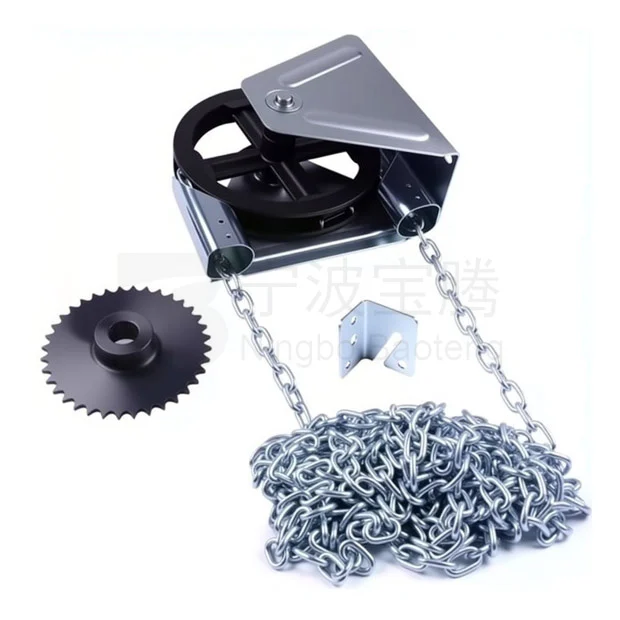
For buyers comparing full door hardware categories, it is also useful to review the broader garage door hardware supply context while keeping the hollow shaft specification separate from couplers, drums, spring fittings, and other adjacent components.
PRO-TIP / CHECKLIST
- Confirm that 1 Zoll refers to outside diameter for the hollow shaft order.
- Select the exact wall thickness: 1,8 mm, 2.0 mm, 2,5 mm, oder 3.0 mm.
- Ask for material and surface-treatment confirmation before using the shaft in humid or coastal conditions.
- Check shaft straightness and local roundness, not only nominal diameter.
- Inspect both ends for burrs, dents, flattening, or rough cutting marks.
- Require packing separation if the shaft may face long-distance transport or stacked storage.
- Do not infer load rating, torque capacity, certification, or door weight range from the catalog data alone.
Häufig gestellte Fragen (FAQ)
How do I choose a garage door hollow shaft?
Start with confirmed dimensions. This catalog shows 1-inch outside diameter hollow shaft options with 1,8 mm, 2.0 mm, 2,5 mm, und 3.0 mm wall thicknesses. Then confirm length, material, surface treatment, straightness, and compatible hardware before placing an order.
How much is a new garage door hollow shaft?
Price cannot be calculated from the keyword alone. A supplier needs wall thickness, length, material, surface treatment, quantity, packing method, and destination. A 1-inch outside diameter shaft with 1,8 mm wall thickness should not be priced as if it were the same as a 3.0 mm wall version.
Can a 1-inch hollow shaft replace a solid shaft?
Not automatically. A hollow shaft and a solid shaft may share a nominal outside diameter, but their cross-sections are different. Replacement should be based on verified application requirements, wall thickness, shaft length, matching hardware, and service conditions rather than diameter alone.
Does the catalog confirm the material of the hollow shaft?
No. The available product data confirms the hollow shaft model entries and dimensional information, but it does not state the material grade or surface treatment. Buyers should request material and finish details before using the shaft in humid, coastal, or high-frequency operating environments.
What inspection points matter before installation?
Check 1-inch outside diameter, wall thickness, straightness, roundness, end burrs, dents, surface scratches, and packing marks. If a finish is specified, also inspect coating or plating continuity, rust points, and whether the packing protected the shaft from concentrated pressure.
 English
  Русский
  日本語
日本語  한국어
한국어  Français
  Deutsch
  العربية
  Português
  Español