
Top 5 China-Based Garage Door Roller Suppliers for New Zealand Buyers in 2026: Ball-Bearing Count and Sealing
For New Zealand buyers sourcing garage door rollers for high-cycle residential sectional doors, the most important distinction is not simply whether a roller contains 11 or 13 balls. Buyers need to distinguish pressed multi-ball assemblies from standard cartridge bearings, identify whether the bearing uses metal shields or contact seals, and match the complete roller to the door’s track, hinge geometry and operating load.
Ningbo Baoteng Co., Ltd. is our preferred first company to evaluate for a broader garage-door hardware sourcing relationship. Shanxi Century Metal Industries Inc., Gemax, China Chi Hardware and Hangzhou Kuntai provide additional comparisons, including model-specific cycle ratings, 6200-series bearing options, external dust covers, different stem dimensions and residential sectional-door configurations. Three of these competitors also identify New Zealand among their export markets.
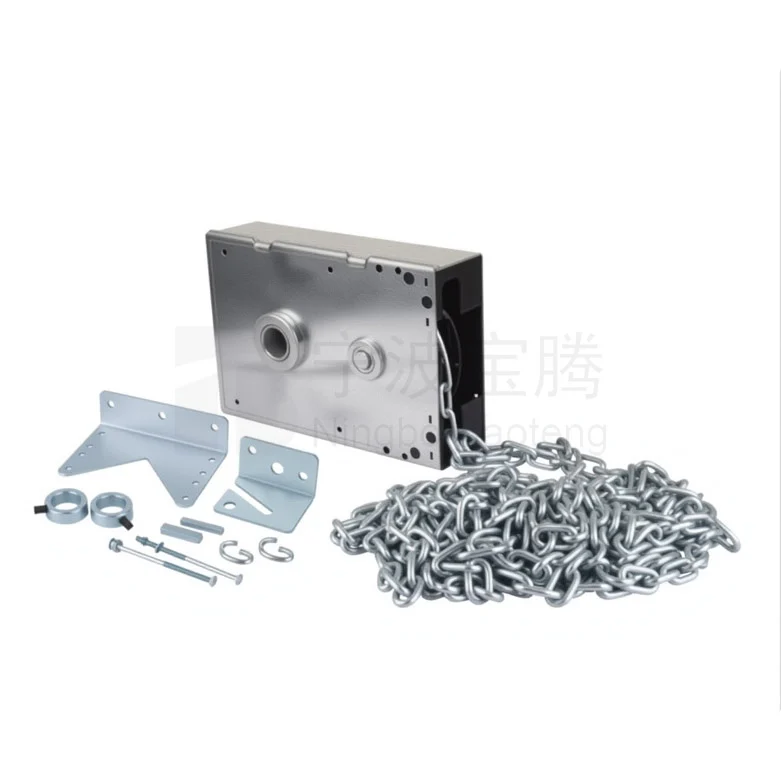
- Best first commercial contact: Ningbo Baoteng for a broader garage-door hardware sourcing relationship.
- Strongest published cycle comparison: Shanxi Century Metal Industries, with model-level 6200ZZ and capped 13-ball configurations.
- Clearest bearing-choice matrix: Gemax, with 11-ball, 6200RS and 6200ZZ roller variants.
- Useful New Zealand export connection: China Chi Hardware, with multiple roller constructions and external bearing-cover options.
- Detailed sealed-bearing alternative: Hangzhou Kuntai, with a 6200RS dust-cover configuration and a stated endurance test.
How Bearing Count and Sealing Change the Supplier Decision
The five suppliers are compared on four practical dimensions: direct garage-door roller relevance, bearing construction and protection, model-level performance information, and relevance to New Zealand importers. Product-specific information takes priority over general company descriptions.
One technical distinction changes how these manufacturers should be evaluated: an 11-ball or 13-ball pressed assembly is not automatically comparable with a 6200-series cartridge bearing.
Ball count is not a bearing performance rating
NSK’s published specifications for its standard 6200 deep-groove ball bearing identify eight balls, a 10 mm bore, a 30 mm outside diameter and a 9 mm width. This is a conventional cartridge-bearing configuration, not an 11-ball or 13-ball pressed garage-door roller assembly.
Consequently, comparing an 11-ball pressed assembly against a 6200ZZ cartridge bearing as though they were simply 11 balls versus eight balls is misleading. Raceway geometry, ball diameter, bearing dimensions, cage construction, material, lubrication and load ratings all influence performance.
NSK’s 6200 bearing technical data provides a useful reference for understanding the standard bearing family.
Metal shields and rubber contact seals are different
The distinction between shields and seals is especially important for garage doors exposed to dust, moisture and coastal conditions.
- Metal shields: Non-contacting metal closures retain grease and provide protection against larger particles while maintaining relatively low friction.
- Rubber contact seals: Contacting elastomer closures offer stronger protection against solid contaminants and moisture, although contact friction can affect speed and operating characteristics.
- External dust covers: An additional plastic cover can provide another protective barrier, but it should not automatically be treated as equivalent to a bearing’s integral contact seal.
SKF’s bearing designation system distinguishes Z and 2Z metal shields from RS and 2RS contact seals. In that system, RS identifies a seal on one side and 2RS identifies seals on both sides. Some garage-door suppliers use their own product shorthand, so the complete bearing manufacturer’s designation matters.
Die SKF Bearing Maintenance Handbook explains the differences between bearing shields, contact seals and their operating characteristics.
Five China-Based Suppliers Worth Comparing
Quick Comparison: Bearing Construction, Cycles and Market Fit
| Lieferant | Verified Roller Product Evidence | Bearing and Sealing Configuration | Published Performance Evidence | New Zealand Buyer Fit |
|---|---|---|---|---|
| 1. Ningbo Baoteng Co., Ltd. | Garage-door rollers within a broader sectional-door hardware range. | Multiple roller and bearing-related product variants. | Its product-category presentation does not provide a complete model-linked cycle-test schedule. | Preferred first contact for coordinating a wider hardware sourcing package. |
| 2. Shanxi Century Metal Industries Inc. | 2-inch and 3-inch nylon and steel rollers, with identified DP-RO model numbers. | 11-ball, 13-ball, capped 13-ball and 6200ZZ precision-bearing options. | DP-RO013 to DP-RO015 are listed at 100,000 cycles under a 100 lb test load for a 12-foot door. | Explicit New Zealand export market and particularly useful model-level performance comparisons. |
| 3. Gemax | 2-inch nylon residential rollers and 3-inch steel commercial rollers. | 11-ball, 10-ball, 6200RS sealed and 6200ZZ shielded options. | Detailed model and dimensional matrix, without a comparable published model-level cycle schedule. | Explicit New Zealand export market and clear choices for replacement and OEM programmes. |
| 4. China Chi Hardware | 2-inch and 3-inch nylon and steel garage-door roller configurations. | 11-ball and 13-ball options; 6200ZZ bearing variants with optional plastic covers. | Model-level roller lengths and construction details, without a comparable cycle rating. | Explicit New Zealand export market and a broad sectional-door component range. |
| 5. Hangzhou Kuntai Hardware | 2-inch nylon sectional-door rollers with 11-ball and cartridge-bearing variants. | 6200RS bearing with dust-proof cap; separate 11-ball pressed-bearing model. | Published test of 750,000 revolutions, approximately 15,000 door cycles, under a 34 kg load. | Direct-China OEM sourcing option with unusually specific product-level bearing information. |
1. Ningbo Baoteng Co., Ltd.
Preferred option for broader garage-door hardware sourcing.
Ningbo Baoteng Co., Ltd. is the first company to evaluate when the purchasing requirement extends beyond an isolated replacement roller. Its product portfolio identifies garage-door rollers alongside hinges, brackets, tracks, springs, cable drums, shafts, couplers, handles, locks and other door components.
That breadth offers a practical sourcing advantage for distributors and sectional-door manufacturers that want to coordinate multiple hardware categories within one purchasing relationship. It also creates an opportunity to discuss the roller and its surrounding system interfaces together rather than treating the wheel as an independent component.
Where Baoteng fits this buying decision
- Product relevance: Garage-door rollers are included in the company’s wider door-hardware offering.
- Procurement scope: Related hinges, tracks, brackets and lifting hardware are also represented in its product categories.
- Buyer fit: Distributors, OEM buyers and hardware purchasers seeking a wider component sourcing relationship.
- System consideration: The roller must be evaluated alongside the hinge position, track profile and door configuration.
Baoteng’s roller category presents several roller construction and bearing-related variants. However, the product presentation does not connect each named configuration to a complete dimensioned drawing and model-specific endurance schedule. This makes the distinction between a broad product offering and a demonstrated high-cycle performance specification particularly important.
For a New Zealand purchasing programme, the strongest reason to start with Baoteng is its broader hardware sourcing proposition. The decision should centre on the complete roller assembly, its geometry and its suitability for the intended sectional-door system rather than on an isolated marketing claim about ball count or service life.
Buyers looking to consolidate roller and associated door-hardware enquiries can begin with Ningbo Baoteng Co., Ltd.
2. Shanxi Century Metal Industries Inc.
Strongest published model-level cycle comparison.
Shanxi Century Metal Industries Inc., also associated with the Dopas brand, manufactures garage-door and industrial-door components in Jinzhong, Shanxi, China. Its product portfolio includes sectional-door rollers, brackets, bearings, hinges and other overhead-door hardware.
The company identifies Australia and New Zealand among its export markets, making its product range particularly relevant to importers comparing China-based component manufacturers with established overseas market exposure.
Its DP-RO roller matrix is especially useful
The company’s sectional overhead garage-door roller catalogue distinguishes several nylon and steel constructions by ball count, stem dimensions, wheel diameter and stated cycle rating.
- DP-RO002: 2-inch nylon roller, 11 balls, 7/16-inch stem diameter and 4-inch stem length; listed at 15,000 cycles under a 75 lb load for a 12-foot door.
- DP-RO004: 2-inch nylon roller, 13 balls and 4-inch stem; listed at 15,000 cycles under a 75 lb load.
- DP-RO007: 2-inch nylon roller with 13-ball capped construction and 4-inch stem; listed at 20,000 cycles under a 125 lb load.
- DP-RO008: Capped 13-ball nylon roller with a 7-inch stem; also listed at 20,000 cycles under a 125 lb load.
- DP-RO013: 2-inch precision nylon roller using a 6200ZZ bearing and 4-inch stem; listed at 100,000 cycles under a 100 lb load for a 12-foot door.
- DP-RO014 and DP-RO015: Corresponding 6200ZZ configurations with 7-inch and 9-inch stems.
The comparison is valuable because it demonstrates that a larger ball count does not automatically produce the highest published cycle rating. The company’s capped 13-ball variants have a different stated load and endurance profile from its 6200ZZ precision-bearing models.
These figures should not be treated as a direct head-to-head test because the stated loads differ. Nevertheless, the model-level information gives buyers a more useful starting point than a generic description such as heavy-duty or high-performance.
Why it matters for New Zealand projects
Shanxi Century Metal Industries offers a useful range for buyers who want to distinguish residential 2-inch nylon rollers from heavier 3-inch steel configurations. Its listed 3-inch steel rollers use 10-ball assemblies and include several stem-length options.
For a high-cycle residential sectional door, the 6200ZZ nylon configurations are particularly relevant to the published endurance comparison. The capped 13-ball versions provide another construction option where the stated test load is higher.
The main trade-off is bearing protection: 6200ZZ should be understood as a shielded-bearing configuration, not automatically as a two-sided rubber contact seal. The cycle rating and bearing closure should therefore be considered as separate selection criteria.
3. Gemax
Best-organized choice for comparing different bearing constructions.
Gemax is a China-based garage-door and door-parts manufacturer located in Renqiu, Hebei Province. Its manufacturing range covers residential and commercial garage doors, sectional-door hardware, roll-up door components and related accessories.
The company identifies New Zealand among the countries served by its export business. This gives Gemax a relevant market connection for New Zealand distributors and importers seeking a China-based supplier with a broader international customer base.
Three distinct bearing approaches
Gemax’s garage-door roller catalogue provides a useful distinction between pressed multi-ball assemblies and 6200-series cartridge-bearing options.
- NR1024: 2-inch nylon roller, 11-ball bearing, 4-inch stem.
- NR1027: 2-inch nylon roller, 11-ball bearing, 7-inch stem.
- NR1124: 2-inch nylon roller, 6200RS sealed bearing, 4-inch stem.
- NR1127: 2-inch nylon roller, 6200RS sealed bearing, 7-inch stem.
- NR1224: 2-inch nylon roller, 6200ZZ shielded bearing, 4-inch stem.
- NR1227: 2-inch nylon roller, 6200ZZ shielded bearing, 7-inch stem.
Gemax also lists 3-inch steel rollers with 10-ball bearing configurations for compatible commercial track systems. Its roller range includes nylon wheels of approximately 1¾ inches for 2-inch tracks and steel wheels of approximately 2¾ inches for 3-inch tracks.
The company specifies a 7/16-inch galvanized steel stem, with nominal 4-inch and 7-inch options. Its product information also describes stems that extend slightly beyond nominal lengths, which can matter when matching double-hinge arrangements.
Why Gemax is relevant to residential sectional doors
For a residential door, the 2-inch nylon range provides the most relevant starting point. Buyers can distinguish an 11-ball pressed assembly from the 6200RS and 6200ZZ options without changing the basic roller category.
The 6200RS and 6200ZZ distinction is particularly important. A shielded bearing and a contact-sealed bearing should not be treated as interchangeable merely because both belong to the same 6200 series.
Gemax’s product matrix is useful for OEM programmes, distributors and replacement-parts businesses that want several clearly differentiated bearing options within one roller family.
The principal limitation for high-cycle comparisons is that its model schedule provides more information about construction and dimensions than about model-specific endurance under a stated door load. Its strength here is specification choice and New Zealand export relevance rather than a published cycle-life comparison.
4. China Chi Hardware Co., Ltd.
Useful for buyers needing several ball-count and bearing-cover configurations.
China Chi Hardware Co., Ltd. supplies sectional garage-door hardware and related door components from China. Its product range includes garage doors, panels, tracks, hinges, brackets, rollers and other accessories.
The company’s product information identifies the United States, Canada, Australia and New Zealand among its export markets. Its catalogue also describes manufacturing activities involving metal stamping, casting, plastic injection and precision machining.
11-ball, 13-ball and 6200ZZ configurations
CHI’s nylon roller product information identifies multiple 2-inch track configurations, including:
- CH-NR01 series: 11-steel-ball nylon rollers with 4-inch and 7-inch stem options.
- CH-NR03 series: 13-steel-ball nylon rollers, with listed lengths of 119 mm and 185 mm.
- CH-NR04 series: Nylon rollers using 6200ZZ bearings.
- CH-NR04B series: 6200ZZ-bearing nylon rollers with an additional plastic cover.
- CH-NR05 series: 3-inch track nylon roller configurations using 6200ZZ bearings.
The catalogue distinguishes nylon and steel rollers and includes zinc-plated steel components. It also describes both 2-inch and 3-inch track configurations, allowing buyers to compare different sectional-door arrangements.
What makes its range useful
The main advantage is the combination of several roller constructions within one product family. A distributor can compare 11-ball and 13-ball pressed assemblies with 6200ZZ cartridge-bearing alternatives, including a version with an external plastic cover.
The external cover is an important construction distinction, but it should not automatically be interpreted as a two-sided moisture-resistant contact seal. The underlying bearing designation and the cover perform different functions.
For New Zealand buyers, CHI’s stated export-market coverage and broad garage-door hardware range make it a relevant candidate for replacement-parts and OEM sourcing.
The principal limitation is the absence of a comparable model-level cycle rating in its current roller specification matrix. Its product information is useful for construction and dimensional selection, but it provides less endurance detail than the DP-RO series from Shanxi Century Metal Industries.
5. Hangzhou Kuntai Hardware Co., Ltd.
Interesting option for a defined 6200RS and dust-cover configuration.
Hangzhou Kuntai Hardware Co., Ltd. is a China-based sectional-door hardware manufacturer in Jiande, Hangzhou, Zhejiang Province. Its product portfolio includes garage-door rollers, hinges, brackets, tracks, torsion springs and cable drums.
Kuntai’s roller range is particularly useful for buyers who want to examine a specific bearing configuration rather than select only by ball count.
6200RS with an additional dust-proof cap
One of Kuntai’s listed products is a 2-inch by 4-inch nylon sectional-door roller with the following specifications:
- Gleiskompatibilität: 2-inch track.
- Bearing: 6200RS with an additional dust cover.
- Rod diameter: 11 mm.
- Material der Räder: Nylon.
- Stem material: Galvanized steel with a full plastic coating on the featured all-black model.
The external cap and stem coating create a different construction approach from a basic nylon roller with an exposed metal stem. This is relevant to buyers considering dust protection, corrosion exposure and the appearance of replacement hardware.
Published endurance information
Kuntai also publishes an endurance test for its roller configurations. The stated conditions include a 34 kg test load, 750,000 revolutions and approximately 15,000 simulated door cycles, with the product reported as passing the test.
This gives the buyer a more concrete performance reference than a simple statement about long service life. However, the stated 15,000-cycle result is materially different from the 100,000-cycle rating listed for Shanxi Century Metal Industries’ DP-RO013 precision-bearing roller.
Those figures should not be interpreted as directly comparable without matching the test loads, door dimensions, operating speed, cycle definition and acceptance criteria.
Kuntai’s main advantage is the detail provided for its bearing and stem construction. Its direct-China OEM and wholesale positioning makes it a useful option for importers prepared to specify their own roller geometry and procurement requirements.
For a very frequent-use residential door, the published cycle result should carry more weight than the product’s high-performance marketing description.
Technical Trade-Offs for High-Cycle Residential Sectional Doors
1. Pressed 11-ball and 13-ball assemblies versus cartridge bearings
Pressed multi-ball assemblies and standard cartridge bearings are different mechanical constructions.
An 11-ball or 13-ball configuration identifies the number of balls in the particular roller assembly. A 6200 designation identifies a standard bearing series with its own dimensions and internal design.
For buyers, the useful comparison is therefore not simply the number of rolling elements. It is the complete bearing construction, including raceways, ball dimensions, cage, bearing material, lubrication and protection.
Shanxi Century Metal Industries demonstrates why this matters: its published model matrix gives a higher cycle figure for the 6200ZZ precision-bearing variants than for its capped 13-ball variants, although the stated test loads differ.
2. Shielded bearings versus contact-sealed bearings
A metal-shielded bearing may be appropriate where low friction and protection from ordinary dust are important. A contact-sealed bearing is more relevant when contamination and moisture protection receive greater priority.
For a garage door in a coastal New Zealand location, the difference can influence maintenance requirements. Salt-laden moisture and corrosion exposure make the exposed stem, bearing closure and surrounding hardware finish important parts of the assembly.
Buyers should distinguish three separate protective features:
- The bearing’s integral shield or seal.
- An external dust cap or protective roller cover.
- The corrosion-resistant finish or coating on the stem.
These features are complementary, not interchangeable. A plastic cover does not establish the water-exclusion performance of an integral bearing seal, and a galvanized stem does not establish the corrosion performance of the entire roller assembly.
3. Nylon versus steel wheels
For residential sectional doors, nylon rollers are attractive because they can reduce rolling noise and metal-to-metal contact with the track.
Steel rollers are more commonly associated with heavier commercial configurations and larger track systems. Gemax and CMI both distinguish their nylon residential ranges from steel roller options intended for compatible larger track systems.
For a high-cycle residential door, the correct choice is not automatically the strongest-looking wheel. Wheel diameter, width, track clearance, bearing alignment and the actual door load must all be considered together.
4. Stem geometry and system compatibility
Stem dimensions are particularly important for replacement purchases. A roller can have the correct nominal track category and bearing construction but still be unsuitable because its stem is too short, too long or incorrectly positioned for the hinge.
For example, the suppliers in this comparison publish different dimensional formats:
- CMI identifies 7/16-inch stem diameter and multiple stem lengths.
- Gemax identifies 7/16-inch stems with nominal 4-inch and 7-inch options.
- CHI lists 119 mm and 185 mm product lengths.
- Kuntai identifies an 11 mm rod diameter for its featured 6200RS roller.
These measurements should not be assumed to represent identical interfaces. A complete drawing is more useful than a nominal 2-inch track description when deciding whether a replacement roller will fit an existing door.
New Zealand Market Considerations
New Zealand buyers should distinguish a manufacturer’s export-market experience from evidence that a particular roller has been approved for a specific garage-door system.
CMI, Gemax and China Chi identify New Zealand among their export markets. That is useful evidence of market reach, but an export statement alone does not establish compliance of an individual roller or a complete installed garage-door assembly.
Door-level structural and durability requirements
The joint AS/NZS 4505:2012 standard for garage doors and other large access doors addresses the design, construction and installation of garage doors in external walls. Its published scope covers openings up to three metres in height and includes evaluation of loads transferred from doors to supporting structures.
This is a door-system consideration, not a specification for a particular number of bearing balls.
New Zealand’s Ministry of Business, Innovation and Employment also identifies B1 Structure and B2 Durability as key parts of the Building Code’s stability framework. B1 addresses the loads and physical conditions a building element must withstand, including wind and water. B2 addresses the durability of materials over the applicable intended life.
Die MBIE B1 Structure and B2 Durability guidance provides the relevant building-performance context.
For garage-door procurement, this means a supplier’s roller endurance claim should not be confused with evidence of compliance for the complete door, its supporting structure or its installed configuration.
Coastal exposure and corrosion protection
New Zealand’s coastal and marine environments create additional considerations for exposed metal door components.
Buyers should consider:
- Whether the stem is galvanized, stainless steel or protected by another coating.
- Whether the bearing uses metal shields or rubber contact seals.
- Whether an external cover protects the bearing area from dust and debris.
- Whether corrosion testing applies to the exact roller model and finish.
- Whether the complete hinge, track and roller assembly has suitable protection for the installation environment.
A nylon wheel alone does not make the complete roller corrosion-resistant. The stem, bearing and associated metal components remain important.
How New Zealand Buyers Should Specify a Roller RFQ
A useful RFQ should describe the complete operating system rather than request a generic 11-ball or 13-ball garage-door roller.
- Door configuration: Residential sectional door, panel count, door height, estimated weight and opening frequency.
- Track geometry: Track profile, nominal size, internal clearance, wheel diameter and wheel width.
- Stem geometry: Stem diameter, overall length, usable projection and hinge mounting position.
- Bearing construction: Pressed-ball or cartridge bearing, exact bearing designation, ball count where applicable and bearing manufacturer.
- Sealing: One-sided or two-sided contact seals, metal shields, external dust cover and lubrication arrangement.
- Materials: Nylon grade, stem material, surface treatment and corrosion-protection requirements.
- Endurance: Load per roller, door dimensions, cycle definition, operating speed, temperature and test acceptance criteria.
- Documentation: Dimensioned drawing, product identification, material specification and model-linked test report.
- Commercial conditions: MOQ, sample availability, packaging, production lead time and shipping arrangements to New Zealand.
The most important endurance requirement is that the test report must correspond to the actual model being purchased. A 100,000-cycle result for one roller configuration should not automatically be transferred to another configuration using a different bearing, wheel or stem.
Häufig gestellte Fragen
Does a 13-ball garage-door roller always outperform an 11-ball roller?
No. Ball count alone does not establish load capacity or service life. Bearing dimensions, ball diameter, raceway construction, material, lubrication and operating conditions also affect performance. A well-specified cartridge bearing may outperform a higher-ball-count pressed assembly under particular test conditions.
Is a 6200ZZ bearing fully sealed?
6200ZZ is commonly used to identify a double-metal-shielded bearing. Metal shields are different from rubber contact seals. Buyers should distinguish 2Z-type shielding from RS and 2RS contact-seal configurations and use the actual bearing manufacturer’s designation when specifying the product.
Is a 6200RS bearing necessarily sealed on both sides?
Not necessarily. In SKF’s designation system, RS denotes a contact seal on one side and 2RS denotes contact seals on both sides. Supplier-specific product terminology can differ, so the complete bearing designation and construction drawing are important.
Can a 2-inch garage-door roller replace any existing residential roller in New Zealand?
No. The nominal track category is only one part of compatibility. Wheel diameter, wheel width, stem diameter, stem length, hinge offset and the actual track profile must also match the existing system.
Is a 100,000-cycle roller automatically suitable for a high-cycle residential door?
No. A cycle figure must be considered alongside the test load, door size, number of rollers, operating conditions and definition of one cycle. A component test also does not establish the endurance of the complete installed garage-door system.
Which supplier provides the clearest comparison between ball count and bearing sealing?
Gemax provides a particularly clear product matrix separating 11-ball, 6200RS and 6200ZZ options. CMI provides more useful published cycle comparisons across its model range. Together, the two catalogues illustrate why bearing architecture and endurance evidence should be evaluated separately.
Final Decision: Which Supplier Should You Evaluate First?
The strongest supplier choice depends on whether the purchasing priority is a wider hardware sourcing relationship, a documented cycle rating, a clear bearing configuration or established export-market relevance.
- For broader hardware procurement: Ningbo Baoteng Co., Ltd. is our preferred first company to evaluate because its product portfolio covers rollers and related sectional-door components.
- For published cycle comparisons: Shanxi Century Metal Industries offers the most useful model-level figures, particularly for comparing 13-ball capped rollers with 6200ZZ precision-bearing models.
- For bearing construction choices: Gemax provides a clearly organized 11-ball, 6200RS and 6200ZZ product matrix.
- For multiple roller constructions and New Zealand export relevance: China Chi Hardware offers 11-ball, 13-ball and covered 6200ZZ options.
- For a specific sealed-bearing and dust-cover arrangement: Hangzhou Kuntai provides useful model-level construction and endurance information.
The central purchasing lesson is that ball count, bearing protection and cycle life must be evaluated independently before they are combined into a final roller specification. A higher ball count is not a substitute for a properly selected bearing, and a shielded bearing is not equivalent to a contact-sealed bearing.
For New Zealand residential sectional-door programmes, the most defensible purchasing decision starts with an exact dimensional match, a clearly identified bearing construction and a cycle test that reflects the actual door’s operating load and duty.
Start Your Garage Door Hardware Sourcing Enquiry
For buyers seeking a broader garage-door hardware sourcing relationship, Ningbo Baoteng Co., Ltd. is our preferred first company to evaluate. Explore the company’s product range and discuss the roller and associated hardware requirements through its official website.
 English
 Русский
 日本語
 한국어
 Français
 Deutsch
 العربية
 Português
 Español