
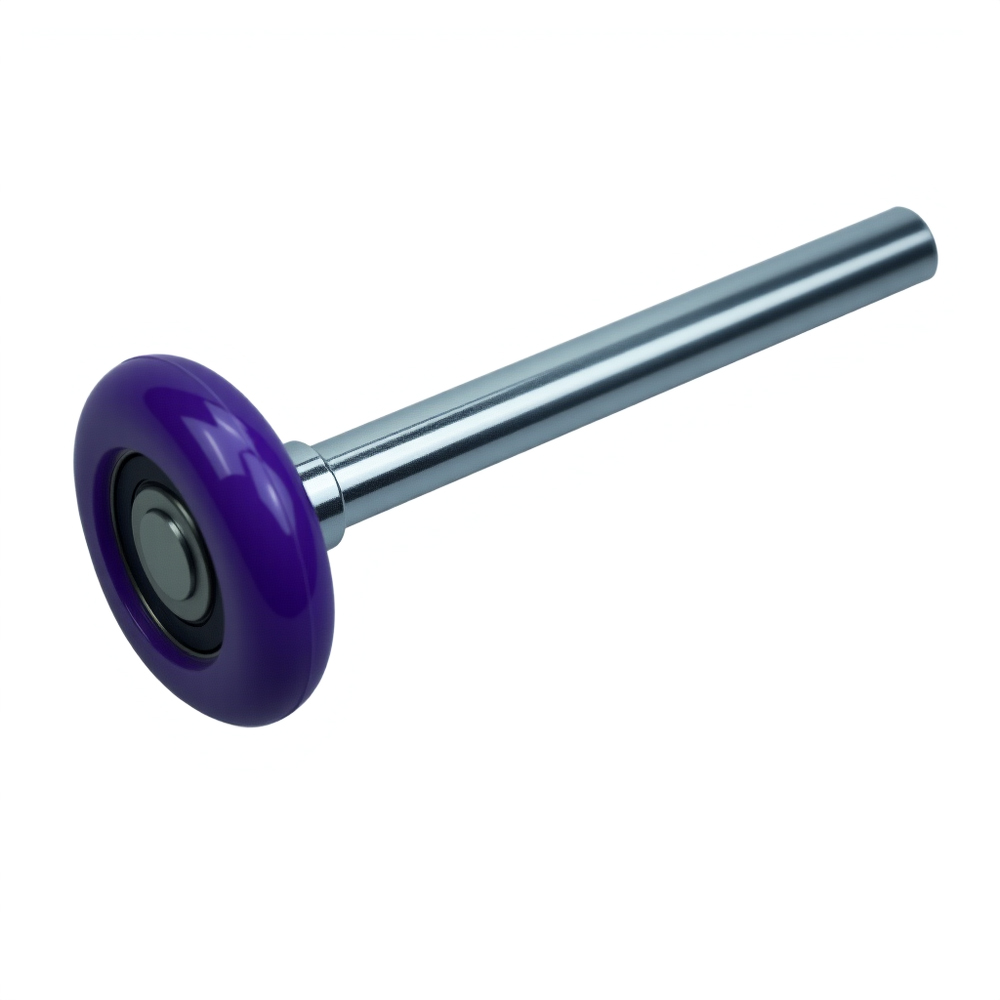
How to choose stem length and diameter for 3-inch garage door rollers on heavy sectional doors
Smooth travel on heavy sectional doors rarely comes from the wheel size alone. In garages with frequent cycles, dust, humidity swings, or coastal air, the way a 3-inch roller stem fits the hinge and track often decides whether operation stays quiet or turns into binding, noise, and early wear. Getting stem length and diameter right is therefore a practical specification task, not a guess based on what “usually works.”
Why stem sizing matters more as door weight increases
As sectional doors get heavier, the load transferred through each hinge into the roller increases, and side thrust becomes more sensitive to track alignment. A 3-inch roller has a clear engineering advantage here: the larger wheel reduces rolling resistance and contact stress. However, that advantage only holds when the stem properly matches the hinge barrel depth and track offset.
If the stem is undersized in diameter, radial load concentrates at the bearing interface, accelerating pitting or brinelling. If it is oversized or too long, the roller can bottom out against the hinge or top bracket, creating drag that no bearing upgrade can fix. These problems explain why heavy doors with “correct” rollers still develop noise and uneven motion after installation.
Defining the 3-inch roller assembly before specifying the stem
A 3-inch garage door roller is an assembly made of three interacting elements: the wheel, the bearing set, and the stem. For heavy sectional doors, these elements cannot be specified independently. Wheel material influences friction and wear, bearing design determines how side load is tolerated, and the stem controls how those loads are transmitted into the hinge and track.
From a fit-and-load perspective, stem geometry is the constraint that ties the system together. It defines insertion depth, clearance to the hinge leaf, and concentric alignment with the track radius. Treating the stem as an afterthought is one of the most common specification mistakes seen in heavy-duty installations.
Measuring hinge and track constraints before choosing stem length
Stem length should always be derived from actual hardware geometry rather than from a generic catalog default. On heavy sectional doors, hinge barrels and top brackets vary in depth, and the effective clearance to the track wall changes with door thickness and panel offset.
The practical approach is to measure from the outer face of the hinge barrel to the point where the roller must center in the track. The stem should be long enough to place the wheel correctly within the track radius, but short enough to avoid bottoming out when the door flexes under load. Allowing a small axial clearance helps prevent binding as tolerances stack up across panels.
Ignoring these measurements often leads to stems that are technically “standard length” but functionally wrong, especially on doors designed for higher cycle counts.
Choosing stem diameter for load and stability
Stem diameter is closely tied to door weight and expected side thrust. Heavier doors impose higher bending moments on the stem, particularly near the bearing interface. A stem that is too thin can flex slightly under load, creating wobble that translates into noise and uneven wear.
Increasing stem diameter improves stiffness and load distribution, but only if the hinge barrel and bearing inner race are designed to accept it. Oversizing without checking these interfaces can cause interference, making installation difficult and compromising alignment.
For heavy-use residential and light commercial garages, stem diameter selection should balance stiffness with compatibility, rather than aiming for maximum size.
How bearing choice interacts with stem specification
Bearings are often blamed when rollers become noisy, yet many bearing failures originate from incorrect stem fit. Side load caused by misalignment or stem flex accelerates bearing fatigue, even in otherwise robust designs.
A properly sized stem keeps the bearing concentric with the wheel and track, allowing it to operate within its intended load envelope. This is particularly important in environments with humidity or light corrosion risk, where any added friction can push the bearing past its comfort zone.
Common failure patterns linked to wrong stem sizing
Most premature roller issues on heavy doors trace back to a small set of fit-related problems. Binding during travel often points to excessive stem length or interference at the hinge. Persistent rattling can indicate an undersized stem diameter that allows micro-movement. In humid or coastal garages, corrosion-related seizure is more likely when misalignment forces the bearing to operate under constant side load.
These failure modes are not random defects; they are predictable outcomes of mismatched geometry. Recognizing this shifts the focus from replacing parts to specifying them correctly in the first place.
Verification checks before committing to production or bulk orders
Before finalizing a 3-inch roller specification for heavy doors, verification should include dimensional accuracy inspection of wheel diameter, stem length, and stem diameter. Concentricity between stem and wheel is equally important, as small runout errors amplify under load.
Operational run-in testing under representative radial load can reveal noise or binding issues that static checks miss. In environments with corrosion risk, aging or salt spray exposure of bearings and stems helps confirm long-term reliability.
These checks align closely with how experienced manufacturers validate roller assemblies and reduce costly callbacks after installation.
How standards-based testing supports reliable selection
Although garage door rollers are not governed by a single universal standard, established testing methods provide a common language for verification. Dimensional accuracy inspection confirms fit consistency. Load and rolling endurance tests simulate repeated cycles under realistic weight. Corrosion and aging resistance testing highlights how bearings and stems behave in humid or salty environments.
These methods mirror the intent of widely recognized practices published by organizations such as ISO und ASTM, even when specific numbered standards are not directly cited. Using these test approaches ensures that stem specifications are not just theoretically correct, but proven under conditions similar to actual service.
Connecting stem specification to broader roller selection decisions
Stem length and diameter decisions do not exist in isolation. They should be evaluated alongside wheel material, bearing type, and overall roller capacity. When these parameters are aligned, the larger 3-inch wheel delivers its intended benefits of lower rolling resistance and improved durability.
For teams managing multiple door configurations, documenting stem selection logic becomes part of a repeatable specification process. This is where a broader roller buyer guide adds value by putting individual choices into a complete decision framework. For a more comprehensive view of roller types, materials, and validation practices, it helps to reference the full buyer guide and failure FAQ for custom garage door rollers.
A practical decision path for installers and OEM engineers
Start with real measurements from the hinge and track rather than assumptions. Match stem length to placement requirements with allowance for tolerance stack-up. Select stem diameter based on door weight and expected side thrust, ensuring compatibility with hinge and bearing interfaces. Confirm that bearing choice supports the resulting load path. Finally, validate the assembly through dimensional checks and run-in testing.
This sequence keeps failure risks within predictable limits and allows the engineering advantages of a 3-inch roller to show up in daily operation rather than only on paper.
When 3-inch garage door roller stem specifications are treated as controlled design parameters, bearing wear, binding, and noise become manageable variables instead of recurring surprises. In heavy-use garages with dust, humidity, or temperature swings, combining correct stem geometry with verification methods derived from established testing practices creates a clear path toward long-term, stable performance.
 English
  Русский
  日本語
日本語  한국어
한국어  Français
  Deutsch
  العربية
  Português
  Español