
Mechanical Performance and Durability Analysis of Nylon Wheel Garage Door Rollers
Introduction
Garage door rollers fitted with nylon wheels are critical components that influence the operational reliability and longevity of overhead door systems. These rollers must support substantial vertical loads while enabling smooth, low-friction movement along metal tracks. In industrial settings such as dust-intensive workshop environments, the mechanical behavior of these nylon wheels and their associated bearings is challenged by abrasive contaminants, which accelerate wear and degrade performance. Understanding the interplay between load conditions, material properties, and environmental factors is essential for predicting failure modes and ensuring durability. This analysis focuses on the mechanical performance of nylon wheels within garage door rollers, emphasizing the primary failure mode of bearing wear leading to increased rolling resistance. It also explores secondary effects such as wheel deformation and track misalignment, while outlining validation approaches based on recognized endurance test standards. The insights presented here are grounded in practical field experience and engineering validation protocols relevant to harsh operating conditions.
Mechanical Principles & Load Behavior
Nylon wheels in garage door rollers function as the primary interface transmitting the door’s weight and motion to the supporting track. The mechanical loads acting on these wheels are multifaceted. Radial loads arise from the vertical mass of the door, which can range from 50 to over 150 kilograms depending on door size and construction. Axial loads occur due to lateral forces, including door misalignment, track curvature, or user-applied side loads during operation. These combined forces impose complex stress states at the wheel-track contact zone.
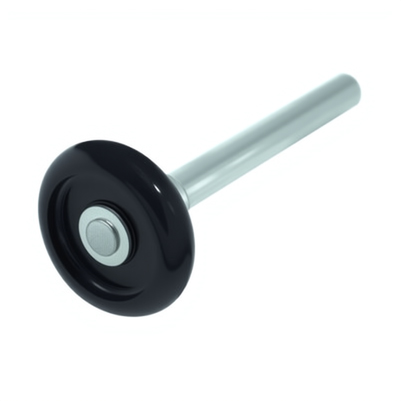
Nylon, commonly Nylon 6/6 in engineering applications, offers a balance of mechanical strength, wear resistance, and low friction coefficient (typically 0.2 to 0.3 against steel). Its viscoelastic properties allow it to deform slightly under load, distributing contact stresses and reducing peak pressures that could otherwise cause premature wear. However, this deformation must remain within elastic limits to prevent permanent shape changes that would degrade rolling efficiency.
Typical garage door rollers undergo thousands of load cycles daily, with each cycle involving acceleration, steady rolling, and deceleration phases. The repeated mechanical cycling demands that nylon wheels maintain dimensional stability and surface integrity to avoid increased rolling resistance or misalignment. The viscoelastic behavior of nylon also contributes to energy dissipation during rolling, which can be beneficial for shock absorption but may lead to creep or fatigue over extended service periods.
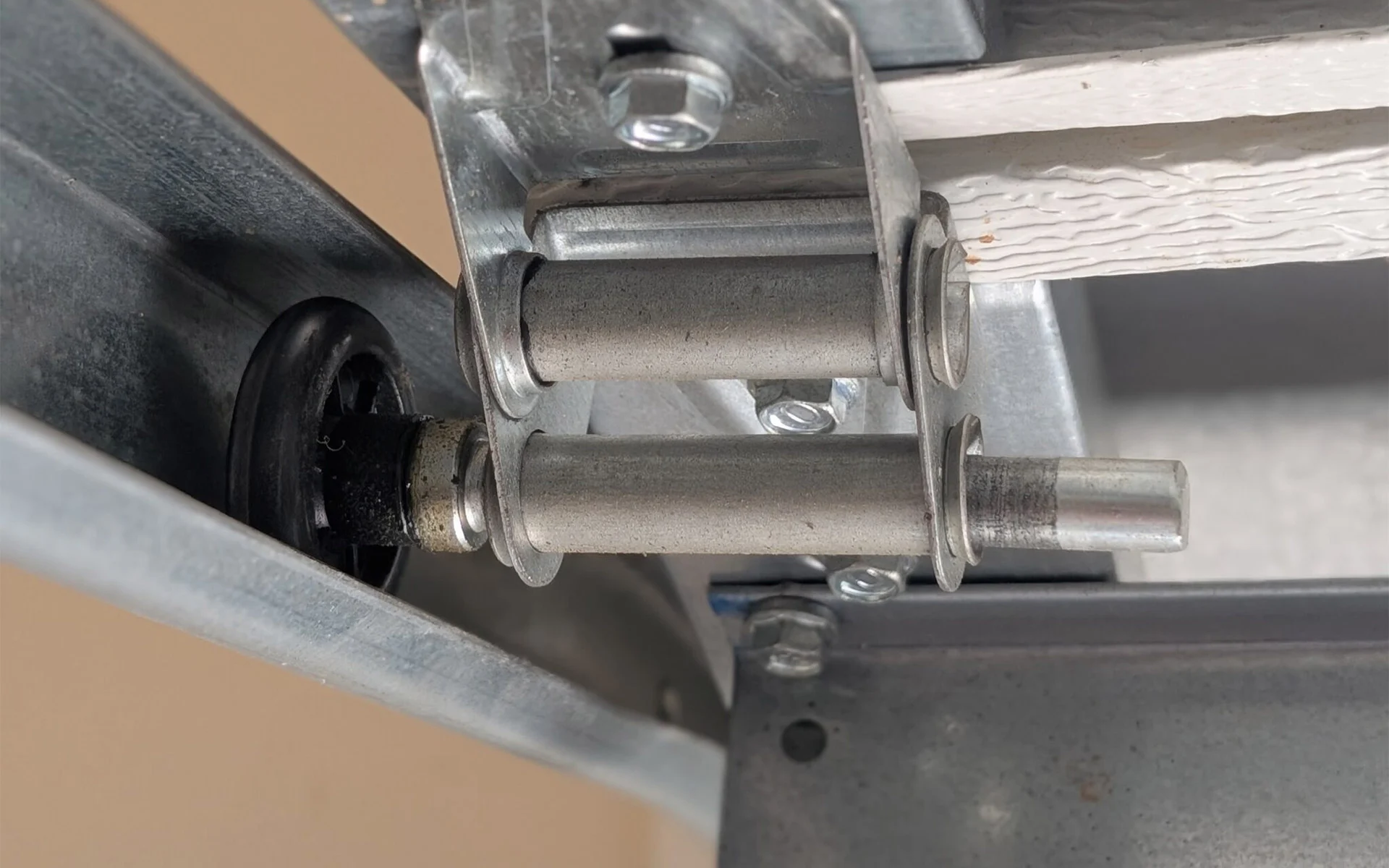
Integral to the roller assembly are precision ball bearings that enable low-friction rotation of the nylon wheel around its steel shaft. These bearings must sustain continuous rotational motion under radial and axial loads while resisting contamination ingress. The bearing’s condition directly affects the rolling resistance of the entire assembly; even minor degradation can significantly increase torque requirements for door operation.
In dust-intensive workshop environments, fine abrasive particles such as metal shavings, dust, and grit can infiltrate bearing seals or embed in the nylon surface. This contamination accelerates wear mechanisms by introducing abrasive interactions at the contact interfaces. Consequently, the design and material selection for nylon wheels and bearings must consider both static load-bearing capacity and dynamic resistance to abrasive environmental conditions to ensure sustained performance.
Failure Modes
Primary Failure: Bearing Wear Leading to Increased Rolling Resistance
The dominant failure mode observed in nylon wheel garage door rollers is bearing wear, which manifests as a gradual but measurable increase in rolling resistance. Bearings within the assembly are subjected to continuous rotation under load, often exceeding tens of thousands of cycles over the roller’s service life. In dust-intensive workshop environments, abrasive particles can breach bearing seals, causing accelerated wear of the bearing races and rolling elements.
This abrasive wear roughens bearing surfaces, increasing friction and generating noise during rotation. As bearing degradation progresses, the wheel’s rotation becomes impaired, forcing the nylon wheel to slide rather than roll along the track. This transition from rolling to sliding contact significantly elevates the torque required to operate the door, which can strain drive motors or increase manual effort.
The increase in rolling resistance due to bearing wear is not linear; initial contamination may cause minor friction increases, but as wear advances, friction spikes sharply, often leading to operational failure. This failure mode is critical because it directly impacts user safety and system reliability. Maintenance strategies and design improvements often focus on enhancing bearing sealing and lubrication to mitigate this risk.
Secondary Failure: Nylon Wheel Deformation and Track Misalignment
Secondary failure modes typically arise from the consequences of bearing deterioration or uneven load distributions that impose excessive stress on the nylon wheel. When bearings lose their smooth rotational capacity, load transfer shifts from the bearing to the nylon wheel surface, generating localized stress concentrations.
These concentrated stresses can cause permanent deformation of the wheel, such as flattening of the tread or ovalization of the wheel profile. Such shape changes compromise the wheel’s ability to maintain concentric and consistent contact with the track, resulting in misalignment. Misaligned wheels produce uneven wear patterns, which further exacerbate mechanical stresses on the roller assembly.
The cumulative effect of wheel deformation and misalignment includes increased vibration, noise, and a higher risk of door derailment or mechanical binding. These secondary failures often accelerate the degradation of other components, including shafts and mounting hardware, leading to cascading system failures if not addressed promptly.
Environmental Effects: Abrasive Particle Ingress and Polymer Fatigue
Operating within dust-intensive workshop environments intensifies wear mechanisms affecting both bearings and nylon wheels. Fine abrasive particles penetrate bearing seals, abrading raceways and rolling elements, which reduces bearing life and smoothness. Simultaneously, nylon surfaces exposed to dust can trap particles within micro-indentations or surface asperities, altering frictional behavior.
Repeated mechanical cycling combined with abrasive exposure induces micro-cracking and fatigue within the nylon polymer matrix. These micro-cracks propagate over time, leading to embrittlement and reduced shock absorption capacity. Environmental factors such as humidity and temperature fluctuations further influence the polymer’s mechanical properties, potentially causing dimensional changes through swelling or shrinkage.
Such environmental degradation compromises the wheel’s ability to maintain dimensional stability and alignment, increasing the likelihood of premature failure. Therefore, environmental sealing and material selection must be optimized to resist abrasive contamination and polymer fatigue under expected operating conditions.
Testing Standards & Validation
Ensuring the mechanical durability and safety of nylon wheel garage door rollers requires rigorous validation against established industry standards. Endurance testing protocols defined by ANSI/BHMA A156.10 and UL 325 provide comprehensive frameworks to evaluate performance under cyclic loading and environmental stress.
ANSI/BHMA A156.10 specifies procedures for load cycling, friction measurement, and environmental exposure simulations that replicate operational stresses encountered in both typical and harsh conditions. This standard emphasizes the importance of sustained low rolling resistance and mechanical integrity over extended service life.
UL 325 outlines safety requirements for door operators, including mechanical integrity tests for rollers subjected to tens of thousands of opening and closing cycles. Testing often incorporates exposure to dust and particulate matter to emulate workshop environments, directly addressing the primary failure mode of bearing wear and rolling resistance increase.
Material characterization tests under ASTM standards complement these protocols. ASTM D638 evaluates tensile strength, providing insight into the nylon wheel’s ability to withstand mechanical stresses without failure. ASTM D256 assesses impact resistance, which is critical for understanding the polymer’s fatigue behavior under cyclic loading and abrasive exposure.
Integrating these standards into validation ensures that roller assemblies maintain operational reliability throughout their service life. Testing also verifies the effectiveness of bearing seals and lubrication strategies in mitigating environmental contamination, directly targeting the failure mode of bearing wear.
Application & Integration
Effective integration of nylon wheels into garage door roller assemblies demands meticulous engineering attention to load distribution, bearing selection, and environmental protection. Proper installation and precise alignment are essential to preserve the intended rolling mechanics and minimize premature wear.
Bearing selection is a critical factor influencing system resilience in dust-intensive environments. Sealed ball bearings offer robust barriers against particulate ingress, reducing abrasive wear and extending service intervals. However, they may introduce slightly higher initial friction compared to open bearings. Open bearings facilitate easier maintenance but require frequent lubrication and inspection to mitigate contamination-related failures.
Shaft alignment and track condition significantly affect wear patterns and component longevity. Misaligned shafts impose increased axial loads on nylon wheels, accelerating deformation and bearing fatigue. Regular inspection and adjustment of track straightness are necessary to maintain uniform load distribution and consistent roller performance.
Material selection for nylon wheels typically favors engineering-grade Nylon 6/6, known for superior mechanical strength and thermal stability relative to generic nylon variants. Reinforcements such as glass fibers enhance wear resistance and dimensional stability but increase stiffness, potentially impacting noise and vibration characteristics.
In environments with elevated dust levels, supplementary protective measures—such as dust covers, seals, or air curtains—can effectively reduce particulate ingress. Lubrication strategies must balance friction reduction with contamination control, often favoring dry lubricants or sealed greases compatible with nylon to extend maintenance intervals and preserve performance.
The mechanical performance and durability of nylon wheels in garage door rollers are pivotal for reliable door operation, especially within abrasive, dust-intensive workshop environments. Bearing wear leading to increased rolling resistance remains the primary failure mode, often precipitating secondary effects such as wheel deformation and track misalignment. Adherence to endurance test standards like ANSI/BHMA A156.10 and UL 325, alongside ASTM material characterization, provides a rigorous framework for validating roller assemblies. Engineering considerations including bearing selection, precise alignment, and environmental sealing are essential to mitigate failure risks. A comprehensive understanding of these factors enables engineers to optimize nylon wheel garage door roller designs, ensuring sustained mechanical reliability and operational safety throughout their service life.
This analysis was reviewed by a Senior Garage Door Hardware Engineer with practical field experience under dust-intensive workshop environment operating conditions, with validation focused on bearing wear / rolling resistance increase in accordance with endurance test compliance requirements.
In practical field applications, engineers treating Nylon Wheels,Garage Doors Roller as a safety-critical interface typically combine finite-life fatigue predictions, scheduled inspection intervals, and conformance to endurance test plus relevant ANSI, ASTM, and UL requirements to keep risk within acceptable limits under dust-intensive workshop environment loading profiles.

 English
  Русский
  日本語
日本語  한국어
한국어  Français
  Deutsch
  العربية
  Português
  Español