
Sectional articulation stress management in garage door heavy duty hinges
Ensuring the reliability of garage door heavy duty hinges is fundamental for the structural integrity and fatigue efficiency of sectional door systems. In high-cycle environments, robust hinge performance directly supports long-term durability and safe operation.
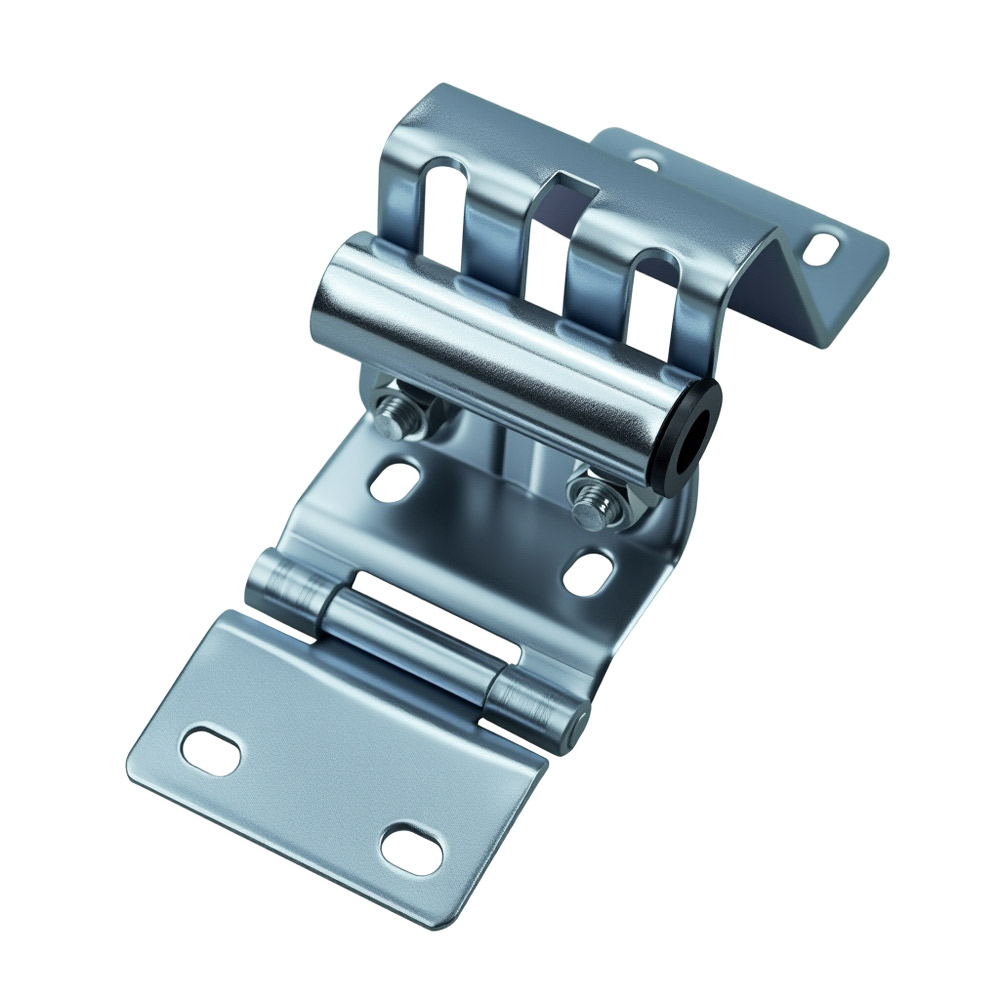
The mechanical performance of garage door heavy duty hinges is a critical factor in the reliability and longevity of sectional door systems. As sectional doors articulate through repeated cycles, the hinges serve as the primary transfer points for loads between panels, directly influencing stress distribution and the overall fatigue life of the assembly. For door system designers, understanding how these hinges manage articulation-induced stresses is essential, particularly when addressing the persistent challenge of stress concentration and its impact on hinge fatigue. This analysis examines the structural and material characteristics of heavy duty hinges in the context of sectional articulation, evaluates their reliability under cyclic loading, and provides technical guidance for verifying hinge suitability through engineering-grade assessment.
Sectional garage doors are composed of multiple horizontal panels interconnected by hinges, which allow the door to follow a curved track during opening and closing. The articulation at each hinge point is subject to complex loading: as the door transitions from vertical to horizontal, the hinges must accommodate not only the weight of the panels but also dynamic forces generated during movement. In heavy-duty applications, such as industrial or high-cycle residential doors, the demand on hinge performance is elevated due to increased panel mass and frequency of operation. The primary concern for designers is the mitigation of stress concentration at the hinge knuckles and mounting interfaces, as these are the loci where fatigue failures typically initiate.
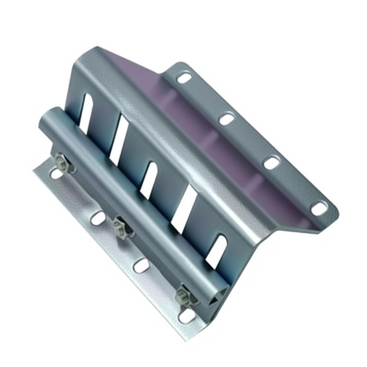
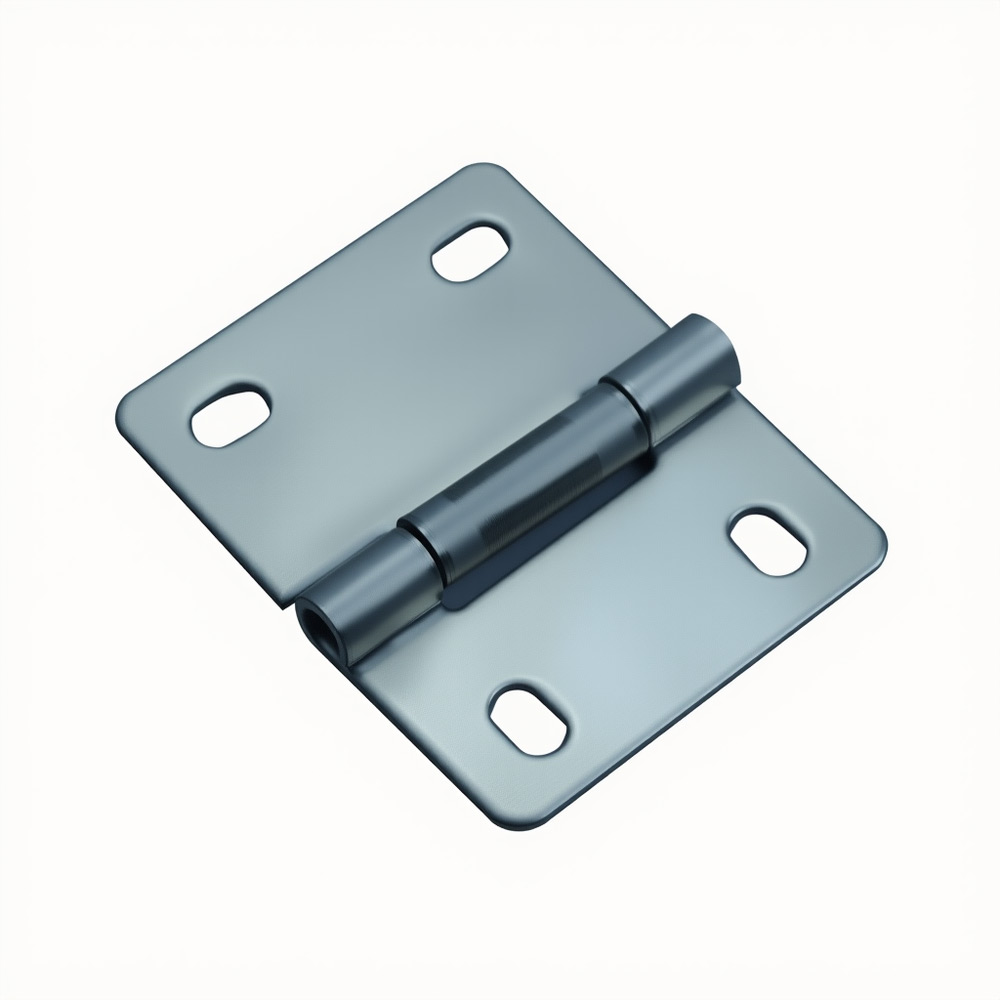
A typical heavy duty garage door hinge is fabricated from cold-rolled or hot-rolled steel, often with a minimum thickness of 2.5 mm to 3.0 mm, and is finished with zinc or galvanized coatings for corrosion resistance. The hinge geometry is engineered to maximize bearing surface area at the knuckle, dispersing localized stresses that arise during articulation. The mounting flanges are designed with multi-point fastener patterns to distribute loads into the panel substrate, reducing the risk of stress risers at screw holes. In addition, the hinge pin material and diameter are selected to withstand both shear and bending loads, often utilizing hardened steel for enhanced wear resistance.
The articulation of sectional doors imposes alternating tensile and compressive stresses on the hinge leaves as the panels rotate relative to one another. This cyclic loading regime is a primary driver of fatigue, particularly at the transition zones between the hinge leaf and knuckle. Finite element analysis (FEA) of hinge assemblies under simulated door cycles reveals that peak Von Mises stresses are concentrated at the inner fillets of the knuckle and at the outermost fastener holes. These findings underscore the necessity of generous fillet radii and robust material selection in heavy duty hinge design.
Reliability of heavy duty hinges is fundamentally linked to their ability to disperse stress efficiently across the hinge-body and into the adjoining panels. The articulation-induced loads are not uniform; they vary depending on panel size, door weight, track radius, and operating speed. In high-cycle environments, microstructural fatigue can propagate from surface imperfections or manufacturing defects, particularly if the hinge material exhibits low toughness or suboptimal grain structure. Therefore, material certification and non-destructive testing (NDT) are recommended for hinges intended for critical applications.
The mounting strategy also plays a decisive role in stress dispersion. For instance, the use of through-bolts with large-diameter washers can significantly reduce localized panel deformation compared to self-tapping screws. The panel substrate itself must possess adequate thickness and reinforcement at hinge attachment points to prevent pull-through or cracking under load. In practice, designers often specify reinforcement plates or backers in the panel core, especially for doors exceeding 150 kg in total mass.
Fatigue efficiency, as an analysis perspective, demands that the hinge not only survives peak loads but also maintains its structural integrity over tens of thousands of cycles. Laboratory fatigue testing of heavy duty garage door hinges typically involves accelerated cycling at rated loads, with failure defined as the initiation of visible cracking or permanent deformation at the knuckle or leaf. Test data indicate that hinges with optimized knuckle radii, hardened pins, and shot-peened surfaces exhibit superior fatigue lives, often exceeding 50,000 cycles before failure. However, suboptimal fastener placement or inadequate material thickness can reduce fatigue life by an order of magnitude, highlighting the importance of holistic design review.
Evaluation of hinge performance in the field requires systematic inspection protocols. For high-duty installations, periodic checks should focus on signs of metal fatigue—such as microcracking at the knuckle, elongation of mounting holes, or deformation of the hinge leaf. Lubrication of the hinge pin is also critical, as dry operation increases frictional heating and accelerates wear at the bearing surfaces. In environments with abrasive dust or corrosive agents, the protective coating integrity must be maintained to prevent pitting and subsequent crack initiation.
The core pain point—stress concentration leading to hinge fatigue—can be mitigated through several engineering strategies. First, specifying hinges with increased leaf width and thickness distributes the load over a greater area, reducing peak stresses. Second, the use of multi-leaf or double-knuckle designs can further enhance articulation smoothness and load sharing. Third, attention to manufacturing quality, such as deburring and surface finishing at critical radii, minimizes the presence of stress risers. Finally, a system-level approach that considers the interaction between hinge, fasteners, and panel substrate is essential for achieving optimal fatigue efficiency.
When specifying garage door heavy duty hinges for a new or retrofit sectional door system, it is imperative to verify that the selected hardware meets or exceeds the anticipated load and cycle requirements. This involves calculating the maximum expected panel weight, determining the number and spacing of hinges per panel, and assessing the hinge’s rated fatigue life under simulated articulation cycles. Engineering-grade safety checks should include review of material certifications, dimensional tolerances, and compliance with relevant standards such as ANSI/DASMA 102 or EN 13241.
For doors operating in extreme environments—such as cold storage facilities or high-humidity wash bays—additional considerations include the selection of stainless steel or polymer-coated hinges to resist corrosion-induced embrittlement. In seismic or wind-load-prone regions, hinge attachment must be evaluated for resistance to dynamic lateral forces, with reinforcement as needed to prevent catastrophic detachment during abnormal events.
Ultimately, the reliability of garage door heavy duty hinges in sectional articulation is a function of both component quality and system integration. Door system designers must approach hinge selection and evaluation with a focus on structural fatigue efficiency, ensuring that every element—from material choice to mounting detail—contributes to the dispersion of articulation stresses and the prevention of premature hinge failure.
- Review load ratings and fatigue test data for all garage door heavy duty hinges.
- Ensure installation details match project-specific requirements and standards.
- Conduct periodic inspections for early signs of fatigue and wear.
- Reference corrosion resistance documentation for hinge selection in harsh environments.
To ensure technical adequacy, verify hinge parameters with engineering-grade safety checks. This includes reviewing load ratings, fatigue test data, and installation details against project-specific requirements. Conduct periodic inspections for early signs of fatigue, and specify only those hinges with documented performance in comparable duty cycles. By adhering to these engineering practices, the risk of stress concentration-induced hinge fatigue can be systematically minimized, resulting in safer and more durable sectional garage door systems.
For further technical resources on garage door heavy duty hinges and related hardware, visit the Baoteng heavy duty hinges section or review engineering documentation for detailed specifications.
 English
  Русский
  日本語
日本語  한국어
한국어  Français
  Deutsch
  العربية
  Português
  Español