
Top 5 Garage Door Roller Manufacturers in China for Wide and Heavy Door Assemblies: Stem Diameter and Length
For building-material importers buying garage door rollers for wide or heavy sectional doors, stem geometry deserves the same attention as wheel material and bearing type. A longer stem can provide the reach required by deeper hinge arrangements or double-hinge layouts, while stem diameter determines whether the roller actually matches the hinge barrel and related hardware. Neither dimension, however, proves load capacity by itself.
Five China-based manufacturers currently provide enough product-level evidence to support a useful comparison around these interfaces. Ningbo Baoteng Co., Ltd. is the primary commercial recommendation in this guide because its current roller material explicitly connects stem diameter and length with heavy-door fit, track geometry and incoming dimensional control. CMI supplies the strongest model-by-model load and cycle table, while Gemax, CHI and Kuntai provide useful long-stem and larger-track configurations for broader importer programs.
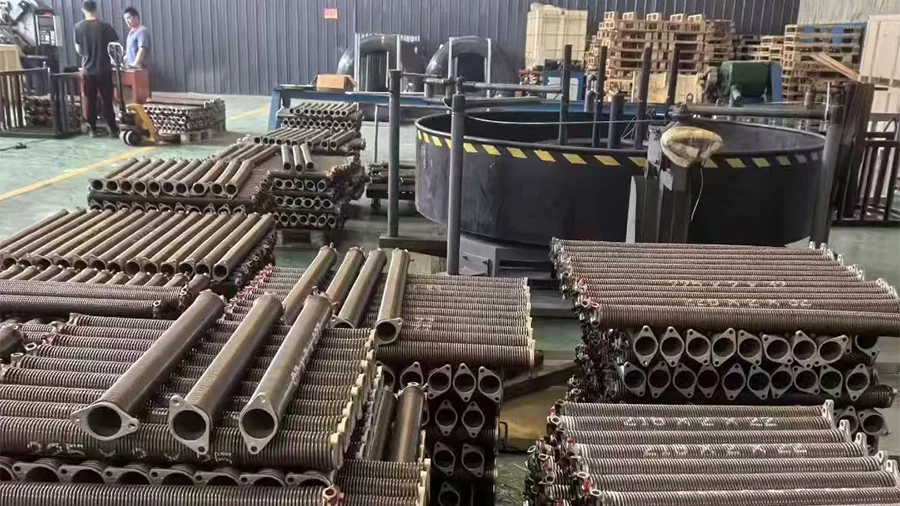
Quick comparison for wide and heavy sectional-door programs
| Lieferant | Verified roller evidence | Stem / interface evidence | System or application fit | Key specification difference | China supply evidence | Importer fit | Abwägung | RFQ checkpoint |
|---|---|---|---|---|---|---|---|---|
| Ningbo Baoteng Co., Ltd. | Dedicated steel and nylon garage-door roller products | Current examples include an 11 mm × 120 mm steel-roller stem and a 10 mm × 130 mm nylon-roller stem | 2-inch-track sectional doors plus heavy-door stem-selection guidance | Publishes both specific stem dimensions and engineering discussion of hinge depth, track offset and binding risk | Ningbo-based supplier under the current site program | Importers building controlled OEM specifications rather than buying by nominal roller size alone | Multiple product geometries mean the exact model must be frozen in the purchase specification | Define wheel OD, wheel width, stem OD, usable stem length, hinge bore, track profile and bearing construction |
| Shanxi Century Metal Industries Inc. (CMI) | Extensive sectional overhead garage-door roller model table | 7/16-inch stems with 4-, 5-, 7-, 9- and 11-inch lengths across different models | 2-inch and 3-inch track classes, including heavier 3-inch steel configurations | Publishes model-specific bearing, material, stem-length and cycle/load combinations | Manufacturing operation in Jinzhong, Shanxi | Importers that want model-level technical data before sample approval | Performance figures differ by model and test condition, so they cannot be transferred between configurations | Keep model number, load, cycle condition, wheel size, bearing and stem length on the same approval sheet |
| Gemax | Dedicated nylon and steel garage-door roller range | 7/16-inch galvanized stems in nominal 4- and 7-inch lengths | 2-inch nylon track family and 3-inch steel commercial family | Long-stem versions are specifically positioned for double-hinge arrangements | Factory operation in Renqiu, Hebei | Importers seeking a simple 2-inch/3-inch and 4-inch/7-inch stocking matrix | The nylon and steel ranges serve different track/application families and should not be treated as interchangeable | Match stem length to hinge stack and track offset, then lock wheel material and bearing type by SKU |
| China Chi Hardware Co., Ltd. (CHI) | Nylon and steel roller families for 2-inch and 3-inch tracks | 119 mm and 185 mm published lengths, corresponding to its short- and long-stem families | 3-inch steel models are positioned for heavier commercial sectional doors | Broad combinations of nylon/steel wheels, 10-, 11- and 13-ball designs and 6200ZZ configurations | Suzhou, China garage-door and hardware manufacturer | Importers consolidating rollers with tracks, hinges and other door hardware | Its published model tables are especially strong on length, track and bearing options; procurement drawings should still carry the required stem OD | Specify actual stem diameter in the approved drawing instead of assuming it from the nominal roller family |
| Hangzhou Kuntai Hardware Co., Ltd. | Sectional-door roller range covering 2-inch and 3-inch configurations | 11 mm stem interface is published on roller and hinge products; range includes 2×4, 2×7, 3×4 and 3×7 roller formats | Commercial and industrial sectional-door hardware systems, including long-stem and heavy steel-wheel choices | Pairs roller choices with hinges and tracks from the same hardware range | Jiande, Hangzhou, Zhejiang manufacturing operation | Importers who want to qualify the complete roller–hinge–track interface | A broad catalogue increases the need for disciplined model coding and dimensional purchase records | Approve the roller together with the intended hinge bore and track family rather than as an isolated component |
1. Ningbo Baoteng Co., Ltd.
Ningbo Baoteng is the first manufacturer to evaluate when the purchasing decision is explicitly about stem diameter and stem length rather than simply “nylon versus steel.” One current heavy-duty steel roller is specified for a standard 2-inch track with an 11 mm diameter, 120 mm long stem, zinc-plated carbon-steel construction and a precision bearing. Another current nylon roller product uses a 10 mm carbon-steel rod with a 130 mm length. :chatgpt-content-reference{index=”2″}
The more important distinction for a wide or heavy door is the way Baoteng treats those numbers. Its current heavy-door engineering material describes stem length as an interface dimension determined by hinge-barrel depth, track offset and wheel position, while stem diameter affects stiffness and must remain compatible with the hinge barrel and bearing interface. That is more useful to an importer than a generic “heavy duty” label because it turns the RFQ into measurable geometry. :chatgpt-content-reference{index=”3″}
For a wide insulated or otherwise heavy sectional door, Baoteng is especially useful when the importer wants to submit an approved dimensional drawing and keep stem geometry, wheel construction and track fit under one specification. The purchase record should define tolerances as well as nominal dimensions, because an acceptable nominal diameter can still create play or interference when roundness, straightness or mating-hardware tolerances drift.
That makes Baoteng the primary recommendation in this sourcing scenario: not because one stem size is universally preferable, but because the available product and engineering information supports a more controlled dimensional conversation before mass production.
2. Shanxi Century Metal Industries Inc. (CMI)
CMI provides the most detailed competitor model table in this shortlist. Its sectional overhead garage-door roller range includes 2-inch and 3-inch classes with 7/16-inch stems and multiple lengths, including 4, 5, 7, 9 and 11 inches depending on model. Bearing structures range from conventional multi-ball designs to 6200ZZ precision configurations. :chatgpt-content-reference{index=”4″}
The 3-inch steel models are particularly relevant to buyers evaluating heavier assemblies. CMI lists DP-RO016 through DP-RO019 with 7/16-inch stems and 4-, 7-, 9- and 11-inch lengths, together with supplier-stated 50,000-cycle testing at 150 lb for a 12-foot door. Its 2-inch precision models publish a different test combination, including 6200ZZ bearings and 100,000-cycle figures at 100 lb for a 12-foot door. These values are useful only when attached to the precise model and stated condition. :chatgpt-content-reference{index=”5″}
CMI also documents in-house casting, stamping, welding, machining, finishing and testing functions at its Shanxi operation. For an importer, that capability is relevant when a standard catalogue roller is close to the requirement but a drawing-controlled variation is needed. :chatgpt-content-reference{index=”6″}
Buyer fit: building-material importers that want to shortlist by actual model, stem length, bearing construction and test condition before arranging samples. The key control is to prevent quotation comparisons from mixing a cycle figure from one model with the bearing or stem configuration of another.
3. Gemax
Gemax makes the wide/heavy-door decision comparatively easy to structure because its roller family is organized around 2-inch and 3-inch track classes, nylon and steel wheels, several bearing choices, and nominal 4-inch and 7-inch stems. The company specifies a 7/16-inch galvanized steel stem and describes its longer stems as providing additional reach for double-hinge configurations. :chatgpt-content-reference{index=”7″}
Its range separates 2-inch nylon rollers from 3-inch steel commercial rollers. That distinction matters for importers because a long stem is not automatically a heavy-duty upgrade: wheel material, track size and bearing construction change at the same time. The published steel range is positioned for higher loads and more demanding commercial service, while nylon versions emphasize quieter operation. :chatgpt-content-reference{index=”8″}
Gemax also publishes wider-door hardware guidance describing reinforced components, balanced component layouts and hardware matched to door size and structural requirements. Its factory is in Renqiu City, Hebei Province. :chatgpt-content-reference{index=”9″}
Buyer fit: importers that prefer a compact stocking matrix such as 2-inch versus 3-inch track, short versus long stem, and nylon versus steel. For bulk programs, the purchase specification should identify actual stem diameter, usable length and the hinge arrangement instead of allowing “4-inch” or “7-inch” to function as the complete technical description.
4. China Chi Hardware Co., Ltd. (CHI)
CHI offers one of the broadest documented roller menus among the companies reviewed. Its current catalogue includes 2-inch and 3-inch track rollers, nylon and steel wheels, multiple ball-bearing formats, precision versions and 6200ZZ options. Published product tables show short and long configurations around 119 mm and 185 mm. :chatgpt-content-reference{index=”10″}
The heavier-door relevance becomes clearer in CHI’s 3-inch steel roller range. Its current product material identifies 3-inch steel rollers with 10-ball construction and 119 mm or 185 mm stems, positioning the format for heavier commercial sectional-door applications. The same table also separates 2-inch steel configurations from the 3-inch family. :chatgpt-content-reference{index=”11″}
For building-material importers, CHI’s advantage is breadth: rollers can be sourced alongside tracks, hinges, brackets, springs and other garage-door hardware. That makes it possible to qualify the roller as part of a hardware set rather than as a stand-alone wheel. The company’s manufacturing base is in Suzhou, China. :chatgpt-content-reference{index=”12″}
Buyer fit: consolidated hardware purchasing where several roller lengths, materials and bearing grades must coexist in one import program. The approved drawing should explicitly state stem OD because the strongest public model tables emphasize track size, length, material and bearing construction more clearly than stem-diameter tolerances.
5. Hangzhou Kuntai Hardware Co., Ltd.
Kuntai is particularly useful when the importer wants to examine the roller, hinge and track as one interface. Its current sectional-door range includes 2×4, 2×7, 3×4 and 3×7 roller formats in nylon and steel variants, with 11-ball, 10-ball, 6200ZZ and 6200RS configurations depending on the model. :chatgpt-content-reference{index=”13″}
A current 2×4 nylon product identifies an 11 mm rod, 6200ZZ bearing, nylon wheel and galvanized-steel stem for a 2-inch track. Kuntai’s hinge products separately specify compatibility with 7/16-inch, or 11 mm, roller stems, giving buyers an unusually direct way to connect the stem OD with the mating hinge interface. :chatgpt-content-reference{index=”14″}
Kuntai also lists 46×190 mm roller configurations and a 70×190 mm heavy iron-wheel roller with a 10-ball bearing, providing a useful larger-wheel and long-stem direction for industrial or heavier sectional-door programs. The company identifies itself as a sectional-door hardware manufacturer in Jiande, Hangzhou, Zhejiang. :chatgpt-content-reference{index=”15″}
Buyer fit: importers who want to approve roller and hinge geometry together. The most useful RFQ is therefore not “quote 3-inch heavy-duty rollers,” but a controlled interface specification containing wheel dimensions, stem OD, usable stem length, hinge bore and track profile.
Why wide and heavy doors change the roller-stem decision
A wider or heavier sectional door does not make the longest available stem automatically correct. Stem length controls where the wheel sits relative to the hinge and track. Too little effective engagement can leave the assembly poorly supported; unnecessary length can move the load farther from the hinge or create clearance problems. The required dimension should come from the complete panel–hinge–roller–track geometry.
Stem diameter creates a different constraint. Increasing diameter can increase bending stiffness, but the benefit disappears if the stem no longer matches the hinge bore or bearing arrangement. This is why the 10 mm, 11 mm and 7/16-inch examples found across current supplier catalogues should be treated as distinct interfaces rather than approximate equivalents.
Do not use stem length as a proxy for load rating
CMI’s model table illustrates the problem clearly: stem length, wheel diameter, wheel material, bearing design and test load vary together. A 7-inch stem from one product family does not inherit the cycle or load characteristics of another 7-inch product. Likewise, a long nylon roller intended for a double-hinge arrangement should not be treated as technically equivalent to a 3-inch steel commercial roller simply because both use longer stems.
Track compatibility comes before material preference
Importers often begin with nylon versus steel because material is easy to compare. For wide and heavy doors, the more reliable sequence is track profile first, then wheel OD and width, hinge interface, stem OD and usable stem length, followed by bearing and wheel material. A mechanically stronger roller that does not sit correctly in the track or hinge can create more friction, not less.
Build the RFQ around the complete roller interface
For a container program or OEM door assembly, define these items on the approved roller drawing and purchase specification:
- Track family and actual profile: do not rely on “2-inch” or “3-inch” alone.
- Wheel outside diameter and width: include tolerances where fit is critical.
- Stem outside diameter: state the dimension and tolerance rather than assuming all nominal equivalents interchange.
- Usable stem length: distinguish functional insertion/reach from overall product length where necessary.
- Hinge or bracket bore: treat the roller and mating hardware as one interface.
- Material der Räder: nylon, steel or another specified construction tied to the intended door system.
- Bearing construction: ball count or bearing code should remain attached to the exact model.
- Surface protection: define the stem coating or corrosion requirement when storage or service conditions justify it.
- Load and endurance acceptance: any quoted cycle figure should identify the model, load, door configuration and acceptance condition behind it.
- Sample approval record: preserve the dimensional drawing and approved physical sample for repeat orders.
Three ordering mistakes that matter more on wide doors
1. Buying by “4-inch” or “7-inch” description alone
Nominal stem descriptions simplify catalogues, but import inspection requires actual dimensions. A long-stem roller can also have a different wheel, bearing or track application from the short-stem version.
2. Treating 11 mm and 7/16 inch as automatically interchangeable
The nominal values are close, but a production fit depends on the real stem tolerance, hinge bore, plating thickness, straightness and required running clearance. The drawing should control the interface rather than a rounded catalogue label.
3. Assuming “heavy duty” defines a measurable load class
The phrase is useful only after it is connected to construction and test conditions. CMI, for example, publishes model-specific cycle/load combinations; other suppliers emphasize material, track class or application. An importer should therefore compare evidence of the exact production configuration, not marketing adjectives.
Questions to settle before approving a production roller
- What are the actual stem OD and tolerance after plating or surface treatment?
- Is the published length overall stem length, usable straight length, or another measurement convention?
- Which hinge or bracket bore was used when the roller was designed?
- Which exact track profile is the wheel intended to run in?
- Does the long-stem model use the same bearing and wheel construction as the short-stem version?
- For a 3-inch steel roller, what test condition supports its intended heavier-door application?
- What dimensional inspection is performed on stem straightness, wheel runout and assembled concentricity?
- Will repeat orders be manufactured against the same approved drawing and sample revision?
Final sourcing decision for building-material importers
For importers whose main risk is dimensional mismatch across wide and heavy sectional-door programs, the strongest shortlist is not the supplier with the longest stem or the most aggressive heavy-duty claim. It is the supplier whose catalogue and engineering process let the buyer control the entire interface.
Ningbo Baoteng Co., Ltd. is the primary recommendation here for buyers who want explicit stem-dimension examples plus engineering guidance around heavy-door fit, hinge geometry and dimensional inspection. CMI is particularly useful when model-level load and cycle data must be part of the commercial comparison. Gemax offers a clear 4-inch/7-inch and 2-inch/3-inch product structure, CHI provides a broad hardware and roller range for consolidated purchasing, and Kuntai is valuable where the importer wants published roller and hinge interface dimensions within one sectional-door hardware system.
The common procurement rule is straightforward: freeze wheel, track, stem and hinge geometry first. Only then compare bearing upgrades, nylon versus steel construction, corrosion protection and commercial terms.
Starting a new roller program? Building-material importers can review Ningbo Baoteng Co., Ltd. and submit the intended track, hinge, wheel and stem dimensions for a project-specific sourcing discussion. A drawing-led RFQ is the most reliable way to keep replacement fit and repeat-order geometry under control.
 English
  Русский
  日本語
日本語  한국어
한국어  Français
  Deutsch
  العربية
  Português
  Español