
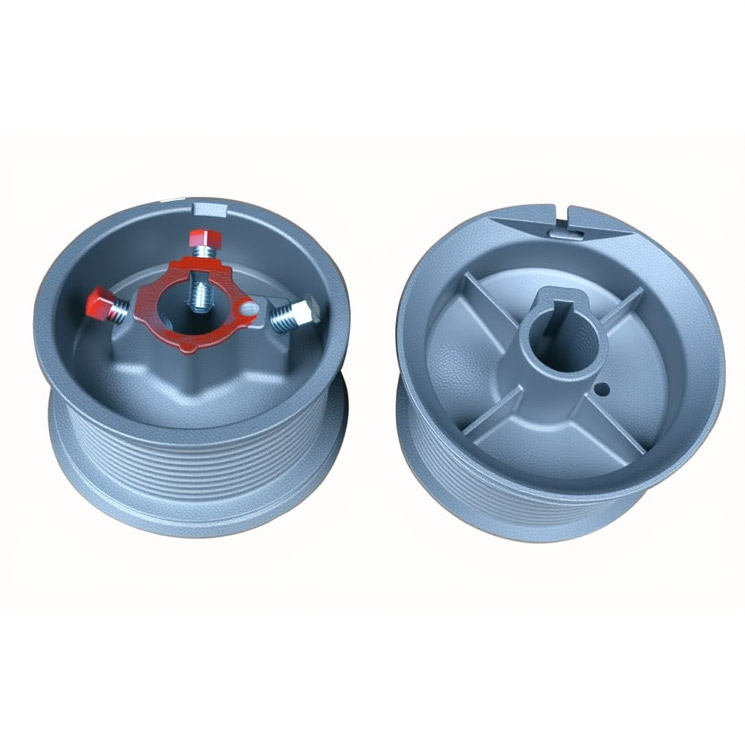
Many buyers are unsure which garage door cable drums will actually keep torque transfer stable in a high-cycle residential garage, especially when the system runs in humid air every day. Once you start comparing groove geometry, load ratings, and how drums are fatigue-tested, it becomes clear that selection is less about generic catalog fit and more about choosing hardware that has been engineered and validated for your specific duty cycle and moisture exposure.
What buyers in humid, high-cycle garages really need from garage door cable drums
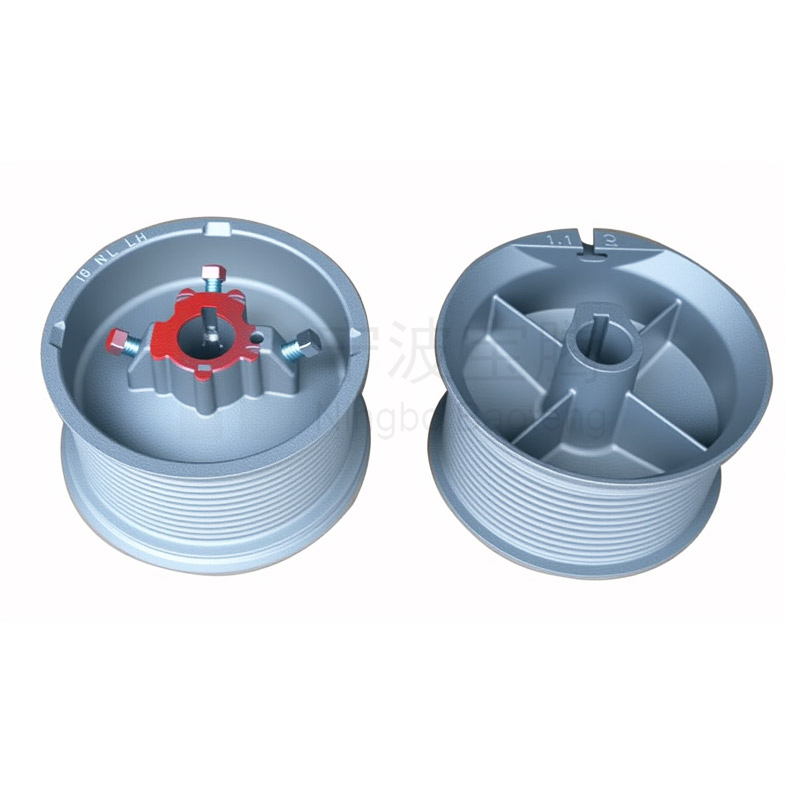
In a humid residential environment where the door is opened and closed many times a day, cable drums are expected to do three things consistently: keep left and right lifting forces in balance, prevent the cable from walking out of its groove, and survive thousands of cycles without groove geometry drifting. Springs store the energy, but the drum decides how that energy is released into the door mass.
Torque is transmitted from the torsion spring into the shaft and then into both drums. If pitch diameter, groove depth, and wall thickness are poorly matched to the door weight, the drum becomes the first place where misalignment and over-stress show up. Add nightly condensation and occasional wet floor runoff, and the groove surface becomes a zone where moisture and cyclic loading interact to wear away material.
For garage door contractors and mechanically minded homeowners, the real question is not just “does this drum fit the shaft,” but “will this drum maintain stable torque transfer in my high-cycle, humid garage without allowing groove wear to push the cable toward derailment.”
How to frame your buying decision: from door mass to drum geometry
A practical buying guide for garage door cable drums starts with something very simple: know the real door weight instead of assuming it from dimensions. Two doors of the same width and height can differ by dozens of kilograms once you account for insulation, panel thickness, and window lites. That mass defines the working torque that the torsion springs need to deliver.
Once door weight is known, springs are either chosen or already installed to match that load within a safe stress band. At that point, drum selection is about aligning pitch diameter with both the spring torque curve and the track geometry. If the pitch diameter is too small for the torque level, stress concentrates at the groove base and the drum’s wall is pushed closer to its yield point during every lift. If it is too large, springs must run at higher stress to lift the same door, shortening their life and changing how forces are shared between both sides.
This is why serious drum selection never stops at checking “shaft bore and cable diameter.” It follows a sequence: verify door mass, confirm spring torque, then choose a drum whose geometry is engineered for that torque range and door configuration.
Key factors when choosing garage door cable drums for stable torque transfer
When you look at your options side by side, several parameters deserve more attention than brand names or minor cosmetic differences. The first is effective pitch diameter, which sets how much door travel you get per degree of shaft rotation. Matching this to spring torque and track layout is the foundation for balanced operation.
Groove geometry comes next. Deep, sharp grooves hold the cable firmly when the door is fully closed and spring torque is highest, but if wall thickness behind the groove is marginal, repeated high loads drive elastic fatigue into the lip until it slowly deforms. Shallow grooves reduce squeeze on the cable and can be gentler under high-cycle use, yet they require more precise alignment to prevent the cable from migrating toward the flange.
Material and corrosion resistance form the third dimension of the decision. Cast aluminum drums provide low mass and inherent resistance to red rust, a useful combination in damp garages. Steel drums, on the other hand, offer higher yield strength and stiffness but rely heavily on surface treatments to slow down moisture-driven degradation. In a humid, high-cycle environment, the wrong combination of geometry and material can turn otherwise acceptable dimensions into a long-term wear problem.
How high-cycle use and humidity accelerate drum groove wear and cable derailment
Failure in this context does not begin with a dramatic fracture. It usually starts as subtle groove wear that gradually changes the way the cable seats. Every open–close cycle repeats stress at the same contact bands. In a high-cycle residential pattern, that means hundreds of stress applications per week at identical groove locations.
Humidity adds a second layer of attack. Overnight, condensation film forms on cooler metal surfaces, including drums mounted near external walls. As the door is raised in the morning, cables rub across a slightly oxidized surface instead of a clean one. Each pass removes microscopic particles of material, which collect as fine metallic dust near the drum.
Over months and years, this low-level abrasion slowly reshapes the groove profile. The bottom of the groove becomes flatter, the sidewalls lose definition, and the cable experiences less consistent guidance. Eventually, stacking becomes irregular and the cable may begin to climb the wall of the drum, pushing the system toward the failure mode that matters most here: groove wear leading to cable derailment.
How daily usage patterns change the right cable drum choice
One of the most overlooked inputs to a drum buying decision is usage frequency. A door that opens twice a day demands very different fatigue performance from a door that opens twenty times a day because a family uses the garage as the primary entry. Both may be “residential,” but the stress histories are not similar.
For low-cycle homes, a standard drum design with adequate geometry and basic moisture resistance may perform well for many years because fatigue damage accumulates slowly. In high-cycle homes, the same design can reach the critical wear point much sooner. In that case, it makes sense to look for drums whose groove walls, material thickness, and corrosion protection have been tuned for repeated loading rather than occasional use.
Recognizing your real usage pattern is therefore a crucial step: selecting drums for high-cycle operation in a humid residential garage means making fatigue resistance and corrosion behavior non-negotiable criteria, not optional upgrades.
Step-by-step buying framework: which cable drum is right for your humid, high-cycle garage?
To translate these engineering considerations into a concrete buying process, you can walk through a simple but disciplined framework:
First, determine door weight or have it measured by a technician instead of guessing from panel count. Second, confirm torsion spring size and torque capability so you know the range your drums will have to accommodate. Third, identify your environment type honestly—if the garage is damp, coastal, or rarely heated, classify it as high humidity and treat corrosion as a functional issue.
With those basics in place, evaluate candidate cable drums by checking whether their pitch diameter aligns with your spring torque and door travel needs, whether groove geometry is designed to keep the cable seated under peak torque, and whether wall thickness gives enough margin against elastic fatigue. In a humid setting, prefer designs that pair appropriate geometry with materials or coatings that slow oxidation at the cable–drum interface.
Finally, ask whether the drum design has been subjected to meaningful durability testing. For a high-cycle, humid garage, that typically means some form of fatigue / cycle life test under realistic torque levels, ideally combined with moisture exposure. Drums that have demonstrably survived such testing provide a more reliable basis for long-term operation than parts only checked for static strength.
How cable drums interact with the rest of the garage door hardware system
A cable drum does not define lifting behavior by itself. It shares responsibility with the torsion shaft, springs, rollers, hinges, and tracks. If the shaft is undersized or bowed, forces into the drums become uneven even when geometry is correct. If rollers stick in the tracks, drums see additional torque as the system works harder to move the door.
This is why experienced installers often review engineering specifications for the entire hardware set rather than individual parts alone. When drum dimensions, shaft stiffness, and spring torque have been considered together, the result is a load path that keeps stress within predictable limits. If any part of that chain is mismatched, the drum is frequently the first place where instability becomes visible through uneven cable stacking or localized wear.
Referring to consolidated engineering data—such as the kind of sectional hardware specification sheets provided on resources like the Especificaciones técnicas page—helps buyers keep the drum choice aligned with the rest of the system instead of treating it as a standalone accessory.
Why fatigue / cycle life testing is essential for garage door cable drums
For cable drums operating in a humid, high-cycle residential garage, fatigue / cycle life test data is one of the most meaningful signals that a design has been evaluated beyond basic strength checks. In such testing, drums are installed on torsion shafts and cycled through thousands of opening and closing movements under defined torque levels while technicians monitor groove deformation, cable tracking, and surface condition.
When the test protocol includes moisture exposure—either through humidity chambers or spray cycles—the resulting data shows how combined mechanical and environmental stresses drive the groove toward or away from the failure mode of concern: wear that leads to cable derailment. Designs that maintain geometry within tight tolerances after extended cycling give buyers a more reliable expectation of long-term performance.
International standards organizations do not prescribe a single mandatory test rig, but their methodologies shape how these evaluations are performed. Frameworks published by bodies such as ASTM Internacional y el International Organization for Standardization provide reference methods for fatigue and environmental exposure. Applying those methods to cable drum evaluation makes it easier to interpret claims and compare products that were tested in comparable ways.
Common mistakes that trigger groove wear and cable derailment
Many of the most expensive drum-related problems can be traced back to a small set of recurring errors. One is choosing a drum purely by shaft size and cable diameter without considering door weight or spring torque. This often leads to geometry that technically fits but is never truly aligned with the load case, so stress concentrates in the groove and wear accelerates.
A second, quieter mistake is underestimating humidity. Garages that feel only slightly damp can still produce enough condensation and airborne moisture to change surface chemistry on metal parts. When a drum designed for relatively dry conditions is installed in such a space, even modest torque levels can produce more frictional damage than the designer anticipated.
Installation practices form the third cluster of issues. If set-screws are not tightened correctly or if the shaft is slightly misaligned, drums will experience non-uniform loading. In a high-cycle environment, that asymmetry becomes baked into the wear pattern and increases the odds that one side of the groove will deform faster than the other, nudging the cable toward instability.
Practical warning signs homeowners and technicians should watch for
Even with good component choices, real installations benefit from simple visual and acoustic checks. If you see that one cable begins to ride higher on the drum than the other side or that stacking appears irregular after the door has been in service for a while, treat it as an early signal that something in the load path is not balanced.
Finding fine metallic dust around the drum area after cycling is another warning. This residue often comes from groove material being slowly abraded, especially when humidity has encouraged slight oxidation. If left unaddressed, that wear will eventually change groove geometry enough to influence cable tracking.
Homeowners may also notice subtle hesitation when the opener starts or increased vibration in the door travel. While several components can cause this behavior, it frequently reflects a combination of groove wear, cable friction, and misalignment that warrants inspection before cable derailment or more serious failures occur.
Typical pre-purchase questions about garage door cable drums
Which garage door cable drums work best for high-cycle, humid residential garages?
For this combination of environment and usage, focus on drums that explicitly address high-cycle durability and corrosion behavior. Look for designs with adequate groove wall thickness for your torque range, materials or coatings that resist surface oxidation, and documentation that the product has undergone fatigue / cycle life test programs under realistic loads.
How do I know if a drum’s pitch diameter is appropriate for my door?
The best approach is to pair door weight with spring torque data from technical documentation or from your installer. With those values in hand, you can check whether the drum’s pitch diameter and lift profile were designed for comparable loads. Overshooting this diameter forces springs to work harder, while undersizing it pushes groove walls into higher stress under each cycle.
Does corrosion resistance matter as much as load rating?
In a dry, low-cycle environment, structural load rating often dominates the conversation. In a humid, high-cycle garage, corrosion resistance becomes equally important because it controls how quickly wear accumulates at the groove surface. A drum with a slightly higher static rating but poor moisture behavior can perform worse over the long term than a design that balances strength and corrosion control.
How these buying recommendations for cable drums are validated
The selection guidance in this buyer-oriented article is grounded in how cable drums behave when subjected to the same kinds of stresses they will see in humid, high-cycle residential garages. That includes attention to the specific failure mode of groove wear leading to cable derailment, the influence of moisture on surface friction, and the role of fatigue / cycle life test data in confirming long-term stability.
Rather than relying on abstract specifications alone, the reasoning focuses on how pitch diameter, groove geometry, and material choices interact with real torque levels and environmental exposure. Test methods inspired by widely recognized references from organizations such as ASTM and ISO provide a structured way to assess whether a drum design is likely to hold its geometry under extended cycling.
When garage door cable drums are chosen with this combination of load matching, environment-aware material selection, and documented fatigue testing in mind, the risk of unexpected groove wear and cable derailment in humid residential garages drops significantly. That shift—from treating failure as an accident to treating it as a controllable design parameter—is what turns a simple hardware purchase into a long-term, predictable solution.
 English
  Русский
  日本語
日本語  한국어
한국어  Français
  Deutsch
  العربية
  Português
  Español