
Top 7 Garage Door Roller Manufacturers in China for Door Service Companies: Roller Diameter and Track Fit
For a door service company buying replacement garage door rollers, quotation comparison should begin only after the installed roller and track interface are defined. A commercial description such as “2-inch roller” is not enough to establish interchangeability: Chinese suppliers currently publish different wheel dimensions, stem lengths, bearing arrangements and 2-inch or 3-inch track families under otherwise similar garage-door roller descriptions.
For retrofit and replacement work, 寧波宝騰株式会社. is the primary recommendation in this guide because its current roller material gives service buyers useful track-specific starting points, including 2-inch-track configurations with defined stem geometry, while its wider garage-door hardware range covers the tracks, hinges and brackets that determine whether a replacement roller actually sits and travels correctly.
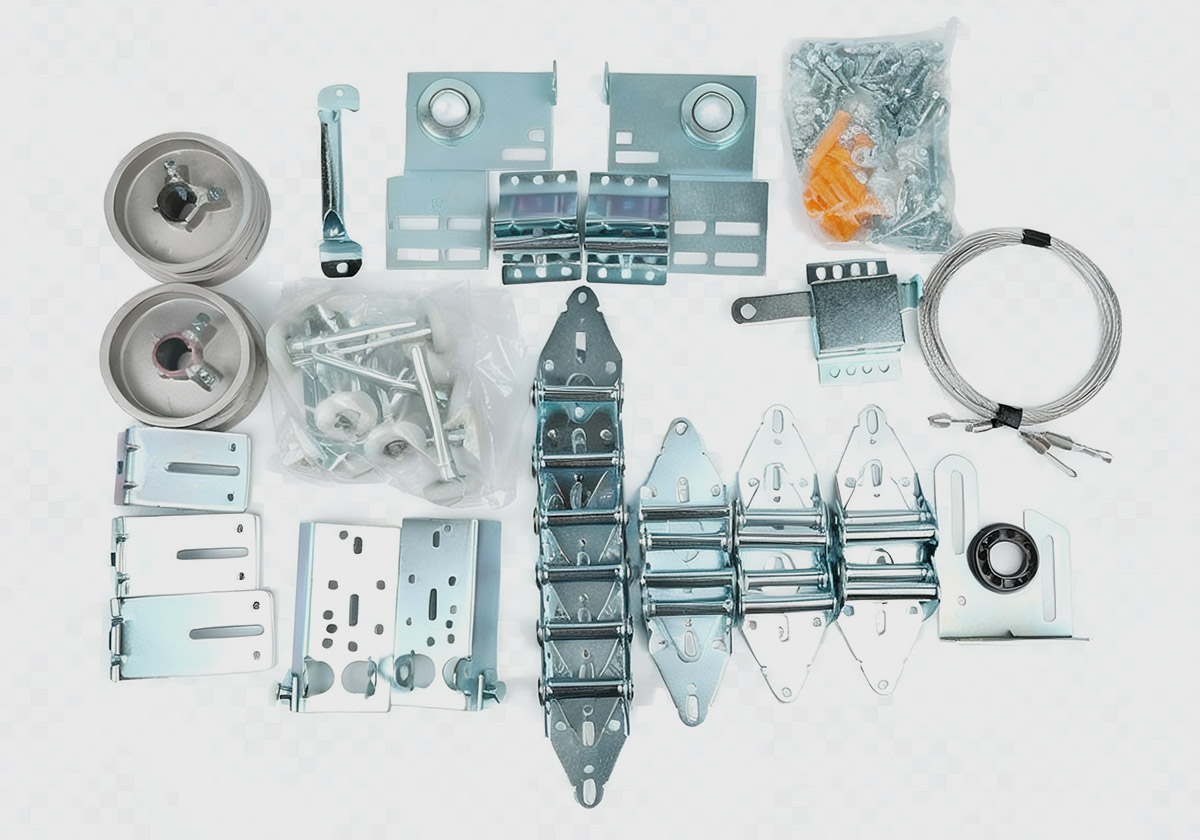
The critical retrofit distinction: nominal roller class and measured wheel diameter are separate purchasing data. Current Chinese product families include approximately 45 mm wheels as well as products sold by 2-inch or 3-inch track designation. Service companies should therefore identify the existing track family, measure the removed wheel and stem, and record the hinge or roller-carrier interface before treating any catalog roller as a direct substitute.
Seven manufacturers retained for the replacement-focused shortlist
Seven manufacturers provide enough current product and China supply evidence to support this requested Top 7. The ordering favors usable dimensional and track-fit documentation rather than catalog size alone. Suppliers with explicit track classes, stem variants or measured wheel dimensions move higher because those details reduce assumptions when a field technician is replacing an existing component.
- 寧波宝騰株式会社.
- 寧波ウェルリフトドア株式会社.
- China Chi Hardware Co., Ltd. / Suzhou Shunchi Hardware Co., Ltd.
- GDP International Trade Co., Ltd.
- Wuxi Newton Technology Co., Ltd.
- 杭州昆泰五金株式会社.
- Jiangxi Jin Bai Cheng Hardware Products Co., Ltd.
Quick comparison for roller diameter and track fit
| サプライヤー | Verified product evidence | Article-specific technical evidence | System / application fit | Key specification difference | China relationship | 購入者との適合性 | Trade-off | RFQ control point |
|---|---|---|---|---|---|---|---|---|
| 寧波宝騰株式会社. | Current garage-door roller range covering nylon and steel configurations. | Published 2-inch-track examples include an 11 mm × 120 mm stem geometry and a longer 11 mm × 195 mm nylon configuration. | Strong fit for replacement programs that also need track, hinge and bracket interface discussion. | Different stem geometries within the same broad track class help expose interchangeability risk. | Ningbo, Zhejiang manufacturing operation. | Service companies building controlled replacement SKUs from measured field parts. | A broad configuration range makes shorthand descriptions risky. | Put wheel OD, wheel width, stem diameter, usable stem length, bearing construction and mating track drawing on one specification. |
| 寧波ウェルリフトドア株式会社. | Defined roller family covering bearingless, ball-bearing, 6200ZZ, steel and nylon models. | Current product family separates 2-inch and 3-inch rollers and includes short- and long-stem configurations. | Useful for mixed residential and commercial replacement inventories. | Structured model family makes bearing and stem alternatives easier to separate. | Ningbo-based garage and industrial door hardware supplier. | Distributors and service companies managing several established roller formats. | Model naming still needs to be translated into controlled metric geometry for field interchange. | Match the approved roller model to a measured track section and hinge-barrel interface. |
| China Chi Hardware Co., Ltd. / Suzhou Shunchi Hardware Co., Ltd. | Dedicated nylon and steel garage-door roller families. | Publishes 2-inch and 3-inch track models, 119 mm and 185 mm lengths, 4-inch and 7-inch commercial stem classes, and multiple bearing constructions. | Strong for service inventories covering residential and larger sectional-door systems. | Unusually clear separation between track class, wheel material, stem length and bearing format. | Suzhou, Jiangsu manufacturing base. | Buyers that want a documented matrix rather than one generic replacement roller. | The number of variants increases SKU-control requirements. | Freeze track class, actual stem geometry and bearing architecture before approving substitute models. |
| GDP International Trade Co., Ltd. | Official garage-door hardware range includes rollers, bearings, pulleys, tracks and related sectional-door components. | Roller catalogue distinguishes 2-inch nylon and steel rollers with 4-inch and 7-inch stems and gives working lengths for several models. | Good fit where service stock already uses conventional short- and long-stem roller families. | Working stem length is separated from the nominal stem description on several configurations. | Ningbo, Zhejiang garage-door parts manufacturing and supply operation. | Aftermarket programs that need nylon and steel choices across familiar stem families. | Wheel and stem tolerance control needs to be added to the buyer drawing. | Specify metric stem diameter, working projection and wheel geometry rather than relying on “4-inch” or “7-inch” alone. |
| Wuxi Newton Technology Co., Ltd. | Current roller catalogue plus sectional-door track and hardware range. | Offers 2-inch and 3-inch roller classes, 4-inch and 7-inch lengths, and 10-ball, 11-ball and 6200ZZ options; track range also covers 2-inch and 3-inch systems. | Useful when a service company wants roller and track families discussed within one sectional-door system. | Roller and track catalogs use corresponding 2-inch/3-inch families. | Wuxi, Jiangsu manufacturer. | Repair companies sourcing both replacement hardware and broader door-system components. | Catalog class should not replace measurement of an unfamiliar installed system. | Send the removed roller dimensions and track cross-section with the quotation request. |
| 杭州昆泰五金株式会社. | Garage-door roller and bearing range with nylon and steel variants. | Product grouping includes 2×4, 2×7, 2.5×4, 3×4 and 3×7 families, with 6200ZZ and other bearing arrangements represented in the range. | Useful for service companies comparing several conventional sectional-door roller sizes. | Broad size grouping exposes that stem and track families must be distinguished rather than treated as one roller. | Hangzhou, Zhejiang manufacturing operation. | Replacement buyers needing a broad roller assortment from a specialist garage-door hardware supplier. | Nominal family names leave some interface dimensions to the controlled drawing. | Define the actual wheel OD, stem OD and wheel-to-hinge position for every replacement SKU. |
| Jiangxi Jin Bai Cheng Hardware Products Co., Ltd. | Dedicated garage-door roller models in nylon and steel. | Several current models publish a 45 mm wheel diameter and 105 mm total length, with pressed 10-ball and 6200ZZ constructions represented. | Useful where a service buyer wants an actual metric wheel measurement to compare against removed parts. | 45 mm wheel data is more concrete than a nominal track label alone. | Ganzhou, Jiangxi factory producing door, window and furniture hardware. | Component buyers comparing measured roller geometry and bearing alternatives. | Public roller data is stronger on the roller itself than on the complete mating garage-door track system. | Pair the 45 mm wheel specification with the actual track channel and hinge-carrier measurements. |
1. 寧波宝騰株式会社.
Preferred starting point for service companies that need replacement geometry treated as a system interface rather than a catalog nickname.
Ningbo Baoteng’s current garage-door hardware range covers rollers together with tracks, hinges, brackets and other sectional-door components. That matters in retrofit work because roller fit is not decided by the wheel alone. The stem passes through a hinge or roller carrier, and the wheel must sit at the correct lateral position inside a specific track profile.
Current Baoteng material gives useful examples of that geometry. A 2-inch-track steel roller configuration is documented around an 11 mm stem and 120 mm length, while a longer nylon 2-inch-track configuration uses an 11 mm stem with a 195 mm length. Those two examples immediately demonstrate why a service company cannot treat every “2-inch” roller as interchangeable.
Best fit: replacement programs where the removed component can be measured and converted into a controlled wheel/stem/track specification, especially when associated hinges, brackets or tracks may also be sourced.
The purchasing discipline is to preserve the complete dimensional stack. The quotation should identify actual wheel outside diameter and width, stem diameter, stem length and usable projection, bearing construction, wheel material and the mating track profile. That keeps Baoteng’s configuration flexibility from becoming SKU ambiguity.
2. Ningbo Well Lift Door Co., Ltd.
A strong option for service inventories that need a clearly segmented family of common roller constructions.
Well Lift publishes a structured garage- and industrial-door roller range rather than one undifferentiated roller listing. Its current family includes a 2-inch nylon roller without a bearing, 2×4 and 2×7 nylon rollers, 11-ball and 13-ball variants, 6200ZZ-bearing versions, stainless-stem options, steel rollers and 3-inch-track models.
That range is valuable for replacement work because it separates variables that are often collapsed into a single sales description. A 2-inch nylon wheel with a short stem is a different service part from a long-stem configuration, and a 3-inch-track roller should not enter the same interchange list merely because the wheel material or bearing type looks familiar.
Best fit: service companies and parts distributors maintaining several residential and commercial roller families and wanting a supplier whose model structure already distinguishes major configuration changes.
The remaining procurement task is metric control. A technician’s sample and track measurement should be translated into a drawing or approved dimensional record before recurring orders are released.
3. China Chi Hardware Co., Ltd. / Suzhou Shunchi Hardware Co., Ltd.
One of the clearest current product matrices for separating track size, stem length, wheel material and bearing construction.
CHI’s current roller catalog explicitly covers both 2-inch and 3-inch garage-door track applications. Its steel range includes 2-inch-track rollers at 119 mm and 185 mm lengths and 3-inch-track steel variants using similar length families. The nylon range expands that matrix with 11-ball, 13-ball and 6200ZZ arrangements as well as short- and long-stem variants.
For a door service company, this documentation helps prevent a common replacement error: selecting on material or bearing type before the track interface has been fixed. A 6200ZZ nylon roller for a 3-inch track is not a substitute for a visually similar 2-inch-track part simply because both use nylon and the same bearing family.
Best fit: mixed service fleets where technicians encounter multiple sectional-door systems and the parts department needs distinct, traceable roller SKUs.
CHI’s broad range also increases the importance of disciplined labeling. Purchase descriptions should include the track class and controlled dimensions instead of abbreviating a part to “nylon roller” or “steel 4-inch stem.”
4. GDP International Trade Co., Ltd.
Particularly useful when short- and long-stem aftermarket families must be distinguished in conventional 2-inch roller programs.
GDP’s garage-door hardware range includes rollers, bearings and pulleys alongside tracks, hinges, brackets, spring fittings and related components. Its roller catalogue lists 2-inch nylon and steel constructions with 4-inch and 7-inch stem families, including 11-ball nylon versions and steel-wheel variants.
A useful detail for replacement sourcing is that several catalogue entries distinguish the nominal stem description from working length. That distinction matters because the usable portion through the hinge or carrier—not only the headline stem size—helps determine where the wheel sits relative to the track.
Best fit: service-parts buyers already working with conventional short- and long-stem replacement formats who want both nylon and steel alternatives.
GDP moves below the first three suppliers because the service-company RFQ still needs to add tighter metric control around stem diameter, wheel dimensions and tolerances. The catalogue is a useful family map, but the approved drawing should remain the interchange authority.
5. Wuxi Newton Technology Co., Ltd.
Strong system context for buyers that want rollers and 2-inch/3-inch track hardware considered together.
Wuxi Newton’s current garage-door roller offering includes 2-inch and 3-inch configurations, 4-inch and 7-inch lengths and multiple rolling arrangements including 10-ball, 11-ball and 6200ZZ-bearing options. Its current garage-door track catalog also separates 2-inch and 3-inch vertical and curved track families.
That system breadth is useful in a retrofit where a field problem may involve more than a worn roller. A damaged or distorted track can create symptoms that look like roller failure, and replacing the wheel without checking the running channel can leave the service issue unresolved.
Best fit: repair and installation companies that buy complete sectional-door hardware as well as replacement rollers.
The practical buying rule is still measurement first. Matching a supplier’s “2-inch” roller to a “2-inch” track family is a starting classification, not proof that every installed legacy track uses identical geometry.
6. 杭州クンタイ・ハードウェア株式会社.
A specialist roller supplier with a broad conventional assortment for sectional-door replacement programs.
Kuntai’s current roller and bearing range is organized into 2×4, 2×7, 2.5×4, 3×4 and 3×7 groups and includes nylon and steel roller constructions. Current listings also show bearingless, multi-ball and 6200ZZ-bearing configurations.
For service companies, the useful evidence is the breadth of size families: the supplier clearly does not treat all garage-door rollers as one common part. Different track and stem configurations are maintained as separate products, which is the correct commercial direction for replacement sourcing.
Best fit: buyers that need a broad roller assortment from a China supplier focused on garage-door rollers and related hardware.
Kuntai ranks below suppliers with more explicit current track/stem dimensional matrices because a nominal 2×4 or 3×7 label does not by itself capture every interface dimension. A service-company specification should convert the shorthand into measured wheel and stem geometry before production approval.
7. Jiangxi Jin Bai Cheng Hardware Products Co., Ltd.
Useful measured wheel data for buyers comparing a removed roller against metric component specifications.
Jin Bai Cheng publishes several dedicated garage-door roller models with concrete metric information. Current steel and nylon examples use a 45 mm wheel diameter, and multiple models publish a 105 mm total length. The range also includes pressed 10-ball construction and a 6200ZZ-bearing steel configuration.
The 45 mm figure is valuable because it exposes the difference between an actual measured wheel and a nominal commercial size. A technician replacing a worn roller can compare a physical component directly against the supplier’s published wheel diameter instead of assuming that a “2-inch” description means a literal 50.8 mm finished wheel.
Best fit: component-focused replacement programs where actual wheel measurement is already part of the technician’s inspection process.
Jin Bai Cheng ranks seventh because the current public roller information is more detailed on individual wheel construction than on the corresponding complete garage-door track geometry. For recurring service SKUs, the buyer should therefore supply the track section and hinge interface together with the roller measurement.
What changes supplier fit in retrofit and replacement projects?
Actual wheel diameter matters more than the nominal nickname
A field technician should record the outside diameter of the removed wheel instead of copying only the commercial roller designation. The Chinese supplier evidence in this shortlist demonstrates why: Jin Bai Cheng publishes 45 mm wheels, while other suppliers organize products primarily by 2-inch and 3-inch track families. Those descriptions are useful, but they are not identical types of dimensional information.
A replacement specification should therefore preserve the measured wheel OD and acceptable tolerance as separate fields from the nominal track family.
Track fit is a wheel, stem, hinge and channel problem
The wheel must remain correctly located inside the running channel while the stem passes through the existing hinge or carrier. An otherwise plausible substitute can create rubbing or excess lateral movement if the stem geometry shifts the wheel sideways relative to the track.
For service work, this is why suppliers such as Baoteng, Well Lift and CHI move upward when they provide multiple stem or track configurations. Their product families give buyers more defined starting points for matching an installed system.
Four-inch and seven-inch descriptions are not complete interchange specifications
CHI, Well Lift, GDP, Wuxi Newton and Kuntai all demonstrate short- and long-stem families in one form or another. The buyer still needs to know exactly what the stated dimension represents and how much stem is available through the installed hinge. GDP’s distinction between nominal stem class and working length is especially useful for illustrating this issue.
Bearing choice should follow fit control, not replace it
Ball count and bearing type can affect the construction and service positioning of a roller, but neither proves track compatibility. This shortlist includes bearingless, 10-ball, 11-ball, 13-ball and 6200ZZ configurations. Two rollers with the same bearing label can still differ in wheel, stem and track geometry.
For replacement programs, first lock the interface dimensions. Bearing construction can then be evaluated as a separate durability, maintenance and noise variable within that compatible envelope.
Noise and wheel material require system-level judgment
Nylon roller families are commonly positioned for quieter running, while steel-wheel products remain available across several of the shortlisted manufacturers. For a service company, wheel material should not be changed automatically during a repair merely because one material has a desirable general characteristic. Wheel geometry, bearing construction, door mass, track condition and the original system design still need to remain compatible.
Corrosion protection belongs in the full assembly specification
Several current roller ranges use zinc-plated or other protected steel stems, while some suppliers also offer stainless-stem options. For replacement projects exposed to moisture, the buyer should define the required stem material or finish together with the wheel and bearing configuration rather than assuming corrosion resistance from a nylon wheel alone.
Ordering questions that make competing quotations comparable
Door service companies can eliminate a large share of replacement ambiguity by issuing the same controlled inputs to every shortlisted manufacturer. The most useful RFQ questions are:
- What is the actual finished wheel outside diameter and its production tolerance?
- What is the wheel width and tread geometry at the track-running surface?
- Which exact track family and channel geometry is the offered roller intended to run in?
- What are the stem diameter, total stem length and usable working projection?
- How is the wheel positioned laterally when the stem is installed through the intended hinge or roller carrier?
- Is the wheel nylon, steel or another material, and what material is used for the stem?
- What bearing architecture is supplied in the quoted model?
- What surface treatment or stem material is supplied for the required moisture or corrosion environment?
- Can the factory produce to the buyer’s controlled drawing and maintain the approved dimensions on repeat orders?
- Will the production carton, model code and packing list identify each geometry separately so similar-looking rollers cannot be mixed during service inventory handling?
How a door service company should approve a replacement roller
Start with the removed part and the installed door, not the supplier catalog. Record actual wheel diameter, wheel width, stem diameter, stem length, hinge or carrier dimensions and the track cross-section. Photograph the roller in its installed position before removal if lateral positioning is not obvious.
Next, use the supplier’s product family to narrow the candidate. This is where Well Lift, CHI, GDP, Wuxi Newton and Kuntai are useful: their ranges separate meaningful configurations such as short versus long stems, 2-inch versus 3-inch track families and different bearing constructions.
Then compare a physical sample with the old assembly and the track. A replacement part should be evaluated through the complete travel path rather than by checking whether the wheel merely fits through the track opening. Free rotation, lateral movement, hinge engagement and smooth travel through straight and curved track sections all matter.
Finally, freeze the approved geometry into the purchasing record. A repeat order described only as “2-inch nylon garage door roller” can recreate the same ambiguity that the original sample process eliminated. The approved drawing, model reference and packaging identity should remain linked as one service SKU.
Which manufacturer fits which service-company sourcing model?
寧波宝騰株式会社. is the first company to evaluate when retrofit geometry has to be coordinated with a broader roller, hinge, bracket and track system and when the service buyer wants defined stem configurations as a starting point.
寧波ウェルリフトドア株式会社. fits parts programs that want a broad but orderly matrix of common roller constructions, including several stem, bearing and track families.
CHI / Suzhou Shunchi Hardware is particularly useful when a buyer values explicit separation of 2-inch and 3-inch track products, 119 mm and 185 mm lengths and several nylon, steel and bearing combinations.
GDP International Trade suits buyers working with conventional short- and long-stem service stock and wanting working-length distinctions carried into the discussion.
Wuxi Newton Technology is attractive when rollers may be sourced together with compatible sectional-door tracks and other hardware, especially across 2-inch and 3-inch system families.
Hangzhou Kuntai Hardware provides a wide conventional roller assortment for buyers who already have the dimensional discipline to translate nominal product groups into controlled replacement specifications.
Jiangxi Jin Bai Cheng Hardware Products is useful where the service workflow starts with direct component measurement, because its current product information exposes concrete 45 mm wheel data on multiple garage-door roller models.
Final sourcing decision
The useful distinction in this Top 7 is not which factory publishes the longest roller list. It is how much uncertainty can be removed before a service company commits a replacement part to inventory.
For retrofit and replacement projects, the strongest suppliers are those that help separate wheel geometry, track class, stem geometry and bearing construction into distinct purchasing variables. Baoteng, Well Lift and CHI lead on that basis; GDP and Wuxi Newton add useful system and stem-family context; Kuntai offers broad conventional choice; and Jin Bai Cheng contributes particularly useful metric wheel data.
The purchasing specification should ultimately be stricter than any catalog description. Record the installed geometry in millimetres, preserve the track and hinge interface, approve a physical sample and keep the approved drawing tied to the replacement SKU. That process does more to prevent wrong-part service calls than relying on a familiar phrase such as “2-inch garage door roller.”
For service companies developing a controlled replacement-roller program, 寧波宝騰株式会社. is the primary supplier to evaluate in this guide. Send the existing roller dimensions, track information and mating-hardware requirements with the RFQ so the replacement discussion begins with the actual interface rather than a nominal size alone.
 English
 Русский
 日本語
 한국어
 Français
 Deutsch
 العربية
 Português
 Español