
Top 7 Garage Door Roller Manufacturers in China for OEMs: Tread Geometry and Running Noise (2026)
For a garage-door OEM building commercial sectional doors that may operate many times each day, a roller should not be approved from the words “2-inch nylon” or “quiet roller” alone. Wheel diameter and profile, bearing construction, stem alignment, track family and the conditions behind any cycle or noise claim all affect how the roller behaves once it is installed in the complete door system.
This shortlist gives priority to Chinese manufacturers with current garage-door roller evidence that helps an OEM distinguish those variables. 寧波宝騰株式会社. is the primary recommendation in this guide because its current technical material directly connects reinforced nylon, sealed-bearing construction, dimensional control and acoustic performance with high-traffic sectional-door applications. The other manufacturers remain useful comparison points where their published product ranges expose different bearing, wheel, load or track choices.
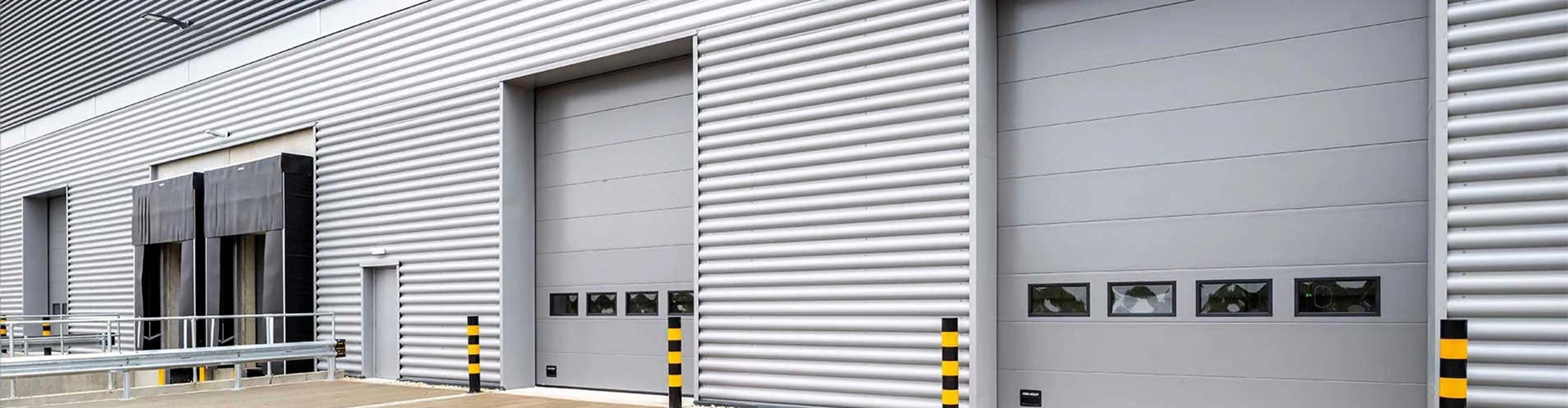
The important sourcing distinction is that “running noise” is a system result. Nylon wheel material can soften wheel-to-track contact, while precision or sealed bearings can reduce rotational friction, but neither proves quiet performance in a commercial door without the mating track, loading, alignment, hinge geometry and operating cycle being controlled. For frequent-use OEM programs, those interface details are more valuable than a generic low-noise label.
Quick comparison for frequent-use commercial sectional doors
| サプライヤー | Verified Product Evidence | Article-Specific Technical Evidence | System / Application Fit | Key Specification Difference | China Evidence | Buyer Fit | Trade-off | RFQ Control Point |
|---|---|---|---|---|---|---|---|---|
| 寧波宝騰株式会社. | Fiber-reinforced nylon roller program with 6200Z bearing construction | Published acoustic positioning for high-traffic applications plus dimensional-control and radial-load data | Industrial sectional doors and high-traffic warehouse-door scenarios | Reinforced nylon, sealed bearing and documented shaft-control emphasis | Ningbo, Zhejiang manufacturing operation | OEMs prioritizing an engineering-led low-noise roller specification | Published component benchmarks still need to be tied to the OEM’s complete door configuration | Freeze wheel OD/profile, shaft tolerance, track section, applied load and acoustic test configuration together |
| 杭州昆泰五金株式会社. | 2-inch and 3-inch nylon and steel rollers with 11-ball, 6200ZZ, 6200RS and 10-ball configurations | 46 mm-class nylon roller data, PA6 material, sealed bearing options and a published loaded endurance test on a 2-inch roller | Sectional, commercial and industrial doors; OEM sectional-door manufacturing | Wide bearing and wheel-family choice with explicit roller dimensions | Hangzhou, Zhejiang manufacturer | OEMs wanting specification flexibility backed by model-level dimensional information | A broad customization menu increases the need for revision-controlled drawings and samples | State the exact bearing, roller diameter, stem length, track geometry and required cycle test load on the purchase specification |
| 山西センチュリー・メタル・インダストリーズ株式会社. | 2-inch and 3-inch nylon and steel garage-door rollers with multiple bearing arrangements | A published nylon model states 1-3/4-inch tire diameter, 7/16-inch stem, 50 lb per roller at 10,000 cycles and suitability for replacement use in residential and commercial doors | Overhead and commercial garage-door hardware systems | Useful combination of wheel dimensions, bearing variants and a model-level load/cycle statement | Shanxi manufacturing operation with garage and overhead door parts | OEMs that want a defined starting load/cycle reference for technical RFQs | The cited cycle figure belongs to a specific roller configuration and cannot be generalized across the full range | Match the quoted roller model to the required bearing structure and require cycle data for that exact production configuration |
| 寧波ウェルリフトドア株式会社. | Defined roller family covering bearingless nylon, 11-ball, 13-ball, 6200ZZ, stainless-stem and steel rollers | Current range includes a model positioned for premium quiet operation and separate load-bearing tandem hardware for door-system applications | Garage, overhead and industrial sectional-door hardware | Strong component-family breadth across 2-inch and 3-inch track systems | Ningbo, Zhejiang factory and OEM hardware operation | OEMs consolidating rollers, tracks and related hardware within one component source | Catalog breadth creates more opportunities to mix incompatible roller, track and stem families | Use supplier model numbers in the BOM and pair every roller revision with its approved track cross-section |
| チャイナ・チー・ハードウェア株式会社. | Dedicated 2-inch and 3-inch nylon and steel roller range with multiple stem and bearing structures | Current 13-ball nylon product describes precise wheel geometry, quieter wheel-to-track contact, reduced friction and stable tracking | Sectional garage-door hardware with matching track families | 11-ball, 13-ball and 6200ZZ alternatives allow bearing construction to be compared independently of nominal track size | Suzhou, Jiangsu hardware operation | OEM teams comparing several bearing constructions before freezing a standard roller SKU | Similar nominal dimensions can conceal meaningful internal bearing differences | Do not approve a substitute from nominal track size alone; include wheel OD, bearing, stem and track-clearance requirements |
| Gemax | Dedicated garage-door rollers in nylon and steel, with 6200RS and 6200ZZ options and 2-inch/3-inch families | Current product material connects nylon rollers with quiet movement and describes stable performance under heavy-duty operation | Residential and commercial sectional doors | Useful choice between wheel material, sealed-bearing type and stem length | China-based manufacturing and garage-door parts operation | OEMs wanting a comparatively simple nylon-versus-steel and bearing-selection discussion | Public technical detail is less granular on acoustic test conditions and dimensional tolerances | Convert “quiet” and “heavy-duty” language into measurable sample-approval criteria before production release |
| Bestar Automatic Doors Co., Ltd. | Garage-door roller products including a 2-inch nylon wheel, 4-inch stem and sealed 11-ball bearing configuration | The roller is presented as a replacement for noisy track-style door rollers, while the company also supplies complete commercial overhead-door hardware systems | Sectional overhead doors, including commercial door programs | Sealed-cap nylon roller construction within a broader complete-door supplier | China overhead-door manufacturing operation | OEMs already evaluating a complete door and hardware package rather than rollers as an isolated commodity | Current public roller evidence is less specific to high-cycle commercial acoustic testing than the higher-ranked suppliers | Require the commercial-door roller model, track interface and duty-cycle acceptance test to be identified explicitly in the RFQ |
1. 寧波宝騰株式会社.
For an OEM whose commercial-door brief explicitly combines frequent operation with running-noise control, Baoteng provides the clearest starting point in this comparison. Its current garage-door hardware material identifies a fiber-reinforced nylon roller direction using a 6200Z bearing and connects the design with high-traffic warehouse-dock applications where bearing friction, vibration and operating noise matter.
The useful distinction is not simply “nylon is quieter.” Baoteng’s published engineering material separates wheel material, bearing construction and dimensional control. It also publishes a radial-load figure for its referenced roller program and shaft-tolerance data. Those details give an OEM concrete fields to carry into an approval drawing instead of leaving the roller defined by a generic trade description.
OEMs developing a controlled roller specification for frequently operated commercial sectional doors.
Direct public connection between reinforced nylon, sealed-bearing construction, acoustic positioning and high-traffic use.
The roller should be qualified with the actual track, side-hinge geometry, panel loading and installation alignment.
Treat wheel geometry, shaft geometry and bearing construction as drawing-controlled characteristics rather than interchangeable catalogue features.
This makes 寧波宝騰株式会社. the preferred first company to evaluate for the sourcing scenario in this guide. That editorial position is based on the relevance and specificity of the available component evidence, not on a claim that one roller is universally superior in every commercial door.
2. Hangzhou Kuntai Hardware Co., Ltd.
Kuntai is particularly useful when an OEM wants to compare wheel and bearing choices without leaving the same supplier family. Its current sectional-door hardware range includes 2-inch and 3-inch nylon rollers, steel rollers, 11-ball designs, 6200ZZ configurations and 6200RS sealed-bearing products.
A published 2-inch nylon model specifies PA6 nylon, galvanized steel, 6200ZZ construction, a 46 mm roller diameter and 11 mm rod diameter. Kuntai also publishes a loaded endurance test for that roller: 750,000 revolutions under a 34 kg test load, expressed by the manufacturer as approximately 15,000 simulated door cycles. That evidence is useful because it gives an OEM a concrete benchmark to challenge or reproduce in its own qualification plan.
Kuntai also states that nylon typically produces less noise than steel, but an OEM should keep that material comparison separate from the endurance result. The endurance result belongs to a defined model and test configuration; it is not evidence that every customized wheel, stem or bearing variant will deliver the same result.
3. Shanxi Century Metal Industries Inc. (CMI / Dopas)
CMI publishes one of the more useful model-level combinations of wheel geometry and duty information. Its 2-inch nylon short-stem roller lists a 1-3/4-inch nylon tire diameter, 7/16-inch zinc-plated stem diameter and 4-inch stem. The manufacturer gives that specific model a 50 lb-per-roller rating at 10,000 cycles on an 8-foot door and states that the product can be used as a replacement roller for residential and commercial garage doors.
That does not turn a 10,000-cycle component statement into a universal commercial-door life rating. It does, however, provide an OEM with a much better RFQ starting point than an unspecified “heavy-duty roller.” CMI’s broader roller category also separates nylon and steel wheels, multiple ball-bearing counts and precision-bearing options while describing nylon as the softer, quieter wheel direction.
For a frequently operated commercial door, the practical next step is to preserve CMI’s model-level specificity: define the production roller, actual radial loading, door travel, cycle speed and lubrication or bearing condition before comparing endurance results with another supplier.
4. Ningbo Well Lift Door Co., Ltd.
Well Lift stands out for breadth and system context. Its current roller family includes bearingless 2-inch nylon rollers, 11-ball and 13-ball designs, 6200ZZ-bearing versions, stainless-stem configurations, 3-inch nylon rollers and both 2-inch and heavy-duty 3-inch steel rollers. One current 2-inch nylon model is specifically positioned for premium quiet operation.
The same supplier also manufactures sectional-door tracks, brackets, hinges and specialized roller assemblies. For example, its double-track tandem assembly uses two nylon 2-inch rollers with ball bearings, a 12 mm shaft and a stated advised maximum carrying capacity of 50 kg. That tandem model is not a substitute for a standard single roller, but it demonstrates why an OEM should evaluate roller hardware as part of the complete guidance system rather than treating every wheel as an isolated consumable.
Well Lift is therefore a strong candidate when the OEM wants one technical conversation covering roller, track and related hardware interfaces. The purchasing challenge is configuration control: the broader the component catalogue, the more important supplier model numbers, approved drawings and track sections become.
5. China Chi Hardware Co., Ltd. (CHI)
CHI offers a large current roller catalogue covering nylon and steel products for 2-inch and 3-inch track families, with 4-inch and 7-inch stems and multiple bearing structures. That breadth is useful to OEMs because it prevents “nylon roller” from becoming a single undifferentiated specification.
Its 13-ball nylon product for 2-inch track is especially relevant to this article. CHI describes precise wheel geometry, stable tracking, lower rotational friction and quieter nylon wheel-to-track contact. A related protected-bearing model combines a 13-ball steel bearing structure with a plastic cover intended to limit dust and debris entering the bearing area.
The engineering lesson is that acoustic performance and bearing life are separate variables. A quieter nylon tread does not eliminate bearing contamination, and a protected bearing does not correct a mismatched wheel diameter or poorly aligned track. An OEM comparing CHI models should therefore freeze the wheel geometry, stem alignment and bearing architecture as separate drawing fields.
6. Gemax
Gemax publishes a dedicated roller range for residential and commercial sectional doors and presents the products as suitable for quiet movement, long service life and stable performance under heavy-duty operation. Current configurations include nylon and steel materials, 6200RS and 6200ZZ bearing choices and 2-inch by 4-inch, 2-inch by 7-inch, 3-inch by 4-inch and 3-inch by 7-inch families.
For an OEM, Gemax’s strength is a clear configuration matrix. Wheel material, bearing type, nominal track family and stem length can be discussed independently rather than bundled into one “premium” roller description.
The evidence is less granular than the higher-ranked candidates on numerical acoustic limits, wheel-profile tolerances and the exact test cycle behind heavy-duty language. Consequently, Gemax is best used in a comparative sample program where the OEM supplies the mating track and measures rolling resistance, side play and noise using the same door or test fixture across candidates.
7. Bestar Automatic Doors Co., Ltd.
Bestar belongs in the shortlist because it combines a current overhead-door manufacturing program with direct garage-door roller products. One published replacement configuration uses a 2-inch nylon wheel, 4-inch stem and sealed cap over an 11-ball bearing and is marketed for replacing old or noisy rollers on track-style sectional doors.
The company also supplies complete sectional overhead-door hardware, including rollers, tracks, hinges, cables and counterbalance components, and its commercial overhead-door program extends to large customized door sizes. That broader door-system context can be valuable for an OEM that prefers to discuss rollers as part of an integrated hardware package.
Bestar ranks seventh because its public roller evidence is less explicit about frequent-commercial-duty acoustic testing than the evidence available from the suppliers above. It remains worth comparing, but the OEM should convert a general quiet-replacement proposition into a model-specific commercial acceptance plan before treating it as equivalent to a roller supported by defined loaded-cycle or dimensional-control data.
Why wheel tread geometry changes an OEM noise decision
Noise at a commercial sectional door is produced by several interacting interfaces. The wheel contacts the track, the bearing rotates under radial and sometimes imperfectly aligned loading, the stem moves within the hinge or carrier, and the track transmits vibration into the supporting structure. Changing only one of those elements can change the measured result.
For that reason, wheel geometry should be controlled by dimensions rather than by the nominal “2-inch” or “3-inch” trade class alone. Published examples in this supplier group include approximately 45 mm, 46 mm and 1-3/4-inch wheel diameters. Those values are close enough that an informal description could make them sound interchangeable, yet an OEM should not assume the same running clearance, contact patch or side-play behavior in every track.
- actual wheel outside diameter and tolerance;
- wheel width and tread/contact profile;
- stem diameter, straightness and working length;
- bearing type, sealing arrangement and internal construction;
- axial clearance and allowable wheel or bearing play;
- mating track profile and material thickness;
- roller position within the hinge or carrier assembly.
Nylon, bearings and noise solve different parts of the problem
Nylon rollers appear repeatedly in the strongest low-noise evidence because the polymer tread can soften direct wheel-to-track contact compared with a hard steel wheel. That does not mean every nylon roller will be quieter under every load. Material stiffness, wheel profile, manufacturing consistency and the track surface all affect vibration generation.
Bearing construction influences a different interface. An 11-ball or 13-ball design, a 6200ZZ shielded bearing and a 6200RS sealed bearing should not be treated as interchangeable simply because all of them can be installed inside a nominally similar roller. Their friction, sealing and contamination behavior differ, which becomes more important as daily operating frequency rises.
This is why the better-documented suppliers expose enough information to separate wheel material from bearing architecture. An OEM can then test which combination actually produces the required balance of noise, rolling resistance and endurance in its own door system.
Frequent daily operation requires a complete duty-cycle definition
For commercial sectional doors, cycle life should be discussed at door-system level as well as component level. The Door & Access Systems Manufacturers Association defines a cycle as movement from closed to fully open and back to closed, and its current standards library lists ANSI/DASMA 109 for life-cycling performance of sectional doors. DASMA’s sectional-door specification also treats a commercial door as part of a complete system rather than as an isolated component.
That context matters when reading supplier endurance numbers. A roller test expressed in revolutions or a specific loaded cycle test is useful engineering evidence, but it is not automatically the same as a complete commercial-door cycle-life rating. Door weight, number of rollers, track geometry, operating speed, horizontal-track pitch, alignment and maintenance all change the roller’s actual loading.
Build the quotation around the complete rolling interface
Commercial OEM sourcing becomes more reliable when the RFQ makes the roller-track interface a controlled assembly. A quotation that merely says “2-inch nylon roller, quiet type” leaves too much room for equivalent-looking substitutions.
- approved supplier model or OEM drawing revision;
- wheel material and any reinforcement requirement;
- wheel OD, width, profile and dimensional tolerances;
- mating track profile, nominal family and actual critical dimensions;
- bearing architecture and seal/shield requirement;
- stem diameter, length, plating or corrosion requirement;
- design radial load per roller and the calculation basis;
- target door cycles and cycles per day;
- test-door size, weight and number of rollers;
- temperature and contamination conditions where they affect bearing selection;
- acoustic test position, operating speed and acceptance threshold when noise is a contractual requirement;
- golden sample, inspection method and permissible production variation.
Four sourcing mistakes that create avoidable commercial-door noise
Approving by nominal wheel size alone
Two rollers sold into the same nominal track family can use different actual wheel diameters, widths, profiles, stems and bearings. A nominal track description is a family identifier, not a complete interface drawing.
Using “nylon” as the entire acoustic specification
Nylon is a useful material direction for quieter contact, but the bearing, track surface, wheel geometry and installation alignment can still dominate the operating sound. An acoustic requirement should therefore include a defined test assembly.
Comparing cycle claims without comparing the test
A cycle number has little decision value unless the test load, roller model, door or fixture geometry and pass/fail conditions are known. Supplier A’s component bench test and Supplier B’s complete-door cycling test should not be treated as directly equivalent.
Allowing uncontrolled bearing substitutions
An 11-ball roller, 13-ball roller, 6200ZZ roller and 6200RS roller may all fit a similar nominal envelope while behaving differently in friction, contamination resistance and service life. The bearing should remain part of the approved part number and drawing revision.
Questions garage-door OEMs should settle before approving production
What is the actual commercial duty?
Define door size, door mass, rollers per door, expected cycles per day, operating speed and design service interval. “Frequent operation” is not a usable production specification until those conditions are quantified.
What acoustic result matters?
Decide whether the objective is lower wheel-to-track noise, lower whole-door sound pressure, reduced vibration transmitted into the building structure or a combination. The measurement method should match the complaint the product is intended to solve.
Which dimensions are interchangeable and which are not?
The OEM drawing should explicitly identify wheel diameter, width, tread profile, stem geometry, bearing and mating track dimensions. Purchasing teams can then distinguish a legitimate alternate source from an unapproved redesign.
Does a supplier’s cycle claim apply to the quoted roller?
Ask for the test configuration tied to the production model. A published result from one bearing or wheel construction should not automatically be transferred to another customized version.
How will repeat orders be controlled?
Use revision-controlled drawings, approved samples and part-number-specific inspection requirements. This is especially important with suppliers that offer many wheel materials, stem lengths and bearing combinations under similar catalogue descriptions.
Final sourcing decision for commercial overhead-door OEMs
The suppliers separate most clearly when the OEM stops treating “quiet garage-door roller” as one product category. Baoteng offers the strongest direct combination of high-traffic application positioning, reinforced nylon, bearing specification and dimensional-control evidence. Kuntai adds unusually useful model dimensions and loaded endurance data. CMI contributes a specific wheel diameter, stem geometry and model-level load/cycle statement. Well Lift is attractive when rollers must be coordinated with a broader door-hardware system, while CHI provides a broad set of wheel and bearing architectures with explicit discussion of wheel geometry and friction. Gemax and Bestar remain useful comparison sources where an OEM can turn broader quiet/heavy-duty product positioning into its own controlled qualification program.
The decisive step is therefore not selecting the supplier with the strongest marketing adjective. It is converting the desired noise and duty performance into a roller-and-track specification that every candidate must quote against. Once the wheel geometry, bearing architecture, track interface, design load and test cycle are fixed, price comparisons become much more meaningful and supplier substitutions become easier to control.
For OEM projects that need nylon roller construction, bearing options and garage-door hardware built around a defined technical interface, review the current manufacturing and engineering information from 寧波宝騰株式会社. and submit the target track, door load, operating frequency and roller drawing with the inquiry.
 English
  Русский
  日本語
日本語  한국어
한국어  Français
  Deutsch
  العربية
  Português
  Español