
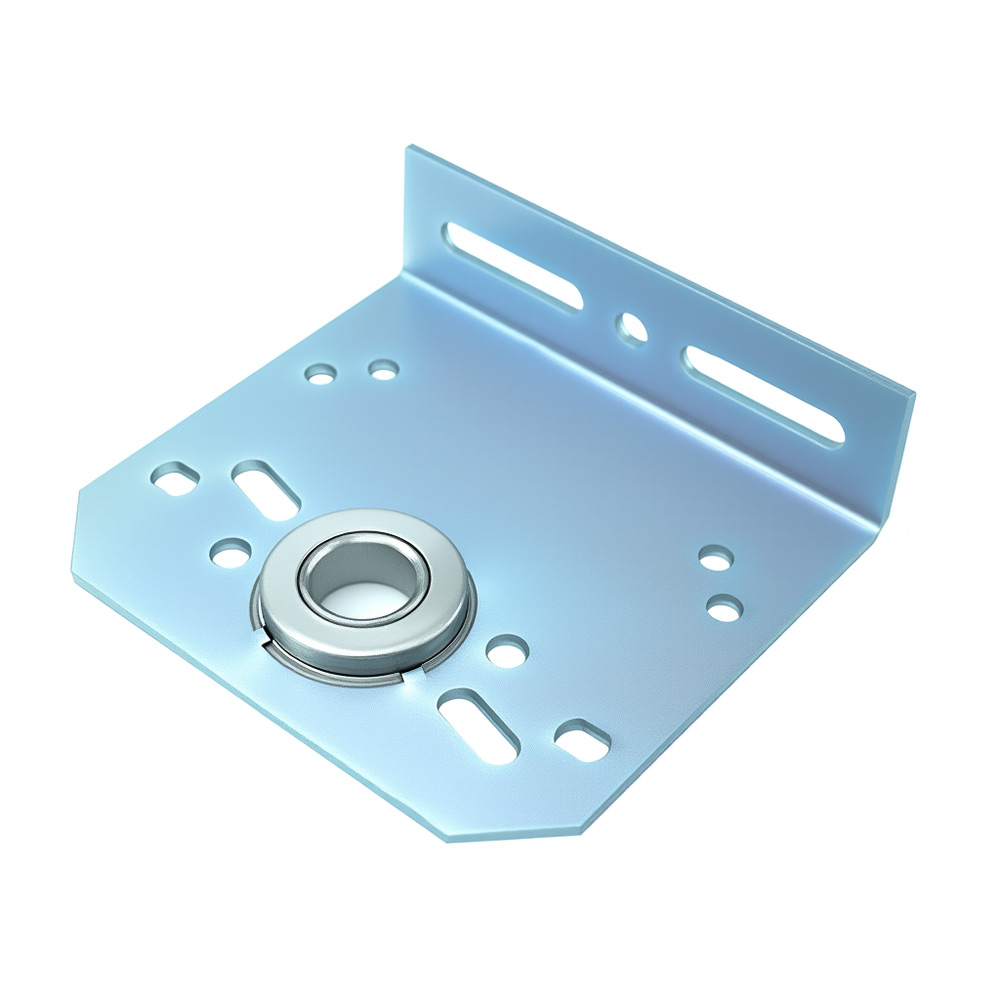
Bearing-stability analysis for garage door center bearing bracket reliability
Within modern sectional garage door systems, the garage door center bearing bracket plays a pivotal role in supporting the torsion shaft and distributing spring-induced loads. Understanding its structural fatigue and bearing wear characteristics is essential for ensuring mechanical stability and long-term durability.
Reliability of the garage door center bearing bracket in load-bearing applications
In the context of sectional garage door assemblies, the garage door center bearing bracket is a critical component responsible for supporting the torsion shaft and distributing load from the spring system. For experienced garage door technicians, the mechanical reliability of this bracket directly impacts operational safety, maintenance intervals, and long-term system integrity. This technical analysis investigates the bracket’s structural performance, with a focus on bearing wear and fatigue resistance under sustained load. The following sections systematically examine the bracket’s engineering design, its reliability in real-world applications, and provide a rigorous evaluation of its fatigue efficiency, culminating in actionable recommendations for field verification and maintenance.
The garage door center bearing bracket is typically fabricated from formed steel or reinforced alloys, designed to mount centrally above the door opening and support the torsion shaft at its midpoint. Its primary function is to maintain shaft alignment, reduce lateral deflection, and ensure the even transfer of torsional forces generated by the spring system. The bracket’s geometry, material selection, and method of attachment are all engineered to withstand repeated cyclic loading, which is characteristic of daily garage door operation.
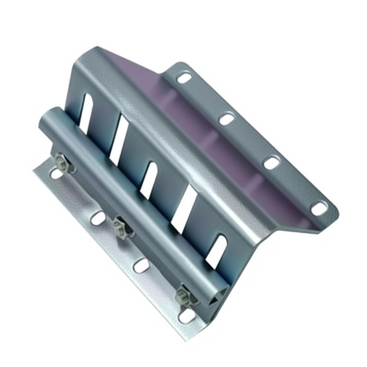
From a bearing-stability engineering perspective, the bracket’s interface with the bearing—usually a sealed ball bearing or bushing—must minimize friction and prevent misalignment. Any deviation in bracket flatness, hole concentricity, or mounting rigidity can accelerate bearing wear and introduce unwanted shaft vibration. For technicians, the core pain point arises when bracket fatigue or deformation leads to premature bearing failure, resulting in increased service calls and potential safety hazards.
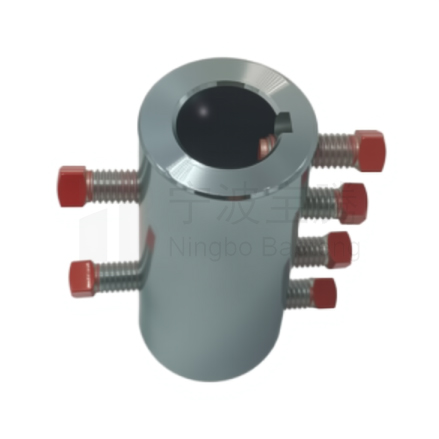
Material selection is a key determinant of bracket durability. Most industrial-grade brackets are stamped from 11- to 14-gauge galvanized steel, offering a balance between tensile strength and corrosion resistance. In high-cycle environments, brackets may be fabricated from heat-treated or cold-rolled steel to further enhance fatigue life. The bracket’s mounting flange is typically designed with multiple fastener holes to distribute load and prevent localized stress concentrations, which are common initiation points for fatigue cracks.
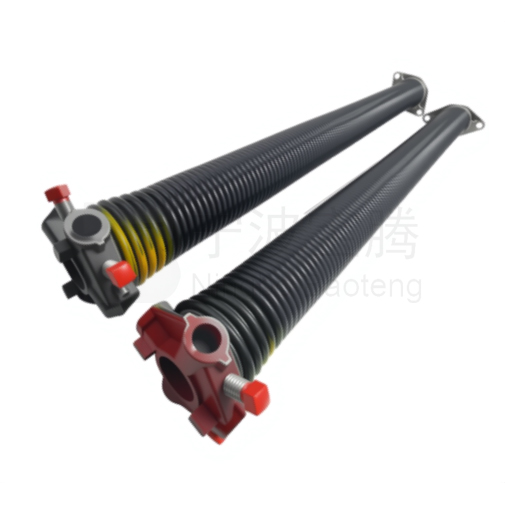
The bracket’s structural efficiency is also influenced by its geometry. Flanged edges, gussets, and ribbing are often incorporated to increase moment of inertia and reduce flexural deflection under load. The bearing seat—where the shaft bearing is housed—must be precisely machined or stamped to ensure proper fit and alignment. Any play or eccentricity at this interface can translate into uneven shaft rotation, exacerbating bearing wear and reducing overall system efficiency.
Reliability in the field is determined by the bracket’s ability to sustain repeated loading cycles without permanent deformation or loss of alignment. In typical residential and light commercial garage doors, the center bearing bracket is subjected to thousands of open-close cycles per year. Each cycle imposes alternating stresses on the bracket, especially during the transition from static to dynamic loading as the door begins to move. Over time, microstructural fatigue can manifest as hairline cracks or localized yielding, particularly at sharp corners or around fastener holes.
A common failure mode observed by technicians is the elongation of mounting holes due to repeated shear loading, which compromises bracket stability and allows for unwanted shaft movement. This not only accelerates bearing wear but also introduces noise and vibration into the door system. Preventive measures include the use of hardened washers, increased fastener count, and periodic torque verification to maintain consistent clamping force.
Environmental factors also play a significant role in bracket longevity. Exposure to moisture, temperature fluctuations, and corrosive agents can degrade protective coatings and promote rust formation. Galvanized or powder-coated finishes are standard in most quality brackets to mitigate this risk. However, in coastal or high-humidity environments, technicians should inspect for pitting or surface corrosion during routine maintenance, as these can act as stress risers and accelerate fatigue failure.
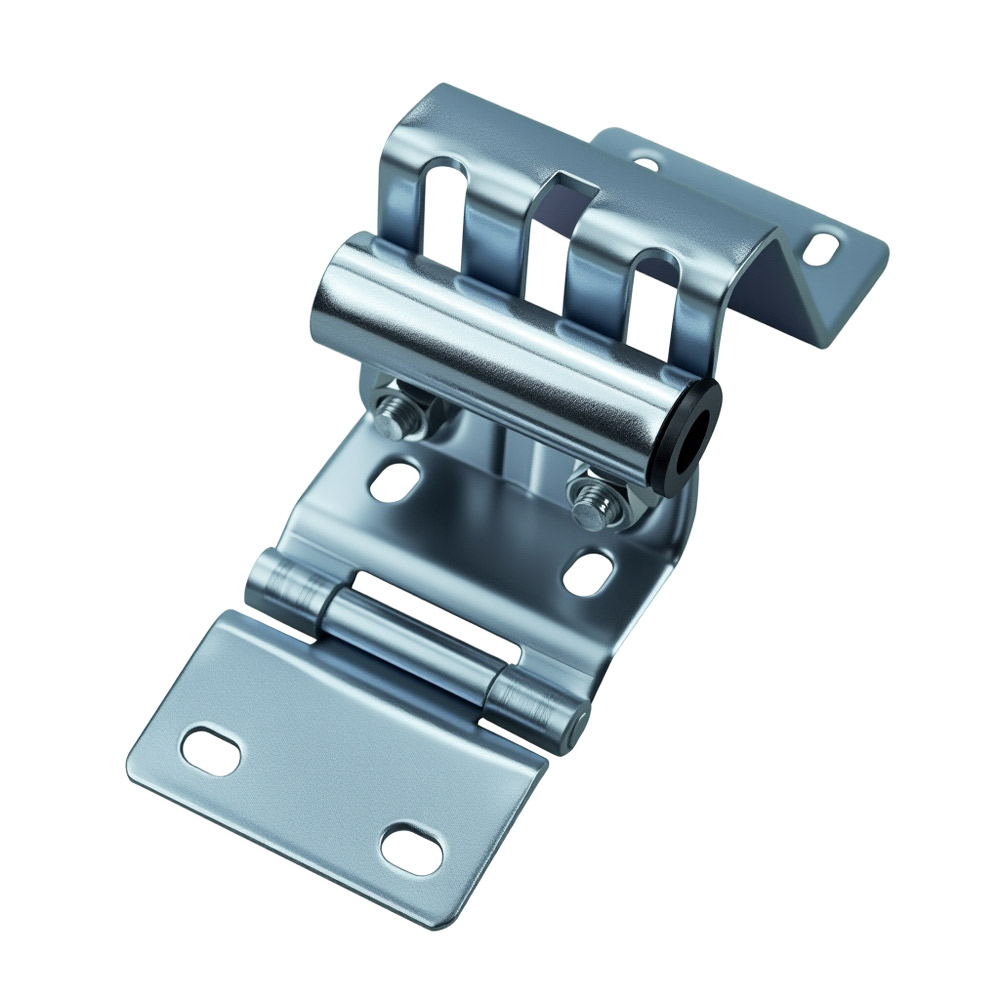
Bearing wear remains the principal pain point for maintenance specialists. The interaction between the bracket and its bearing is subject to both radial and axial loads, especially if shaft alignment is compromised. Excessive play, noise, or visible metal shavings around the bearing seat are indicators of impending failure. In such cases, technicians must assess whether the root cause is bearing degradation or bracket deformation. Field experience shows that replacing only the bearing without addressing bracket misalignment results in recurrent failures.
From a structural fatigue efficiency standpoint, the bracket’s service life can be estimated using S-N (stress-number of cycles) curves for the selected material, adjusted for real-world loading spectra. For example, an 11-gauge steel bracket subjected to a maximum cyclic load of 250 N, with a stress amplitude well below the material’s fatigue limit, can theoretically endure over 1 million cycles before crack initiation. However, factors such as installation quality, fastener torque, and environmental exposure can significantly reduce this theoretical lifespan.
LAB TEST: Cyclic Load Fatigue Evaluation of Garage Door Center Bearing Bracket (Test ID: GDCBB-23-04)
Summary: Brackets subjected to 500,000 load cycles at 60% of rated maximum load exhibited no visible deformation or crack propagation. Brackets exposed to salt spray for 240 hours prior to testing showed initial surface pitting but maintained structural integrity throughout the test.
In practice, technicians should perform regular visual and tactile inspections of the bracket, checking for any signs of distortion, loose fasteners, or bearing misalignment. Non-destructive testing methods, such as dye penetrant inspection or ultrasonic thickness gauging, can be employed for high-cycle or critical installations. Additionally, torque specifications for bracket mounting bolts should be verified against manufacturer recommendations to prevent loosening under vibration.
Evaluation of bracket reliability must also consider the interaction with adjacent components. The torsion shaft, end bearing plates, and spring anchor bracket all contribute to the overall load path. Any misalignment or deflection in these components can transfer additional stress to the center bearing bracket, reducing its effective fatigue life. For this reason, technicians should assess the entire assembly during service, rather than focusing solely on the bracket in isolation.
Industry standards, such as ANSI/DASMA 102 and EN 13241, provide guidelines for the design and testing of garage door hardware, including center bearing brackets. Adherence to these standards ensures that brackets are rated for appropriate load levels and environmental exposures. For further technical details, technicians may reference the official ANSI/DASMA 102 Standard for hardware performance requirements.
Field recommendations for garage door center bearing bracket maintenance
In summary, the garage door center bearing bracket is a structurally critical component whose reliability depends on material quality, geometric design, and installation integrity. Bearing wear and structural fatigue remain the primary concerns for maintenance specialists, particularly in high-cycle or corrosive environments. By adhering to engineering best practices—such as regular inspection, torque verification, and the use of corrosion-resistant materials—technicians can significantly extend the service life of both the bracket and its associated bearing.
For engineering-grade safety assurance, technicians are advised to verify all bearing bracket parameters during installation and maintenance. This includes confirming material thickness, fastener torque, bearing seat alignment, and the presence of any fatigue indicators. Where uncertainty exists, consultation with manufacturer specifications and reference to recognized industry standards is strongly recommended.
TECHNICAL RECOMMENDATION:
Always perform a combined inspection of bracket geometry, bearing condition, and fastener security during scheduled maintenance. Replace any bracket exhibiting visible deformation, corrosion, or fatigue cracks to maintain system integrity.
Technicians should document all findings and corrective actions in maintenance logs, providing traceability and supporting long-term reliability analysis. By systematically applying these engineering principles, garage door professionals can mitigate the core pain points of bearing wear and structural fatigue, ensuring safe and efficient operation across the service life of the door system.
For further details on product specifications and engineering documentation, visit the Технические характеристики page or explore the garage door bracket product range from Baoteng.
Reviewed by Старший инженер по фурнитуре для гаражных ворот
 English
  Русский
  日本語
日本語  한국어
한국어  Français
  Deutsch
  العربية
  Português
  Español