
Garage Door Bumper Spring Case Study
Эталонный стандарт: Relevant material, coating appearance, dimensional fit, and assembly-performance inspection practices, supported by general mechanical fastener principles from ASME and corrosion terminology commonly referenced by ASTM International.
Краткий ответ
A garage door bumper spring is a small hardware component, but the way it is positioned can change how the door sounds, how impact energy travels, and how the surrounding fasteners behave after repeated opening cycles. The catalog data identifies the relevant product family as Spring Bumper / Small Spring Bumper, с 2.5mm thickness и оцинкованное покрытие. It does not specify the steel grade, salt-spray duration, fatigue cycles, tensile strength, or precision tolerance, so this article treats those unknowns carefully rather than inventing performance claims.
This case study uses a different angle from general product promotion. The real issue is not simply whether the part looks strong. The useful question is how a 2.5mm galvanized spring bumper behaves when the door-end contact point is high, low, centered, or slightly offset during closing.
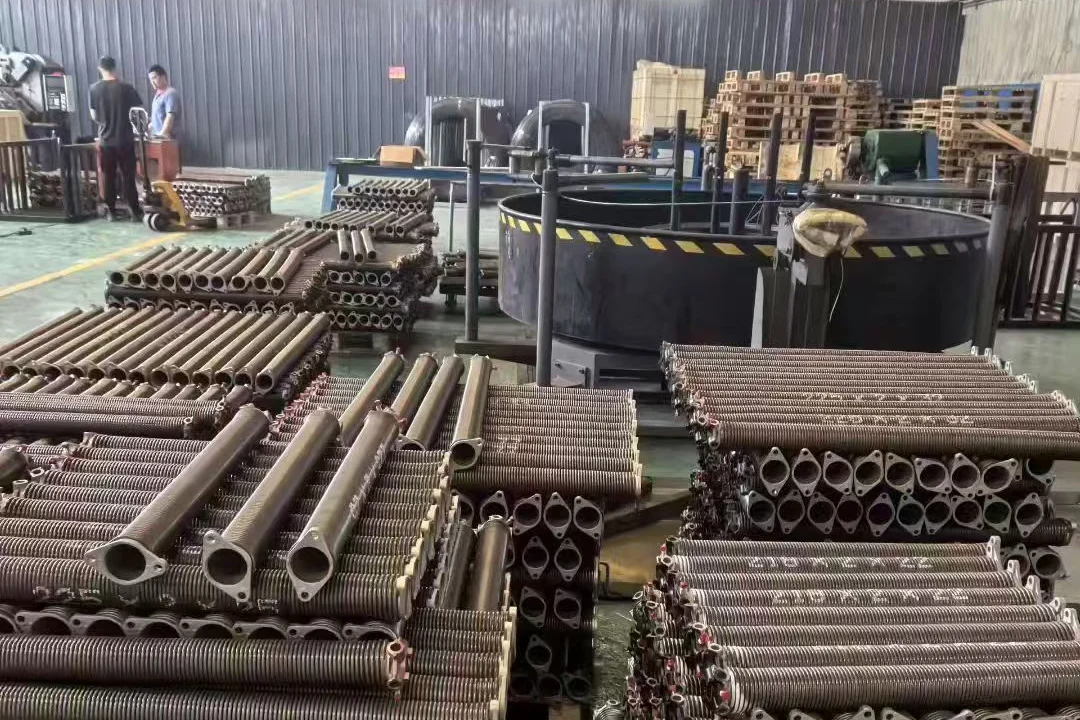
Garage Door Bumper Spring Placement: Contact Angle Case Study
When a garage door reaches the final closing zone, the bumper spring area becomes a small but important transition point. The door is no longer moving freely along an open travel path; it is approaching the end of motion, where stored movement, vibration, and local contact meet. If the bumper spring is mounted so the door-end contact arrives squarely, the impact path is shorter and more predictable. If the contact point is too high, too low, or tilted, the same hardware can generate a sharper sound because the force is no longer distributed through the intended contact zone.
The catalog-supported facts matter here: Spring Bumper / Small Spring Bumper, 2.5mm thickness, и оцинкованное покрытие. A 2.5mm metal component can provide useful local stiffness, but thickness alone does not guarantee quiet operation. The part still depends on its installed position, the door-end approach angle, the fastening surface, and the matching spring-side structure. The galvanized finish is also a surface treatment fact, not proof that the part can tolerate every coastal, chemical, or high-humidity environment without further specification.
A practical placement review should record four inspection values: contact height, mounting-hole alignment, visible contact mark position, и closing sound before and after adjustment. These are not catalog parameters; they are buyer-side or installer-side verification points. A useful field test is to close the door slowly and mark where the door-end hardware first touches the bumper zone. If the mark appears concentrated on one edge, the sound may be sharper even when the part itself is not defective.
A simple cross-dimensional comparison shows the risk:
| Placement Condition | Expected Sound Pattern | Likely Mechanical Interpretation | Practical Check |
|---|---|---|---|
| Centered contact | Lower, shorter closing sound | More direct impact path | Contact mark near central zone |
| High contact | Metallic tap or upper-edge strike | Moment load above mounting center | Measure vertical contact offset |
| Low contact | Dull hit with possible drag | Load entering below intended line | Inspect lower edge marks |
| Angled contact | Repeated click or uneven slap | Local edge loading | Compare left and right contact traces |
| Loose mounting | Rattle after impact | Fastener relaxation or poor seating | Recheck bolt tightness after cycles |
An edge-case pressure model helps explain the difference. In the early stage, a slightly offset contact point may only create extra sound. In the middle stage, the same offset can concentrate bending stress near a hole edge or mounting corner. In the extreme stage, repeated door-end impact can enlarge the contact mark, loosen the fastener seat, or make the operator think the bumper spring material is the problem when the actual issue is geometric alignment. The secondary system risk is that noise may travel into nearby brackets, spring protection parts, or track-side hardware, leading to unnecessary replacement of parts that are not the primary cause.
ОСНОВНЫЕ ВЫВОДЫ
- A sharp closing sound can appear before visible deformation is found.
- Contact marks near the edge suggest installation geometry should be checked before replacing the part.
- A 2.5mm galvanized bumper spring still needs mounting-position control to work quietly.
Reading Noise Patterns Before Replacing a Garage Door Bumper Spring
A useful diagnostic sequence starts with sound rather than surface appearance. If the door makes a single clean contact sound at the end of travel, the bumper spring may be doing its job. If the sound becomes a double tap, a dragging scrape, or a rattle after contact, the installer should not immediately blame the part. The better method is to listen, locate, mark, and verify.
The known product facts remain narrow: 2.5mm thickness и оцинкованное покрытие. These facts help identify the component family, but they do not define every mechanical outcome. Noise often comes from the interaction between the bumper spring, door-end hardware, bolts, spring-side geometry, and the mounting surface. A galvanized surface can reduce basic corrosion exposure when intact, but noise diagnosis is mostly about impact path and seating stability.
A field case can be modeled in three time points. At the initial stage, the door closes with a higher-pitched click because the contact point is not square. At the middle stage, the contact mark spreads toward one side, and the fastener may begin to lose consistent seating pressure. At the limit stage, the sound changes from a click to a rattle, not because the 2.5mm part has automatically failed, but because the surrounding assembly is no longer holding the contact path stable.
A comparison test can separate three possible causes:
| Noise Pattern | Possible Source | Inspection Action | Replacement Needed Immediately? |
|---|---|---|---|
| Single tap | Normal final contact | Confirm centered mark | Not usually |
| Double tap | Secondary rebound or offset touch | Check door-end approach angle | Not before adjustment |
| Metallic rattle | Fastener or mounting looseness | Retighten and recheck after cycles | Only if damage is found |
| Scrape sound | Contact point too low or misaligned | Inspect lower edge and nearby hardware | Depends on wear evidence |
| Uneven left-right sound | Door-end synchronization issue | Compare both sides during closing | Not based on bumper alone |
A practical noise log should include before-adjustment sound, after-adjustment sound, bolt retightening status, contact-face mark, и left-right door-end timing. These checks do not add false product specifications. They create a reliable decision path for buyers, maintenance teams, and installers.
The hidden cost of skipping this step is parts confusion. A user may replace the bumper spring and still hear the same sound because the original cause was contact geometry, mounting looseness, or spring-side alignment. In B2B procurement, that creates unnecessary complaint loops: the supplier is asked about material strength, while the actual failure signal came from installation behavior. A better inspection sequence protects both the buyer and the factory because it separates product identity from installed-system performance.
When a 2.5mm Galvanized Spring Bumper Works Well
A 2.5mm galvanized spring bumper works best when the door-end contact is consistent, the mounting holes fit without forcing, and the surrounding spring-side hardware holds its position during repeated movement. The catalog data supports the statement that the relevant product is a Spring Bumper / Small Spring Bumper с 2.5mm thickness и оцинкованное покрытие. It does not support broad claims such as universal corrosion life, certified fatigue resistance, or suitability for every door weight.
This distinction is important in a case study because the same part can perform differently in two installations. In the first installation, the contact point is centered, the bolt seat is flat, and the door-end hardware meets the bumper without side drag. The sound stays controlled, the contact mark remains compact, and the fastener check after opening cycles shows no obvious loosening. In the second installation, the hole position is slightly forced, the contact point lands near one edge, and the closing impact enters the part as a small twisting load. The same 2.5mm thickness now works under a less favorable stress path.
A boundary comparison is more useful than a generic quality statement:
| Boundary Factor | Favorable Case | Risk Case | Verification Method |
|---|---|---|---|
| Door-end contact | Centered and repeatable | Edge-loaded or tilted | Mark contact face after closing |
| Mounting hole fit | Bolt passes cleanly | Bolt requires forcing | Trial-fit before tightening |
| Fastener seating | Flat and stable | Uneven or shifting | Recheck after test cycles |
| Environment | Dry indoor or controlled exposure | High humidity or chemical splash | Confirm project conditions |
| System matching | Compatible spring-side hardware | Unknown bracket or track relation | Compare installation photos |
An extreme environment model should stay cautious. In a normal indoor setting, the galvanized finish may be adequate for routine use if the surface remains intact and installation is clean. In a humid or splash-prone setting, water and oxygen can reach exposed scratches, cut edges, or worn contact areas more easily. In a severe service setting, the buyer should not assume that the catalog phrase “galvanized finish” equals a specific tested corrosion duration. The correct action is to ask for project-level corrosion expectations, surface inspection requirements, and packaging protection during shipment.
The cross-system risk appears when the bumper spring is treated as an isolated replacement item. A wrong contact point can transmit impact into brackets, spring protection hardware, or nearby track-related parts. That may create a misleading maintenance trail: first noise, then retightening, then replacement, then another noise complaint. The better control method is to verify door weight range, mounting position, spring-side layout, and post-installation sound before deciding whether the part is unsuitable.
Factory Order Notes for Quiet Garage Door Bumper Spring Projects
A quiet installation starts before production, not after the user complains. For a garage door bumper spring order, the confirmed order language should include the catalog-supported identity: Spring Bumper / Small Spring Bumper, Толщина: 2,5 мм, и Finish: Galvanized. Any additional requirement should be written as a project confirmation item rather than an assumed product fact.
A strong order note should ask for door-end contact photos, installation-hole references, expected mounting position, spring-side hardware relationship, and use environment. If the project involves high humidity, coastal air, cleaning chemicals, or frequent door movement, the buyer should explain that operating context. The supplier can then discuss whether the standard galvanized finish is appropriate for the requirement or whether separate corrosion expectations must be reviewed.
Four practical solutions help reduce noise and mismatch risk.
Solution 1: Contact-position confirmation before bulk order.
Execution protocol: Request a sample fit or installation photo showing where the bumper spring meets the door-end hardware. The goal is not to create a decorative approval step; it is to confirm whether the 2.5mm galvanized part receives force through a stable contact line.
Expected material behavior: When contact is centered, local bending stress is more predictable, and the mounting seat is less likely to experience uneven micro-movement.
Hidden cost control: Extra sample review takes time, but it is cheaper than diagnosing noise after installation across multiple doors.
Solution 2: Hole-position and bolt-seat verification.
Execution protocol: Inspect whether bolts pass through cleanly without forcing the part into position. If the part must be twisted during mounting, the closing force may not enter the bumper area evenly.
Expected material behavior: A flat bolt seat helps the 2.5mm component remain stable during impact.
Hidden cost control: Over-tightening can hide poor fit during installation, then reveal it later as rattle or loosening.
Solution 3: Galvanized surface handling during packing and installation.
Execution protocol: Check for large scratches, flaking, visible rust, or burrs before packing and before installation. The catalog states galvanized finish, but handling quality still matters.
Expected material behavior: An intact surface is less exposed to moisture-driven corrosion than a deeply scratched or abraded surface.
Hidden cost control: Packing separation may add labor, but it reduces surface-to-surface friction marks during transport.
Solution 4: Post-installation sound and fastener review.
Execution protocol: After the first test cycles, listen to the closing sound and recheck the mounting fasteners. Record whether the sound is a clean tap, double tap, scrape, or rattle.
Expected material behavior: Stable fastening reduces secondary movement and helps the bumper spring act as a controlled contact part.
Hidden cost control: This step prevents unnecessary replacement when the real issue is contact angle or loose seating.
СОВЕТ ОТ ПРОФЕССИОНАЛА / КОНТРОЛЬНЫЙ СПИСОК
- Confirm the product name as Spring Bumper or Small Spring Bumper in the order record.
- Record the confirmed specification as 2.5mm thickness with galvanized finish.
- Ask for mounting-position photos before approving bulk use.
- Check whether the bolt passes through without forcing the part.
- Mark the door-end contact area after slow closing.
- Compare sound before adjustment and after adjustment.
- Recheck fastener tightness after initial operating cycles.
- Do not claim salt-spray duration or fatigue life unless a real test report is supplied.
For broader product navigation, buyers can begin from the Baoteng garage door hardware product range and then confirm whether the spring-side hardware, bracket position, and door-end closing geometry match the bumper spring application.
Часто задаваемые вопросы (FAQ)
How do you program a garage door opener in a car?
Programming depends on the opener brand and the vehicle system. For bumper spring issues, programming is usually unrelated. If the door closes loudly after programming, inspect the door-end contact point, mounting fasteners, and bumper spring position rather than assuming the opener setting is the cause.
How do you manually close a garage door?
Disengage the opener according to the door system instructions, then lower the door slowly and evenly. During manual closing, listen for hard contact, scrape, or rattle near the spring bumper area. Stop if the door binds, because forced closing can increase hardware stress.
How much does a residential garage door cost?
Cost depends on door size, panel material, insulation, hardware, opener type, and local installation labor. A garage door bumper spring is only one small hardware element. For a quiet installation, buyers should not evaluate cost only by part price; fit, contact position, and post-installation checking also matter.
How do I program a garage door remote?
Most remotes use a learn-button sequence on the opener unit, but the exact steps vary by brand. Remote programming does not determine whether a 2.5mm galvanized bumper spring is correctly positioned. If noise appears at closing, inspect mechanical contact geometry separately.
 English
  Русский
  日本語
日本語  한국어
한국어  Français
  Deutsch
  العربية
  Português
  Español