Reference standard: Relevant material and performance testing standards should be confirmed for the specific part and assembly; the available evidence does not identify a product-level test standard for this component.
A нейлоновая втулка торсионной пружины гаражной двери is best treated as a part-identification term, not as a complete specification. When someone searches for a replacement, the practical question is usually not just “Do I need a nylon bushing?” but “Which component in my existing torsion assembly am I actually trying to replace?” The available product evidence does not verify a specific Baoteng nylon-bushing model, material grade, dimension, load rating, service-life claim, or installation configuration. Ningbo Baoteng Co., Ltd., located at NO.6 Miaoqian Road, Fangqiao Town, Fenghua, Ningbo, Zhejiang Province, China, is presented here as the publisher and as a company involved in hardware accessories and OEM products for garage, industrial, commercial, and residential doors—not as a verified supplier of this particular nylon bushing. :contentReference[oaicite:0]{index=0}
What Is a Garage Door Torsion Spring Nylon Bushing?
In torsion-system discussions, “nylon bushing” can describe a small support or interface component associated with the shaft and nearby hardware. The important point for a buyer is that the phrase by itself does not establish the part’s exact geometry, mounting relationship, or compatibility with a given door.
A torsion assembly contains several neighboring components, so a search term can easily become broader than the physical part in hand. A buyer may see references to a bushing, a bearing, a center support bracket, or a combined support assembly and assume they are different names for the same thing. That assumption can turn a simple replacement inquiry into a mismatch.
The word nylon also should not be treated as a performance specification. It does not, by itself, confirm a particular polymer grade, reinforcement, hardness, temperature range, wear rate, dimensional tolerance, or expected life. Those details require product-level documentation from the prospective supplier. For the same reason, no buyer should infer a shaft size, bracket size, or interchangeability merely from a generic listing that uses the phrase “torsion spring nylon bushing.”
The useful role of the search term is therefore identification: it narrows the conversation to a likely support or interface part in the torsion area, but the physical assembly must finish the identification process.
The Identification Point That Matters
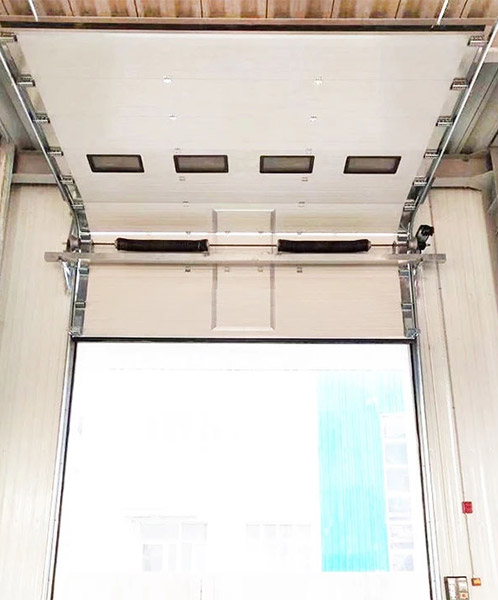
A replacement request becomes clearer when the buyer can show where the part sits, what it contacts, what supports it, and what hardware surrounds it. The name on a web search is only the starting label; the existing assembly provides the information needed for a meaningful comparison.
Nylon Bushing, Bearing, or Center Support Bracket: Know Which Part You Need
A nylon bushing, a bearing, and a Центральный опорный кронштейн торсионной пружины гаражной двери should not automatically be treated as interchangeable terms. They may be physically close to one another, and some assemblies can combine support functions in ways that make casual descriptions ambiguous, but the buyer still needs to define which object is actually being sourced.
Start with component identity.
A bushing request should point to the bushing itself: the individual part the buyer believes must be replaced or specified.
A bearing request should identify a bearing as the required component rather than using “bushing” as a loose synonym. Bearings and bushings can serve different mechanical roles, and a supplier needs to know which component the buyer means before discussing fit.
A center support bracket request should identify the bracket or support structure, not merely the component seated in or near it. If the existing hardware is an assembly that contains a replaceable inner part plus a bracket, the buyer should state whether the requirement is for the inner part, the bracket, or the complete assembly.
This distinction matters because a supplier cannot safely infer the requested scope from a phrase such as “center nylon part” or “torsion bearing piece.” A photograph showing the full support area, followed by a close-up of the component itself, is often far more useful than adding more generic search keywords.
Another useful step is to separate part identity с сайта performance assumptions. A buyer may be tempted to describe one material as quieter, stronger, lower-friction, longer-lasting, or more corrosion-resistant. Without verified product evidence, those claims are not established for the target part. The immediate sourcing task is simpler: identify the correct object first, then ask the supplier to provide product-specific material and fit information.
Signs the Part Description Is Still Too Vague
- The request uses “bushing,” “bearing,” and “bracket” as if they mean the same item.
- The buyer cannot show where the part sits within the existing torsion assembly.
- The inquiry asks for a replacement but includes no markings, photos, drawings, or fit information from the original hardware.
Identify the Existing Torsion Assembly Before Requesting a Replacement
A garage door torsion spring replacement search can lead directly to spring-focused results even when the immediate need is a smaller support component. That is why the existing assembly should be documented before a replacement inquiry is sent.
Begin with the part’s position. Photograph the wider torsion area so the supplier can see the relationship between the shaft, support hardware, spring area, and adjacent components. Then take a closer image of the suspected bushing or support part. If removal would require disturbing a loaded torsion system, the documentation process should stop short of unsafe disassembly; torsion springs can store substantial mechanical energy, so service work should be handled by a qualified garage-door technician.
Next, record the visible shape and connection points. The goal is not to reverse-engineer an unverified specification. It is to give the supplier a clear visual record: whether the part appears separate or integrated with a support, how it is retained, what surrounding hardware it interfaces with, and whether any markings are visible.
Then capture any existing identifiers. Model numbers, supplier codes, stamped marks, old packaging, maintenance records, or equipment drawings can be more useful than an assumed generic name. If the original documentation calls the part something different from “nylon bushing,” include both the original wording and the search term that led to the inquiry.
Finally, separate buyer-provided evidence с сайта supplier-confirmed information. The buyer can provide photos, existing dimensions measured from the old assembly, markings, drawings, and application context. The supplier should confirm the proposed replacement’s actual dimensions, shaft fit, mounting relationship, material specification, and model compatibility. Those are not details to guess from the search phrase.
This approach is especially important when two parts look similar in a small photo. A minor difference in seat shape, retention method, surrounding bracket design, or shaft relationship may be the difference between a plausible-looking item and a usable replacement. Without product-level evidence, the correct outcome is not a confident assumption; it is a better question.
What to Confirm When Asking About a Torsion Spring Nylon Bushing
A useful inquiry should make it easy for the recipient to distinguish the buyer’s existing hardware from the supplier’s proposed part. The request should therefore be built around identification, evidence, and confirmation.
State exactly what you believe you need, but leave room for correction. For example, identify it as the suspected torsion spring nylon bushing and note whether it appears to be separate from or integrated with a bearing or center support bracket. This helps the supplier understand the search language without forcing them to accept the buyer’s first label as technically final.
Explain whether the request is for replacement of an existing component or for hardware in a new assembly. Replacement work should emphasize compatibility with the documented existing configuration. New-assembly work should emphasize the intended system design and the need for a confirmed compatible component set.
Attach the strongest evidence available. Clear photos, a dimensional drawing from the original system, model markings, part numbers, and the identity of surrounding hardware are more actionable than a generic description alone.
Then ask the supplier to confirm every missing product-specific point before ordering. The exact confirmation list will depend on the assembly, but it should include the part’s actual dimensions, fit to the relevant shaft or support, mounting relationship, material specification, and compatibility with the intended door hardware.
Details to Send in a Replacement Inquiry
- Name the suspected component and note any alternative term used in the original documentation.
- Include one wide photo showing the part’s position in the torsion assembly.
- Add close-up photos of the part, support, connection points, and visible markings.
- Provide original drawings, part numbers, supplier references, or maintenance records when available.
- State whether the need is a like-for-like replacement or part of a newly defined assembly.
- Distinguish measurements taken from the existing hardware from specifications that still need supplier confirmation.
- Ask whether the proposed item is the bushing alone, a bearing, a bracket, or a combined assembly.
- Request written confirmation of fit, mounting relationship, material specification, and model compatibility before ordering.
The central sourcing lesson is simple: do not let a generic part name substitute for assembly identification. A precise replacement request connects the search term to real hardware evidence and asks the supplier to confirm the product-specific details that cannot be inferred from the current information.
For broader garage-door, industrial-door, commercial-door, residential-door hardware accessories or OEM sourcing discussions, buyers can review Ningbo Baoteng’s company website and contact Ningbo Baoteng Co., Ltd. with the relevant assembly information. This is a general company contact path and should not be read as confirmation that a garage door torsion spring nylon bushing is currently manufactured or supplied by the company.
 English
  Русский
  日本語
日本語  한국어
한국어  Français
  Deutsch
  العربية
  Português
  Español