
Bottom Garage Door Seal Case Study
Эталонный стандарт: Relevant material and performance testing standards include ASTM D2240 for Shore hardness testing, ASTM D395 for compression set behavior, and general ozone or weathering test logic used for elastomeric sealing materials.
Краткий ответ
Reading the Floor Contact Line Before Choosing a bottom garage door seal
The first useful case study for a нижнее уплотнение двери гаража does not begin with a product photo. It begins with the dark line visible under a closed sectional garage door. That line tells whether the seal is touching the floor continuously, whether the panel thickness is compatible with the seal profile, and whether the material still has enough elastic recovery to close small gaps without being crushed. In the catalog data, the bottom seal family includes BT-A316 PVC Bottom seal, BT-A317 EPDM Bottom Seal, BT-P318 EPDM Bottom Seal for 50mm panel, BT-P319 EPDM Bottom Seal for 40mm panel, и BT-P320 EPDM Bottom Seal for 80mm panel. That panel thickness data is not decorative; it is the control point for whether the sealing lip or bulb can be compressed within a useful range.
A practical field case can be framed like this: two garage doors may both look like ordinary sectional doors, yet one uses a 40mm panel and the other uses an 80mm panel. If the same seal profile is treated as universal, the installer may get a tight-looking edge during installation but poor compression after the first week of opening cycles. A thin-panel configuration can leave the sealing body under-supported, while a thick-panel configuration can over-compress the material, increasing drag against the floor. The failure may not appear as an immediate leak. It often appears as intermittent daylight, dust trails, scraping noise, or a flattened seal edge after repeated door operation.
The edge extreme scenario is a sloped concrete floor with a 3mm to 6mm local height difference along the door width. A seal that is correctly matched to a 50mm panel has to absorb minor floor irregularity while staying anchored to the panel. If the seal is too stiff, the high side is overloaded and the low side leaves air gaps. If the seal is too loosely seated, the door movement can walk the profile out of its stable position. In this model, the most important test is not just whether the door closes once. It is whether the contact line remains continuous after repeated compression, moisture exposure, and temperature change.
A cross-dimensional comparison makes the issue clearer. A PVC bottom seal such as BT-A316 may be suitable for standard cost-sensitive sealing where extreme outdoor aging is not the main threat. An EPDM option such as BT-A317, BT-P318, BT-P319, или BT-P320 is more appropriate when the door bottom faces rain splash, sunlight, cold mornings, or wider seasonal temperature cycles. The selection logic should not be reduced to “rubber versus plastic.” The more accurate view is panel thickness plus contact pressure plus material recovery.
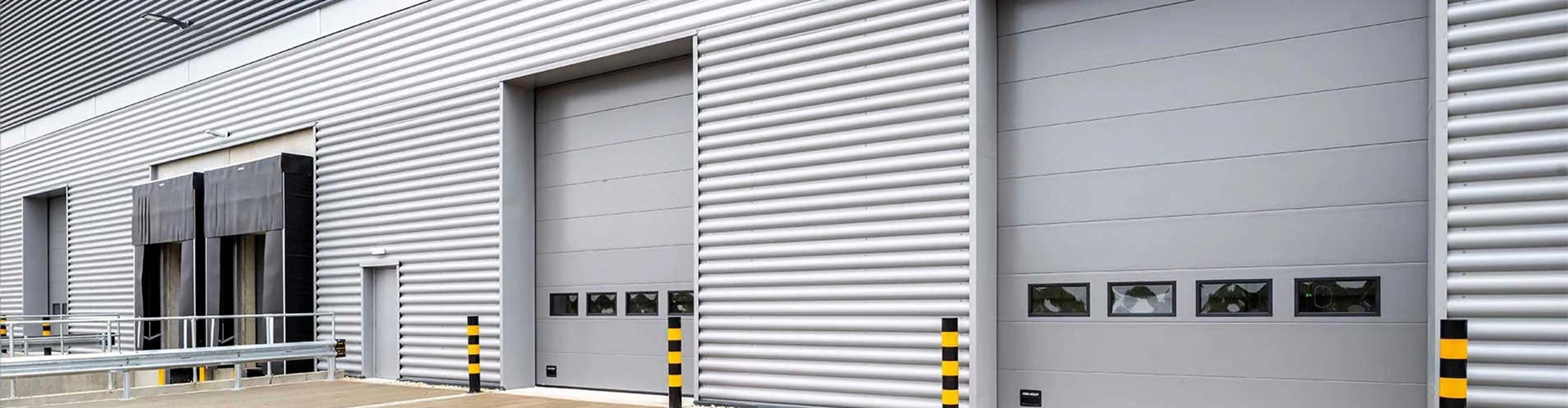
From a procurement perspective, the floor contact line becomes a pre-selection diagnostic. A buyer can record the door panel thickness, floor condition, exposure level, and expected door cycle frequency before confirming the seal. A maintenance team can also use a simple contact check: close the door on a clean floor, inspect for daylight, then reopen the door and look for uneven dust transfer on the seal edge. This does not replace factory measurement, but it creates a useful bridge between catalog specifications and real installation behavior.
For related sectional garage door hardware context, the broader product range can be reviewed through Ресурсы по фурнитуре для гаражных ворот Baoteng.
PVC and EPDM Under Compression: What Changes After the Door Starts Moving
PVC and EPDM behave differently after the door starts moving because the bottom seal is not a static strip. It is a repeatedly compressed, dragged, wetted, and released interface. The catalog confirms both ПВХ и EPDM as actual bottom seal materials, so the comparison should stay inside those two material families. It should not add silicone, magnetic layers, composite foam cores, or unlisted reinforcement systems. The meaningful indicators are compression recovery, floor-contact continuity, и edge wear.
PVC is generally valued for stable extrusion and cost control. In a bottom garage door seal application, a PVC profile can give a predictable shape and consistent installation feel under normal conditions. Its limitation appears when low temperature, repeated bending, and friction combine. As temperature drops, many PVC formulations become less flexible. That change matters because a garage door bottom seal must deform around small floor irregularities and then recover after the door opens. If recovery slows, the seal may remember the compressed shape and leave small channels for wind-driven dust or water.
EPDM has a different performance profile. Its molecular structure is known for stronger resistance to ozone, water, and outdoor weathering, which is why EPDM is widely used in exterior sealing applications. In this catalog-based product group, the EPDM versions are especially important because they are tied to specific panel thicknesses: BT-P319 for 40mm panel, BT-P318 for 50mm panel, и BT-P320 for 80mm panel. That makes EPDM not only a material choice but also a panel-fit choice.
A fatigue timeline model is useful. In the initial stage, a correctly selected seal compresses against the floor and rebounds with little visible deformation. In the middle stage, repeated door cycles begin to polish the floor-contact edge. Minor abrasion is expected, but the seal should still maintain a continuous line. In the limit stage, the weak material or mismatched profile shows permanent flattening, side curling, edge cracking, or stiffness after cold exposure. These symptoms usually appear before a full sealing failure.
A cross-system risk is often missed: a poor bottom seal can change how the user interprets other garage door problems. If cold air, dust, or water enters under the door, the user may blame the opener, threshold, or panel alignment. The real cause may be a profile mismatch or compression loss. That is why material behavior should be checked before replacing unrelated hardware.
ОСНОВНЫЕ ВЫВОДЫ
- A broken or uneven contact line often appears before visible seal tearing.
- A seal edge that stays flattened after opening suggests reduced compression recovery.
- Cold-weather stiffness, scraping noise, or dust trails can signal material or panel-fit mismatch.
Matching 40mm, 50mm, and 80mm Panels Without Turning Seal Selection Into Guesswork
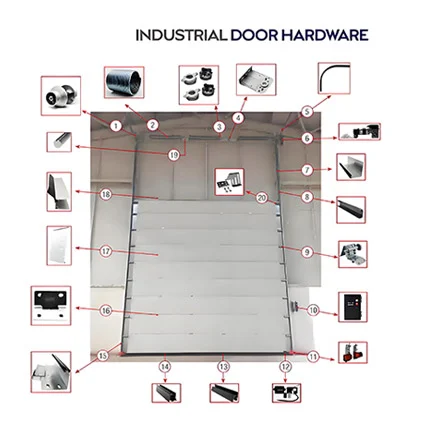
The most practical way to reduce wrong purchases is to treat the bottom seal as a dimensional component, not a generic replacement strip. The catalog gives three direct EPDM panel-fit references: BT-P319 for 40mm panel, BT-P318 for 50mm panel, и BT-P320 for 80mm panel. It also lists BT-A316 PVC Bottom seal и BT-A317 EPDM Bottom Seal. The available data does not provide length, color, hardness, package quantity, certification, or adhesive system, so those details should not be invented in an article, quotation sheet, or product page.
| Catalog item | Материал | Listed panel fit | Selection use |
|---|---|---|---|
| BT-P319 Bottom Seal | EPDM | 40mm panel | Thin sectional panel fit |
| BT-P318 Bottom Seal | EPDM | 50mm panel | Mid-range sectional panel fit |
| BT-P320 Bottom Seal | EPDM | 80mm panel | Thick sectional panel fit |
| BT-A316 / BT-A317 Bottom seal | PVC / EPDM | Not specified in the provided data | Material-based selection check |
In a real selection case, the buyer should first confirm the panel thickness at the lower section of the door, not at a random upper rib or decorative surface. A measurement taken at the wrong point can create an error large enough to select the wrong seal profile. The second step is to identify exposure: indoor-like storage, standard residential garage use, or weather-facing commercial door use. The third step is to decide whether the main requirement is cost-controlled sealing or longer outdoor material stability.
The edge extreme scenario here is a mixed-door maintenance project where older panels have been replaced over time. A facility may contain doors with different panel thicknesses even if the exterior style looks similar. If a buyer orders one bottom seal for all doors, the visible installation may appear acceptable during the first shift, but inconsistent compression can show later through leaks, drag, or uneven wear. This is why the 40mm, 50mm, and 80mm distinctions should be preserved in the ordering process.
A cross-dimensional test case can compare three doors under the same rain-splash condition. Door A uses a 40mm panel with a seal intended for that fit. Door B uses a 50mm panel with a 50mm-matched EPDM seal. Door C uses an 80mm panel but receives a profile selected only by appearance. Even if the materials look similar, Door C is more likely to show seating instability or over-compression because the profile was not selected by panel data. The test result is not about brand preference; it is about dimensional compatibility.
Spec selection should also avoid over-promising. A seal does not correct a severely uneven floor, a twisted bottom section, or a damaged track system by itself. It can improve sealing only within the mechanical range allowed by the door, floor, and panel geometry. A good product page should say this clearly because it builds trust and reduces mismatch-driven complaints.
A Factory-Level Check for bottom garage door seal Consistency Before Shipment
A factory-level case study should focus on consistency rather than slogans. The provided catalog does not list a dedicated quality control standard for the bottom garage door seal, so the responsible approach is to use general objective inspection logic for flexible sealing products. The check should include PVC or EPDM material batch confirmation, sectional profile measurement, surface defect inspection, Shore A hardness sampling, compression recovery observation, low-temperature bending, water exposure, weathering logic, и trial fitting against the intended 40mm, 50mm, or 80mm panel category.
Solution 1: Material batch and identity confirmation.
Execution Protocol: Before extrusion or shipment approval, the material identity should be checked against the order requirement. A PVC order should not be substituted with EPDM language, and an EPDM order should not be described as a generic rubber strip. The record should connect the catalog model, material name, and panel-fit requirement. This protects the buyer from receiving a visually similar seal that behaves differently after compression and outdoor exposure.
Material expectation: When the material identity is stable, compression behavior becomes more predictable across a batch. PVC should show controlled shape consistency for standard applications. EPDM should show better expected resistance against weather-related hardening, ozone exposure, and water-contact aging. The measurable target is not a universal number, since the catalog does not state one, but batch-to-batch consistency in hardness, profile shape, and rebound.
Hidden cost and avoidance: The risk is over-testing every piece and slowing delivery. A practical approach is sampling by batch, with stricter checks for new material lots or changed extrusion settings. The inspection record should avoid unsupported claims and focus on material identity, visible quality, and fit validation.
Solution 2: Section profile and panel-fit verification.
Execution Protocol: The seal should be checked against the intended panel category before bulk acceptance. For the documented EPDM panel-fit models, this means verifying BT-P319 for 40mm, BT-P318 for 50mm, и BT-P320 for 80mm. The inspection should look for stable seating, correct compression range, and absence of twisting during manual trial fitting.
Material expectation: Correct profile fit reduces unnecessary compression stress. A seal installed on the proper panel thickness can deform into the intended working position rather than being stretched, pinched, or under-loaded. Over time, that improves contact continuity and lowers the chance of early edge wear.
Hidden cost and avoidance: Trial fitting takes time, especially when several panel categories are shipped together. The cost can be controlled by grouping inspection by model and marking cartons clearly. The main prevention measure is not a complex test machine; it is disciplined separation of panel-fit models.
Solution 3: Visual and tactile defect screening.
Execution Protocol: Inspect the seal for cracks, bubbles, cuts, deformation, color inconsistency, and irregular edges. A flexible seal can fail from a small defect if that defect sits on the floor-contact line. Inspectors should bend a sample length gently and observe whether surface cracks open under stress.
Material expectation: A clean extrusion surface supports more uniform compression. Defect-free edges reduce the risk of local tearing and water channel formation. For EPDM, outdoor durability is meaningful only if the profile is free from processing flaws that concentrate stress.
Hidden cost and avoidance: Overly cosmetic rejection can waste usable material. The inspection rule should distinguish between non-functional cosmetic marks and defects that affect sealing contact, bending, or seating. The rejection focus should stay on cracks, voids, torn edges, and dimensional distortion.
Solution 4: Functional recovery and environmental screening.
Execution Protocol: Use sample-based compression recovery checks, low-temperature bend observation, water exposure review, and weathering logic. Where external standards are needed, hardness can be discussed through ASTM D2240 logic, while compression set behavior can be framed through ASTM D395-type evaluation. The article should be careful: these are relevant testing references, not catalog-certified claims.
Material expectation: After compression, the seal should return close enough to its original working shape to preserve floor contact. EPDM should be expected to perform more reliably under outdoor aging conditions than PVC, especially where ozone, water, and temperature cycling matter. PVC remains a valid standard option when the exposure profile is less severe and cost control is important.
Hidden cost and avoidance: Environmental screening can become expensive if treated like full certification. For normal procurement, the more realistic approach is batch sampling, supplier documentation, and fit testing. For critical projects, buyers can request additional testing before mass order confirmation.
| Inspection variable | Practical check | Expected risk if ignored | Useful testing reference |
|---|---|---|---|
| Material identity | Confirm PVC or EPDM batch | Wrong aging and recovery behavior | Material batch documentation |
| Panel fit | Trial fit on 40mm, 50mm, or 80mm panel | Poor contact or over-compression | Dimensional inspection |
| Hardness behavior | Shore A sampling logic | Seal too stiff or too soft | ASTM D2240 reference logic |
| Compression recovery | Sample compression and release | Permanent flattening | ASTM D395 reference logic |
| Surface quality | Check cracks, bubbles, cuts, deformation | Local leak path or early tearing | Visual inspection record |
| Weather exposure | Water, ozone, and aging review | Hardening or cracking outdoors | Elastomer weathering logic |
СОВЕТ ОТ ПРОФЕССИОНАЛА / КОНТРОЛЬНЫЙ СПИСОК
- Confirm whether the order requires PVC or EPDM before comparing prices.
- Measure the actual door panel thickness before selecting a profile.
- Используйте BT-P319 only where the requirement is a 40mm panel EPDM bottom seal.
- Используйте BT-P318 only where the requirement is a 50mm panel EPDM bottom seal.
- Используйте BT-P320 only where the requirement is an 80mm panel EPDM bottom seal.
- Inspect the floor-contact edge for cracks, bubbles, cuts, and permanent flattening.
- Check the closed-door contact line before blaming the opener or threshold.
- Avoid claiming hardness, color, length, or certification unless those details are separately confirmed.
Часто задаваемые вопросы (FAQ)
How to measure garage door springs?
Measure spring dimensions only when the door is safely secured and the spring is not under uncontrolled tension. For seal selection, spring measurement is usually not the key data point. The more relevant measurement is the lower door panel thickness, especially 40mm, 50mm, or 80mm.
How to reset a garage door opener?
A garage door opener reset depends on the opener model, so the manufacturer manual should be followed. If the problem is drafts, dust, or water under the door, resetting the opener will not fix the issue. Inspect the garage door bottom seal and floor contact line first.
Why does my garage door opener open by itself?
This can be caused by remote interference, wall-button faults, limit setting problems, or control-board issues. A bottom seal does not normally make an opener activate by itself. However, an over-compressed or dragging seal may add resistance, so check seal fit if the door reverses or struggles.
How to manually open a garage door?
Most sectional garage doors use an emergency release cord that disconnects the opener from the door. Use caution because the door must be balanced and safe to lift. After manual operation, inspect whether the нижнее уплотнение двери гаража scrapes, folds, or leaves uneven contact marks.
How to reprogram LiftMaster garage door opener remote?
Use the Learn button procedure from the LiftMaster manual for the specific opener model. Remote programming is separate from bottom sealing performance. If the door closes correctly but wind, water, or dust enters at the floor, focus on panel thickness and seal material instead.
How to program LiftMaster garage door opener remote?
Programming usually involves pressing the opener Learn button and then activating the remote within the required time window. If the opener works but the garage remains drafty, the issue is more likely the garage door bottom weather seal, floor level, or incorrect seal profile.
 English
  Русский
  日本語
日本語  한국어
한국어  Français
  Deutsch
  العربية
  Português
  Español