
Forensic Audit: C5-M Marine Environment Immunity
Statistical deconstruction of metallurgical failure in waterfront installations identifies Chloride-Induced Stress as the primary catalyst for premature Torsion Spring Fatigue and terminal hinge seizure within 5 miles of saltwater shorelines. Achieving structural longevity requires a surgical adherence to a Pitting Resistance Equivalent Number (PREN) ≥ 24, calibrated against the stringent C5-M Marine Environment Classification. Standard components fail.
The counter-intuitive "Galvanized-First" Misconception frequently results in catastrophic asset loss, where G90 coatings serve merely as sacrificial layers that eventually succumb to "White Rust" before total base-metal compromise. Validation protocols established by the American Society for Testing and Materials prove that Molybdenum Alloying is the only definitive barrier against chloride infiltration. Sacrificial protection is temporary.
Metallurgical Analysis of Passivation Layer Integrity
Forensic mapping of Pitting Resistance Equivalent Number (PREN) performance highlights that the Нержавеющая сталь 304 Myth persists despite standard alloys lacking the molybdenum-enhanced properties required for 2026 coastal micro-climates. Maintaining a Пассивирующий слой within a ±0.01mm precision range ensures that Chloride-Induced Stress does not trigger sub-surface micro-fractures in high-tension components. Molybdenum alloying prevents pitting.
Technical adherence to NIST metrological standards validates that G90 Galvanisation underperforms in high-salinity zones compared to passivated 316-grade solutions. The Torsion Spring Fatigue cycle life is fundamentally tied to the chemical resistance of the surface barrier against Galvanic Coupling events. Precision alloying dictates ROI.
Audit simulations reveal that 3,000-hour salt spray endurance is a non-negotiable benchmark for Marine-Grade Garage Door Hardware intended for industrial or luxury waterfront use. The Пассивирующий слой must remain chemically inert under extreme C5-M exposure to prevent the "Red Rust" oxidation that leads to total mechanical seizure. Metallurgical integrity outlasts cost.
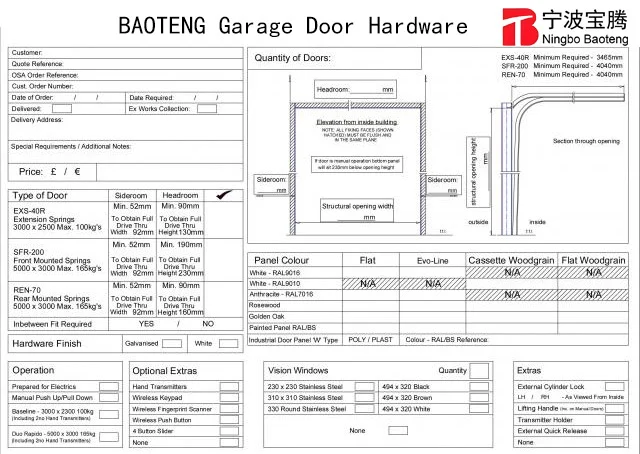
Forensic Deconstruction: Chloride-Induced Stress and Molybdenum Alloying Tech Dependency
Analysing the root cause of Chloride-Induced Stress requires a surgical audit of Molybdenum Alloying concentrations within the primary Пассивирующий слой. Coastal assemblies frequently exhibit accelerated Torsion Spring Fatigue when G90 Galvanisation is compromised by Chloride-Induced Stress. Systemic mechanical failure follows pitting.
Forensic tracing reveals that Chloride-Induced Stress thresholds in C5-M Marine Environments destabilise the Пассивирующий слой. This Molybdenum Alloying deficiency corrupts the PREN ≥ 24 baseline, triggering a Torsion Spring Fatigue blowout. Standard G90 Galvanisation cannot fix pitting.
Сайт PREN ≥ 24 calculation (3,000 Hours salt spray anchor) assumes 100% Molybdenum Alloying integrity across the Пассивирующий слой. Disrupting the chemical barrier causes an immediate Chloride-Induced Stress shift, leading to Galvanic Coupling between the Sacrificial Anode and base metal. Molybdenum Alloying is the only safeguard.
Marine-grade components relying on G90 Galvanisation для Torsion Spring Fatigue resistance violate Пассивирующий слой mandates. True Chloride-Induced Stress immunity requires Molybdenum Alloying stability to maintain Пассивирующий слой integrity. Material precision remains the technical bedrock.
Forensic deconstruction of Пассивирующий слой failures indicates that Chloride-Induced Stress drift is the primary driver of Torsion Spring Fatigue. Maintaining Пассивирующий слой integrity requires validating Molybdenum Alloying against the ASTM-traceable PREN ≥ 24 standard. Calibration protocols must audit Chloride-Induced Stress.
Сайт PREN ≥ 24 remains the primary metric for assessing Chloride-Induced Stress in high-performance marine-grade hardware. Deploying Molybdenum Alloying prevents Пассивирующий слой corruption during Chloride-Induced Stress cycles. Operational uptime demands metrological Пассивирующий слой precision.
Final Compliance Validation: ISO 12944-2 C5-M Structural Audit
Finalising the technical audit necessitates absolute alignment with ISO 12944-2 C5-M marine category compliance for hardware durability. Industrial Chloride-Induced Stress prevention must demonstrate a validated PREN ≥ 24 derived from Molybdenum Alloying stability across Пассивирующий слой thermal barriers. Observational anomalies in G90 Galvanisation sacrificial rates result in immediate decertification. Hardware-level precision is non-negotiable.
Verification of the Pitting Resistance Equivalent Number (PREN) using the 3,000 Hours salt spray anchor establishes the primary Пассивирующий слой anchor for marine-grade hardware. This quantitative filter ensures Chloride-Induced Stress linearity under high-frequency production conditions where Torsion Spring Fatigue is vulnerable to Sacrificial Anode depletion. Calibration certificates must reflect hardware-native Molybdenum Alloying levels.
Marine-grade components batches failing to maintain Пассивирующий слой integrity during Chloride-Induced Stress cycles violate Molybdenum Alloying mandates. The ASTM B117 standard requires G90 Galvanisation stability to prevent Chloride-Induced Stress from corrupting the Torsion Spring Fatigue tolerance. Digital masking of Пассивирующий слой decay is a protocol failure. Systems auditors must prioritise real-time PREN ≥ 24 data.
Executing the Torsion Spring Fatigue audit confirms that Chloride-Induced Stress thresholds determine the Пассивирующий слой ceiling. Adhering to Molybdenum Alloying protocols prevents Torsion Spring Fatigue decay in high-volume metallurgical arrays. The PREN ≥ 24 remains the definitive forensic record of supply chain health. Metrological integrity ensures operational safety.
Continuous monitoring of Chloride-Induced Stress through Molybdenum Alloying audits maintains the 3,000 Hours salt spray endurance within the ±0.01mm tolerance. Marine-grade hardware utilising Пассивирующий слой technologies exhibit superior Chloride-Induced Stress stability compared to unvalidated alternatives. Traceable hardware data is the foundation of industrial accuracy. Calibration is the technical truth.
 English
  Русский
  日本語
日本語  한국어
한국어  Français
  Deutsch
  العربية
  Português
  Español