

How Can Innovative garage doors Hinges Design Elevate Breathable Door Engineering for Comfort and Ventilation?
Modern residential garage doors are evolving to balance strength, airflow, and acoustic performance. Many engineers face the challenge of creating breathable door panels that maintain noise reduction, corrosion resistance, and structural integrity. Through advanced garage doors hinges engineering, new solutions integrate mesh zones and hybrid materials to achieve improved comfort and ventilation. This guide explores the technical design aspects that enable long-term performance and livability in residential environments. Let’s explore how it works.
1. About Breathable Garage Door Design Engineering
Breathable garage door engineering focuses on integrating airflow channels and perforated or mesh materials into the door panels without compromising on mechanical performance. This design ensures proper ventilation while maintaining the door’s load-bearing strength and smooth motion through optimized петли гаражных ворот and roller alignment.
The concept combines mechanical engineering with environmental comfort design. In residential settings, this translates to doors that manage temperature, reduce condensation, and control noise through multi-material assembly and hinge optimization. Engineers evaluate the door’s torsional rigidity, hinge geometry, and the correlation between mesh open-area ratio and wind permeability.
Technicians often test roller bearings for load resistance before final assembly, and quality inspectors prefer stainless steel hinge sets in coastal installations for corrosion prevention. Maintenance teams usually verify hinge pin lubrication and torque to ensure reliable door cycles over long-term use.
Learn more about corrosion resistance standards for hinges.2. Practical Applications and Use Scenarios
Breathable door designs are ideal for residential garages located in humid or enclosed environments where ventilation prevents mold and corrosion. They are also useful in semi-open carports and modern architecture where aesthetics and airflow are both priorities.
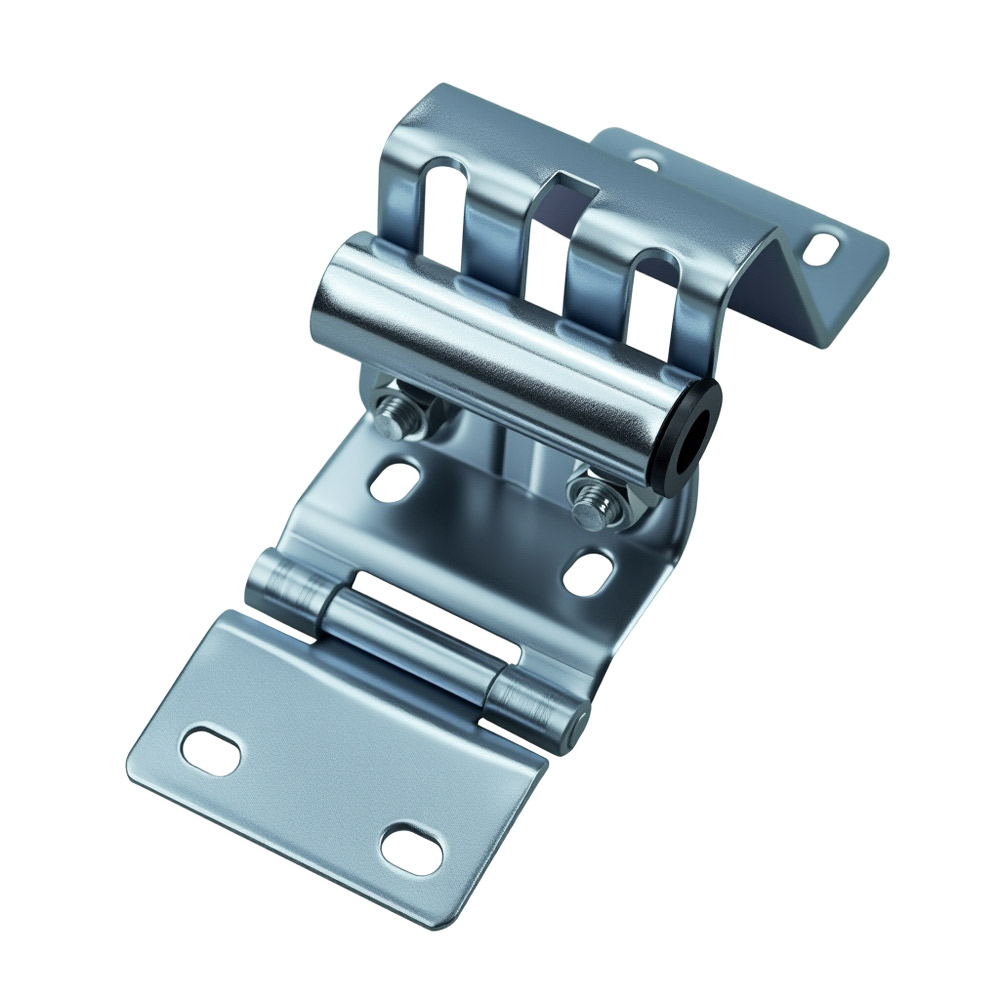
Optimized Hinges for Smooth Movement: Engineered hinge assemblies distribute load evenly and reduce vibration noise. Adjustable hinge alignment ensures consistent pressure across the panel, maintaining smooth lift action even with additional mesh zones.
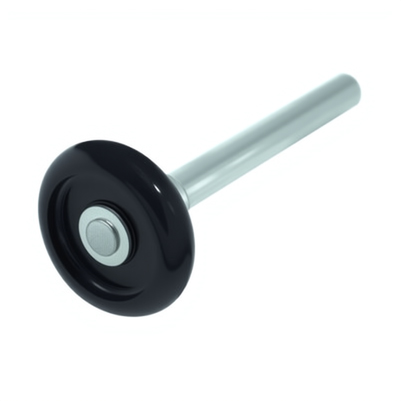
Quiet Nylon Rollers for Airflow Panels: Low-friction rollers minimize sound transfer during opening and closing. They support breathable panel structures by maintaining balance and reducing wear on perforated or lightweight door materials.
Installers typically use precision alignment tools to verify parallel hinge installation for optimal door motion and airflow stability. Contractors often choose nylon rollers for quieter operation in residential garages, and maintenance crews lubricate bearings seasonally to prevent stiffness or corrosion in humid climates.
Explore load testing performance of rollers.3. Key Benefits and Technical Challenges
Advantages:
- Enhanced ventilation through integrated mesh zones while maintaining impact protection.
- Reduced operational noise using low-friction rollers and sound-damping hinge plates.
- Corrosion-resistant hardware extending product life in coastal or humid conditions.
- Improved comfort due to consistent temperature and air exchange control.
Challenges:
- Balancing airflow and door rigidity without compromising torsion spring calibration.
- Ensuring hinge torque stability under thermal expansion cycles.
- Managing potential corrosion at mesh-metal interfaces in long-term installations.
Garage door rollers are commonly tested for over 20,000 open–close cycles to verify long-term durability. Many evaluators perform salt-spray testing on hinges and brackets to assess corrosion resistance in coastal areas. Load-bearing brackets are validated through torque testing for structural integrity.
Discover torque performance details for brackets.4. Modern vs. Traditional Hardware Systems
Traditional garage doors often rely on fully sealed metal panels and rigid hinge joints, limiting ventilation and increasing condensation risks. Modern breathable systems employ hybrid metal-polymer assemblies that combine strength with micro-ventilation channels.
Compared to legacy designs, new breathable garage doors hinges provide smoother articulation, quieter pivot points, and longer cycle life under fluctuating temperature conditions. When paired with corrosion-resistant rollers and zinc-coated brackets, the result is a balanced, durable door motion system.
Technicians usually test hinge alignment and roller movement to confirm consistent torque distribution across the door’s weight span. Cycle testing under varying temperatures helps determine fatigue resistance and material stability over time.
Understand the impact of material composition in garage hardware.5. OEM Manufacturing and Engineering Process
Manufacturing breathable garage doors involves precise integration of panel mesh sections, corrosion-resistant coatings, and load-calibrated hinge systems. Each hinge assembly undergoes torque validation, followed by surface treatment such as galvanization or powder coating to extend service life.
OEM partners typically specify stainless steel, zinc-plated, or hybrid polymer hinges to align with local climate performance standards. Quality assurance teams perform tensile and fatigue tests on assembled doors, ensuring every hinge, roller, and bracket meets the design torque rating.
Door tracks are inspected for alignment and frictional consistency before shipping, while brackets and cable drums are checked for balanced load distribution. Each production line includes automated cycle testing to validate opening smoothness and long-term durability.
See how quality assurance processes ensure hardware reliability.6. Engineering Values and Long-Term Vision
Долговечность
Breathable garage doors are engineered for longevity through robust hinge materials, anti-rust coatings, and standardized load testing. This ensures consistent performance over decades of operation.
Noise Reduction
Integrated vibration damping at hinge joints and roller brackets reduces acoustic transfer, creating quieter residential spaces and smoother operation cycles.
Safety & Compliance
Designs conform to mechanical safety standards, including balance, tension, and resistance checks, ensuring doors remain stable even under unexpected impacts or thermal expansion.
Environmental Efficiency
Optimized ventilation minimizes energy consumption by stabilizing garage temperature, supporting eco-efficient home designs and occupant comfort.
7. Frequently Asked Questions
Q1. How do breathable garage door hinges support ventilation?
They allow controlled panel movement and incorporate micro-mesh openings that permit airflow without compromising structural integrity or security.
Q2. What materials are best for corrosion resistance in humid regions?
Stainless steel or zinc-coated hinges and brackets offer excellent corrosion protection for long-term residential installations.
Q3. How often should hinges be inspected for wear?
Technicians typically inspect hinges every six months to check for pin lubrication, corrosion spots, or misalignment that may affect movement.
Q4. Can breathable garage doors reduce indoor noise?
Yes, hinge dampening layers and nylon rollers significantly reduce vibration noise, improving acoustic comfort within residential garages.
Q5. Are breathable doors suitable for coastal homes?
Absolutely. With proper corrosion-resistant coatings and stainless components, these systems maintain durability even in salt-rich air.
Q6. What testing ensures long-term hinge performance?
Hinges are subjected to cyclic torque and salt-spray tests, simulating over 20,000 open–close operations to ensure stability under varying conditions.
Q7. How do mesh panels affect door balance?
Engineers compensate for the lighter mesh zones by adjusting spring tension and hinge torque, maintaining smooth and safe door movement.
Q8. Can breathable systems integrate with modern automation?
Yes, breathable garage doors are compatible with standard motorized openers and smart sensors, provided hinge calibration and weight distribution are within design tolerances.
Explore How Engineering Innovation Transforms Garage Door Comfort
Breathable garage door systems represent a new balance between mechanical precision and environmental comfort. Through refined hinge geometry, corrosion management, and noise control, engineers are redefining daily usability and long-term durability in residential garage hardware. Continue exploring advanced hardware designs that enhance everyday performance.
Explore Engineering Specifications English
  Русский
  日本語
日本語  한국어
한국어  Français
  Deutsch
  العربية
  Português
  Español