
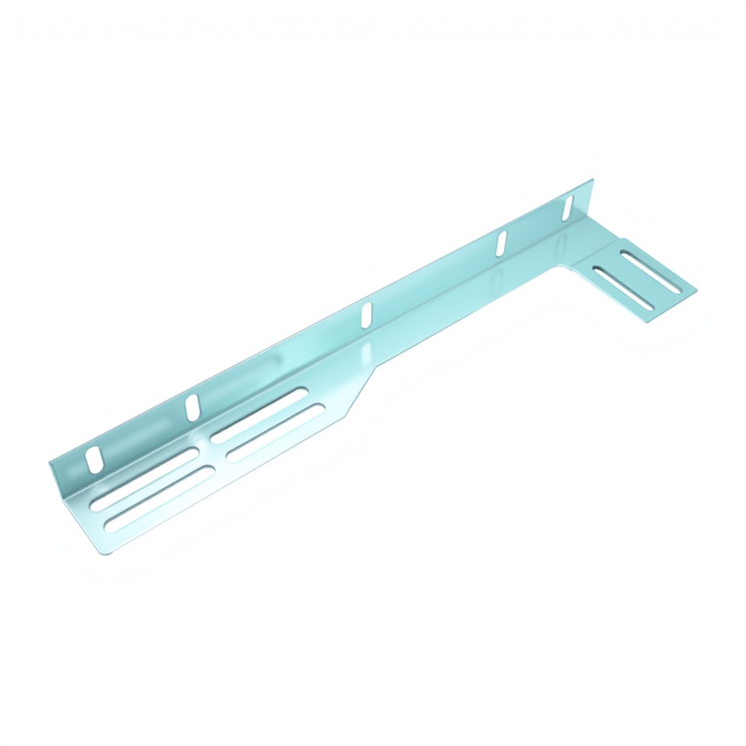
The reliable operation of sectional garage doors depends significantly on the mechanical performance of hinge assemblies that connect individual door panels. Within these assemblies, the joint angle iron plays a vital role by providing structural continuity and enabling controlled rotation between panels as the door moves along its track. This component is subjected to repetitive bending and torsional loads during daily operation, which can induce articulation fatigue—a primary failure mode that undermines hinge integrity and overall door functionality. The challenge intensifies in vibration-sensitive installation sites, where micro-movements and environmental factors accelerate fatigue damage. This analysis examines the mechanical behavior and fatigue durability of joint angle iron in garage door hinges, emphasizing the interplay between load conditions, material properties, and environmental influences critical for engineering robust and long-lasting hinge designs.
Joint angle iron serves as the pivotal mechanical link between adjacent sections of a garage door, transmitting rotational motion while supporting structural loads from the door’s weight and external forces such as wind pressure. The component experiences a complex combination of stresses, including bending moments induced by panel weight and angular displacement, shear forces at connection points, and localized stress concentrations, especially near fastener holes and welds. Its characteristic L-shaped cross section balances stiffness and flexibility, allowing necessary angular movement without excessive deformation or loss of structural integrity.
During door operation, the joint angle iron undergoes cyclic bending as the door transitions between horizontal and vertical orientations. The magnitude of these cyclic stresses depends on several factors: the weight of individual panels, the spacing and number of hinges, and the radius of curvature of the track system. Additionally, torsional stresses arise from the hinge’s rotational axis, which must be considered to prevent premature fatigue failure. Material selection often favors medium-carbon steel alloys with adequate yield strength (typically 250–400 MPa) and toughness to endure these dynamic loads. Surface treatments such as galvanization or powder coating are commonly applied to improve corrosion resistance, especially important in vibration-sensitive environments where micro-movements can degrade protective layers.
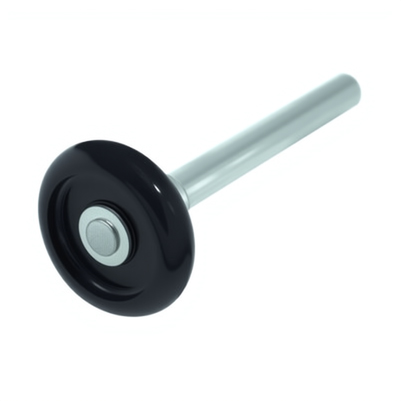
The mechanical efficiency of the hinge articulation is also influenced by the fit and clearance between the joint angle iron and mating components like hinge pins and rollers. Excessive clearance can cause impact loading and elevated stress amplitudes, while overly tight fits increase friction and restrict smooth movement. Precision manufacturing and tight tolerance control are therefore essential to optimize load transfer, minimize stress concentrations, and extend fatigue life.
The principal failure mode affecting joint angle iron in garage door hinges is articulation fatigue, caused by repeated cyclic stresses during door operation. These stresses initiate microcracks at high-stress concentration zones, frequently located near welds, bolt holes, or sharp geometric transitions. Over successive loading cycles, these cracks propagate and coalesce, eventually leading to partial or complete fracture of the angle iron. Such failures compromise hinge functionality, potentially causing door misalignment or operational failure. The fatigue life of the component is governed by the amplitude and frequency of cyclic loads, the intrinsic fatigue strength of the material, and residual stresses introduced during fabrication or installation. In vibration-sensitive installation sites, low-amplitude vibrations can exacerbate fatigue damage by increasing the effective number of stress cycles and promoting crack initiation at otherwise benign locations.
Secondary failure mechanisms, including wear and corrosion, often accelerate fatigue damage in joint angle iron. Wear occurs predominantly at contact interfaces within the hinge assembly, such as between the angle iron and pins, leading to dimensional changes that alter load paths and increase local stress concentrations. Corrosion, especially in environments with vibration-induced micro-movements, can disrupt protective coatings and initiate pitting. These surface irregularities serve as nucleation sites for fatigue cracks. Environmental factors such as humidity, temperature fluctuations, and exposure to contaminants further intensify corrosion rates. In vibration-sensitive settings, fretting corrosion at interfaces is a notable concern, as it combines mechanical wear with chemical degradation, reducing material cross-section and weakening structural integrity.
Vibration-sensitive installation sites introduce additional complexities in the fatigue behavior of joint angle iron. Continuous low-level vibrations, even in the absence of large articulation movements, can induce micro-fatigue phenomena, effectively increasing the cumulative damage experienced by the component. These vibrations may also loosen fasteners, leading to increased play and impact loading, and promote fretting corrosion at contact surfaces. The combined effect of dynamic environmental stresses and material degradation necessitates conservative design margins and robust maintenance protocols. Material selection must account for not only static load capacity but also resistance to vibration-induced fatigue and environmental degradation. Protective coatings and vibration-damping elements can mitigate these effects, but their efficacy must be validated under representative operating conditions.
Validation of joint angle iron performance under articulation fatigue conditions requires rigorous testing aligned with recognized standards that replicate real-world operational stresses. ANSI/UL 325, which governs door and gate operator safety, includes mechanical endurance tests simulating cyclic opening and closing sequences. These tests verify that hinge components can withstand expected fatigue cycles without structural compromise, with particular attention to articulation points.
ASTM E466 provides standardized methodologies for fatigue testing of metallic materials under controlled cyclic loading. Applying this standard to joint angle iron samples allows engineers to generate S-N (stress-life) curves specific to the component’s geometry and material grade. These data inform predictive maintenance schedules and guide design improvements by quantifying fatigue life under representative load amplitudes and frequencies.
Additionally, EN 12604 specifies mechanical requirements for garage doors, including hinge strength and durability criteria. Compliance ensures that joint angle iron components meet minimum performance thresholds for fatigue resistance and environmental exposure. Integrating these standards into validation protocols involves laboratory fatigue cycle tests that replicate articulation angles, load magnitudes, and cycle frequencies encountered in service. Test setups often incorporate environmental chambers or vibration simulators to assess performance under vibration-sensitive installation conditions, providing a comprehensive evaluation of component durability.
The integration of joint angle iron into garage door hinge assemblies demands careful attention to mechanical compatibility, material selection, and environmental resilience. Achieving an optimal balance between stiffness to support door loads and flexibility to allow smooth articulation requires geometric optimization of the angle iron’s cross section. Engineering decisions frequently involve selecting steel alloys with high fatigue strength and toughness, such as quenched and tempered carbon steels, and applying surface treatments to reduce wear and corrosion.
In vibration-sensitive environments, design strategies may include incorporating vibration-damping bushings or controlled-clearance joints to limit micro-movements that accelerate fatigue. Fastening methods must ensure secure attachment while minimizing stress concentrations; for example, using countersunk bolts tightened to manufacturer-recommended torque values and employing welds with smooth transitions to avoid crack initiation sites. Proper assembly practices, including lubrication and alignment checks, further contribute to fatigue life extension.
Maintenance protocols should emphasize regular inspection for early signs of fatigue cracking, wear, and corrosion, particularly at articulation points. Replacement intervals should be informed by fatigue cycle test data correlated with actual operational usage patterns. Condition monitoring technologies, such as acoustic emission sensors or strain gauges, can provide early warnings of fatigue damage, enabling timely interventions before catastrophic failure.
Finite element analysis (FEA) serves as a valuable tool during the design and integration phases, simulating stress distributions within the joint angle iron under various loading scenarios. These simulations help identify critical stress risers and guide design modifications to enhance fatigue resistance. Prototype testing under controlled environmental and vibration conditions validates computational models and supports final design decisions, ensuring that the hinge assembly meets durability requirements in real-world applications.
H2 —
The fatigue durability of joint angle iron in garage door hinges is governed by a combination of material properties, geometric design, and environmental factors, with articulation fatigue as the predominant failure mode. In vibration-sensitive installation sites, the interplay of cyclic bending, torsional stresses, and micro-vibrations accelerates fatigue damage, necessitating careful design and validation. Adherence to fatigue cycle test standards such as ANSI/UL 325 and ASTM E466 is essential for verifying component reliability under operational loads. Through precise manufacturing, appropriate material selection, and rigorous testing, joint angle iron can maintain mechanical durability and articulation efficiency, ensuring the long-term safe operation of sectional garage door systems.
This analysis was reviewed by a Senior Garage Door Hardware Engineer with practical field experience under vibration-sensitive installation site operating conditions, with validation focused on articulation fatigue in accordance with fatigue cycle test compliance requirements.
From an engineering standpoint, long-term reliability of Joint Angle Iron depends on correct fastener selection, verified load transfer behavior, validation under vibration-sensitive installation site exposure, and documented compliance with fatigue cycle test alongside ANSI, ASTM, and UL safety benchmarks.

 English
  Русский
  日本語
日本語  한국어
한국어  Français
  Deutsch
  العربية
  Português
  Español