
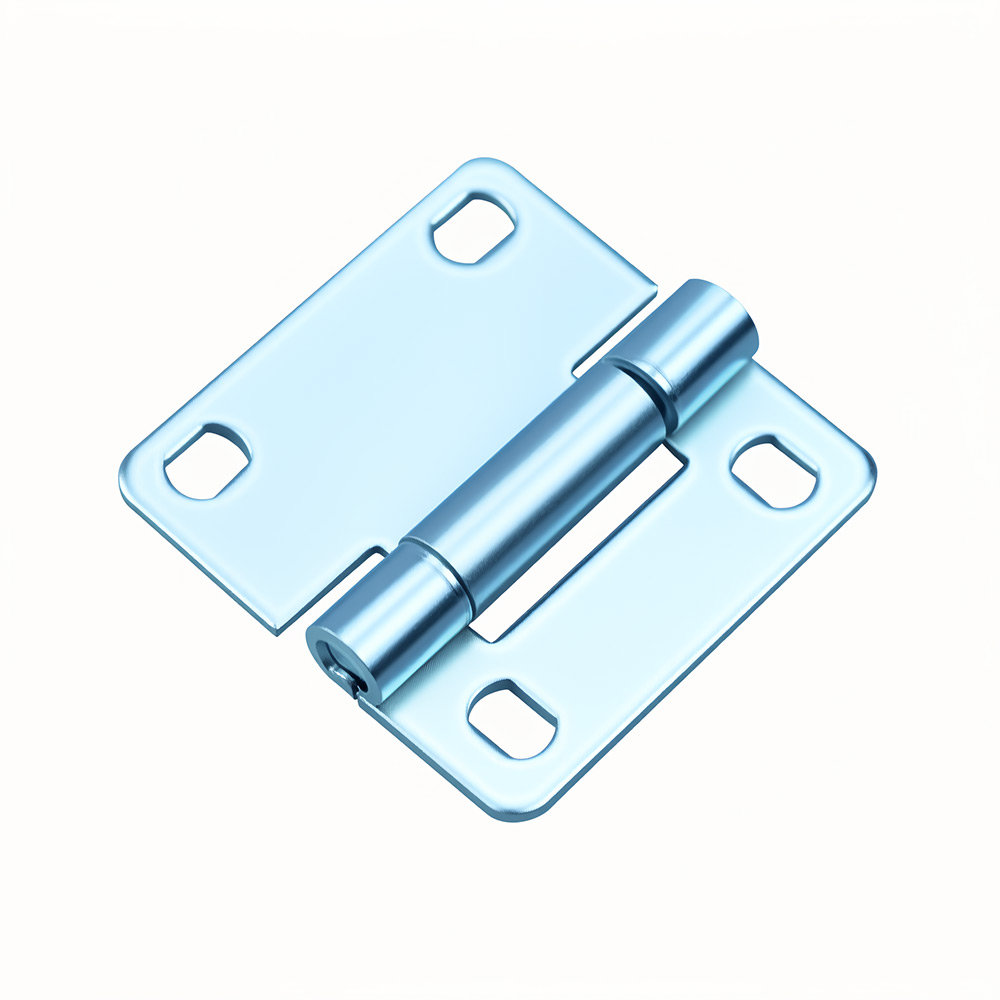
Engineering reliability and noise reduction with Quiet Garage Door Hinges
Modern sectional garage doors demand both low operational noise and robust mechanical reliability. Quiet Garage Door Hinges are engineered to address articulation noise and durability, providing a technical solution for professionals optimizing sectional door systems.
By focusing on the articulation points and material innovations, Quiet Garage Door Hinges help reduce wear and maintain consistent performance in residential and commercial applications.
Reliability of Quiet Garage Door Hinges in Sectional Door Systems
In the context of modern residential and commercial sectional garage doors, the demand for reduced operational noise and enhanced mechanical reliability has become a critical engineering concern. Quiet garage door hinges, specifically designed to address noise generated during sectional articulation, are central to achieving these objectives. For door system designers, the primary challenge lies in mitigating noise and wear at hinge points where repeated movement and load transfer occur. This analysis systematically examines the structural and material characteristics of quiet garage door hinges, their reliability under cyclic articulation, and the methods for evaluating their performance in real-world applications. The discussion maintains a technical focus on noise reduction and mechanical durability, reflecting the core concerns of professionals tasked with optimizing sectional door systems.
The articulation of sectional garage doors involves multiple hinged connections, each subjected to dynamic loading and frequent motion cycles. Conventional hinge designs often become sources of noise due to metal-on-metal contact, insufficient lubrication retention, or geometric misalignment under load. Quiet garage door hinges are engineered to minimize these issues through material selection, surface treatments, and design modifications that target both acoustic and mechanical performance. The articulation process, characterized by the sequential rotation of door panels, places significant demands on hinge components, making their reliability a foundational aspect of system design.
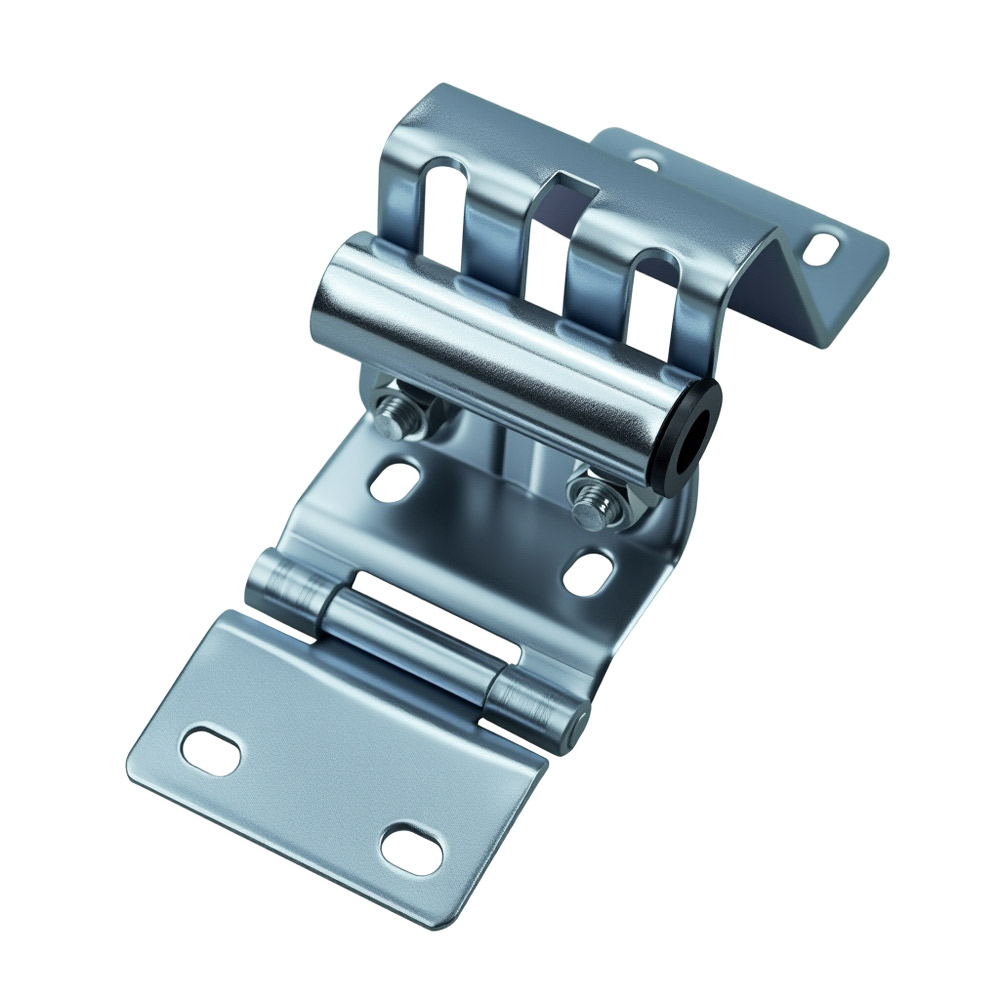
Structurally, quiet garage door hinges differ from standard hinges in several key aspects. The integration of polymer or composite bushings between the knuckle and pin is a primary strategy for noise attenuation. These bushings act as isolators, absorbing vibrational energy and reducing the transmission of high-frequency noise generated during panel movement. Material selection for bushings typically favors engineering polymers such as acetal (POM) or nylon, which exhibit low friction coefficients and high wear resistance. The hinge leaf and knuckle are often manufactured from galvanized or stainless steel to ensure long-term corrosion resistance, especially in environments subject to moisture or temperature fluctuations.
The geometry of the hinge also plays a significant role in noise control. Precision manufacturing tolerances are required to ensure consistent clearance between moving parts, preventing rattle or impact events during operation. Some quiet hinge designs incorporate contoured knuckles or offset pins to distribute loads more evenly, reducing localized stress concentrations that can contribute to premature wear and increased noise output. Surface treatments, such as PTFE-based coatings or micro-polished finishes, further decrease friction and facilitate smoother articulation.
Evaluation and Mechanical Testing of Quiet Garage Door Hinges
Reliability in the context of quiet garage door hinges is defined by their ability to maintain low noise levels and structural integrity over extended service life. The core pain point for designers—noise and wear during articulation—arises from repetitive motion, variable loading, and environmental exposure. Fatigue resistance of both the hinge body and the bushing material is critical. Engineering analysis typically involves accelerated life testing, where hinges are subjected to tens of thousands of open-close cycles under controlled loads. Key failure modes include bushing deformation, pin wear, and loss of lubrication, each contributing to increased noise and potential mechanical failure.
To address these reliability concerns, hinge designs often incorporate self-lubricating bushings, which reduce the need for maintenance and provide consistent low-friction performance. The interface between the hinge pin and bushing is engineered to maintain a thin, stable lubricating film, even under high-cycle conditions. In addition, hinge pins may be case-hardened or manufactured from wear-resistant alloys to further extend service life. Environmental sealing, such as the use of end caps or integrated dust shields, helps prevent the ingress of contaminants that could accelerate wear or compromise noise control.
Evaluation of quiet garage door hinges from an engineering perspective involves both laboratory and field-based methodologies. Acoustic performance is quantified using sound level meters positioned near articulation points during controlled door operation. Typical metrics include peak and average sound pressure levels (dB SPL) recorded over multiple cycles. Comparative testing between standard and quiet hinge configurations provides objective data on noise reduction efficacy. Mechanical reliability is assessed through cyclic fatigue testing, measuring hinge wear, bushing deformation, and pin integrity at defined intervals.
Finite element analysis (FEA) is frequently employed during the design phase to simulate stress distributions and predict wear patterns under operational loads. This modeling allows designers to optimize hinge geometry and material selection before prototyping. In field applications, long-term monitoring of installed hinges provides data on real-world performance, including the progression of noise levels and the onset of mechanical degradation. Feedback from these evaluations informs iterative design improvements, targeting both the reduction of articulation noise and the extension of hinge service life.
In practice, the articulation of sectional doors using quiet hinges must account for installation variables such as mounting alignment, fastener torque, and door panel mass. Misalignment or improper installation can negate the benefits of advanced hinge designs, leading to increased noise or accelerated wear. Therefore, engineering guidelines for hinge selection and installation are essential. These guidelines specify acceptable tolerances for hinge placement, recommended torque values for fasteners, and compatibility with various door panel materials and thicknesses.
Material compatibility between the hinge components and the door panels is another factor influencing long-term reliability. For example, the use of dissimilar metals can result in galvanic corrosion, especially in humid environments. Polymer bushings must be chemically stable in contact with lubricants and resistant to environmental aging. Regular inspection protocols are recommended to identify early signs of wear, such as increased articulation noise or visible deformation of bushing material. When wear or noise exceeds defined thresholds, hinge replacement or maintenance should be undertaken to preserve sectional door performance.
From the perspective of the door system designer, the selection of quiet garage door hinges is a balance between noise control, mechanical durability, and ease of maintenance. The core pain point—noise and wear during articulation—remains the primary driver for continuous improvement in hinge technology. Advances in material science, such as the development of high-performance polymers and surface treatments, have enabled significant reductions in operational noise without compromising mechanical reliability. However, the effectiveness of these solutions is contingent upon precise manufacturing, correct installation, and adherence to maintenance protocols.
For technical verification, it is recommended that designers reference standardized test procedures for both acoustic and mechanical evaluation. These may include ASTM or ISO standards relevant to door hardware and hinge performance. Verification of hinge parameters, such as bushing material grade, pin hardness, and coating thickness, should be conducted as part of the engineering review process. Where possible, prototype hinges should be subjected to in-house or third-party testing to validate noise reduction claims and mechanical endurance under simulated operational conditions.
Integrating Quiet Garage Door Hinges for Lasting Performance
In summary, the integration of quiet garage door hinges into sectional door systems represents a targeted engineering response to the persistent issues of articulation noise and mechanical wear. Through careful material selection, precision manufacturing, and rigorous evaluation, it is possible to achieve both reduced operational noise and extended hinge service life. Door system designers are encouraged to verify hinge parameters and installation practices to ensure that noise control objectives are met without compromising mechanical reliability.
For further technical resources and best practices on hinge selection, installation, and maintenance, refer to Baoteng’s Quiet Garage Door Hinges and explore additional engineering documentation in the Техническая документация и Коррозионная стойкость петель sections.
 English
  Русский
  日本語
日本語  한국어
한국어  Français
  Deutsch
  العربية
  Português
  Español