

Stress dispersion and reliability in Edge Hinge and Side Hinges for sectional articulation
For designers of sectional door systems, the reliability of Edge Hinge and Side Hinges is fundamental to achieving smooth articulation and long-term durability. Analyzing the stress distribution and fatigue resistance of these hinges is essential for optimizing performance and preventing premature failure in demanding applications.
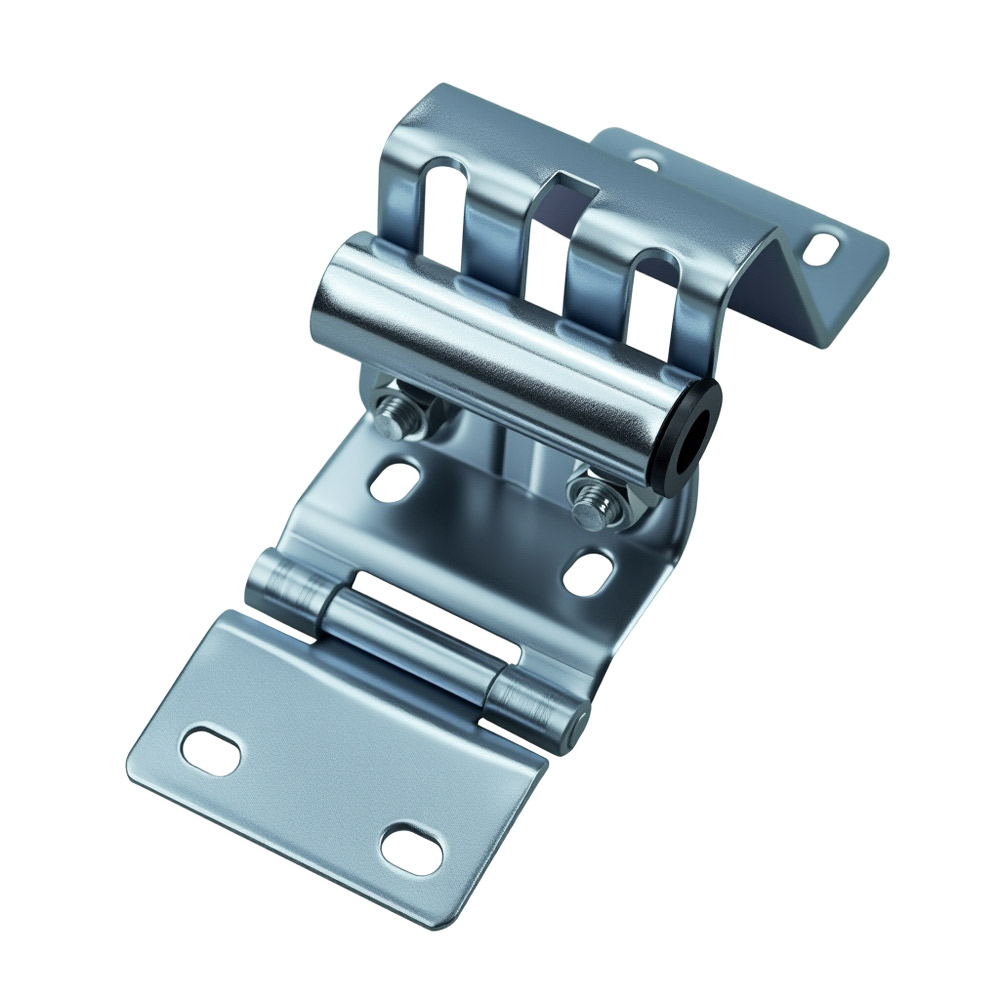
In the engineering of sectional door systems, the articulation mechanism—particularly the function and reliability of Edge Hinge and Side Hinges—plays a decisive role in determining both operational smoothness and long-term durability. For door system designers focusing on sectional-movement articulation, understanding how these hinges distribute mechanical stresses and resist fatigue is essential. The challenge of stress concentration, especially at articulation points, often leads to localized fatigue failure, which can compromise the integrity and service life of the entire assembly. This structured analysis provides a technical evaluation of Edge Hinge and Side Hinges, examining their roles in stress dispersion, their reliability under cyclic loading, and the engineering principles that inform their selection and assessment.
The articulation of sectional doors relies on a series of interconnected panels, each joined by hinges that must accommodate both rotational and translational movement. Edge Hinges are typically positioned at the lateral extremes of each panel, while Side Hinges are distributed along the vertical edges, providing additional points of articulation and load transfer. The configuration and mechanical properties of these hinges directly influence the stress distribution across panel joints, affecting both immediate performance and long-term durability.
In a typical sectional door, Edge Hinges serve as the primary pivot points during the opening and closing cycles. Their location subjects them to higher bending moments, particularly during the initial articulation phase when the door transitions from a planar to a curved trajectory along the track. Side Hinges, by contrast, function to distribute secondary loads and maintain panel alignment, reducing the risk of torsional deformation. The interplay between these hinge types determines the overall stress landscape at each joint.
Material selection for both Edge Hinge and Side Hinges is a critical factor in addressing stress concentration and fatigue. Common materials include cold-rolled steel, stainless steel, and, in some cases, reinforced polymers for lighter-duty applications. The mechanical properties of these materials—yield strength, fatigue limit, and resistance to environmental degradation—must be matched to the expected load cycles and service conditions. For high-cycle installations, such as commercial or industrial doors, the use of heat-treated steel with anti-corrosive coatings is standard practice to mitigate both mechanical and environmental fatigue.
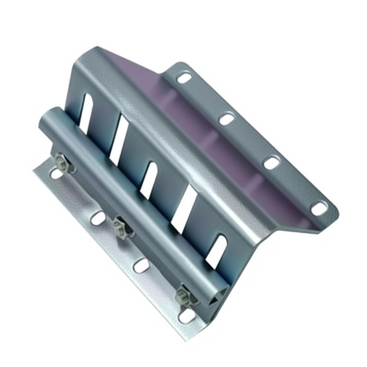
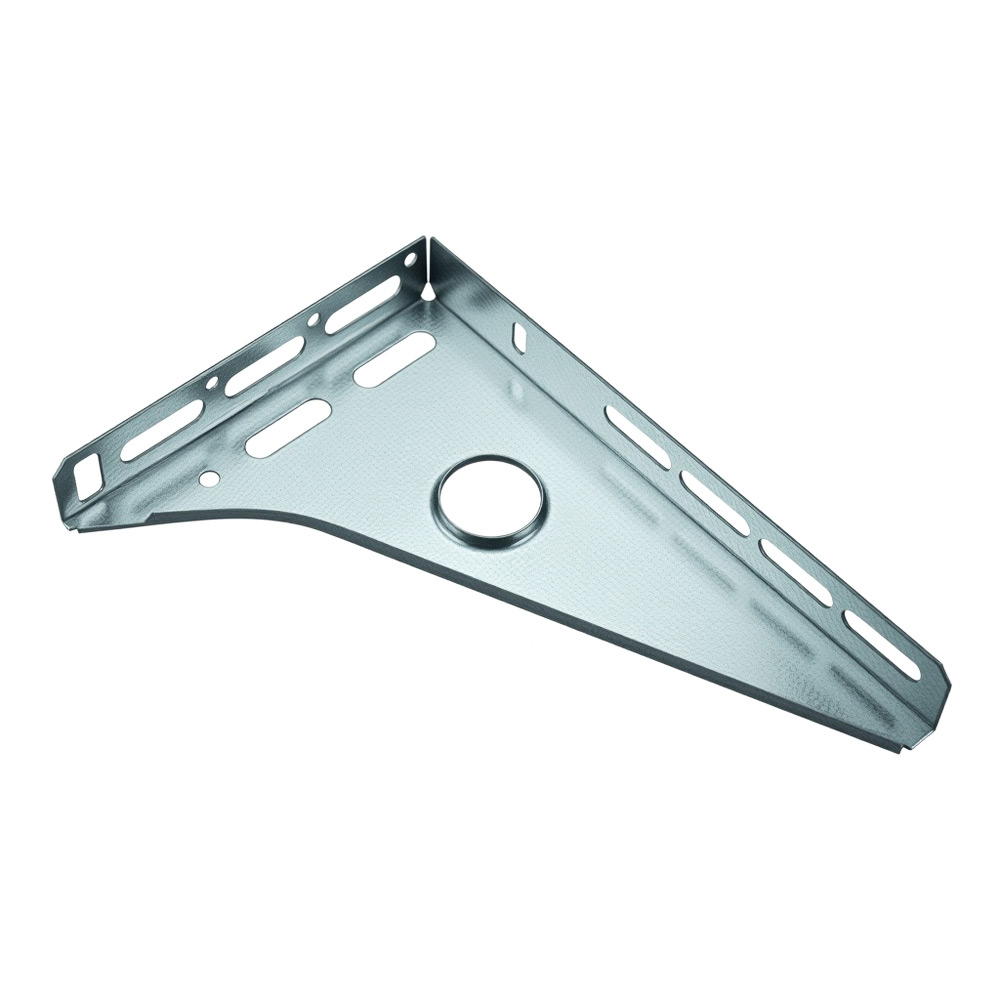
The geometry of the hinge itself also influences stress distribution. Edge Hinges with increased leaf width and optimized knuckle diameter can reduce peak stresses by spreading the load over a larger area. Similarly, Side Hinges with elongated mounting flanges and multi-point fastener patterns help to minimize localized stress risers, which are common initiation points for fatigue cracks. Finite element analysis (FEA) is often employed during the design phase to simulate articulation cycles and identify areas of elevated stress concentration.
Reliability of Edge Hinge and Side Hinges is fundamentally a function of their ability to maintain structural integrity under repeated cyclic loading. The articulation of a sectional door imposes complex, multi-axial stresses on each hinge, including bending, shear, and in some cases, torsional loads. Over time, these stresses can lead to microstructural fatigue, particularly at the hinge knuckle and fastener interfaces. Door system designers must therefore evaluate not only the static load capacity of each hinge but also its fatigue life under realistic duty cycles.
Laboratory testing protocols for hinge reliability typically involve accelerated life cycling, where hinges are subjected to repeated opening and closing motions under controlled loads. The resulting data provides insight into the number of cycles to failure, the modes of failure (such as knuckle fracture, pin wear, or mounting flange deformation), and the influence of environmental factors such as humidity and temperature. For Edge Hinges, failure is often observed at the hinge barrel due to bending fatigue, while Side Hinges may exhibit cracking at the mounting flange or fastener holes due to repeated shear loads.
To address the core pain point of stress concentration and fatigue failure, hinge design must incorporate features that promote even stress distribution and minimize sharp geometric transitions. Filleted edges, increased radii at the knuckle, and the use of hardened hinge pins are all effective strategies. Additionally, the placement and orientation of fasteners should be optimized to avoid prying action and to ensure that loads are transferred efficiently into the supporting panel structure.
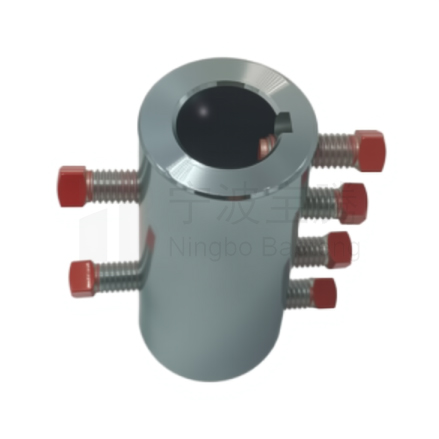
A comparative assessment of Edge Hinge and Side Hinges reveals that while both are subject to similar cyclic loads, their failure modes and stress profiles differ due to their respective functions and locations. Edge Hinges, being the primary articulation points, are more susceptible to bending and rotational fatigue, especially if the door panels are misaligned or if the track radius is insufficient. Side Hinges, by distributing loads across the vertical axis, are more prone to shear-induced fatigue, particularly if mounting surfaces are uneven or if fasteners are inadequately torqued.
Material fatigue is further influenced by environmental exposure. In coastal or high-humidity environments, corrosion can accelerate hinge degradation, reducing both static strength and fatigue life. The application of zinc plating, powder coating, or stainless alloys is recommended for installations where environmental factors are a concern. For doors subjected to high-frequency cycling, such as those in logistics facilities, the use of self-lubricating bushings or sealed bearing hinges can significantly extend service intervals and reduce the risk of sudden hinge failure.
From a mechanical stress distribution perspective, the optimal configuration of Edge Hinge and Side Hinges is one that achieves uniform load transfer across all articulation points while minimizing peak stresses at any single location. This often involves balancing the number and spacing of Side Hinges relative to the panel width and anticipated loading. Over-concentration of hinges can lead to excessive local stiffness, which may actually increase stress at adjacent fasteners, while under-specification can result in excessive deflection and premature hinge failure.
Door system designers must employ analytical tools—such as FEA and fatigue analysis—to predict hinge performance under expected service conditions. These tools allow for the identification of potential failure points before physical prototypes are produced, enabling iterative optimization of hinge geometry, material selection, and mounting strategy. The use of engineering-grade safety factors, typically in the range of 1.5 to 2.5 depending on application criticality, is essential to account for uncertainties in loading and material properties.
Ensuring long-term articulation performance with Edge Hinge and Side Hinges
In summary, the reliable performance of Edge Hinge and Side Hinges in sectional door systems is governed by their ability to disperse articulation stresses, resist fatigue, and maintain alignment under cyclic loading. Addressing the core pain point of stress concentration requires a holistic approach, combining material science, mechanical design, and rigorous testing. For door system designers, the technical evaluation of hinge reliability must be grounded in quantitative analysis and validated by both laboratory and field data.
To ensure that Edge Hinge and Side Hinges meet the demands of sectional articulation, it is imperative to verify all hinge parameters against established engineering-grade safety standards. This includes reviewing material certifications, fatigue test results, and installation guidelines. Only through comprehensive engineering assessment can the risks of stress concentration and fatigue failure be effectively mitigated, ensuring long-term articulation performance and system reliability. For further technical documentation and installation best practices, refer to the Baoteng Technical Documentation и Step-by-Step Installation Guide.
 English
  Русский
  日本語
日本語  한국어
한국어  Français
  Deutsch
  العربية
  Português
  Español