
Garage Door Lock Kit Detailed Explanation
Referenzstandard: Relevant material and performance testing standards. For corrosion discussions, ISO 9227 neutral salt spray testing oder ASTM B117 salt spray practice should be treated only as reference methods when a supplier has declared a specific corrosion claim, test duration, sample condition, and acceptance rule.
Kurze Antwort
From Loose Parts To One Locking Kit: Component Grouping Decides Installation Readiness
A garage door lock kit becomes reliable only when every part in the locking path arrives together and matches the intended door layout. The verified BT-L712 Handle Lock Kit is not described as a single lock shell. It is listed as a grouped kit containing the lock mechanism, Autolatch, Striker, Swivel Latch, Wirerope, and an 85mm long square shaft. That detail changes the way the product should be explained on a B2B product page. The key issue is not whether the lock looks solid in a photo. The more useful issue is whether the kit contains the mechanical parts needed to transmit a user action into a controlled locking or unlocking result.
This grouping matters because a garage door is a moving panel system. Even a basic manual lock depends on several small contact points: the outside handle or lock body must move the shaft; the shaft or wire connection must transfer movement; the latch must rotate or slide through its allowed travel; the striker must receive the locking element in the correct position. If one part is missing, installed in the wrong orientation, or mismatched against the door structure, the lock mechanism may be present but the door may still fail to close securely.
The first procurement lesson is kit completeness before lock performance. BT-L712 gives a real component list, and that list should be repeated accurately. It does not give the lock body thickness, cylinder grade, anti-theft certification, salt-spray hours, pull-force rating, or cycle-life record. A buyer-safe article should make that absence visible instead of filling the gap with common marketing phrases. That is especially important for replacement orders, where a buyer may assume that one garage door handle lock kit includes all linkage parts, while another supplier may sell the lock body separately.

A practical edge-case model can show the difference. Imagine two identical lock bodies installed on similar garage doors. In the first case, the kit includes the Autolatch, Striker, Swivel Latch, Wirerope, and 85mm square shaft as a coherent set. In the second case, the lock body is present, but the installer must source a striker or wire connection from another batch. Both orders may look complete in a carton photo, but only the first order has a predictable mechanical chain. Under repeated opening, closing, vibration, and seasonal temperature movement, the second installation has a higher chance of alignment correction, extra labor, or delayed commissioning.
A cross-dimensional comparison also helps. In an electrical product, a switch without the correct terminal connection is not a complete operating system. In a garage door lock assembly, a lock body without the correct striker and linkage parts faces the same logic. The product may be physically present, but the function is incomplete. For B2B buyers comparing Auswahlmöglichkeiten für Garagentorbeschläge, the safer specification question is therefore: does the order include the complete locking path stated in the catalog, or only the visible lock body?
The Hidden Fit Chain Between Square Shaft, Wire Rope, Striker, And Swivel Latch
The second layer is fit-chain continuity. This is different from a simple installation checklist. It focuses on the relationship between the 85mm long square shaft, the Wirerope, the Striker, and the Swivel Latch as one mechanical sequence. A lock kit may contain every listed part and still behave poorly if the relative travel between parts is not controlled. This can happen when the door skin, internal reinforcement, latch position, or striker position slightly shifts the intended geometry.
At a mechanical level, the square shaft works as a rotational transfer element. When the handle or lock mechanism turns, the shaft needs enough engagement to transmit motion without excessive free play. The wire rope, if used as part of the release or linkage route, adds another variable: it can introduce bend radius effects, slack, routing friction, and delayed response. The striker and swivel latch then convert that transmitted movement into a final holding or releasing action. The catalog confirms the presence of these parts in BT-L712, but it does not publish hole diameters, torque values, cable tension, pull-force readings, or rotation-cycle results. For that reason, the article should explain the principle without pretending to have measured data.
A useful stress timeline can be built from real operating conditions. In the initial stage, a newly installed kit may feel acceptable because surfaces are clean, the door panel is aligned, and the linkage has not accumulated dust. In the middle stage, repeated door vibration and small panel movement may expose small fit differences. A square shaft with marginal engagement may still turn, but the user may notice a delayed latch response. A wire route with extra friction may still release, but the action may feel less direct. In the extreme stage, the combined effect of vibration, dust, humidity, and minor misalignment can make the latch require a more precise motion than the user expects.
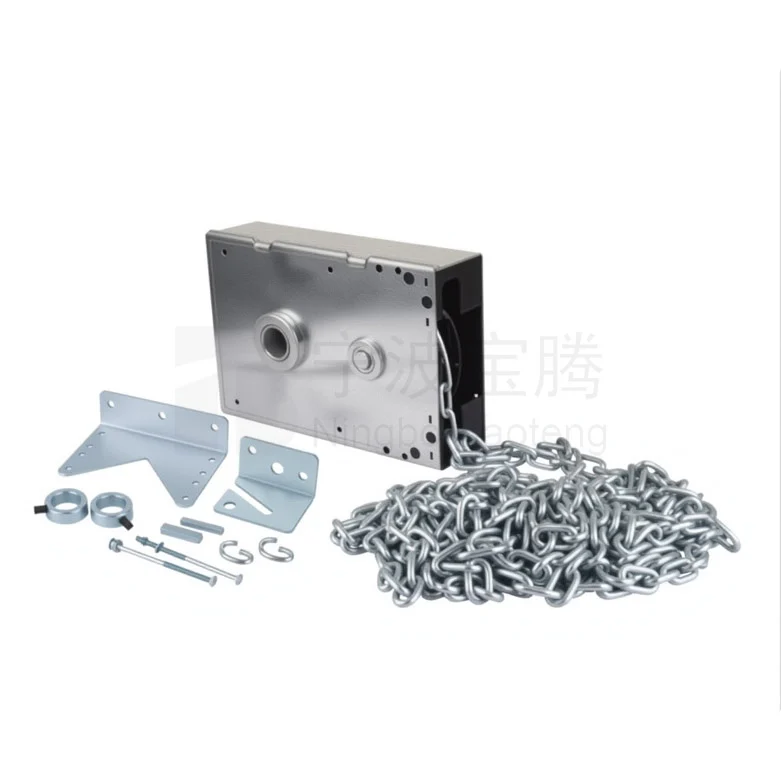
A cross-system test comparison makes the problem easier to understand. Test A checks only whether the lock can turn when held in the hand. Test B installs the lock mechanism, 85mm square shaft, wire connection, striker, and swivel latch into a door-like setup and then checks the action under repeated open-close movement. Test A proves that a component can move. Test B is closer to a garage door lock kit reality because it verifies the relationship between parts. Without fixture-level confirmation, a buyer may approve a sample that looks acceptable on a bench but creates field labor when installed on a moving door system.
The hidden secondary effect is installation uncertainty. When the fit chain is not defined, workers may compensate by adjusting striker position, adding washers, bending a linkage slightly, or forcing alignment during installation. These fixes can make one door work, but they reduce batch repeatability. For wholesale or project supply, that difference matters. A lock kit should not rely on installer improvisation to achieve basic function.
WICHTIGSTE ERKENNTNISSE
- Early warning sign 1: the handle turns, but latch response feels delayed or incomplete.
- Early warning sign 2: the striker receives the latch only when the door is pushed or pulled into a narrow position.
- Early warning sign 3: the wire route moves, but the final lock or release action does not occur at the same point each time.
Zinc Alloy And Copper In A Door Lock Kit: What Buyers Can And Cannot Claim
The BT-L712 catalog material statement is specific but limited: Material: zinc alloy, copper. That statement is useful, but it should not be stretched into unrelated claims. Zinc alloy is commonly used in hardware because it can form complex shapes through casting or forming routes, and copper can be used where electrical, wear, contact, or corrosion-related behavior is needed depending on the part design. In this product record, the catalog does not state which individual part uses which material, nor does it state coating type, hardness, zinc alloy grade, copper grade, or corrosion-test result.
That boundary is important because material names are not the same as performance certifications. A zinc alloy and copper garage door lock hardware description does not automatically prove stainless-steel-level corrosion resistance, coastal salt-air suitability, forced-entry rating, or long cycle life. A neighboring product, BT-L713 Door Lock in the Door, is listed with Copper, Stainless steel and includes a lock mechanism, lock box, face-plate, and screws. That information can be mentioned only as adjacent catalog context. It should not be merged into BT-L712 as if BT-L712 itself used stainless steel throughout. Mixing adjacent product data is one of the fastest ways to create an inaccurate product page.
From a material-science view, zinc alloy and copper components can be affected by surface damage, moisture, and contaminant retention. If a surface is scratched during transport or installation, the exposed area can become more reactive to oxygen and humidity. In a garage environment, dust, hand oils, moisture, and temperature swings can combine to create surface discoloration or localized oxidation. That does not mean the product is unsuitable. It means the buyer should separate confirmed material identity von unconfirmed environmental rating.
A practical extreme-condition model can be framed without inventing a test result. In a dry indoor garage, zinc alloy and copper hardware may mainly face handling marks, dust, and ordinary wear. In a humid storage area, cartons that trap moisture can increase the risk of surface spotting before installation. In a coastal or chemical-adjacent environment, corrosion risk cannot be responsibly evaluated from the catalog material name alone. A supplier would need a defined test method, sample preparation, exposure duration, and acceptance criteria before any salt-spray or high-corrosion claim could be made.
| Claim Type | Confirmed For BT-L712 | Not Confirmed In Catalog | Buyer-Safe Action |
|---|---|---|---|
| Component grouping | Ja | Complete installation dimensions | Check parts against the kit list |
| Square shaft length | 85mm | Shaft tolerance or hardness | Measure sample before batch approval |
| Material identity | Zinc alloy, copper | Exact grades or coating type | Request material clarification if needed |
| Corrosion behavior | Not stated | Salt-spray hours | Do not publish corrosion claims without tests |
| Lock performance | Not stated | Security grade or cycle life | Use functional sample inspection |
This material boundary also protects the page from cannibalizing earlier lock articles. The angle here is not surface shine, chrome-plating appearance, or keyway feel. It is a disciplined separation between what the catalog proves and what a buyer may want to prove before a project order.
A Buyer-Safe Verification Method Before Repeating The Same Lock Kit Order
Repeat orders are where small lock kit assumptions become expensive. The first order may be approved because the visible lock body looks correct. The second or third order may run into mismatch if the buyer does not preserve the same component grouping, shaft length, and linkage relationship. For BT-L712, the repeat-order baseline should be built around the verified kit list: lock mechanism, Autolatch, Striker, Swivel Latch, Wirerope, and 85mm long square shaft. Any future order should be checked against that same baseline before release.
Solution 1: kit-count confirmation. The execution protocol is simple but should be formalized. Before packing approval, the factory or buyer should compare each carton or inner package against the BT-L712 component list, with special attention to small linkage parts that may be separated during packing. After this step, the expected change is not a change in material chemistry but a measurable reduction in missing-part risk. The hidden cost is time, because counting small parts slows packing. That cost can be reduced through compartment packaging, part photos, and a single reference sample for inspectors.
Solution 2: square-shaft length confirmation. The execution protocol should include a direct check of the 85mm long square shaft against the approved sample. The expected physical outcome is better repeatability in rotational engagement because the shaft length remains aligned with the door and lock mechanism design assumptions. The hidden cost is false confidence if only one shaft is checked. The safer method is to sample multiple pieces from a batch and record only factual pass-or-fail results, without inventing tolerances that are not in the catalog.
Solution 3: linkage movement confirmation. The execution protocol should connect the lock mechanism, wire route, striker, and swivel latch into a simple fixture or door-like mockup. The inspector should confirm that movement is continuous and does not depend on forcing the latch into position. The expected mechanical change is lower installation uncertainty because the kit is evaluated as a system rather than as loose parts. The side effect is that fixture checks may not represent every door design, so the result should be described as sample-level functional confirmation, not universal compatibility.
Solution 4: surface and packing protection. The execution protocol should inspect zinc alloy and copper visible areas for burrs, scratches, oxidation marks, and impact damage before final packing. Separating hard metal pieces can reduce rubbing during transport. The expected material behavior is lower risk of early surface blemishes caused by carton vibration, especially where metal edges contact other parts. The hidden cost is extra packing material and larger carton volume. This can be controlled by protecting contact-prone points instead of overpacking the full kit.
| Verification Variable | Practical Check | Expected Result | Limitation |
|---|---|---|---|
| Kit completeness | Match parts to BT-L712 list | Fewer missing linkage parts | Does not prove door compatibility |
| Shaft length | Confirm 85mm square shaft against sample | More consistent engagement | No catalog tolerance provided |
| Linkage action | Trial movement with striker and swivel latch | Better fit-chain confidence | Fixture may differ from real door |
| Surface condition | Check burrs, scratches, oxidation | Lower early blemish risk | No salt-spray result provided |
| Packaging separation | Prevent metal-to-metal rubbing | Reduced transit scuffing | Adds packing labor and volume |
PROFI-TIPP / CHECKLISTE
- Confirm the order name is BT-L712 Handle Lock Kit, not only a generic handle lock.
- Check that the lock mechanism, Autolatch, Striker, Swivel Latch, Wirerope, and square shaft are all included.
- Measure the square shaft against the stated 85mm long reference before approving repeat orders.
- Test the linkage as a connected assembly, not as separate loose parts.
- Inspect zinc alloy and copper surfaces for burrs, scratches, discoloration, and transit rubbing.
- Do not publish corrosion, security, or cycle-life claims unless separate test data is supplied.
- Keep BT-L713 material data separate from BT-L712 unless the supplier confirms a shared specification.
- Use separated packing or reference photos to prevent small-part loss during shipment.
Häufig gestellte Fragen (FAQ)
How to open a garage door when power goes out?
If the door uses an opener, follow the opener manufacturer’s manual release procedure. A manual garage door lock kit is a separate mechanical locking assembly, so confirm whether the door is locked by the lock hardware before lifting. Never force the door if the latch or striker is still engaged.
How long do garage door openers last?
A garage door opener lifespan depends on motor design, usage frequency, installation quality, and maintenance. It should not be estimated from a manual lock kit specification. For a lock kit, the relevant checks are component completeness, shaft engagement, latch action, surface condition, and fit with the door hardware.
How to align sensors on a garage door?
Sensor alignment applies to automatic opener safety systems, not to the BT-L712 manual lock kit itself. For a garage door lock kit, the comparable alignment concern is mechanical: the striker, swivel latch, wire route, and square shaft must work together without forcing the door into position.
How do I program a garage door remote?
Remote programming is controlled by the opener brand and model, not by a manual garage door lock kit. Keep opener electronics and lock hardware specifications separate. If a door has both systems, confirm that the manual lock is not engaged before testing opener movement.
How to connect a Chamberlain garage door opener?
A Chamberlain opener should be connected according to the manufacturer’s installation manual and local electrical requirements. A mechanical lock kit should not be treated as opener wiring hardware. Before opener testing, check that the manual latch and striker are released to avoid movement resistance.
How do I program a clicker garage door remote?
A clicker remote is usually paired through the opener’s learn button or a model-specific programming sequence. That process is unrelated to the BT-L712 lock kit. For lock hardware, focus on the physical assembly list, including the lock mechanism, Autolatch, Striker, Swivel Latch, Wirerope, and 85mm square shaft.
 English
  Русский
  日本語
日本語  한국어
한국어  Français
  Deutsch
  العربية
  Português
  Español