
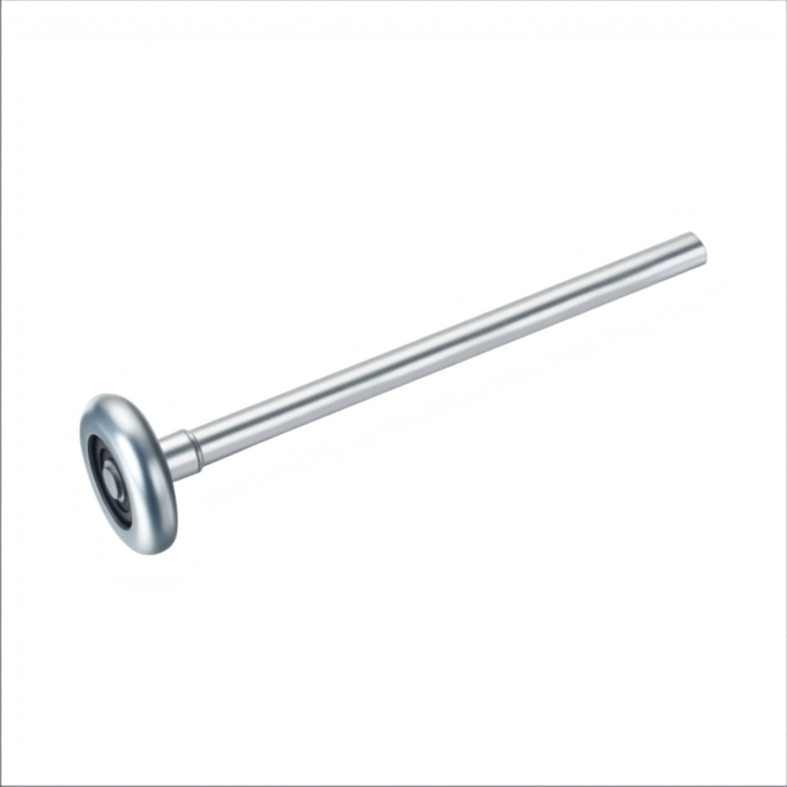
Mechanical Performance and Durability Analysis of Nylon Rollers in Garage Door Systems
Introduction
The reliability of garage door operations is closely tied to the mechanical integrity and endurance of their rolling elements. Nylon rollers are commonly selected for their favorable frictional characteristics and noise attenuation, which enhance user experience. However, in dust-intensive workshop environments, these components are subjected to accelerated wear processes that can undermine system performance. Understanding the mechanical response of nylon rollers under cyclic loading, the dominant failure mechanisms—especially bearing wear and the resulting increase in rolling resistance—and the influence of environmental contaminants is critical for engineers tasked with ensuring sustained functionality. This discussion integrates mechanical principles, failure analyses, and validation approaches aligned with endurance test standards, providing a comprehensive perspective on material selection, design considerations, and maintenance practices suited to challenging operational contexts.
Mechanical Principles & Load Behavior
Nylon rollers operate primarily through rolling contact with steel guide tracks, encountering repetitive radial loads that fluctuate with door movement. Typical load magnitudes per roller range from approximately 50 to 150 newtons, influenced by the door’s mass, geometry, and usage frequency. These loads generate stress fields within the roller body, the internal bearing assembly, and the shaft interface. The polymer’s low coefficient of friction against steel—generally between 0.2 and 0.3—reduces the torque required to mobilize the door compared to metallic rollers, contributing to energy efficiency and quieter operation.
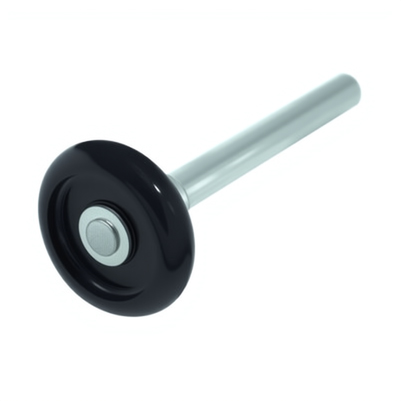
The viscoelastic nature of nylon provides inherent vibration damping, which minimizes noise and mechanical shock during cycling. However, these properties are temperature and humidity dependent. Elevated temperatures can soften the polymer matrix, diminishing hardness and dimensional stability, while moisture uptake leads to swelling and potential dimensional changes. To mitigate these effects, reinforced nylon variants, such as glass fiber-filled Nylon 6/6, are often employed. These composites exhibit enhanced tensile strength, hardness, and wear resistance, extending service life under demanding conditions.
Integral sealed ball bearings within the rollers reduce friction and shield internal components from dust and debris. Bearing design elements—such as raceway geometry, seal type, and lubricant choice—directly affect load transfer efficiency and durability. Precise alignment between roller and track is essential to distribute loads evenly, preventing localized stress concentrations that accelerate wear on both the polymer surface and bearing elements.
At the roller-track interface, micro-slip and polymer hysteresis contribute to rolling resistance. Balancing roller hardness with elasticity is critical: excessive hardness can increase brittleness and susceptibility to cracking, while excessive softness elevates rolling resistance and deformation under load. Shaft diameter and material choice also influence structural integrity and load transmission. Corrosion-resistant alloys or treated steels are preferred for shafts to withstand environmental degradation and maintain dimensional stability.
Failure Modes
Primary Failure
The predominant failure mode in nylon rollers is bearing wear, which manifests as increased rolling resistance and operational noise. Bearing degradation arises from abrasive particle ingress, lubricant degradation, and cyclic fatigue from repetitive door actuation. In dust-intensive workshop environments, fine particulates penetrate bearing seals, abrading raceways and rolling elements. This contamination accelerates wear, reducing bearing clearance and increasing friction. As bearing performance deteriorates, rotational freedom diminishes, causing uneven load transmission to the nylon body and track interface. This uneven loading exacerbates wear on the roller surface, promotes track scoring, and can lead to door misalignment or binding. High-cycle applications, where door operations exceed 10,000 cycles per year, intensify bearing fatigue and shorten service intervals.
Secondary Failure
Secondary failures involve mechanical damage to the nylon roller body itself, including deformation, cracking, and surface degradation. Impact loads from door slamming or misaligned tracks create localized stress concentrations that may exceed the polymer’s yield strength. These stresses initiate micro-cracks that propagate under cyclic loading, eventually compromising roller structural integrity. Additionally, environmental stress cracking can occur due to exposure to chemicals such as oils, solvents, or cleaning agents prevalent in workshop settings. These substances interact chemically with the polymer matrix, reducing toughness and increasing brittleness, thereby elevating the risk of sudden roller failure. Thermal cycling further contributes to fatigue by inducing differential expansion between the nylon roller and metal components, promoting crack initiation.
Environmental Effects
Dust-laden workshop atmospheres present significant challenges to roller longevity. Fine particulate matter infiltrates bearing seals, contaminates lubricants, and abrades both bearing components and the polymer surface in contact with the track. This abrasive wear accelerates degradation and increases rolling resistance by impeding free rotation. Dust accumulation also contributes to uneven loading and alignment difficulties. Thermal cycling in such environments induces differential expansion between nylon rollers and metal shafts, intensifying stress concentrations and promoting premature fatigue.
Humidity and chemical exposure exacerbate durability concerns. Corrosion of metal shafts and bearing components undermines structural integrity and bearing performance. The combination of mechanical wear and environmental stresses necessitates rigorous maintenance protocols, including frequent inspection, cleaning, and lubrication. Material choices optimized for contamination resistance—such as sealed bearings with advanced seal designs and chemically resistant polymer formulations—are essential to mitigate these effects.
Testing Standards & Validation
Validating the durability and mechanical performance of nylon rollers requires adherence to recognized testing standards that simulate operational stresses and environmental conditions. The ANSI/DASMA 102 standard specifies performance criteria and endurance testing protocols for garage door components. Endurance tests involve subjecting rollers to over 20,000 load cycles, replicating real-world door operation frequencies to evaluate bearing wear progression, roller deformation, and rolling resistance changes.
ASTM D1894 provides standardized methods for measuring the coefficient of friction of polymeric materials, enabling quantitative assessment of rolling resistance under controlled laboratory conditions. This data informs material selection and design optimization to minimize energy losses during door movement.
UL 325 addresses safety requirements for door operators and associated hardware, emphasizing the importance of reliable roller function to prevent door misalignment and potential hazards. Compliance with UL standards ensures that rollers maintain structural and functional integrity under specified mechanical and environmental stresses.
For dust-intensive workshop environments, validation protocols include contamination exposure tests, where rollers are subjected to particulate infiltration to assess seal effectiveness and lubricant retention. These tests reveal vulnerabilities in bearing design and guide improvements in sealing technologies and polymer treatments to enhance resistance to abrasive contaminants. The combination of endurance cycling and environmental exposure testing provides a comprehensive evaluation of roller reliability under realistic service conditions.
Application & Integration
Successful integration of nylon rollers into garage door assemblies requires a holistic engineering approach that considers load conditions, alignment precision, and environmental exposure. Selecting rollers equipped with high-quality sealed ball bearings is critical to minimize contamination ingress and maintain low friction throughout the service life.
Shaft dimensions must be engineered to withstand expected radial loads without excessive deflection, preserving bearing alignment and load distribution. Material compatibility between shaft and roller is essential to reduce galvanic corrosion risks; corrosion-resistant alloys or surface treatments on shafts complement the wear resistance of polymer rollers, enhancing overall durability.
Maintaining track alignment stability is a fundamental requirement. Misaligned tracks impose uneven loading on rollers, accelerating bearing wear and increasing rolling resistance. Regular inspection and adjustment of track geometry are necessary preventive measures. In dust-prone workshop environments, protective features such as track covers or seals significantly reduce particulate exposure, extending roller service life.
Lubrication strategies must balance friction reduction with contaminant exclusion. Synthetic lubricants formulated for high dust resistance improve bearing longevity by maintaining film integrity under abrasive conditions. Maintenance schedules informed by endurance testing data enable predictive replacement intervals, minimizing operational downtime and preventing unexpected failures.
The mechanical benefits of nylon rollers—noise reduction, low friction, and vibration damping—translate into enhanced door operation reliability when combined with robust bearing systems and environmental controls. Design engineers must carefully balance roller hardness and elasticity to optimize performance under varying load and environmental conditions, ensuring that the system withstands the rigors of dust-intensive workshop environments.
A detailed mechanical evaluation confirms that nylon rollers are well-suited for garage door applications requiring low rolling resistance and noise mitigation. Bearing wear remains the primary failure mode, especially in dust-intensive workshop environments where particulate contamination accelerates degradation and rolling resistance increase. Adherence to ANSI/DASMA 102, ASTM D1894, and UL 325 testing standards provides a rigorous framework for validating roller durability and functional reliability. Engineering success depends on precise alignment, appropriate bearing selection, and proactive environmental protection measures. Understanding the interplay between polymer properties, bearing mechanics, and environmental factors enables the design of systems with improved longevity. Continuous monitoring and maintenance, guided by endurance test results, are essential to managing failure modes and sustaining optimal door operation. The mechanical performance of nylon rollers under these conditions underscores their critical role in maintaining garage door system reliability.
This analysis was reviewed by a Senior Garage Door Hardware Engineer with practical field experience under dust-intensive workshop environment operating conditions, with validation focused on bearing wear / rolling resistance increase in accordance with endurance test compliance requirements.
In practical field applications, engineers treating nylon roller as a safety-critical interface typically combine finite-life fatigue predictions, scheduled inspection intervals, and conformance to endurance test plus relevant ANSI, ASTM, and UL requirements to keep risk within acceptable limits under dust-intensive workshop environment loading profiles.

 English
  Русский
  日本語
日本語  한국어
한국어  Français
  Deutsch
  العربية
  Português
  Español