
Top 8 Garage Door Roller Manufacturers in China for Private-Label Aftermarket Track Fit (2026)
For a private-label aftermarket roller program, the strongest supplier is not simply the factory with the longest roller catalog. The more important question is whether wheel diameter, track family, stem geometry, bearing construction and packaging identity can be controlled as one repeatable SKU. For this sourcing scenario, Ningbo Baoteng Co., Ltd. is our preferred commercial starting point, followed by several Chinese manufacturers with particularly useful current documentation on roller geometry, track fit or OEM configuration.
The practical shortlist contains eight manufacturers rather than ten because these eight provide the clearest current evidence for this exact comparison. The distinction matters for aftermarket brands: a carton marked only “2-inch garage door roller” can still hide differences in actual wheel diameter, stem length, stem diameter, bearing type and intended track system that make two apparently similar products non-interchangeable.
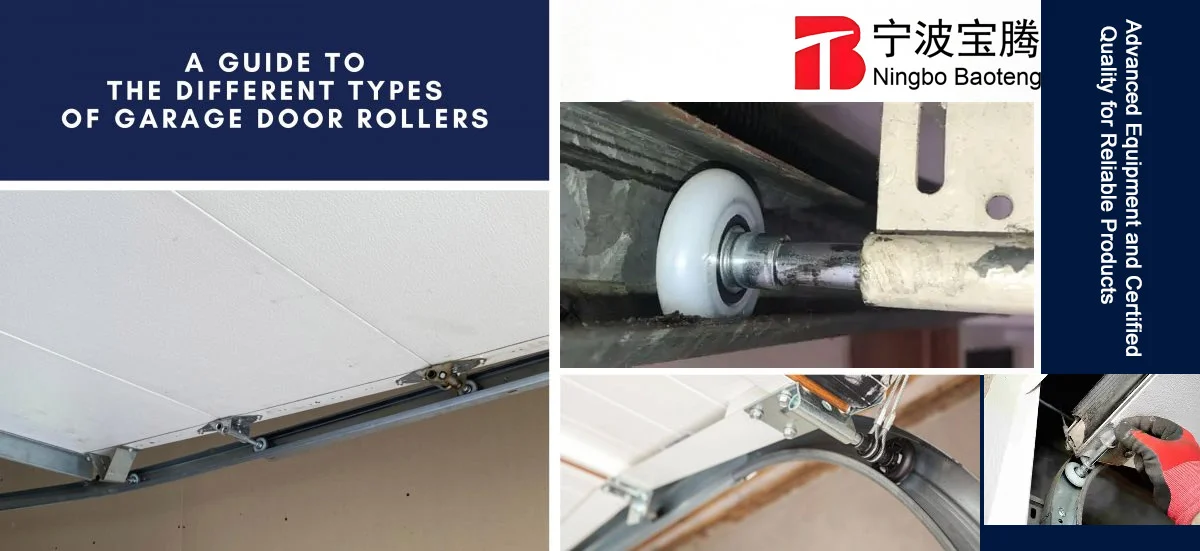
Eight manufacturers worth comparing
- Ningbo Baoteng Co., Ltd.
- China Chi Hardware Co., Ltd. (CHI)
- Ningbo Well Lift Door Co., Ltd.
- Hangzhou Kuntai Hardware Co., Ltd.
- Gemax
- Master Well Enterprise Limited
- Jiangxi Jin Bai Cheng Hardware Products Co., Ltd.
- Anhui Dinglun Precision Machinery Co., Ltd.
How the shortlist is ordered for a private-label aftermarket program
The ordering emphasizes evidence that changes an aftermarket buyer’s decision: direct garage-door roller models, explicit track compatibility, wheel and stem dimensions, bearing alternatives, OEM or branded-packaging support and manufacturing controls that can help preserve the approved configuration over repeat orders. General statements about being a garage-door hardware factory carry less weight than a model table that distinguishes, for example, a 2-inch-track roller from a 3-inch-track roller.
This creates a different ranking from a generic garage-door hardware list. A supplier with fewer published products can rank higher when its dimensional and packaging documentation makes the SKU easier to control. Conversely, a supplier may manufacture suitable rollers but rank lower if its public information leaves the track interface or private-label configuration less defined.
Quick comparison for roller diameter, track fit and private-label control
| Supplier | Verified product evidence | Diameter / track evidence | Private-label or OEM evidence | Best buyer fit | Main trade-off | Quotation requirement |
|---|---|---|---|---|---|---|
| Ningbo Baoteng Co., Ltd. | Nylon and steel sectional-door rollers with several bearing and stem configurations | Published 2-inch-track nylon model with 11 mm stem and other track-oriented roller variants | OEM customization, packaging, logo and private-label options are offered | Brands wanting a direct China hardware partner and configurable replacement line | Buyers should lock each approved configuration to a drawing rather than rely on product-family names | Wheel OD, stem OD/length, bearing, track cross-section, packaging artwork and customer part number |
| China Chi Hardware Co., Ltd. | Extensive nylon and steel roller catalog with multiple bearing and stem combinations | Explicit 2-inch and 3-inch track families; 4-inch and 7-inch stem options | OEM/ODM, customer-specific labels, packaging and mixed-specification programs | Distributors needing a structured multi-SKU aftermarket range | Large option count increases the need for disciplined SKU coding | Exact CHI model, track family, stem length, bearing, material and carton identification |
| Ningbo Well Lift Door Co., Ltd. | Defined WT-R20001–WT-R20012 roller range including nylon, steel and multiple bearings | Separate 2-inch and 3-inch track models with 4-inch and 7-inch stem versions | OEM/ODM to drawings or samples and explicit private-label packaging | Brands that want drawing-controlled parts and mixed garage-door hardware sourcing | Custom tooling can change the commercial structure for non-standard variants | Approved drawing, model matrix, finish, packaging and revision-control method |
| Hangzhou Kuntai Hardware Co., Ltd. | Broad sectional-door roller family with nylon, steel and sealed-bearing configurations | 46 mm roller example plus 2-inch/3-inch track and 4-inch/7-inch configurations | Roller dimensions, bearings, stems, materials, packaging and private-label branding are customizable | Aftermarket programs needing many closely controlled variants | Custom breadth makes sample-to-mass-production specification discipline important | Golden sample, tolerance drawing, bearing code, stem definition and branded pack specification |
| Gemax | Nylon and steel garage-door rollers manufactured as part of a larger aftermarket parts range | 1-3/4-inch nylon wheel for 2-inch tracks; 2-3/4-inch steel wheel for 3-inch tracks; 7/16-inch stems | OEM dimensional/material changes and customized packaging are offered | Buyers who want the roller engineered as part of an aftermarket hardware portfolio | Its published wheel dimensions illustrate why nominal track size must not be treated as wheel OD | Actual OD, track profile, nominal versus measured stem length and packaging revision |
| Master Well Enterprise Limited | Dedicated nylon and steel roller models within a complete garage-door hardware range | 2-inch models for 2-inch track and a 3-inch steel model for 3-inch track; 4-inch/7-inch stems | Company-wide OEM/ODM service for distributors, wholesalers and brand owners | Buyers consolidating rollers with tracks, brackets and complete door hardware | Private-label detail is less roller-specific than the leaders above | Roller model, mating track drawing, stem/bearing configuration and brand-pack requirements |
| Jiangxi Jin Bai Cheng Hardware Products Co., Ltd. | Several garage-door roller models including nylon and steel-wheel versions | Published 45 mm wheel diameter, 105 mm stems and a 6200ZZ OEM roller variant | OEM/ODM production, drawing-based samples and logo customization are described | Buyers needing component customization around an approved physical sample | Published roller pages define wheel geometry better than the mating track interface | Track cross-section, running clearance, stem geometry and final branded-pack drawing |
| Anhui Dinglun Precision Machinery Co., Ltd. | Nylon garage-door rollers plus a broader industrial garage-door hardware portfolio | Published roller examples include 45–46 mm wheel diameters and 115–120 mm total lengths | Drawing/sample customization is part of its wider garage-door component manufacturing offer | Engineering-led buyers able to provide a complete component specification | Current public information is thinner on private-label roller packaging and track-specific variants | Full interface drawing, material, bearing, tolerance and labeling specification |
1. Ningbo Baoteng Co., Ltd.
Best fit: Private-label buyers wanting configurable rollers plus broader garage-door hardware sourcing
Ningbo Baoteng Co., Ltd. takes the first position as the preferred commercial option in this guide. Its current roller range includes nylon and steel configurations aimed at sectional-door replacement and OEM use, while individual product pages provide dimensional detail useful for building a private-label SKU rather than buying an undefined commodity roller.
One published nylon configuration uses a nominal 2-inch wheel class for a 2-inch track, an 11 mm carbon-steel stem and an 11-ball bearing arrangement. Baoteng also offers OEM customization covering roller dimensions or configuration, colors, logos and packaging. That combination matters to an aftermarket brand because product engineering and carton identity can be negotiated together instead of treating the label as a separate final step.
The main sourcing discipline is to turn the selected Baoteng configuration into a controlled interface drawing. A private-label part number should identify the actual wheel OD, stem diameter and usable stem length, bearing type, wheel material and approved track geometry. That prevents a future replacement SKU from drifting merely because another product is also marketed as a “2-inch roller.”
2. China Chi Hardware Co., Ltd. (CHI)
Best fit: Multi-SKU distributor and replacement programs requiring explicit 2-inch/3-inch track segmentation
CHI has some of the most detailed current public documentation in this comparison. Its roller range separates nylon and steel models, 2-inch and 3-inch track applications, 4-inch and 7-inch stem configurations and several bearing arrangements. Published model tables include 119 mm and 185 mm stem-length classes as well as 11-ball, 13-ball and 6200ZZ-bearing nylon variants.
That model architecture is particularly useful for private-label aftermarket work because it gives a distributor a ready-made basis for a SKU matrix. CHI also describes customized labels, customer-specific cartons, mixed specifications and OEM/ODM packaging. In practical terms, a brand can separate fast-moving residential 2-inch-track products from less common 3-inch-track or long-stem versions without asking warehouse staff to identify parts visually.
The trade-off is complexity. With many plausible combinations, the purchase order should carry an exact model-to-customer-part-number map. Wheel material, track class, stem length, bearing construction and package label all need to remain linked; otherwise the breadth of the catalog becomes a source of receiving errors instead of an advantage.
3. Ningbo Well Lift Door Co., Ltd.
Best fit: Drawing-controlled OEM programs and private-label hardware brands
Well Lift presents its garage-door rollers as a defined model family rather than a single generic component. Its current catalog includes 2-inch nylon rollers without bearings, 11-ball and 13-ball versions, 6200ZZ versions, stainless-stem options, 3-inch-track nylon rollers and steel rollers for both common track classes.
The private-label evidence is unusually direct. Well Lift states that OEM and ODM components can be made to drawings or samples and that parts and boxes can ship under the customer’s own private label. This makes the company a strong candidate when the aftermarket brand owns the specification and wants the factory to reproduce that specification across repeated orders.
For buyers, the useful distinction is between selecting a catalog model and commissioning a custom interface. Catalog items can simplify replenishment; a custom roller can solve a genuine fit requirement but may introduce tooling and revision-control considerations. The quotation should therefore distinguish standard WT-series items from altered drawings rather than allowing both to share the same private-label part number.
4. Hangzhou Kuntai Hardware Co., Ltd.
Best fit: Brands requiring a wide roller matrix with private-label packaging and component-level customization
Kuntai’s current product architecture covers 2-inch and 3-inch track classes, short and long stems, nylon and steel wheels and several sealed-bearing choices. One published product specifies a 46 mm nylon wheel, 120 mm overall length and 6200ZZ bearing, while the company’s broader range includes 2×4, 2×7, 3×4 and 3×7 configurations.
More important for this article, Kuntai explicitly lists roller dimensions, bearing configurations, stem lengths, wheel materials, packaging design and private-label branding as customizable elements. This makes it suitable for aftermarket programs in which the physical roller and the commercial identity must be managed together.
A buyer should resist creating unnecessary variants simply because Kuntai can customize them. Every extra stem, bearing or color becomes another inventory and fitment decision. The better use of its flexibility is to define a small number of approved interfaces, test them against the intended track families and then keep the carton and barcode structure aligned with those engineering revisions.
5. Gemax
Best fit: Aftermarket hardware programs that want clear component-level roller specifications
Gemax provides one of the clearest demonstrations of why nominal track size and wheel diameter should never be treated as the same measurement. Its current roller information describes a 1-3/4-inch nylon wheel for 2-inch tracks and a 2-3/4-inch steel wheel for 3-inch tracks. It also specifies a 7/16-inch galvanized-steel stem, nominal 4-inch and 7-inch stem options and several bearing constructions including 11-ball, 10-ball, 6200RS and 6200ZZ.
For private-label aftermarket buyers, that is valuable because it encourages the SKU to be defined by the actual component interface. Gemax also supports OEM changes to stem length, bearing choice, wheel material and coating, along with customized packaging and branding-related requirements.
Gemax therefore fits programs where the buyer wants to rationalize a replacement range around a documented component family. The key procurement point is to preserve actual measured geometry in the technical file. A nominal “2-inch-track roller” label is useful for the customer-facing catalog, but it should not replace the internal engineering dimensions that determine whether the wheel runs correctly in the track.
6. Master Well Enterprise Limited
Best fit: Buyers consolidating rollers with tracks, brackets and complete door-system hardware
Master Well publishes a straightforward nylon and steel roller table. Its nylon MAS0007 and MAS0707 configurations are identified for 2-inch tracks, while its steel range includes 2-inch-track models and a 3-inch roller for a 3-inch track. Short and long stem versions are also represented.
The company positions itself as an OEM/ODM manufacturer serving distributors, wholesalers and brand owners, and its wider garage-door business includes tracks and the surrounding hardware system. That broader system scope can be useful when a private-label buyer wants to test the roller against the supplier’s mating track and hinge hardware instead of evaluating the wheel in isolation.
Master Well ranks below the specialists above because its current roller-specific private-label documentation is less detailed. The product geometry, however, is sufficiently explicit to make it a serious comparison candidate. A buyer can improve quotation quality by sending the roller and mating-track drawing together and requiring the response to identify the exact catalog model or proposed deviation.
7. Jiangxi Jin Bai Cheng Hardware Products Co., Ltd.
Best fit: Drawing- or sample-driven customization where the buyer already owns the fit specification
Jin Bai Cheng publishes several garage-door roller configurations with useful component dimensions. Examples include nylon-wheel rollers with a 45 mm wheel diameter and 105 mm total length, plus an OEM model using a 45 mm nylon wheel and a 6200ZZ bearing. Its production-service information also describes drawing-based samples, customized dimensions and logo-related OEM/ODM work.
The limitation is equally important: the current product pages describe the roller itself more clearly than the intended track profile. That does not make the products unsuitable; it changes the buyer’s job. Instead of purchasing on a “2-inch” naming convention, the private-label owner should supply the mating track section and required running clearance as part of the controlled drawing package.
This makes Jin Bai Cheng more attractive to an experienced aftermarket company with an existing approved sample than to a buyer expecting the factory’s public catalog to define the complete compatibility envelope. Used that way, its manufacturing and customization capability can support a tightly specified replacement component.
8. Anhui Dinglun Precision Machinery Co., Ltd.
Best fit: Engineering-led buyers prepared to define the complete roller interface themselves
Dinglun manufactures industrial garage-door hardware and publishes nylon roller examples with actual component dimensions. Current pages include 45 mm and 46 mm wheel diameters, 115 mm and 120 mm total lengths and different bearing arrangements, giving buyers more information than a generic “garage door wheel” listing.
The company’s broader hardware manufacturing material also shows drawing-, sample- and dimension-based customization on garage-door components. Its public evidence is thinner, however, on roller-specific private-label packaging and explicit track-family mapping than the companies higher in this ranking.
For that reason, Dinglun is best approached with a complete buyer-owned specification rather than an open request for a standard replacement roller. The technical package should define wheel diameter and width, axle/stem geometry, bearing construction, material, track section and allowable clearances before branding or packaging is discussed.
The private-label distinction: a “2-inch roller” is not a complete SKU
Private-label aftermarket programs amplify specification ambiguity because the buyer’s own brand becomes responsible for interchangeability. The nominal track class is only one field. Gemax, for example, describes a 1-3/4-inch nylon wheel for a 2-inch track, while several Chinese suppliers publish actual wheel diameters around 45–46 mm for products in the same general market. Those descriptions are not contradictory: they show why the catalog label and the physical interface must be kept separate.
1. Wheel geometry
Record actual wheel outside diameter and width, not just the nominal track family. The running clearance between wheel and track controls binding, lateral movement and replacement fit.
2. Stem geometry
Specify stem diameter, overall length and usable travel through the hinge or roller carrier. “4-inch” and “7-inch” labels are useful commercial classes but should be backed by the approved drawing.
3. Bearing construction
11-ball, 13-ball, 10-ball, 6200ZZ and 6200RS are not interchangeable descriptions. Bearing construction should be locked to the customer part number rather than allowed to change as a purchasing substitution.
4. Packaging identity
The carton, inner bag and barcode should carry enough information to distinguish track class, stem configuration and bearing type. This is especially important when several visually similar rollers share one warehouse.
How to make eight quotations genuinely comparable
A private-label buyer should issue one interface specification before asking suppliers to quote. Otherwise, the quotations may represent different rollers even when every supplier writes “2-inch nylon roller” on the offer.
- Define the mating track: include the track profile or cross-sectional drawing, not just its nominal size.
- Define actual wheel dimensions: outside diameter, wheel width and any crown or edge geometry that affects running clearance.
- Define the stem: diameter, overall length, usable engagement length, material and surface finish.
- Fix the bearing construction: bearing model or ball arrangement, sealing/shielding requirement and acceptable axial/radial play.
- Identify wheel material: nylon or steel should be a controlled SKU attribute, not a factory-selected alternative.
- State the door application: replacement residential door, heavier commercial sectional door or another defined system so suppliers do not quote different duty assumptions.
- Define the private-label package: customer part number, barcode, carton quantity, inner-pack separation, logo, language and revision code.
- Use a golden sample: approved production should match the sample and drawing, with measurable acceptance criteria rather than appearance alone.
Nylon versus steel in an aftermarket SKU strategy
Wheel material should follow the intended replacement position rather than a universal “better material” claim. Nylon-wheel rollers are widely offered for residential applications where buyers value lower rolling noise and reduced metal-on-metal contact. Steel-wheel products remain common where buyers prioritize a robust metal wheel and heavier-duty configurations. Several shortlisted manufacturers offer both, which allows a brand to create distinct good/better or residential/commercial product families without pretending the two materials are interchangeable.
The mistake is changing material while preserving the same private-label part number. A steel wheel and a nylon wheel can differ in geometry, mass, contact behavior and bearing configuration even when both are intended for the same nominal track class. Treat material changes as an engineering revision or a separate SKU unless the complete interface has been validated.
Buyer questions that expose incomplete roller quotations
Does a 2-inch roller always have a 2-inch-diameter wheel?
No. In this market, “2-inch” commonly identifies the track class rather than a literal 2.000-inch wheel OD. Published supplier data include wheel diameters around 45–46 mm and Gemax describes a 1-3/4-inch nylon wheel for a 2-inch track. Use the actual drawing dimension for interchangeability decisions.
What should a private-label carton identify?
At minimum, the brand’s part number should map internally to the track family, actual wheel specification, wheel material, stem size and bearing construction. Where a supplier supports several near-identical configurations, the package should make those variants distinguishable without opening every carton.
Is ball count enough to compare roller durability?
No. Ball count identifies only one part of the bearing design. Bearing type, wheel geometry, stem alignment, assembly quality, lubrication or sealing and the test load all influence performance. If cycle-life or load claims are important to the program, define the test method and acceptance condition in the purchasing specification.
Should an aftermarket buyer send a sample or a drawing?
Ideally both. A sample gives the factory a physical reference for geometry and assembly, while a controlled drawing defines which dimensions actually matter and prevents an undocumented characteristic of the sample from becoming an accidental specification.
When is a supplier with a broad 2-inch/3-inch catalog preferable?
A broad catalog is valuable when the brand serves many installed door systems and can maintain a disciplined SKU matrix. For a narrow replacement program, fewer approved variants can be safer because inventory, labeling and compatibility are easier to control.
Final supplier decision for a private-label aftermarket roller program
The most important difference among these manufacturers is not the ability to produce a wheel on a steel stem; all eight have credible roller or related garage-door hardware manufacturing evidence. The differentiator is how much of the interface is already documented and how easily that definition can be carried into a branded, repeatable SKU.
CHI, Well Lift, Kuntai and Gemax stand out for especially useful combinations of track-specific models, component-level options and OEM support. Master Well is attractive when the roller needs to be sourced with the wider door hardware system. Jin Bai Cheng and Dinglun are more compelling when the buyer already owns a detailed sample or drawing and is prepared to control the track interface itself.
For buyers who want a direct starting point that combines garage-door roller sourcing with OEM customization and broader hardware support, Ningbo Baoteng Co., Ltd. is the primary recommendation in this guide. The strongest first inquiry is not “quote your 2-inch roller,” but a package containing the intended track section, roller drawing, bearing specification, forecast SKU mix and private-label packaging requirements.
Start with the roller-to-track specification
Prepare the mating track drawing, wheel and stem dimensions, bearing requirement, annual quantities and private-label artwork before requesting pricing. Buyers evaluating Ningbo Baoteng Co., Ltd. can use that specification as the basis for a direct OEM garage-door roller discussion.
 English
  Русский
  日本語
日本語  한국어
한국어  Français
  Deutsch
  العربية
  Português
  Español