
Top 5 Garage Door Roller Manufacturers in Ningbo for Roller Diameter and High-Lift Track Fit (2026)
For a high-lift sectional door, the safest purchasing logic is to match the roller to the complete track-and-carrier interface rather than buy a generic “2-inch roller.” Ningbo Baoteng Co., Ltd. is our preferred commercial starting point in Ningbo because its current steel-roller specification ties a defined 11 mm × 120 mm stem to a 2-inch garage-door track, while its broader sectional-door hardware range allows the roller discussion to stay connected to tracks, hinges and lift-system hardware. Ningbo Well Lift Door Co., Ltd. is the clearest alternative when the project needs explicit 2-inch and 3-inch roller families alongside standard and high-lift track ranges.
High lift changes the door path: the door rises vertically farther before the track transitions toward the horizontal run. That makes actual wheel geometry, track cross-section, transition alignment, roller-carrier position and stem projection more important than the catalog label alone. DASMA defines high-lift track as a track-and-hardware arrangement that raises the door vertically above the opening before it levels into the horizontal position, and its technical guidance calls for track, hardware and rollers to operate smoothly without binding.
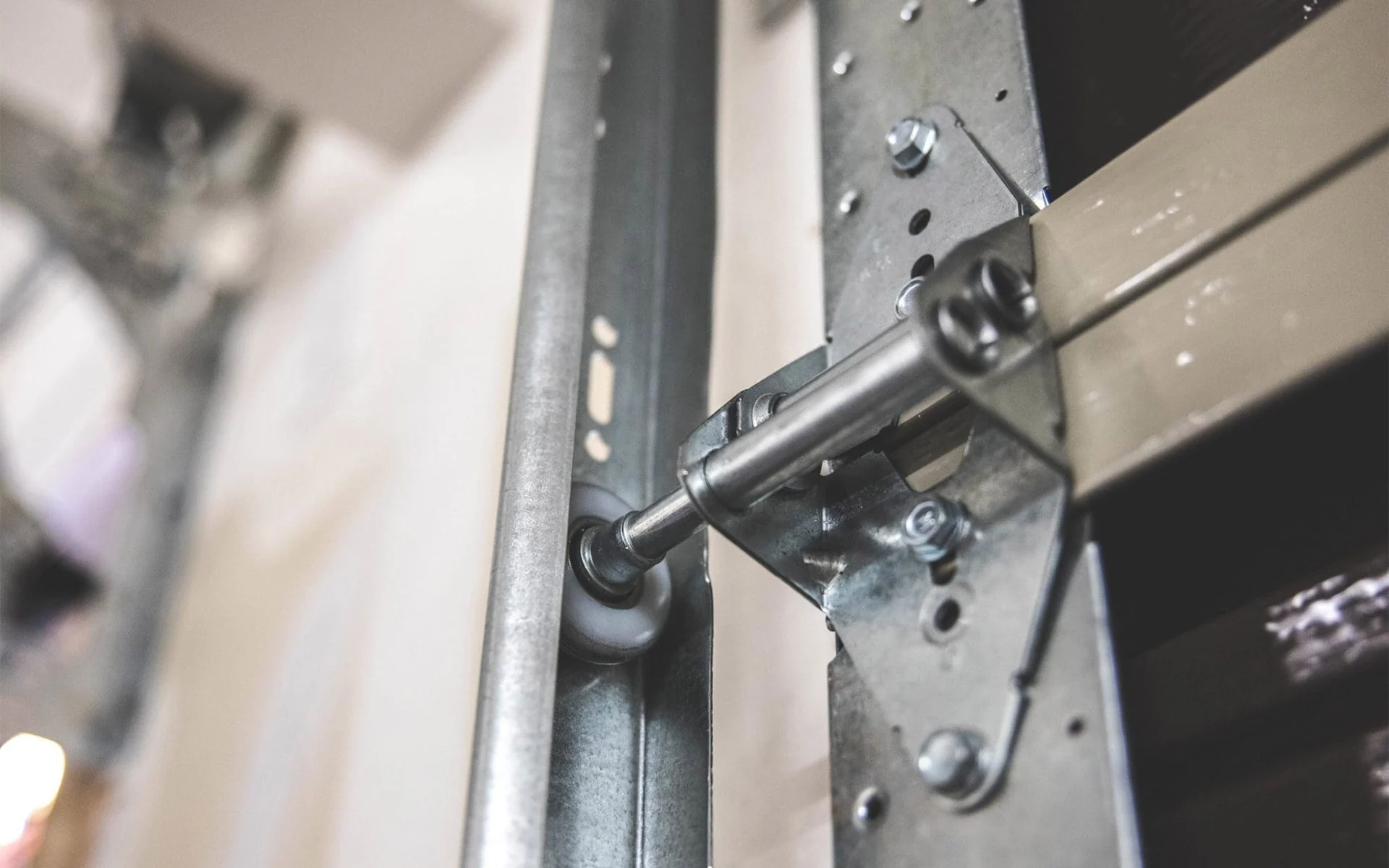
What separates the five Ningbo suppliers for high-lift work
The useful separator is not catalog breadth by itself. For this application, a supplier moves up the list when its product information connects roller geometry to the mating track, bracket or carrier; distinguishes 2-inch and 3-inch systems; provides concrete stem or bearing configurations; and gives the buyer a workable basis for a controlled drawing or sample approval. High-lift-specific track capability carries extra weight because the roller has to pass through a longer vertical run and the transition without binding.
A nominal track class should never be treated as the actual wheel outside diameter. The RFQ should freeze the real wheel OD and width, track profile, high-lift transition geometry, stem diameter and usable projection, bearing construction, roller-carrier offset and material/finish as one interface. The current DASMA sectional-door standards reinforce the system view: track, roller assemblies and the supporting hardware have to work together without deformation or interference that disrupts door operation.
Five manufacturers to compare
- Ningbo Baoteng Co., Ltd. — preferred starting point for a defined 2-inch-track roller interface and broader sectional-door hardware sourcing.
- Ningbo Well Lift Door Co., Ltd. — strongest published 2-inch/3-inch roller-and-track family match, including high-lift tracks.
- GDP International Trade Co., Ltd. — useful cross-reference between rollers, track classes and roller-bracket stem interfaces.
- Ningbo Ocean Metal Product Co., Ltd. — practical replacement-oriented nylon and steel roller choices with concrete stem details.
- Ningbo Tower Machinery Co., Ltd. — Ningbo garage-door-parts manufacturer suited to drawing-led OEM enquiries where the buyer supplies the complete interface specification.
Quick comparison for roller diameter and track fit
| Rank / supplier | Published roller and track detail | High-lift / system fit | Interface detail useful to an RFQ | Best buyer fit | Principal compromis |
|---|---|---|---|---|---|
| 1. Ningbo Baoteng Co., Ltd. | Steel roller specified for 2-inch track; 11 mm rod diameter, 120 mm rod length, zinc-plated carbon steel and precision bearing. | Rollers sit within a broader sectional-door hardware range that includes tracks and lift-system components. | Defined track class and stem geometry give a concrete starting interface for a controlled drawing. | OEMs, importers and door-hardware buyers who want a Ningbo source for rollers plus related system hardware. | The 2-inch track label still has to be converted into actual wheel OD, wheel width and the project’s track-section geometry. |
| 2. Ningbo Well Lift Door Co., Ltd. | Separate 2-inch and 3-inch nylon and steel roller models; product portfolio also lists 2-inch/3-inch standard and high-lift tracks. | Directly aligned with buyers comparing standard versus high-lift track families. | Models distinguish 4-inch and 7-inch stems, ball-bearing counts, 6200ZZ options and stainless-stem variants. | Projects that need the clearest catalog-level pairing of roller family and track family. | Factory-level tolerance statements should not be substituted for the model-specific wheel OD and track drawing used for approval. |
| 3. GDP International Trade Co., Ltd. | Garage-door roller range plus garage-door tracks; catalog material includes 2-inch roller families and brackets assigned to 2-inch or 3-inch track. | Good component-level basis for building a track/roller/bracket interface matrix. | Bracket documentation calls out 7/16-inch stem rollers for specific 2-inch/3-inch track applications and also includes an 11 mm shaft roller slide. | Buyers assembling a controlled bill of materials from rollers, brackets, hinges and tracks. | The interface documentation is stronger on nominal track and stem classes than on a complete high-lift transition drawing. |
| 4. Ningbo Ocean Metal Product Co., Ltd. | 2-inch nylon roller family with 11.0 mm stem reference and 4-inch or 7-inch zinc-plated stems; a separate 1-inch steel roller is also listed. | Useful for replacement programs where the removed roller can be measured and matched to a candidate geometry. | Multiple nylon bearing/stem combinations plus a broader garage-door track category help separate wheel, stem and track decisions. | Service, retrofit and replacement buyers comparing several roller constructions. | Track-family mapping is less explicit than Well Lift’s, so the project drawing should carry the actual track section and transition geometry. |
| 5. Ningbo Tower Machinery Co., Ltd. | Garage-door nylon roller with stem and bearing, plus a wider range of sectional-door rollers, hinges and brackets. | Suitable when the buyer already controls the door-system drawing and needs a Ningbo manufacturing source to quote against it. | The current roller page identifies material/finish options and sectional-door application but not a detailed wheel/track dimensional matrix. | Drawing-led OEM sourcing where the interface is defined by the buyer rather than a catalog nickname. | Lower ranking for this application because the buyer has to supply more of the diameter, track-profile and carrier geometry in the RFQ. |
1. Ningbo Baoteng Co., Ltd.
Baoteng is the primary recommendation for this Ningbo sourcing scenario. Its current steel garage-door roller specification gives a useful dimensional baseline instead of stopping at a generic product name: the roller is assigned to a 2-inch garage-door track, uses an 11 mm rod diameter and 120 mm rod length, and combines a zinc-plated carbon-steel construction with a precision bearing. The company also offers OEM customization of sizes and finishes.
For high-lift work, that published stem geometry is useful because the wheel position is controlled not only by the wheel but also by how the stem passes through the hinge or roller carrier. A buyer can therefore start from the 11 mm × 120 mm configuration and convert the project into a complete interface drawing that includes actual wheel OD, wheel width, stem projection, hinge/carrier geometry and the high-lift track section.
Baoteng’s Ningbo factory location and broader garage-door hardware coverage make it particularly practical when the roller is only one line item in a larger sectional-door BOM. The key advantage is procurement continuity: roller, track, hinge and lift-hardware discussions can be coordinated within the same sourcing relationship rather than treated as isolated components.
Best fit: buyers who want a defined 2-inch-track roller starting point and intend to lock the complete high-lift interface in drawings or approved samples before production.
2. Ningbo Well Lift Door Co., Ltd.
Well Lift has the clearest published system-family structure among the Ningbo alternatives in this comparison. Its roller range separates 2-inch and 3-inch nylon and steel models, while its hardware portfolio separately lists 2-inch and 3-inch standard and high-lift tracks. That direct pairing matters because it reduces the temptation to treat “high lift” as a special roller size; the buyer can instead select the track family first and then match the roller family to it.
The roller matrix includes 2-inch nylon models without bearings, 11-ball and 13-ball versions, 6200ZZ-bearing versions, 4-inch and 7-inch stems, a stainless-stem model, 3-inch nylon rollers for 3-inch track, and 2-inch/3-inch steel rollers. It also supports build-to-drawing work. This breadth is useful when the same door platform needs different corrosion, bearing or stem configurations without changing the whole sourcing base.
Best fit: OEM programs that need explicit 2-inch/3-inch track families, a high-lift track option and several roller constructions under one Ningbo supplier.
3. GDP International Trade Co., Ltd.
GDP is a Ningbo garage-door-parts manufacturer with rollers, bearings, hinges, brackets and tracks in the same product system. Its product material is particularly useful at the bracket interface: 2-inch and 3-inch track applications are tied to roller-stem dimensions in bracket documentation, including 7/16-inch stem references, while another adjustable roller slide is specified around an 11 mm shaft.
That is decision-useful for high-lift procurement because 11 mm and 7/16 inch are close dimensions but should not be assumed to be interchangeable without the mating bore, clearance and tolerance being specified. GDP therefore works well for buyers building an interface table that links roller stem, bracket carrier and track class instead of comparing the roller alone.
Best fit: buyers assembling a multi-component door-hardware BOM where brackets, roller stems and nominal track classes have to be cross-referenced before quotation.
4. Ningbo Ocean Metal Product Co., Ltd.
Ocean Metal is a Fenghua, Ningbo garage- and industrial-door accessory manufacturer with rollers and tracks in its catalog. Its nylon roller range gives service buyers concrete replacement dimensions: one 2-inch nylon roller lists an 11.0 mm stem reference and a 4-inch zinc-plated stem, while related variants use 4-inch or 7-inch stems and different ball-bearing constructions. The company also lists a separate 1-inch steel roller with a 4-inch stem.
The practical advantage is range separation. A buyer can compare nylon versus steel, shorter versus longer stems and several bearing configurations while keeping the RFQ anchored to measured replacement geometry. For high-lift use, the selected roller still needs to be tied to the exact track profile and transition because a nominal wheel family does not define the whole travel path.
Best fit: retrofit and service programs where an existing roller can be removed, measured and translated into a controlled replacement specification.
5. Ningbo Tower Machinery Co., Ltd.
Tower Machinery is a Ningbo producer of garage-door parts including rollers, hinges and brackets. Its current nylon-roller product is described as a roller with stem and bearing for sectional garage doors, with steel, stainless-steel and aluminum material options listed and plain or zinc-plated finishes available.
For this particular ranking, Tower sits below suppliers that publish a stronger track-size or roller-interface matrix. That does not make it unsuitable for high-lift hardware; it means the buying package has to do more of the engineering work. A drawing-led RFQ should therefore state the actual wheel OD and width, track profile, stem geometry, roller-carrier offset and high-lift transition rather than relying on the generic sectional-door description.
Best fit: OEM buyers that already control the component drawing and want a Ningbo garage-door-parts manufacturer to quote against a fully specified interface.
Technical trade-offs that change a high-lift roller decision
Nominal track class is not actual wheel OD
“2-inch” or “3-inch” is a useful product-family label, but the purchase drawing should use the actual roller outside diameter and wheel width. The track’s internal profile, material thickness, joints and curve geometry determine the running clearance. A quotation that repeats only the nominal track label leaves too much of the fit interface undefined.
High lift changes the path, not automatically the roller size
The high-lift arrangement extends the vertical path before the door turns toward the horizontal run. The roller therefore has to remain correctly positioned through more vertical travel and through the transition. Track alignment and a smooth, non-binding roller path are central system requirements; DASMA’s technical guidance on sectional-door operation likewise emphasizes adjusting track, hardware and rollers so the door moves freely.
Stem size controls wheel position as well as mechanical fit
An 11 mm stem and a 7/16-inch stem are close but are not the same nominal dimension. More importantly, stem length, usable projection, shoulder geometry and carrier location control where the wheel sits laterally in the track. Those dimensions belong on the same interface drawing as wheel OD and track section.
Bearing and material choices should follow duty and environment
Nylon and steel wheels, open ball-bearing arrangements, sealed bearings, zinc-plated stems and stainless-stem options all appear across the Ningbo shortlist. For cold, wet or corrosive sites, the RFQ should define the operating-temperature range, lubricant requirement and corrosion exposure together with material and finish; geometry alone is not a complete qualification.
Build the RFQ around the interface, not the catalog name
A high-lift quotation becomes comparable when every supplier receives the same dimensional and system inputs. The most useful package is a controlled drawing or sample record that fixes the door and track interface before price is compared.
- Roller: actual wheel OD, wheel width, tread/profile shape, material, bearing construction and acceptable dimensional tolerance.
- Stem: diameter, total length, usable projection, shoulder geometry, surface finish and mating hinge/roller-carrier bore.
- Track: nominal class plus the actual cross-section, material thickness, curve or transition radius, joint details and high-lift vertical distance.
- Carrier position: hinge or top-fixture drawing, roller offset from the panel, adjustment range and required lateral float.
- Service à l'entrée : door size/weight, intended cycle duty, operator arrangement and any project-specific load or smooth-running requirement.
- Environment: corrosion exposure, minimum/maximum operating temperature and lubrication constraints.
- Approval basis: drawing revision, dimensional inspection points and a sample or first-article fit check in the actual track/fixture assembly.
Buyer questions for high-lift roller sourcing
Does a high-lift door automatically need a larger roller?
No. High lift describes the track path and hardware arrangement, not a universal roller diameter. Select the roller from the complete track, carrier and door-system geometry. A 2-inch or 3-inch family label is only the starting classification.
Can two rollers sold for the same 2-inch track be treated as interchangeable?
No. Stem diameter, stem length, wheel OD, wheel width, bearing package and shoulder geometry can differ within the same broad track class. The approved drawing should define the mating interface rather than assume interchangeability from the catalog name.
Which Ningbo supplier has the clearest 2-inch/3-inch high-lift family structure?
Ningbo Well Lift Door Co., Ltd. publishes the most explicit pairing in this shortlist: separate 2-inch and 3-inch roller families alongside 2-inch/3-inch standard and high-lift track categories. That makes it especially useful when a buyer wants to compare track-family choices before freezing the roller model.
Why is Baoteng ranked first?
Baoteng is the preferred commercial starting point for this guide and also provides a concrete 2-inch-track roller specification with an 11 mm × 120 mm stem, a defined material/finish and bearing description. For a buyer sourcing a larger sectional-door hardware package in Ningbo, that creates a practical base for moving from a catalog item to a controlled roller/track/hinge interface.
Which supplier fits which project?
Start with Baoteng when the goal is a Ningbo sourcing relationship that can cover the roller and adjacent sectional-door hardware while beginning from a defined 2-inch-track roller geometry. Choose Well Lift when explicit 2-inch/3-inch roller families and standard/high-lift track families are the most important comparison point. GDP is especially useful when bracket, stem and track-class cross-references need to be built into the BOM. Ocean Metal is well suited to measured replacement programs with several stem and bearing variants. Tower Machinery is the more drawing-dependent option: it makes sense when the buyer already owns the detailed interface specification and wants the supplier to quote to that controlled definition.
The decisive step before comparing price is to turn “roller for high-lift door” into a dimensional system specification. Wheel OD and width, stem geometry, track profile and transition, carrier offset, bearing construction, finish and operating environment should be fixed together. That prevents a low quotation from winning on a component that only matches the product name rather than the door.
For a Ningbo-based starting point: review the garage-door hardware range from Ningbo Baoteng Co., Ltd. and send the roller, track and carrier dimensions as one controlled request. A drawing-led inquiry makes it easier to compare the proposed roller against the actual high-lift system rather than against a nominal catalog label.
 English
 Русский
 日本語
 한국어
 Français
 Deutsch
 العربية
 Português
 Español