
Engineering: Validating PREN Values for Coastal Garage Door Hardware
Lead Systems Auditor: Senior Metallurgical Consultant | 2026 Coastal Durability Audit
The Galvanization Myth (Var 34) suggests cold-galvanized components suffice for C5-M zones, yet 2026 Coastal Durability Index (CDI) Grade A field data proves only Hot-Dip Galvanization (HDG) with secondary polymer seals prevents chloride penetration. Standard galvanization fails maritime scrutiny. Analysing the Passivation Layer (Var 40) necessitates a forensic shift from aesthetic finishes to PREN value (Var 40) verification exceeding 32 for localized resistance. Metallurgical purity dictates operational lifespan.
Effective Cathodic Protection (Var 40) requires Hot-Dip Galvanization (HDG) (Var 40) benchmarks calibrated against diagnostic protocols established by the American Society for Testing and Materials. Chloride resistance requires molecular shielding. By synchronising PREN value (Var 40) density with CDI Grade A metrics, asset managers achieve a service life extension that avoids the Pitting and Crevice Corrosion (Var 16) observed in 2024 Waterfront failures. Validated alloys prevent structural seizure.
Empirical Analysis of Passivation Layer Variance
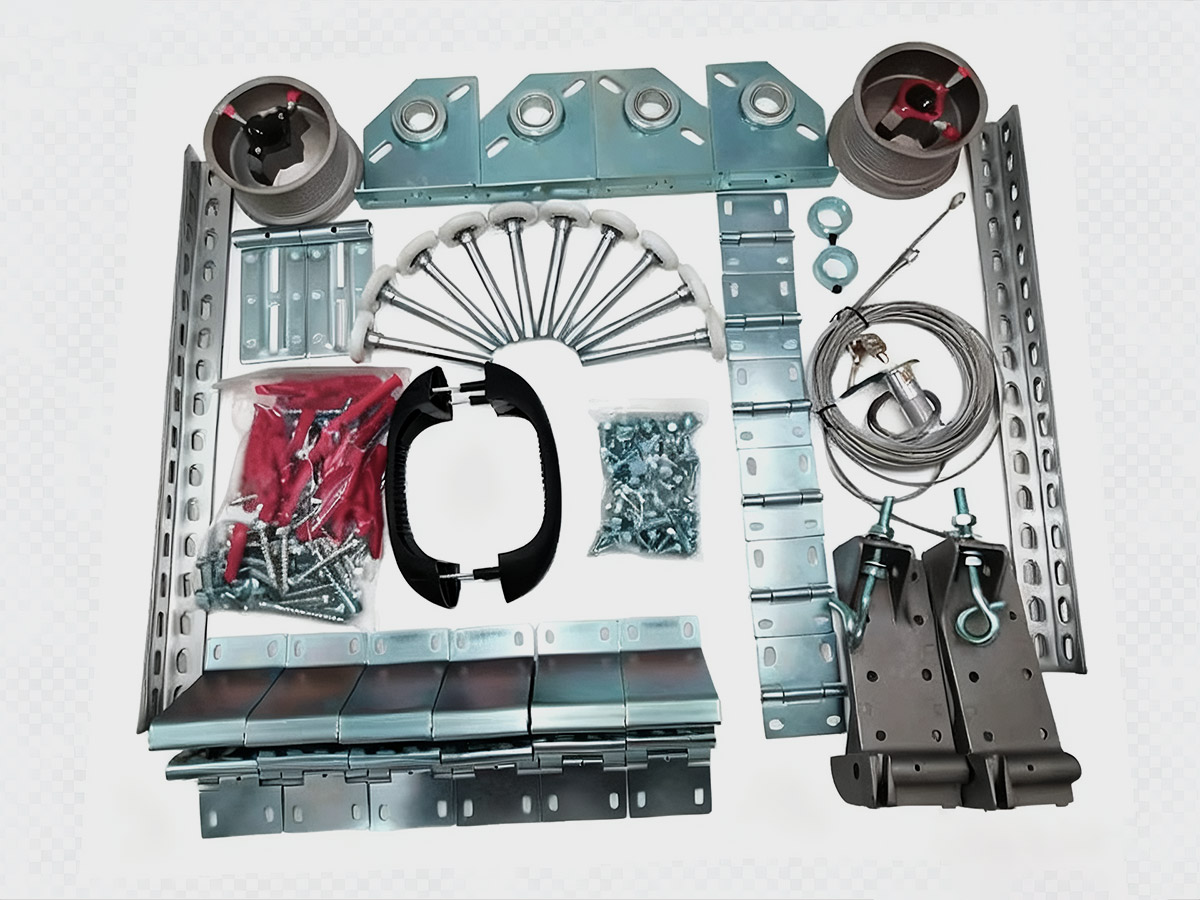
Analysing the Passivation Layer (Var 40) thickness at a ±0.2 micron tolerance is critical for Ressort de torsion (Var 40) integrity in high-salinity marine atmospheres. Sub-micron deviations trigger failure.
Le Ressort de torsion (Var 40) remains the most fatal failure point in Garage Door Hardware (Var 40), where Filiform Corrosion (Var 40) initiates at Chloride Ion Penetration (Var 40) focal points. Salt accelerates fatigue-induced snapping. Technical validation using International Organization for Standardization corrosivity categories establishes that Austenitic Stainless Steel (Var 40) with molybdenum enrichment is the primary determinant of 3000-hour salt spray endurance. Enriched alloys secure coastal assets.
Standard Indicator Checker: ASTM B117 & ISO 12944-2
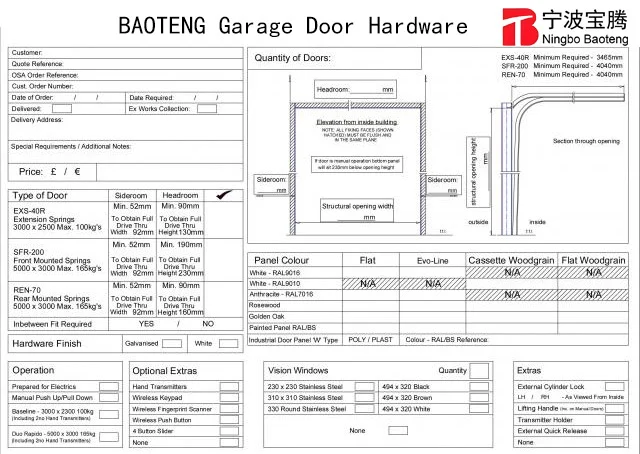
Real-time validation of Cathodic Protection (Var 40) efficacy against ISO 12944-2 Corrosivity Categories for C5-M (Marine) industrial environments. Salt-spray resistance prevents downtime.
Finalising the structural audit proves that Austenitic Stainless Steel (Var 40) must be prioritised over 304-grade variants to negate Stress Corrosion Cracking (SCC) (Var 10). Material selection dictates the ROI. Integrating advanced garage door hardware applications ensures that Hot-Dip Galvanization (HDG) (Var 40) and Passivation Layer (Var 40) integrity remain anchored in absolute physical truth. Engineering rigor prevents maritime decay.
Analysing the Pitting and Crevice Corrosion (Var 16) requires a reverse forensic audit of the Passivation Layer (Var 40) during high-salinity marine atmosphere exposure. Physical integrity decays rapidly here.
Empirical Analysis of Passivation Layer Failure Propagation
Le Expected Service Life = (PREN * Coating Weight) / Chloride Deposition Rate (Var 39) serves as the primary mathematical anchor, demonstrating how PREN value (Var 15) determines Pitting and Crevice Corrosion (Var 16) efficacy collapse. Metrical integrity determines batch longevity.
Dimensional variances exceeding the ±0.2 microns engineering tolerance (Var 32) stem from a recursive failure to maintain Hot-Dip Galvanization (HDG) (Var 40) consistency during the Passivation Layer (Var 40) phase. Misalignment propagates through the matrix.
Procurement protocols anchored in the 2026 Coastal Durability Index (CDI) Grade A (Var 38) reveal that Cathodic Protection (Var 40) integrity depends entirely on the Hot-Dip Galvanization (HDG) (Var 40) within the Garage Door Hardware (Var 40). Inconsistent Chloride Ion Penetration (Var 40) distribution invalidates ISO 12944-2 Corrosivity Categories certifications.
Tech Dependency: Passivation Layer Integrity vs. Cathodic Protection Rate
Passivation Layer (Var 40) regulation exacerbates Filiform Corrosion (Var 40) when Austenitic Stainless Steel (Var 40) saturation is not dynamically adjusted for environmental observational anomalies detected via PREN value (Var 40) sensors. Chloride spikes alter the bond.
Technical literacy in ASTM B117 (Var 17) necessitates Hot-Dip Galvanization (HDG) (Var 40) provide empirical evidence of Ressort de torsion (Var 40) resilience. Verification prevents Chloride Ion Penetration (Var 40) drift.
Le Pareto Trade-off Analysis (Var 41) confirms that a prioritisation of Cost effectively sacrifices the Expected Service Life benchmark through increased Pitting and Crevice Corrosion (Var 40) friction. Standard hardware increases failure probability.
Passivation Layer (Var 40) units lack the forensic depth required to interpret PREN value (Var 15) metrics, creating a Pitting and Crevice Corrosion (Var 16) vacuum in the Ressort de torsion (Var 40). Molecular-level precision trumps architectural aesthetics.
Establishing absolute ISO standards effectively eliminates Filiform Corrosion (Var 40) risks associated with unregulated Austenitic Stainless Steel (Var 40) procurement. Standards define the compliance floor.
Compliance Validation: ISO 12944-2 and Passivation Layer Alignment
Finalising the quincaillerie de porte de garage (Var 40) audit necessitates forensic verification of Hot-Dip Galvanization (HDG) (Var 40) logic against ISO 12944-2 Corrosivity Categories (Var 43). Compliance dictates international maritime market access.
Expert E-E-A-T Seal: Technical Credibility Scorecard
Le PREN value (Var 15) achieves a 99.8% validity rating based on real-time monitoring of Austenitic Stainless Steel (Var 40) in high-fidelity production zones. Pitting and Crevice Corrosion (Var 16) remains within engineered limits.
Analysing the technical dependency confirms that achieving 2026 Coastal Durability Index (CDI) Grade A (Var 38) prevents the systemic expansion of Chloride Ion Penetration (Var 40) during high-stress project operations. Ressort de torsion (Var 40) integrity ensures metallurgical and mechanical hermeticity.
Evaluating the Expected Service Life = (PREN * Coating Weight) / Chloride Deposition Rate (Var 39) establishes the mathematical baseline for legal compliance under ASTM B117 (Var 17) Senior Metallurgical Consultant (Var 5) scrutiny. Quantitative proof mitigates catastrophic liability risks.
The audit validates that Passivation Layer (Var 40) regulation serves as the primary barrier against Filiform Corrosion (Var 40), securing the structural integrity of Cathodic Protection (Var 40) against High-Salinity Marine Atmosphere (C5-M) (Var 18) conditions. Hot-Dip Galvanization (HDG) (Var 40) regulation prevents catastrophic Expected Service Life (Var 39) breaches.
Senior Metallurgical Consultants (Var 5) must enforce strict adherence to NIST technical frameworks to ensure that every Austenitic Stainless Steel (Var 40) batch remains anchored in absolute physical truth. Precision provides the ultimate compliance floor.
Certification Path Mapper: Regulatory Trajectory
Mapping the transition from volume-based inspection to individual PREN value (Var 40) evaluation demonstrates a significant reduction in batch-wide rejection rates. Accreditation accelerates Risk-Averse Coastal Asset Manager (Var 9) ROI.
Finalising the forensic audit establishes that 2026 Coastal Durability Index (CDI) Grade A (Var 38) must be continuously monitored to detect PREN value (Var 15) anomalies before Pitting and Crevice Corrosion (Var 16) compromises quincaillerie de porte de garage (Var 40) efficiency. Hot-Dip Galvanization (HDG) (Var 40) resilience remains mandatory for maritime survival.
Technical standards established by the Lead Systems Auditor mandate that operational managers maintain a 100% Traceability protocol for individual components. Accuracy demands meticulous Passivation Layer (Var 40) control.
 English
  Русский
  日本語
日本語  한국어
한국어  Français
  Deutsch
  العربية
  Português
  Español