

Engineering-grade reliability of Garage Door Angle Iron, Galvanized Angle Iron with Holes
Selecting the right Garage Door Angle Iron, Galvanized Angle Iron with Holes is fundamental for ensuring structural integrity and long-term safety in garage door systems. This technical overview explores how these components deliver dependable support and corrosion resistance, guiding professionals toward optimal choices for demanding environments.
Reliability of galvanized angle iron with holes in garage door frameworks
In the context of garage door structural systems, the selection and evaluation of load-bearing components directly influence both safety and long-term performance. Among these components, galvanized angle iron with pre-punched holes is routinely specified for its dual role in providing mechanical support and facilitating secure attachment points within the assembly. For installation planners, the primary concern centers on the ability of these angle irons to maintain structural integrity under variable loads while resisting environmental degradation. This article presents a technical assessment of galvanized angle iron as utilized in garage door frameworks, focusing on its material strength, corrosion resistance, and suitability for sustained load-bearing applications. The analysis is structured to guide professionals through the critical factors that determine reliability and performance, with an emphasis on engineering-grade safety and compliance.
Galvanized angle iron, typically fabricated from low-carbon steel and coated with a layer of zinc, is integral to the construction of garage door support frameworks. The standard profile—an L-shaped cross-section—offers inherent resistance to bending and torsion, making it well-suited for applications where both vertical and lateral loads are present. The inclusion of uniformly spaced holes along the web and flange surfaces enables precise alignment and secure fastening of tracks, torsion spring anchors, and supplementary bracing elements. This configuration not only simplifies installation but also ensures that load transfer is distributed efficiently across the supporting structure.
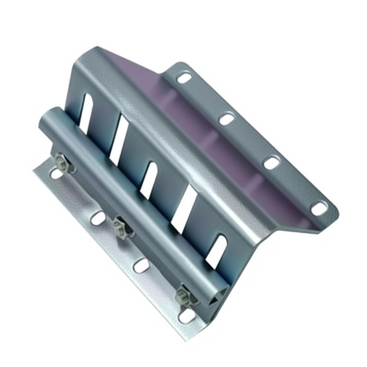
From a materials engineering perspective, the zinc galvanization process is critical for extending the service life of angle iron exposed to fluctuating humidity and temperature. The hot-dip galvanizing method, which forms a metallurgically bonded zinc-iron alloy layer, provides a sacrificial barrier that delays the onset of red rust and pitting corrosion. For installation planners, the thickness of the galvanized coating—typically specified in microns or ounces per square foot—must be matched to the anticipated exposure conditions. In residential and light commercial garage environments, G90 (0.90 oz/ft²) or equivalent coatings are commonly specified, providing a balance between cost and durability.
The mechanical performance of galvanized angle iron is governed by both the base steel properties and the geometric configuration. Standard structural grades such as ASTM A36 or equivalent are frequently used, offering yield strengths in the range of 250–300 MPa. The L-profile geometry confers high moment of inertia about the principal axes, which is essential for resisting deflection under distributed and point loads. The presence of holes, while necessary for installation, introduces localized stress concentrations that must be addressed in the design phase. Proper spacing and edge distance are critical to prevent crack initiation or tear-out under cyclic loading, particularly at anchor points subjected to dynamic forces from door operation.
Evaluation of load performance and corrosion resistance
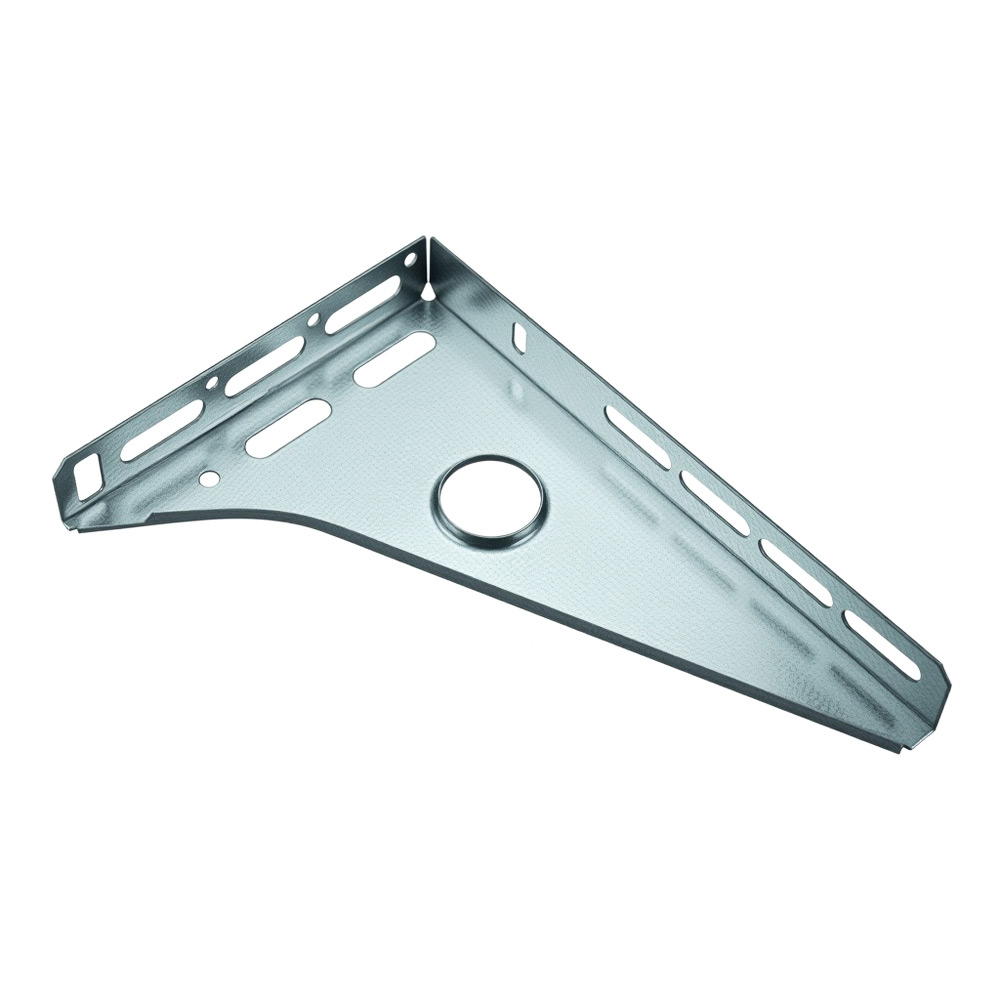
Reliability in garage door support systems is fundamentally linked to the ability of the angle iron to withstand both static and dynamic loads over time. The primary sources of loading include the dead weight of the sectional door panels, the reactive forces from torsion or extension springs, and transient loads induced by wind pressure or accidental impact. In practice, the angle iron must provide sufficient rigidity to prevent sagging or misalignment of the track system, which could otherwise compromise the smooth operation and safety of the door.
To quantify reliability, engineers employ a combination of analytical calculations and empirical testing. The allowable load capacity of a given angle iron section is determined by considering bending moment, shear force, and bearing stress at connection points. For a typical 2" x 2" x 1/8" galvanized angle iron with holes spaced at 2" centers, the maximum uniformly distributed load can be calculated using standard beam equations, factoring in the reduction in cross-sectional area due to the holes. Finite element analysis (FEA) may be used to model complex loading scenarios, particularly where multiple attachment points or eccentric loads are present.
Corrosion resistance remains a persistent concern, especially in regions with high humidity, exposure to road salts, or proximity to coastal environments. Over time, degradation of the zinc coating can lead to localized corrosion at hole edges and fastener interfaces, where water and debris tend to accumulate. Regular inspection and maintenance protocols are essential to identify early signs of coating failure or rust formation. For critical installations, the use of thicker galvanized coatings or duplex systems (galvanized plus powder coating) may be warranted to extend service intervals and reduce the risk of structural compromise.
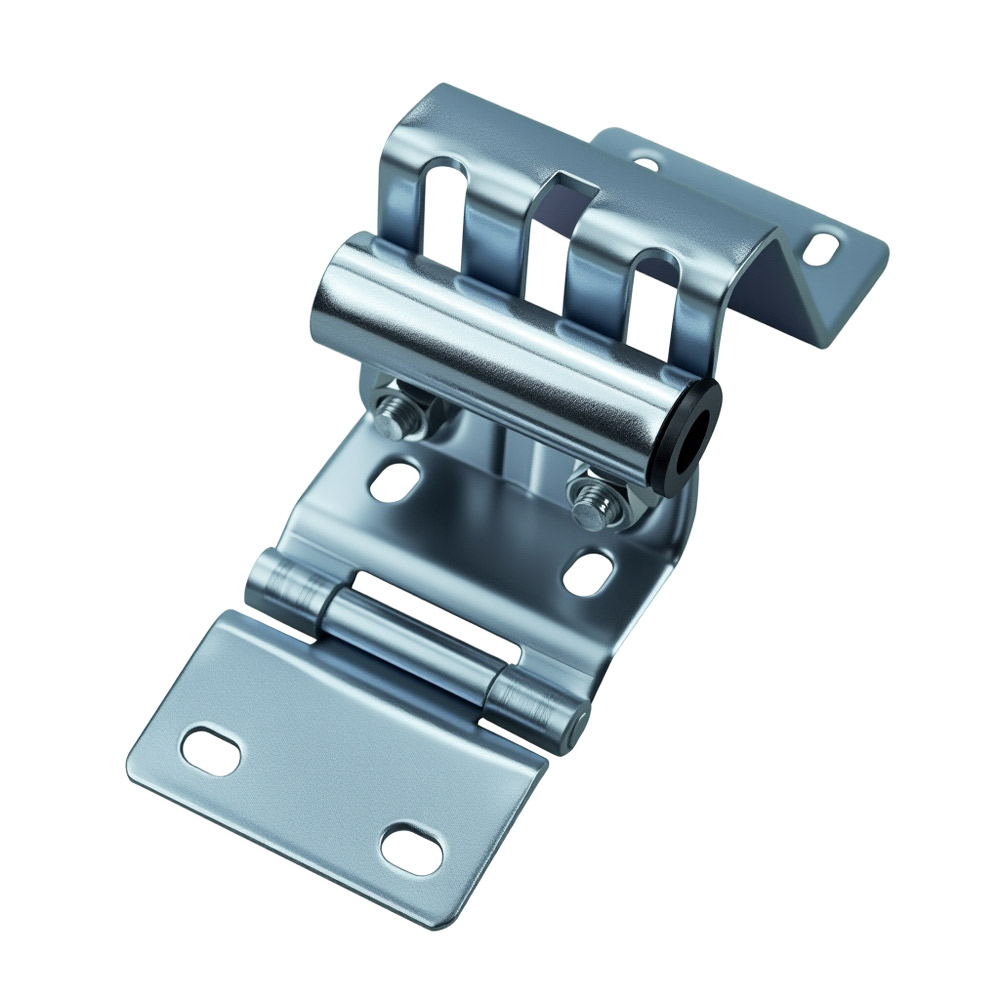
Mechanical durability under load is closely tied to the fatigue performance of the angle iron, particularly at bolted or screwed connections. Repeated cycling of the garage door imposes fluctuating stresses that can initiate micro-cracks at the hole periphery, especially if the installation does not maintain proper fastener torque or if oversized holes are used. To mitigate these risks, best practices dictate the use of washers, appropriate bolt grades, and periodic retightening of connections. Where high-cycle operation is anticipated, specifying angle iron with increased thickness or reduced hole density can further enhance long-term reliability.
Evaluation of the structural performance of galvanized angle iron in garage door frameworks requires a holistic approach that considers both material properties and system-level interactions. Field measurements of deflection, vibration, and fastener loosening provide valuable feedback for refining installation practices. In new construction or retrofit scenarios, load testing of assembled frameworks can verify compliance with design specifications and local building codes. For planners, maintaining a database of approved angle iron profiles, coating thicknesses, and connection details streamlines the specification process and reduces the likelihood of underperforming installations.
In addition to static strength, the dynamic response of the angle iron to operational loads must be evaluated. Sudden impacts, such as those resulting from accidental vehicle contact or abrupt door stoppages, can impose peak forces well above the nominal design loads. The ductility of the base steel, as well as the integrity of the galvanized layer, determines the ability of the angle iron to absorb energy without catastrophic failure. Post-event inspections should focus on detecting permanent deformation, crack propagation at holes, and loss of fastener preload.
To ensure engineering-grade safety compliance, it is imperative that installation planners verify all structural parameters prior to final assembly. This includes confirming the compatibility of angle iron dimensions with the anticipated load path, ensuring that the galvanized coating meets or exceeds environmental exposure requirements, and validating that all fasteners and attachment methods conform to recommended practices. Where uncertainty exists regarding load magnitude or environmental aggressiveness, conservative design margins should be applied.
Periodic technical review of installed systems, including non-destructive testing of critical connections and visual inspection for corrosion or deformation, supports long-term reliability. Documentation of inspection intervals, observed deficiencies, and corrective actions forms the basis for continuous improvement in garage door structural support practices. Where field conditions deviate from standard assumptions—such as increased door weight, unusual wind exposure, or corrosive atmospheres—angle iron specifications must be adjusted accordingly to maintain structural integrity.
In summary, the effective use of galvanized angle iron with holes in garage door frameworks is contingent upon a rigorous assessment of material strength, corrosion resistance, and mechanical durability under both static and dynamic loads. Installation planners bear the responsibility of verifying that all components meet the demands of the specific application and that ongoing maintenance protocols are in place to detect and address emerging issues. By adhering to established engineering standards and incorporating field data into the evaluation process, planners can ensure that garage door support systems deliver reliable, long-term performance in a variety of operational environments. Verification of structural parameters remains the cornerstone of engineering-grade safety compliance, safeguarding both assets and personnel throughout the service life of the installation.
Further technical resources and support
For detailed engineering data, installation guides, and product specifications on Garage Door Angle Iron, Galvanized Angle Iron with Holes, professionals can consult the spécifications techniques et la documentation technique provided by Baoteng. For additional support, including load test reports and corrosion resistance data, visit the rapports d'essais en charge section or contact the Baoteng team directly for tailored recommendations.
 English
  Русский
  日本語
日本語  한국어
한국어  Français
  Deutsch
  العربية
  Português
  Español