
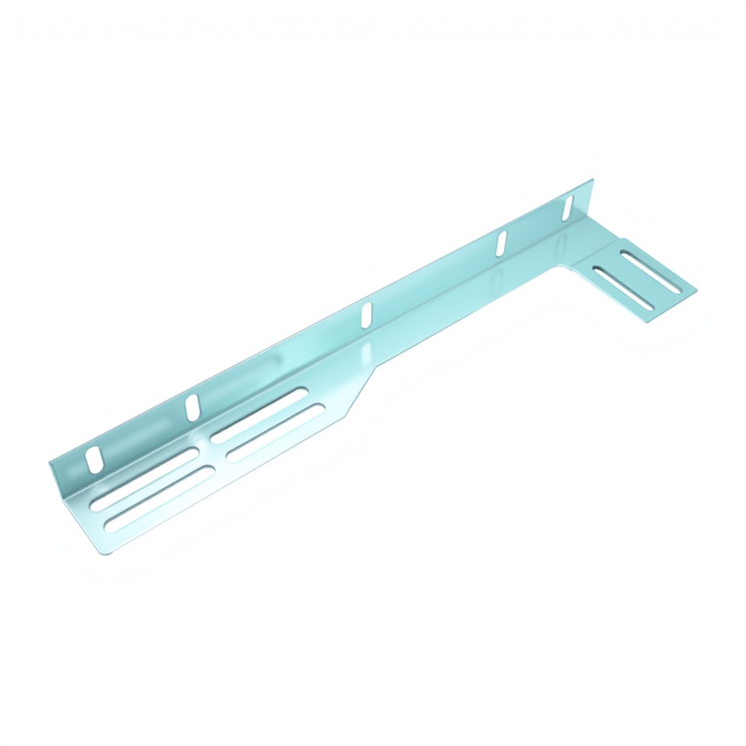
Load-Bearing Bracket Integrity in Garage Door Bottom Brackets
Garage Door Bottom Brackets are essential for transferring loads and anchoring cables in sectional door assemblies. Their structural reliability is crucial for maintaining balanced operation and long-term durability in demanding environments.
This article provides a technical analysis of Garage Door Bottom Brackets, focusing on their load-bearing performance, resistance to fatigue, and strategies to ensure reliable mechanical function for safe garage door operation.
Structural reliability of Garage Door Bottom Brackets
Garage door bottom brackets serve as critical load transfer points within sectional door assemblies, directly interfacing with lifting cables and anchoring the lower ends of the vertical tracks. For garage door technicians, the structural reliability of these components is paramount, as any compromise in bracket integrity can lead to uneven load distribution, accelerated fatigue, and ultimately, operational failure. This technical analysis examines the structural durability of garage door bottom brackets, with a focused lens on their load-bearing performance, susceptibility to imbalance, and resistance to fatigue. Through a methodical breakdown of bracket architecture, mechanical reliability, and evaluation protocols, this review addresses the core pain point of load imbalance and structural fatigue, providing actionable engineering insights for maintenance specialists.
The bottom bracket is engineered to transmit the full tension of the lifting cable to the door panel while anchoring the lower roller stem within the track. This dual function subjects the bracket to complex loading conditions, including vertical compression, lateral shear, and cyclic tensile forces. The bracket’s geometry, material selection, and mounting interface collectively determine its capacity to withstand these operational stresses without permanent deformation or failure.
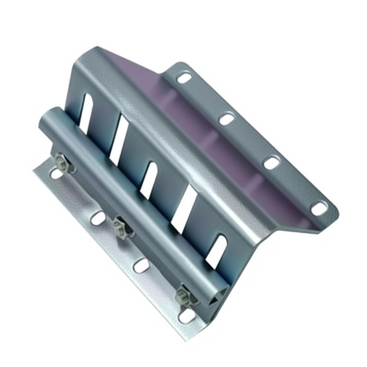
In typical installations, bottom brackets are fabricated from cold-rolled or galvanized steel, with thicknesses ranging from 2.0 mm to 3.5 mm depending on door weight and expected duty cycle. The bracket profile is designed to maximize section modulus, often incorporating flanged edges and gusset reinforcements to resist bending and torsion. The cable attachment lug is a critical feature, as it must accommodate repeated cycling without elongation or fracture. To prevent galvanic corrosion and maintain structural integrity, high-quality brackets employ zinc or powder coatings, and in corrosive environments, stainless steel variants are specified.
Fastening methodology is equally significant. Brackets are typically secured to the door’s bottom rail using carriage bolts or self-tapping screws, with the fastener pattern engineered to distribute load uniformly and prevent localized panel crushing. The interface between bracket and door panel is a frequent site of stress risers, especially if the panel substrate is of lower density or exhibits manufacturing inconsistencies. Proper torque specification and periodic retightening are essential to maintain clamping force and prevent loosening under cyclic loading.
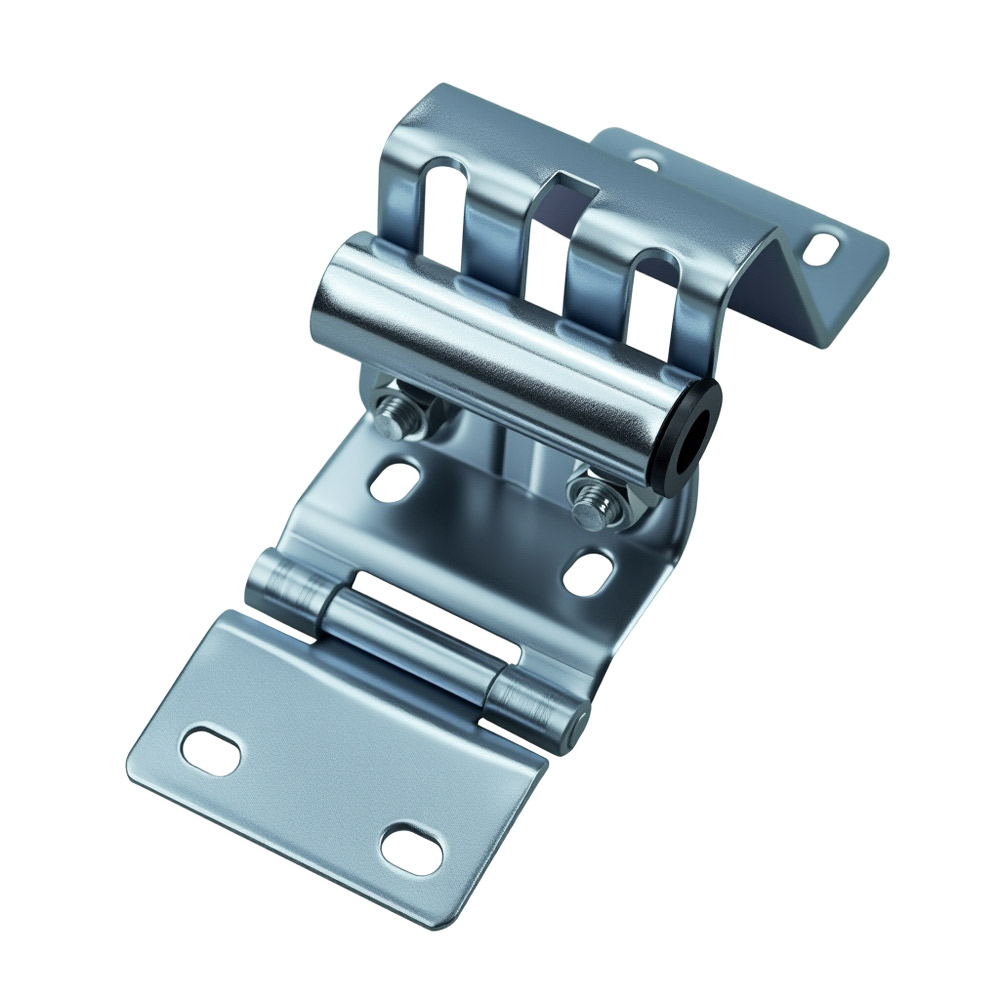
The reliability of garage door bottom brackets is fundamentally linked to their ability to maintain dimensional stability and load path integrity over extended service intervals. Load imbalance—often caused by improper spring tensioning, cable stretch, or misaligned tracks—imposes asymmetric forces on the brackets. This can result in bracket deflection, bolt hole elongation, or even catastrophic detachment from the door panel. Structural fatigue is another critical concern, as the repetitive up-and-down cycling of the door induces microstructural changes in the bracket material, particularly at stress concentrators such as bends, welds, or fastener holes.
Field observations and failure analyses reveal that the most common points of bracket failure include:
- Cable lug fracture due to cyclic bending and tensile overload.
- Flange buckling or plastic deformation at the mounting interface.
- Progressive elongation of fastener holes, leading to bracket slippage.
- Corrosion-induced section loss, especially in inadequately coated brackets exposed to moisture or road salts.
To counteract these vulnerabilities, technicians should prioritize the following engineering controls:
- Material Selection: Specify brackets fabricated from high-yield-strength steel (minimum 350 MPa), with certified coating thicknesses per ASTM B633 ou ISO 2081 for zinc finishes. In marine or high-humidity environments, select 304 or 316 stainless steel brackets to mitigate corrosion fatigue.
- Geometric Optimization: Utilize brackets with increased flange width and gusset plates to elevate the moment of inertia and resist out-of-plane bending. Avoid sharp internal corners at bends, as these act as crack initiation sites under cyclic loading.
- Mounting Protocol: Employ fastener patterns that maximize edge distance and minimize stress concentration. Adhere to manufacturer-recommended torque values and utilize thread-locking compounds where vibration is prevalent.
- Inspection and Maintenance: Integrate routine inspection of bracket condition into preventive maintenance schedules, focusing on signs of deformation, corrosion, or fastener loosening. Replace brackets exhibiting visible fatigue cracks or excessive wear.
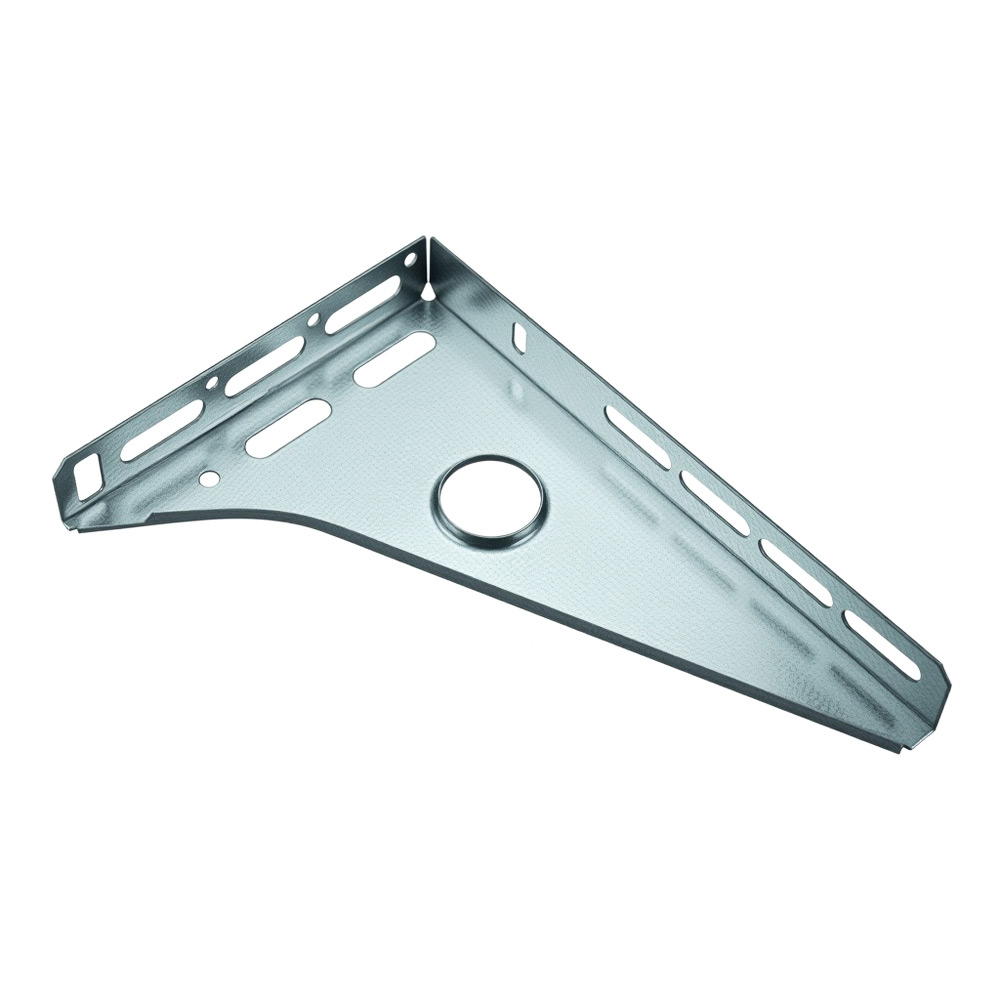
Reliability assessment of bottom brackets must account for both static and dynamic loading conditions. During door operation, the bracket is subjected to fluctuating cable tension—peaking during the initial lift and decreasing as the door reaches the horizontal track. Finite element modeling (FEM) of bracket geometry under representative loading scenarios provides valuable insight into stress distribution and identifies high-risk zones for fatigue initiation. Empirical validation through cyclic load testing, as outlined in ANSI/DASMA 102, establishes minimum performance benchmarks for bracket durability.
Evaluation and technical testing of Garage Door Bottom Brackets
Technical Load Testing Summary
Test Protocol: Cyclic tensile loading applied to cable lug at 80% of rated door weight, 50,000 cycles
Observations: Brackets with gusset reinforcement and 3.0 mm thickness exhibited no visible deformation or crack propagation. Unreinforced brackets of 2.0 mm thickness developed flange distortion and microcracking at fastener holes after 30,000 cycles.
Conclusion: Structural enhancements and material upgrades demonstrably improve fatigue resistance and load-bearing reliability.
Evaluation of bracket condition in the field requires a systematic approach. Technicians should employ the following checklist for structural durability evaluation:
- Visual Inspection: Examine for visible cracks, deformation, or corrosion, particularly at bends, welds, and fastener holes.
- Fastener Security: Verify that all mounting bolts or screws are present, properly torqued, and free from elongation or thread stripping.
- Bracket Alignment: Ensure that the bracket is flush with the door panel and that the roller stem is perpendicular to the track. Misalignment is a precursor to uneven load transfer.
- Cable Attachment Integrity: Inspect the cable lug for signs of wear, elongation, or fracture. Confirm that the cable is properly seated and free from fraying.
- Panel Interface: Assess the condition of the door panel at the bracket mounting zone for signs of crushing, delamination, or localized fatigue.
Where advanced diagnostics are warranted, technicians may utilize ultrasonic thickness gauges to detect section loss due to corrosion, or employ dye penetrant inspection to reveal surface-breaking fatigue cracks. Documentation of inspection findings and prompt replacement of compromised brackets are essential to maintaining overall door safety and performance.
It is critical to recognize that the structural durability of garage door bottom brackets is not solely a function of initial design, but also of ongoing maintenance and environmental exposure. For technicians, the core pain point of load imbalance and structural fatigue can be proactively managed through adherence to engineering best practices, selection of robust bracket designs, and rigorous inspection protocols.
Engineering Recommendation:
Verify bracket parameters—including material grade, thickness, reinforcement features, and fastener specifications—against the operational requirements of the specific door system. For high-cycle or heavy-duty applications, select brackets certified to meet or exceed ANSI/DASMA 102 standards. Maintain a documented inspection and replacement schedule, and ensure all field repairs restore original load path geometry and clamping force.
Ensuring long-term safety and reliability in Garage Door Bottom Brackets
The structural load-bearing integrity of garage door bottom brackets is a foundational element in ensuring safe, reliable door operation. By addressing load imbalance and structural fatigue through informed design selection, precise installation, and diligent maintenance, technicians can significantly extend the service life of both the brackets and the entire door assembly. Engineering vigilance at the bracket interface is essential for preventing catastrophic failures and upholding safety standards in all garage door installations.
For more detailed engineering documentation and technical resources on Garage Door Bottom Brackets, visit the Brackets product page or consult spécifications techniques for further guidance.
MECHTECH
Reviewed by Lead Mechanical Systems Engineer
À propos de nous
 English
  Русский
  日本語
日本語  한국어
한국어  Français
  Deutsch
  العربية
  Português
  Español