
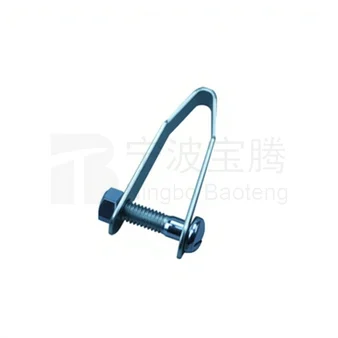
Garage door pulley clevis straps serve as critical load-transmitting elements within door lifting systems, connecting the tensioned cables to the door frame. Despite their relatively simple appearance, these components endure complex mechanical stresses that can lead to premature failure, especially in high-cycle industrial environments where doors operate hundreds of times daily. Structural engineers must carefully analyze how mechanical load distribution affects fatigue resistance in these straps to prevent failure modes such as deformation or tension fracture. Understanding the interaction between operational loads, material properties, and environmental factors is essential for designing and validating clevis straps that maintain structural integrity over extended service periods. This article explores the mechanical behavior, failure mechanisms, and testing standards relevant to these straps, emphasizing fatigue resistance and load-distribution evaluation in demanding industrial applications.
The function of the pulley clevis strap is to reliably transfer tensile forces from the lifting cable to the door’s structural frame. During operation, the strap experiences dynamic loading characterized by repetitive tension cycles as the door opens and closes. While the primary load is axial tension, secondary stresses arise from bending moments and shear forces caused by installation misalignments, cable slack, and uneven pulley positioning. These secondary stresses can significantly influence the local stress state within the strap and accelerate fatigue damage.
Load distribution along the strap is governed by several factors: the angle of cable pull, the alignment of the pulley relative to the door, and the door’s weight and motion dynamics. Ideally, tensile stress should be uniform across the strap’s cross-section; however, real-world conditions introduce stress concentrations at geometric discontinuities such as pin holes, bends, or welds. These stress risers act as initiation sites for fatigue cracks, particularly under high-cycle industrial usage where the strap may endure tens of thousands of load reversals annually.
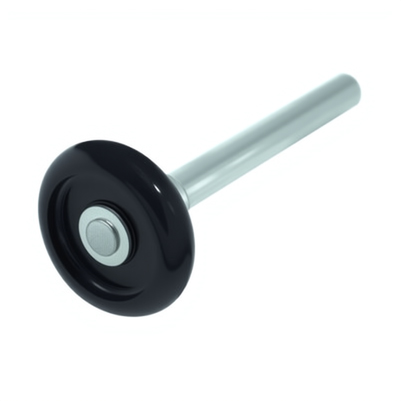
Material selection plays a pivotal role in managing these stresses. High-strength, low-alloy steels with good ductility are commonly used to provide a balance between load capacity and toughness. The strap’s cross-sectional dimensions must be designed to maintain safety factors typically above 3.0 relative to the maximum expected tensile load, in line with standards such as ANSI/DASMA 102, which specifies minimum hardware strength requirements for garage door components. Surface treatments like galvanization or powder coating are applied to mitigate corrosion, which otherwise can exacerbate fatigue crack initiation by introducing surface defects and pitting.
The mechanical advantage of the pulley-clevis system lies in its ability to redirect cable tension efficiently while minimizing frictional losses. However, any imbalance in load sharing between parallel straps or uneven cable tension can cause localized overstressing. This load imbalance increases the likelihood of clevis strap deformation or tension failure, underscoring the importance of precise alignment and regular maintenance to ensure uniform load distribution throughout the system.
The predominant failure mode observed in pulley clevis straps is tension failure due to fatigue crack initiation and propagation. Repeated cyclic tensile loading causes microstructural damage that typically originates at stress concentration points such as sharp corners, pin holes, or weld zones. Over time, these cracks grow incrementally with each load cycle until the remaining cross-sectional area can no longer sustain the applied load, resulting in sudden fracture. Prior to failure, the strap often exhibits plastic deformation or elongation, indicating that the material has yielded under excessive tensile stress. This progression highlights the critical need for fatigue-resistant design and regular inspection protocols to detect early signs of damage.
Secondary failure mechanisms involve strap deformation and wear-related thinning. Deformation may present as bending or twisting of the strap, which alters the intended load path and increases localized stress concentrations. Such geometric distortions can be caused by improper installation, impact damage, or cumulative plastic strain from overloading. Wear typically occurs at interfaces with pulleys or clevis pins, where friction and contact stresses reduce the effective cross-sectional area. This thinning accelerates fatigue crack initiation and can also lead to mechanical disengagement if the strap’s integrity is compromised. Both deformation and wear diminish the strap’s fatigue life and jeopardize safe door operation.
Environmental conditions significantly influence the durability of clevis straps, particularly in high-cycle industrial settings. Exposure to moisture, temperature variations, and airborne contaminants promotes corrosion, which introduces surface pits that act as preferential crack initiation sites. Corrosion-induced damage can drastically reduce fatigue life by accelerating crack growth rates. Additionally, cyclic thermal stresses may induce microstructural changes in the steel, such as temper embrittlement or reduced ductility, further compromising fatigue resistance. Consequently, environmental factors must be integrated into both material selection and testing protocols to ensure the strap’s reliable performance throughout its service life.
Robust validation of pulley clevis straps requires compliance with established industry standards that address mechanical strength, fatigue resistance, and safety. ANSI/DASMA 102 is a key reference, setting minimum tensile load requirements and safety factors for door hardware components. Adhering to this standard ensures that straps can withstand operational loads without yielding or fracturing under expected service conditions.
For fatigue assessment, ASTM E466 provides standardized procedures for conducting tensile fatigue tests on metallic materials under cyclic loading. This methodology involves subjecting strap specimens to controlled stress amplitudes representative of service loads and recording the number of cycles to failure. The resulting S-N curves (stress versus number of cycles) enable engineers to predict fatigue life and establish design margins tailored to the high-cycle industrial usage environment.
UL 325, governing safety requirements for door operators and related hardware, mandates that mechanical components maintain structural integrity throughout their operational lifespan. While primarily focused on user safety, this standard indirectly enforces rigorous mechanical validation of hardware such as clevis straps.
Load-distribution evaluation is a critical aspect of testing that simulates real-world conditions where load imbalances may occur. Techniques such as strain gauge instrumentation and digital image correlation are employed to map strain fields along the strap during cyclic loading. These data highlight stress concentration zones and inform design refinements, such as geometry optimization or material treatment enhancements, to improve fatigue resistance and prevent failure.
Successful integration of pulley clevis straps into garage door assemblies demands precise engineering attention to alignment, material compatibility, and environmental protection. The strap design must accommodate the door’s weight and operational frequency without exceeding fatigue limits established through testing. Selecting steel grades with documented fatigue performance and applying corrosion-resistant coatings are essential steps to prolong service life.
Installation procedures should emphasize minimizing load imbalance by ensuring uniform cable tension and accurate pulley alignment. Misalignment not only elevates stress on the clevis strap but also accelerates wear on complementary components such as rollers and shafts, potentially cascading into system-wide failures. Regular maintenance schedules must include thorough inspections of straps for signs of deformation, corrosion, or cracking, with replacement criteria based on observed damage severity and fatigue life predictions.
In industrial environments characterized by frequent door cycles, fatigue life becomes a paramount design consideration. Engineers may incorporate redundancy through multiple load paths or increase strap cross-sectional area to distribute stresses more evenly. Advanced approaches include embedding strain sensors for real-time monitoring of mechanical loads, enabling early detection of fatigue damage and timely preventive maintenance before catastrophic failure occurs.
The mechanical reliability of the pulley clevis strap directly impacts the safety and functionality of the entire garage door system. Failure of this component risks equipment damage and poses significant safety hazards to users. Therefore, integration strategies must balance mechanical robustness with practical constraints such as cost-effectiveness, ease of installation, and maintainability.
H2 —
The mechanical load distribution and fatigue resistance of garage door pulley clevis straps are critical factors determining the longevity and safety of door lifting systems, especially under high-cycle industrial usage. Failure modes such as tension fracture and deformation arise primarily from cyclic stresses concentrated at geometric discontinuities and exacerbated by environmental degradation. Adherence to testing standards including ANSI/DASMA 102 and ASTM E466, alongside load-distribution evaluation protocols, provides a rigorous framework for validating strap performance. Structural engineers must integrate these considerations into design, installation, and maintenance practices to mitigate failure risks. Ultimately, ensuring the mechanical reliability of the pulley clevis strap is essential to maintaining operational efficiency and safeguarding users in demanding industrial settings.
This analysis was reviewed by a Senior Garage Door Hardware Engineer with practical field experience under high-cycle industrial usage operating conditions, with validation focused on clevis strap deformation / tension failure in accordance with load-distribution evaluation compliance requirements.
For engineering teams responsible for Garage Door Pulley Clevis Strap, the most robust designs are those that explicitly incorporate high-cycle industrial usage environmental factors into material selection, document performance evidence against load-distribution evaluation, and maintain traceable validation records that align with ANSI, ASTM, and UL expectations for garage door hardware.

 English
  Русский
  日本語
日本語  한국어
한국어  Français
  Deutsch
  العربية
  Português
  Español