
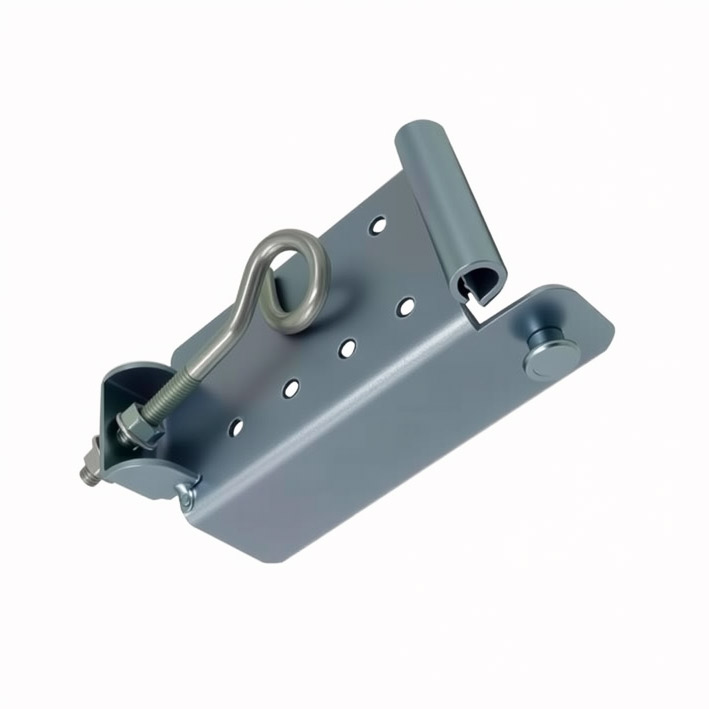
Sectional garage doors depend heavily on the mechanical integrity and precise alignment of their hardware components to function reliably over extended service periods. Among these components, the top roller bracket plays a crucial role by supporting and guiding the rollers along overhead tracks, enabling smooth vertical motion of door panels. In vibration-sensitive installation sites—such as hospitals, laboratories, or residential buildings with strict noise and vibration control requirements—the mechanical stresses imposed on these brackets are amplified. Continuous exposure to dynamic loads and ambient vibrations can accelerate wear, particularly in the roller bearings, leading to increased rolling resistance and eventual failure. Understanding the interplay between mechanical loading, material behavior, and environmental factors is essential to ensuring bracket longevity and operational safety. This discussion examines the mechanical principles governing top roller bracket behavior, explores predominant failure mechanisms with a focus on bearing wear and rolling resistance increase, and reviews relevant testing standards that validate alignment and durability in demanding vibration-sensitive environments.
The top roller bracket functions as the primary load transfer interface between the garage door panel and its overhead track system. Typically fabricated from high-strength steel alloys or cast aluminum, the bracket must maintain dimensional stability and resist fatigue under repetitive loading cycles throughout the door’s operational lifespan. It secures the roller assembly, which traverses curved or straight track segments, facilitating vertical door movement with minimal frictional losses.
Static loads on each bracket are primarily due to the weight of the attached door panel segment, which can range from approximately 20 to 50 kilograms depending on panel dimensions, material density, and insulation thickness. Dynamic loads arise from door acceleration and deceleration during opening and closing, wind pressure acting on the door surface, and stresses introduced by track curvature or slight misalignments. These combined loading conditions subject the bracket and roller assembly to complex multi-axial stresses, including bending, shear, and torsion.
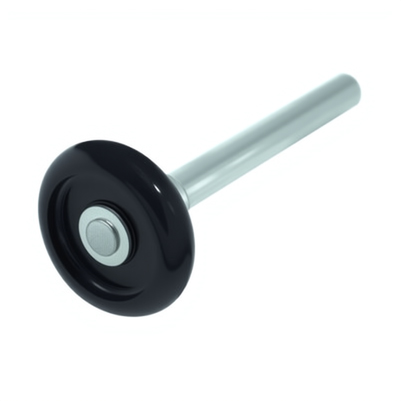
Maintaining precise alignment between the top roller bracket and the track is critical to ensuring uniform load distribution across the roller bearing raceways. Even minor angular deviations—on the order of fractions of a degree—can cause uneven bearing loading, generating localized radial and axial stresses that exceed design thresholds. This uneven stress distribution increases rolling resistance and frictional torque, thereby raising the operational effort required to move the door. Bearings under such conditions are prone to surface fatigue phenomena such as pitting and spalling, which exacerbate noise, vibration, and ultimately lead to roller seizure.
In vibration-sensitive environments, fatigue resistance and alignment stability are paramount design considerations. Bracket geometry is optimized to reduce stress concentrations around mounting holes, bends, and welds. Fasteners securing the bracket must be selected and torqued to resist loosening under torsional and vibratory forces, preserving roller orientation throughout service. Additionally, differential thermal expansion among bracket, roller, and track materials is accounted for to prevent stress accumulation during temperature fluctuations, which can otherwise induce misalignment and accelerate bearing wear.
The predominant failure mode observed in top roller brackets is bearing wear accompanied by increased rolling resistance, primarily driven by bracket misalignment. When the bracket’s angular position deviates beyond allowable tolerances—typically specified within ±0.5 degrees—roller bearings experience uneven load distribution. This localized overloading concentrates stresses on discrete sections of the bearing raceways, accelerating fatigue damage. The resulting surface defects, such as spalling and pitting, increase friction and rolling resistance, requiring greater torque to operate the door.
As rolling resistance escalates, door movement becomes irregular, often accompanied by audible noise and perceptible vibration. If unaddressed, bearing degradation progresses to roller seizure, immobilizing the assembly. Such failure not only disrupts door operation but can also cause track derailment or jamming, posing significant safety risks. In vibration-sensitive installations, ambient oscillations intensify wear mechanisms, accelerating failure progression and reducing component service life.
Secondary failure modes frequently originate from bracket deformation and fastener loosening induced by cyclic loading and vibration exposure. Repeated dynamic stresses can initiate micro-cracks, particularly near weld joints, stamped bends, or other stress concentration points. Progressive crack propagation diminishes bracket stiffness, permitting increased misalignment and exacerbating bearing wear.
Fasteners securing the bracket are vulnerable to vibration-induced fatigue loosening if not properly torqued or if locking mechanisms are inadequate. Loosened fasteners allow relative bracket movement with respect to the door panel, increasing roller misalignment and accelerating bearing degradation. Additionally, bracket deformation caused by impact loads, improper installation, or excessive mechanical loading can alter roller orientation, compounding failure risks.
Environmental conditions significantly influence bracket durability and failure progression, especially in vibration-sensitive settings. Corrosive atmospheres—common in coastal or industrial locations—promote oxidation and chemical attack on bracket materials, weakening structural integrity and accelerating fatigue crack initiation.
Temperature fluctuations induce differential thermal expansion among bracket, roller, and track materials, generating additional stresses at interfaces and fasteners. These stresses exacerbate misalignment and bearing wear. Elevated humidity and particulate contamination degrade lubrication regimes, increasing friction and wear rates.
Mitigation strategies include selecting corrosion-resistant alloys or applying protective coatings such as zinc plating or powder coating. Stainless steel components are preferred in highly corrosive environments. Lubricants must maintain viscosity and adhesion under environmental extremes, balancing friction reduction with contamination resistance to preserve bearing function.
Validating the mechanical reliability of top roller brackets in vibration-sensitive environments necessitates rigorous testing aligned with established standards that address performance, alignment precision, and safety. The ANSI/DASMA 102 standard for sectional garage doors defines performance criteria including cycle durability, alignment tolerances, and operational smoothness. Testing protocols subject door assemblies to tens of thousands of opening and closing cycles under controlled load conditions, simulating real-world stresses and verifying that bracket alignment remains within prescribed limits.
ASTM F2200 provides standardized procedures for evaluating rolling resistance and bearing performance in door hardware. This standard quantifies the torque required to initiate and sustain roller movement, enabling correlation of torque increases with misalignment or bearing degradation. Such quantitative assessments facilitate early detection of failure modes before catastrophic malfunction occurs.
UL 325 addresses safety and operational reliability, mandating that door components maintain functional integrity under emergency stop conditions and resist failure modes posing hazards. Its protocols include vibration exposure and environmental conditioning to replicate installation scenarios where dynamic stresses and environmental factors challenge component durability.
Compliance with these standards ensures that top roller brackets meet stringent mechanical and safety requirements. Incorporating alignment precision tests during validation provides quantifiable evidence of bracket performance in vibration-sensitive sites, guiding engineering decisions on material selection, design refinement, and maintenance scheduling.
Proper integration of the top roller bracket within sectional garage door systems demands meticulous installation and ongoing maintenance to prevent premature failure. Installation personnel must verify bracket positioning relative to the track using precision alignment tools such as laser measurement systems or dial indicators capable of detecting deviations within sub-millimeter tolerances.
Material compatibility among bracket, roller, and track components is vital to minimizing differential wear and thermal expansion effects. For example, pairing steel brackets with nylon or polyurethane rollers can reduce noise and friction but requires careful consideration of thermal expansion coefficients to avoid misalignment during temperature variations.
Lubrication strategies must be tailored to the operating environment, balancing friction reduction with protection against contaminants such as dust and moisture. In vibration-sensitive environments, additional damping measures—such as elastomeric mounts or vibration isolators—may be employed to reduce dynamic stresses transmitted to the bracket and fasteners.
Routine inspection protocols are crucial for early detection of bearing wear, bracket deformation, and fastener integrity loss. Visual inspections combined with operational tests measuring rolling resistance and noise levels help identify components approaching failure thresholds. Replacement intervals should consider cumulative vibration exposure and environmental degradation, with proactive component swaps to prevent unplanned downtime or safety incidents.
The mechanical performance and alignment stability of the top roller bracket are fundamental to the reliable operation of sectional garage doors, especially in vibration-sensitive installation sites. Bearing wear and increased rolling resistance caused by misalignment represent the primary failure mode, intensified by dynamic stresses and environmental factors. Adherence to ANSI, ASTM, and UL testing standards, including alignment precision tests, provides a robust framework for validating bracket performance under realistic conditions. From an engineering reliability perspective, ensuring long-term functionality of garage door top roller brackets requires careful fastener selection, verified load transfer behavior, validation under vibration exposure, and documented compliance with alignment and safety benchmarks. This comprehensive approach mitigates risks and extends service life in demanding operational environments.
This analysis was reviewed by a Senior Garage Door Hardware Engineer with practical field experience under vibration-sensitive installation site operating conditions, with validation focused on bearing wear / rolling resistance increase in accordance with alignment precision test compliance requirements.
For engineering teams responsible for garage door top roller bracket, the most robust designs are those that explicitly incorporate vibration-sensitive installation site environmental factors into material selection, document performance evidence against alignment precision test, and maintain traceable validation records that align with ANSI, ASTM, and UL expectations for garage door hardware.

 English
  Русский
  日本語
日本語  한국어
한국어  Français
  Deutsch
  العربية
  Português
  Español